Easy Chairs & Hard Words

Easy Chairs

Some time ago I posted a series of fictional discussions between a young man from a Broadly Evangelical background and a seasoned minister in a more historical theological tradition.  The series is titled Easy Chairs & Hard Words. It was penned by Douglas Wilson of Christ Church of Moscow, Idaho, and first appeared in Credenda Agenda.

These engaging instructive narratives have come to mind in a few discussions over the past couple weeks, so I decided it might be good to republish the links to each of the six chapters:


Easy Chairs & Hard Words – Part 1

Easy Chairs & Hard Words – Part 2

Easy Chairs & Hard Words – Part 3

Easy Chairs & Hard Words – Part 4

Easy Chairs & Hard Words – Part 5

Easy Chairs & Hard Words – Part 6

Two Contents, Two Realities

Francis Schaeffer said: “there are four things which are absolutely necessary if we as Christians are going to meet the need of our age and the overwhelming pressure we are increasingly facing.” These four things are two contents and two realities:

The First Content: Sound Doctrine 

The Second Content: Honest Answers to Honest Questions 

The First Reality: True Spirituality

The Second Reality: The Beauty of Human Relationships

Each link above will take you the substance of the respective  Contents and Realities. I am convinced they are worth consideration.  Why? Because I believe Schaeffer was right when he wrote:

[W]hen there are the two contents and the two realities, we will begin to see something profound happen in our generation.

Reformation Essentials

On October 31, 1517 a young college professor, heavy of heart, wanted to discuss some of the things he was thinking.  Posting his thoughts on the front doors of the church in the center of town – the 16th Century version of Facebook or blogging – a flame ignited that  still burns today.  In fact, with the recent resurgence of the Reformed tradition that flame is burning bright.

On this 494th anniversary of Martin Luther’s simple act, I thought I would post a piece that reminds us of the essence of the movement that rocked the world.

***

by Michael Horton

In May, 1989, a conference jointly sponsored by the National Association of Evangelicals and Trinity Evangelical Divinity School was held at the Trinity campus in Illinois. Dubbed a consultation on Evangelical Affirmations, the meeting revealed more than it settled. In the published addresses (Zondervan, 1990), Carl F. H. Henry, the dean of American evangelicalism, sets the tone for book with his opening line: “The term ‘evangelical’ has taken on conflicting nuances in the twentieth century. Wittingly or unwittingly, evangelical constituencies no less than their critics have contributed to this confusion and misunderstanding.” He warned that “evangelical” was being understood, not according to Scriptural teaching and “the theological ‘ought,'” but according to the sociological and empirical “is.” In other words, Henry was disturbed that evangelicalism is increasingly being defined by its most recent trends rather than by its normative theological identity. Author after author (presumably, speaker after speaker) echoed the same fears that before long “evangelical” will be useless as any meaningful identification.

The term itself derives from the Greek word euangelion, translated “Gospel,” and it became a noun when the Protestant reformers began their work of bringing the “one holy, catholic and apostolic church” back to that message by which and for which it was created. People still used other labels, too, like “Lutheran,” “Reformed,” and later, “Puritans,” “Pietists,” and “Wesleyans.” Nevertheless, the belief was that the same Gospel that had united the “evangelicals” against Rome’s errors could also unite them against the creeping naturalism and secularism of the Enlightenment in the eighteenth century. The so-called “Evangelical Awakening” in Britain coincided with America’s own “Great Awakening,” as Wesley, Whitefield, Edwards, Tennant, and so many others centered their preaching on the atonement. Later, of course, Wesley’s zeal for Arminian emphases divided the work in Britain, but the Reformation emphases were clearly and unambiguously articulated in the Great Awakening.

Out of this heritage, those today who call themselves “evangelicals” (or who are in these churches, but might not know that they are in this tradition) are heirs also to the Second Great Awakening. Radically altering the “evangel” from a concern with the object of faith, the Second Great Awakening and the revivalism that emerged from it focused on the act and experience of faith, in dependence on the proper “excitements”, as Finney and others expressed it, to trigger the right response. In our estimation, this Second Great Awakening was the most important seismic shift in American religious history. Although the Reformation emphases of sin and grace continued to exercise some influence, they were being constantly revised to make the “Gospel” more acceptable to those who thought they could pull themselves up by their own bootstraps.

Only in the last decade of this century have many of the movement’s mainstream leaders considered the loss of an evangelical substance. No longer is the evangel the focus of the movement’s identity, but it is now known more by a sub-culture, a collection of political, moral and social causes, and an acute interest in rather exotic notions about the end-times. At a loss for words, one friend answered a man’s question, “Who are the evangelicals?” with the reply, “They’re people who like Billy Graham.”

It is at this point that those of us who are heirs to the Reformation–which bequeathed to evangelicalism a distinct theological identity that has been since lost–call attention once more to the solas (only or alone) that framed the entire sixteenth-century debate: “Only Scripture,” “Only Christ,” “Only Grace,” “Only Faith,” and “To God Alone Be Glory.”

Continue reading

The Connection of the Law With the Gospel

There is a common question about how the Law of God and the Grace of God relate to one another. Some seem to wonder how they even co-exist. 

Spurgeon, though, when once asked how he reconciled the Law and the Gospel, replied:

“There is no need to reconcile friends.”

Granted, there is some tension between these two great Biblical themes. But there is an answer – a wonderful, glorious answer. 

Charles Bridges, a 19th Century Anglican pastor-theologian, takes up this  issue and offers some profound and practical answers in an essay titled: The Connection of the Law With the Gospel. 

Bridges’ language is a bit archaic, but with some effort most people should be able to grasp the richness of his insights. Having found it nowhere else on the web, I post his essay below for the benefit those willing to work through it.

But I have been thinking: Perhaps one day I will edit and translate this essay to language for our day… and post it again.

Continue reading

Easy Chairs & Hard Words

Some time ago I posted a series of fictional discussions between a young man from a Broadly Evangelical background and a seasoned minister in a more historical theological tradition.  The series is titled Easy Chairs & Hard Words. It was penned by Douglas Wilson of Christ Church of Moscow, Idaho, and first appeared in Credenda Agenda.

These engaging instructive narratives have come to mind in a few discussions over the past couple weeks, so I decided it might be good to republish them. At least I will post links to each of the six chapters: 

Easy Chairs & Hard Words – Part 1

Easy Chairs & Hard Words – Part 2

Easy Chairs & Hard Words – Part 3

Easy Chairs & Hard Words – Part 4

Easy Chairs & Hard Words – Part 5

Easy Chairs & Hard Words – Part 6

Doctrine

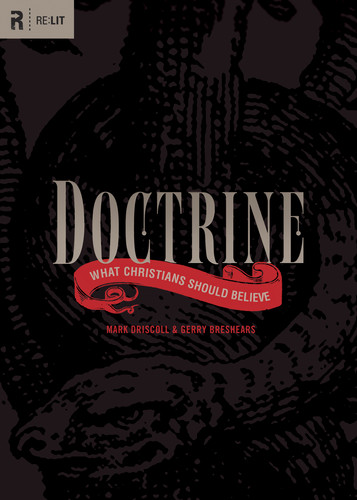
Do you want a good overview of the doctrines of the Christian faith? Would you be open to a introductory course, but are afraid people in your church might think lesser of you because of what you don’t know? (Most of them don’t know either, by the way.)  re:Lit publications has developed Doctine by Mark Driscoll & Gerry Breshear to introduce an overview of the themes of the Bible.

On the web site, across the top of the screen are icons that provide a brief synopsis of each doctrine. Additionally at the top right of the synopsis is a link to an audio/video of messages Driscoll delivered at Mars Hill Church that served as a foundation for each chapter.

Crossway Books has an e-book available free online.

  • Click: Doctrine
  • Scroll down to Contents
  • Click the Chapter Ttile

Resurging Calvinism

Jonathan Dodson, of Acts 29 Network, has posted a great synopsis of beliefs in an article titled: The Message of Resurging Calvinsm.  This falls into the category of: I Wish I’d Written That –  it so simply and concisely summarizes what I have been teaching at Walnut Hill Church.

Dodson clearly describes 5 areas of important Faith distinctives:

  1. Gospel vs. Religion
  2. Us vs. Them
  3. Big vs. Small
  4. Conservative vs. Liberal
  5. Suburban & Urban

In this post there are some references to the New Calvinism. In some respects this label seems a bit of a misnomer since, it seems to me, it is really a just a great expression of healthy Calvinism… But I don’t want to be nit-picky.

Easy Chairs & Hard Words – Part 5

by Douglas Wilson

We join a conservation in progress; it is between a young theological questioner who grew up in a typical Evangelical church, and an older pastor from a historical theological tradition.  

***** 

“But… What difference does it all make?” I asked.  

Pastor Spenser took a sip of his coffee, and answered the question with a question. “What kind of difference do you mean? For the individual Christian, or for the Church, or both?”  

“Well, I first came to visit you because the difference it makes to me was obvious. The doctrine I held before did little more than torment me. I was constantly in fear over the possibility of losing my salvation.”  

“But I have friends who hold to those same doctrines with enthusiastic cheerfulness. Are these teachings something which I needed to hear for my Christian life, but which are not necessary for the Church at large?”  

Pastor Spenser nodded. “I see what you are asking. Even if all this is true, is it something the Church needs to believe? Is the Church hindered in her work if these doctrines are neglected or rejected?”  

“Right. If some Christians seem to get along just fine without it, why can’t the Church as a whole?”  

“Because ideas have consequences, and because the Church is made up of individuals.”  

“OK. Explain.”  

“Ideas have consequences, not because each individual is consistent, but because groups of people are consistent over time.”  

“What do you mean by that?”  

“Let’s take a clear example from outside the faith. Have you ever known an atheist who was a decent, law-abiding citizen?”  

I nodded. “Yes.”  

“Now was he being consistent with the basic premises of his worldview?”  

I laughed, “No. And we had many discussions about it. He treated me with respect, but given his worldview, I was nothing more than a mass of protoplasm.”  

Pastor Spenser continued. “Now my point is this. Individual atheists can frequently be inconsistent like this. Atheistic societies never are.”  

“Never are inconsistent, you mean?”  

“Right. Over time, the beliefs of individuals will be consistently applied by the group, even if many of the individuals who brought this about did not apply them.”  

“Apply this to the Church, then.”  

“The basic issue we have been discussing all these weeks has been the difference between man-centered religion, and God-centered religion.”  

“I follow that.”  

“Now, have you ever known any Christian whose beliefs, or doctrines, were what we have been calling ‘man-centered’, but whose life was clearly God-centered?”  I nodded again. “Yes.” “And we would call that inconsistent?”  

“Yes.”  

“And if you wind up changing churches, you will very quickly encounter Christians whose doctrines are ‘God-centered’, but whose life is man-centered. This is also inconsistent.”  

“Well, this brings us back to my first question. If this is the case, what difference does it all make?”  

“It is quite simple. The Church, being an assembly of people, will eventually live in a manner consistent with her doctrine. If the doctrine is man-centered, then there will come a time when the lifestyle, morals, ceremonies, teaching, etc. are also man-centered.”  

“So even though an individual is inconsistent with his false doctrine, the Church at large will eventually be consistent with it.”  

“Correct. This explains why certain beliefs can be held by pious Christians, while those same beliefs go on to corrupt and defile the piety of the Church.”  

“Can you give me an example from church history?”  

“Certainly. Consider revival. What does that term mean?”  

I grinned. “A week of nightly meetings?”  

“That is what it has come to mean. Arrange for a speaker, print the flyers, gather the troops, and work up a revival. From start to finish, it is the work of man.”  

“What did revival mean before?”  

“It referred to a time when the sovereign Holy Spirit moved in a congregation in such a way as to reveal the glory of Jesus Christ. From start to finish, it was the work of God.”  

“What is a true revival like?”  

I was surprised to see Pastor Spenser’s eyes well up. “I don’t know,” he said. “All the knowledge of true revival today is second-hand – through books. The last healthy revival was in the mid-nineteenth century.”  

“What happened?”  

“Revival, which is a gift of God, was, through theological confusion, turned into a work of man. The result is revivalism, not revival.”  

“What is the difference?”  

“Well, there are two kinds of revivalism. One is where a denomination has a long tradition of having these meetings, everyone is used to it, they go and listen, and then go home. It is little more than a religious seminar. And, as seminars go, some of them might be worthwhile.”  

“And the other?”  

“The other is the result of taking the whole idea of revival more seriously. The people expect fireworks, so they see to it there are fireworks. It is nothing more than religious enthusiasm and fanaticism.”  

“But weren’t some of the great revival preachers of the past – men you respect – accused of religious fanaticism too?”  

“They certainly were. And if God is merciful to us and sends true revival again, the charges of fanaticism will be heard again.”  

“But…”  

“I know. Couldn’t a Christian make the point that the whole distinction between revival and revivalism is a false one, and that all such events are fanatical to some degree or another?”  

“Right.”  

Pastor Spenser nodded. “It is a legitimate concern. First, can we agree that there is such a thing as true fanaticism?”  

“Sure. I don’t believe anyone would disagree there. Religious fanatics have always been around.”  

“Now, the next question is this: Does the Bible teach anything which, if applied, would result in the one applying it to be accused of fanaticism?”  

I smiled. “You tell me.”  

“How about 1 Peter 1:8? ‘Though now you do not see Him, yet believing, you rejoice with joy inexpressible and full of glory.’ Or Ephesians 3:17-19? ‘…that you…may be able to comprehend with all the saints what is the width and length and depth and height – to know the love of Christ which passes knowledge.’  I don’t know. A little extreme, don’t you think?”  

I sat for a moment, thinking. Pastor Spenser spoke again.  

“Christians get used to such passages. There it is, safe on the page. But there is no way for a Christian to be filled with inexpressible joy without it affecting his demeanor and behavior. And when it does, he will be accused of fanaticism. Many Christians, in their concern over religious fanaticism, have gotten rid of not only the fanaticism, but also the religion.”  

“So what are the characteristics of true revival, over against revivalism?”  

“We have been talking about God-centeredness versus man-centeredness. The distinction follows us into our discussion of the criteria by which everything is to be evaluated; teaching and lifestyle, or, put another way, doctrine and morals.”  

“OK. Let’s start with doctrine.”  

“In a true revival, doctrine is the emphasis, and the doctrine is God-centered. In revivalism, because man is the center, feelings are emphasized. In revival, truth overwhelms the mind, resulting in an emotional response – inexpressible joy. In revivalism, the emotions are excited directly, and any number of teachings, true or false, can do that.”  

“What about morality?”  

“In a true revival, the change in the moral behavior of those blessed is significant and lasting. With revivalism, very little is done to teach the people to restrain their passions. In fact, because the ‘revival’ encourages a lack of restraint in the church, it is not long before a lack of restraint is evident elsewhere, usually in the area of sexual morality.”  

“Are you saying that in order to have a true revival, a belief in God’s exhaustive sovereignty is necessary?”  

“Yes.”  

“But didn’t men like Charles Finney deny this particular truth? And wasn’t he part of the revivals of the nineteenth century?”  

“Yes, he did deny it, and he was certainly a participant in ‘revivals.’ But he was one of those who effectively introduced the man-centered doctrines and practices which were the death of true revivals in this country.”  

“You know,” I said, “I thought I had gotten used to the strange things you say from time to time. But this takes the cake! I have some friends who are really into revival, and they read books by Finney all the time.”  

Pastor Spenser was shaking his head. “I know, I know. It is ironic. When Christians periodically despair of the current state of the church, and come to think, correctly, that the only thing which will help us is revival, they then turn to one of the men who was a major part of the problem.”  

“So how would you summarize all this?”  

“I would say that God is over all, and through all, and in all. Anyone who denies this, in any measure, is a hindrance to true heaven-sent revival.”  

****

This is Part 5 in a series of 6 titled Easy Chairs & Hard Words.


Easy Chairs & Hard Words – Part 4

by Douglas Wilson

We join a conservation in progress; it is between a young theological questioner who grew up in a typical Evangelical church, and an older pastor from a historical theological tradition.  

 ***** 

Pastor Spenser shifted easily in his seat while I carefully thought over my next question. “Some of my friends at my church have figured out that I have been coming to see you,” I said.  

Pastor Spenser nodded, and waited.  

“Naturally,” I said, “they are somewhat concerned.”  

“Naturally. About what?”  

“Well, they say that Christians who believe in the exhaustive sovereignty of God are setting themselves up.”  

“For…?”  

“For the temptation which says that because God controls everything, then the way I live doesn’t really matter.”  

“I see. In other words, if I am elect, then my sins won’t damn me, and if I am not, then all the good works in the world won’t save me. Is that it?”  

“Yes. That is exactly it. If the whole thing was settled before the world began, then why bother? My friends know that there are true Christians who believe this, but they think that, because of this theology, these Christians will tend to become careless about how they live.”  

“Why should we take responsibility for our actions after we have embraced a theology which cuts the nerve of personal responsibility?”  

“Right. If God controls everything, then what room is there for personal holiness?”  

Pastor Spenser thought for a moment. “The problem is not with your friends’ concern for personal holiness. That is admirable. All Christians should set their faces against carnal living on the part of professing Christians. But it does no good to oppose carnal living with carnal reasoning.”  

“What do you mean?”  

“When someone is whooping it up down at the bars, or sleeping with their girlfriend, why do we say it is sin?”  

“Is this a trick question?”  

Pastor Spenser grinned. “You might say that. Why do we call such things sin?”  

“Because the Bible does.”  

“Exactly. So this carnal living we have been talking about is a lifestyle that is not in submission to the clear teaching of the Word of God.”  

“Well, sure. But I still don’t see where you are going with this.”  

“Now if carnal living is a lifestyle that does not submit to God’s Word, then how should we define carnal reasoning?” 

“The same way, I suppose?”  

“Right. It is not enough to submit what we do externally to God; we must also submit the way we think. Your friends are trying to defend God’s standards for living by abandoning His standards for thinking. It cannot be successful.”  

“Is there a passage where this point is clear?”  

“Yes, in Philippians. Chapter 2, verses 12 and 13.”  

I turned to Philippians and read. “Therefore, my beloved, as you have always obeyed, not as in my presence only, but now much more in my absence, work out your own salvation with fear and trembling; for it is God who works in you both to will and to do for His good pleasure.” I looked up.  

“What does the passage say God is doing?” Pastor Spenser asked.  

I looked down again. “It says that He is working in the Philippians, both in willing and doing, and that the result is His good pleasure.”  

“And what would carnal reasoning do with that?”  

“Well, the response would be that if God is doing the willing, and if God is doing the doing, and the result is whatever He wants, then there is no reason for me to put myself out. It is going to happen anyway.”  

“Right. The reasoning says that if God is going to do the work, then why should I have to?”  

I nodded, and Pastor Spenser went on.  

“But what application of this truth does Paul command the Philippians to obey?”  

I looked at the passage again. “He tells them to work out their own salvation, with fear and trembling.” I glanced down further. “And in the next verse he goes on to specific ethical instruction – to avoid murmuring and disputing.”  

I sat and thought for a moment. “But my friends would say that the application they are making is obvious – common sense.”  

“Well, it certainly is common. But is it biblical?”  

“Why do so many Christians fall for this line of reasoning then? It seems like a trap that is extremely easy to fall into.”  

“Well, yes, it easy to fall into. But it is also easy to drink too much, not watch your tongue, lust after women, and so forth. And these are things which the church recognizes as sin, and warns the people against. But carnal reasoning is also easy, and almost no one warns the people.”  

“Why not?”  

“Sheep are hungry because shepherds don’t feed them. Shepherds don’t feed them because shepherds don’t have food.” Pastor Spenser leaned forward in his seat. “The shepherds don’t have food because they don’t study their Bibles.”  

“You think it is obvious in the Word?”  

“Certainly. When the apostle Paul magnified the prerogatives of the sovereign God, he fully anticipated the response of carnal reasoning.” Pastor Spenser leaned back, closed his eyes, and quoted, “You will say to me then, ‘Why does He still find fault? For who has resisted His will?’” A modern pastor, in the unlikely event that someone asked him this, would say that it was a good question, and that he wrestles with it often himself. Paul tells the questioner to shut up and sit down. ‘But indeed, O man, who are you to reply against God?’”  

“Paul doesn’t answer the question then?”  

Pastor Spenser opened his eyes. “Oh, he does. It just isn’t the answer carnal reason wants.”  

“So what is the answer?”  

“The answer is God – the same answer that is given at the end of the book of Job. Carnal reason doesn’t see a real answer there either. But believe me, it is a real answer. The answer is the ground of reality; the answer is God.”  

“What happens at the end of the book of Job?”  

“The questions raised in the book are conducive to carnal reason; indeed, even non-Christians are attracted to the first part of the book of Job. As they would put it, ‘It addresses the human condition.’ But then, at the end of the book, God comes in, with glory and thunder. And do you know what? He doesn’t answer any of the impertinent questions; rather, He poses some sobering questions of His own. ‘Who is this who darkens counsel by words without knowledge? Now prepare yourself like a man; I will question you, and you shall answer Me.’”  

I nodded. “And He asks where Job was when the universe was created.”  

“The question is not irrelevant. It is the heart of the matter. Discussions of God’s sovereignty and human responsibility very rarely display any understanding at all of Who the Creator is.”  

“But my friends would say that you are making God responsible for evil, and that they are concerned to protect God’s honor and glory.”  

Pastor Spenser looked at me intently. “It is true that the affirmation of God’s total control over all things causes some to blaspheme. But your friends need not be concerned for God’s glory; man’s slanders and blasphemies do not touch Him. Such slanderers are pelting the sun with wadded-up balls of tissue paper.”  

“They are stumbling over something though.”  

“They stumble, being disobedient to the word, to which they also were appointed.”  

“Now, see? Why do you have to put these things so strongly? Doesn’t that cause people to react to what you are teaching? They were appointed to stumble?”  

“That wasn’t my choice of words. I was quoting 1 Peter 2:8.”  

“Oh. Oops.”  

“Your friends are concerned that God be seen as good. But seen as good by whom? Those who believe the Word of God will know that God is light and in Him is no darkness at all. Of course He is good – by definition. And those who do not believe the Word of God will persist in thinking that there is a tribunal or court somewhere in which God will one day be arraigned. On the day of judgment, their folly will be apparent to all – even to them.”  

“So how do we bring this back to the original point?”  

“The original point was the concern that the doctrine of God’s sovereignty would be made into a cushion for sin. My answer to this is that we must, in all things, recognize God as God. We must do so in how we live holy lives, but we must also do so in why we live holy lives. We are to live in a holy way because God has commanded it.”  

“But you would also say that what God has commanded the believer He has also given the believer.”  

“Well, certainly.”  

“I honestly see why carnal reason has a problem with this.”  

“And I honestly see why carnal men want to lust after beautiful women. But what does the Bible say?”  

“What do you mean?”  

“What is the greatest commandment?”  

“That we love God.”  

“And what is the first fruit of the Spirit?”  

“Love.” I said. “I see.”  

“What do you see?” Pastor Spenser asked.  

“This takes us back to Philippians. We are commanded to work out what God works in.”  

“Right.” he said. “Nothing less.”

***

This is Part 4 in a series of 6 posts titled Easy Chairs & Hard Words.

Easy Chairs & Hard Words – Part 3

by Douglas Wilson 

“At last,” I thought. “Now we should be able to talk about what brought me here in the first place.” Pastor Spenser and I were both settling in chairs with the conversation already well under way. 

“I know what your position is,” I said. “But I am afraid that I still don’t know why.” 

“And what is my position?” he said, smiling. 

“Well, I assume that you believe that it is not possible for a Christian to lose his salvation…that’s correct, isn’t it.” 

“Sort of.” 

I grinned. “Way to come down clearly on the issue.” 

Pastor Spenser laughed. “There would be a lot more peace in the church if Christians learned to frame their questions more biblically.” 

“How do you mean?” 

“The question is posed as to whether a Christian can lose his salvation, the pros and cons line up, and debate the question as it was posed. But salvation is not a personal possession of ours, like car keys, which can be misplaced by us.” 

“So what is the real question?” 

“The way the question is usually asked, we wonder if a Christian can lose his salvation, which is the same as asking whether a Christian can lose Christ. Some say yes, and others no.” 

“And you would say…?” 

“I would ask whether Christ can lose a Christian.” 

“I don’t get you.” 

“Christians are those who are redeemed or purchased for God through the blood of Christ. We have been bought with a price. Now if someone, so purchased, winds up in Hell, then who has lost that person’s salvation?” 

“I’m sorry, I must be thick. I still don’t get what you are driving at.” 

“Christians cannot lose their salvation, for the simple reason that their salvation does not belong to them. It belongs to Christ. If anyone is to lose it, it must be He. And He has promised not to.” 

“Where does the Bible teach that we are His possession?” 

“There are many passages which cover this…too many to cover tonight. Why don’t we just look at several? I’ll give you a list of others.” 

“Fair enough.” 

“In Revelation 5:9-10, the new song in honor of the Lamb states that He has redeemed us to God by His blood – from every tribe, tongue, people, and nation.” 

“And…” 

“In 1 Corinthians 6:20, it says, `For you were bought at a price; therefore glorify God in your body and in your spirit, which are God’s.” 

“It seems pretty clear.” 

“Right. In salvation, Christ does not become our property; we become His. So in discussing this, we must remember that all the saving is done by Him. Those who want to maintain that salvation can be lost are really saying that He is one who loses it.” 

“This throws the whole debate into a completely different light.” 

“It does. And frankly, it is the difference between grace and works.” 

“How so?” 

“To assert that a man can lose his salvation through what he does or does not do is to assert, in the final analysis, salvation by works.” 

“But the church in which I grew up taught that you can lose your salvation, but they also preached salvation by grace.” 

“Not quite. They preached a conversion experience by grace. But how is that experience to be maintained and protected? And by whom? They begin with the Spirit, but seek to finish through human effort.”  I must have looked confused, so he continued. 

“Were you ever taught that you could, by committing certain sins, place yourself outside of Christ?” 

“Yes, and it terrified me.” 

“Now, let’s say that you committed such a sin, and then were killed in a car wreck? Where would you go?” 

“To Hell.” 

“And why?” 

“Because I had sinned, and a holy God cannot look on sin.” 

“And your salvation, or lack of it, was up to whom?”  

“You are arguing that it was up to me. I can tell you that it certainly felt that way. The more I wanted to serve God, the more condemned I felt.” 

“Don’t you see that your insecurity was the result of your salvation riding on a roulette wheel…every day?” 

“How so?” 

“If you died on Monday, you go to be with the Lord. If you died on Thursday, off to Hell. On Sunday night, you are heaven-bound again.” 

“You are saying that this is salvation by works?” 

“What else can we call it? And it produces two kinds of people. One group is confident in their own righteousness, but they have watered down the righteous standards of God in order to delude themselves this way. The other group is comprised of sincere people, who, because they are honest, realize that they are under condemnation.” 

“It seems a little strong to say that they are professing salvation by works, though.” 

“Paul rebuked Peter to his face at Antioch, and why? Because Peter did something as “trivial” as withdrawing table fellowship from Gentiles temporarily. But Paul knew that the gospel was threatened by this. How much more is it threatened through teaching that a Christian can do a “work” which will blow his salvation away? This teaching makes salvation depend upon the works of men.” 

“You contrasted this with grace.” 

“Correct. Salvation by grace is a gift from God. “Salvation” by works is man’s attempt to earn his way into the presence of God, or in this case, his attempt to earn his right to stay there.” 

“But what is to prevent someone from saying they are “saved by grace,” and then going to sin up a storm?” 

Pastor Spenser laughed. “Nothing at all. Sinners can say and do what they please. Until the judgment.” 

“But how would you answer the objection?” 

“There are two things worth noting about it. One is that having to answer it places me in good company. The apostle Paul had to answer the same objection in Romans 6, against those who objected to his message of grace. Secondly, the answer is the one Paul gives. Recipients of grace do not get to decide to receive forgiveness grace, while passing on death to sin grace. How can we who died to sin, still live in it?” 

“But aren’t there some who teach that salvation can be lost simply to keep this type of person from presumption?” 

“There are some who insist on teaching that Christians can lose their salvation out of a concern they have for ‘holiness’. They say that if this is not done, then people will abuse grace. But if you hold the biblical perspective, you do not consider grace a possession of ours, to be abused or not. Rather, grace belongs to God, and He never abuses it.” 

“This means what?” 

“In Ephesians 2:8-9, we learn that we are saved by grace through faith. In the next verse, we learn that we are God’s workmanship, created in Christ Jesus for good works prepared beforehand by God. God’s grace is never truly abused because it belongs to God. Those outside abuse the name grace, but they cannot touch the thing itself.” 

“You sound like you have very little respect for those on the other side of this issue.” 

“That is not quite true. Some of them are teaching another gospel, and the condemnation of the apostle is sufficient for them. But there are others who are true Christians, and who hold this position because of their reading of certain texts…Hebrews 10:26, for example.” 

“You respect them?” 

“Yes. I believe them to be wrong, but their error proceeds from a desire to be honest with the text. With the purveyors of a false gospel, the error comes from an almost complete confusion of grace and works.” 

“What about Hebrews 10:26?” 

“We are almost out of time. Why don’t I read that passage, adding some comments of my own based on the context of Hebrews. Then you can go back through the book with that context in mind. It should be helpful in chapter 6 as well.” 

“Fine.”

 “For if we sin willfully by going back to the sacrifices of bulls and goats after we have received the knowledge of the truth that Christ was the once for all sacrifice for sin, there no longer remains a sacrifice for sins because temple sacrifice of bulls and goats is a system that is fading away, but a certain fearful expectation of judgment, and fiery indignation which will devour the adversaries because they are sacrificing their bulls and goats in a temple that will be destroyed in just a few years.” 

I laughed. “Is all that in the Greek?” 

Pastor Spenser grinned. “No, but it is in the context. Read through the book of Hebrews with the impending destruction of Jerusalem in mind, and consider the problem caused by professing Christians who were being tempted to return to Jerusalem in order to sacrifice there. The fire that was going to consume the enemies of God in this passage is not hellfire.” 

“So what is the basic issue here?” 

“It is grace; grace and works. Works is a barren mother; she will never have any children, much less gracious children. Grace is fruitful; her children are many, and they all work hard.”

****

This is Part 3 in a series of 6.


Easy Chairs & Hard Words – Part 2


by Douglas Wilson

I had thought of a question during the week which I thought would bring our conversation back to some evangelical “basics.” My sessions with Pastor Spencer were unsettling and fascinating both; on the one hand I was attracted by his approach to the Scriptures, but on the other I was concerned about the danger of “too much theology” getting in the way of basic Christianity. After we had settled in our chairs, I presented my concern.  

“Why should Christians discuss the sorts of doctrines we have been discussing? Shouldn’t we just stick to the gospel? Sinful men need to be told that they must be born again, and here we sit, week after week, splitting theological hairs.”  

Pastor Spencer chuckled. “To be sure, sinful men need to be told that they must be born again. What would you say if one of them asked you what on earth that meant?”  

I stared at him. “Isn’t that obvious? It means that men must become Christians.”  

Pastor Spencer took a sip of his coffee. “How does one do that?”  

I thought for a moment. “Well, the person must repent of his sins, and must put his faith in Jesus Christ, who died on the cross for sinners.”  

Pastor Spenser smiled. “Very good–so far. Most Christians would leave the cross out of it altogether–they would say something like `ask Jesus into your heart,’ or `make a commitment to Christ.’ Now what happens after he repents and believes?”  

“He is born again.”  

“Now are you aware that this order–`Repent, believe, and then you will be born again’–is not in the Bible?  

I was actually aware of no such thing, so I shook my head. “What do you mean?”  

“How do you know that the biblical order is not, `You must be born again, in order to repent and believe?’”  

I think my mouth was hanging open. I had never heard anything like this before.  

“You mean that the new birth is first?”  

Pastor Spencer nodded.  

“In the order you have assumed, man makes a choice, and then he is born again. But the Bible places the choice regarding the new birth in God’s hands, not man’s.”  

“Where?” I asked.  

“There are three basic arguments from Scripture for this. The first is how the Spirit’s work is described; the second is the nature of birth; and the third would be express statements of Scripture to this effect.  

I nodded. “OK, let’s start with the first.”  

He had me turn to John 3:7-8, and I read. “Do not marvel that I said to you, `You must be born again.’ The wind blows where it wishes, and you hear the sound of it, but cannot tell where it comes from and where it goes. So is everyone who is born of the Spirit.” I looked up.  

Pastor Spencer said, “Would you agree that it is fairly common for Christians to evangelize by telling people how to be born again?”  

“Certainly. Isn’t that what evangelism is?”  

“No. Evangelism is preaching the death of Christ for sinners, and the necessity of repentance and belief. Telling people how to be born again is like telling people how to understand where the wind comes from, and where it is going. The new birth is mysterious – it is the work of the Spirit of God, not the work of man.”  

“So you are saying that the new birth cannot be controlled by men.”  

“Yes. I am saying that the wind blows where He pleases.”  

“What must men do then?”  

“They must repent and believe on the Lord Jesus Christ.”  

“So repentance and belief are what the man contributes?”  

“In a way. It is the man who repents and believes, but the Spirit has made that repentance and belief possible by giving the sinner a new heart through regeneration. So, for example, repentance is described as something men do (Acts 26:20), but it is also seen as a gift from God (2 Tim. 2:25). In contrast, the new birth is never described as anything done by man. It is always shown as the imperial work of God.”  

“You mentioned the nature of birth. What did you mean by that?”  

“Jesus taught that the new birth is necessary. From this, many have falsely concluded that it is a command to be obeyed by us. But `be born’ is a passive verb, not active. `Repent’ and `believe’ are active.”  

“What does that mean?”  

“It means that those who are born again are recipients. A birth is not something one volunteers for; it is something that happens to him.”  

“Can you illustrate?”  

“Sure. I was in the Navy for four years, and I am a Spencer. I joined the Navy (voluntarily) and my family (not voluntarily). When Jesus compared the start of the Christian life to a birth, which type of `joining’ did He have in mind?”  

“The second, I guess,” I said reluctantly.  

“And which type of joining is presented in most modern evangelism?”  

“The first.” I didn’t know why I felt so miserable.  

“Exactly. One of the major problems we have in the church today is the result of well-meaning but unbiblical recruiters, instead of biblical evangelists. We have even fallen to the point where we have borrowed, on a large scale, techniques of recruitment from the world.”  

“How would you summarize this point about the verb `be born’?”  

“By saying that if the new birth is what many describe it to be, there is no way to express in the language of birth what is happening. Birth would be an extremely clumsy metaphor for what is happening. How does one birth himself?”  

I turned to the next point. “You said that there were several verses that make your point about the new birth.”  

Pastor Spencer nodded. “Turn to James 1:18. Why don’t you read it out loud?”  

“Of His own will He brought us forth by the word of truth, that we might be a kind of first-fruits of His creatures.”  

“Notice it does not say, `Of our own will He brought us forth by the word of truth. . . .”  

“Where is the other passage you had in mind?”  

John 1:12-13.”  

I turned the pages slowly, thinking hard.  

“But as many as received Him, to them He gave the right to become children of God, even to those who believe in His name: who were born, not of blood, nor of the will of the flesh, nor of the will of man, but of God.”  

I looked at Pastor Spencer. “Do you believe there are no legitimate questions about what you are saying?”  

He laughed. “I would have to be an insufferable coxcomb to say something like that. Someone could say, for example, that some passive verbs can be obeyed by us–`be filled with the Spirit’–and he could point out that God gives the right to become His children to those who received Him because they received Him. But of course I believe such objections, while valid, can still be answered.”  

“There is one thing I still don’t understand,” I said. “I began by asking whether or not we are splitting theological hairs in our discussions. What practical difference does this all make? I mean, an average non-Christian isn’t going to know whether the man preaching to him believes what you are saying or not. So why bother with it? Why don’t we just preach the gospel?”  

“To say that the non-Christian could not tell the difference is not to say there is no difference.”  

“What does that mean?”  

“Does this make any difference to the evangelist? How he prays, prepares, preaches?”  

“What difference could it make?”  

“The two preachers have a completely different understanding of their respective tasks. The one believes himself to be going to the sick, supplied by God with the proper medicine, and his task is to persuade the patients to take the medicine. The other man is going, like Ezekiel, to preach in a graveyard.”  

“Ezekiel?”  

“The Lord told him to prophesy to a valley full of dry bones. I dare say that Ezekiel did so with the full knowledge that if something were to happen it would have to be the result of the Spirit’s work. It certainly would not be because of anything Ezekiel did in his own power.”  

“But all evangelists know that God must empower them. . . .”  

“Yes, but to do what? The one seeks to raise consciousness, while the other seeks to raise the dead. All godly evangelists seek to be dependent upon God in the performance of their task; but their respective theologies will determine their understanding of that task. Believe me, I have preached the gospel both ways, and I know the difference it makes.”  

I scratched my chin thoughtfully. “So you are saying that Calvinism will result in powerful evangelism..”  

“No. And please don’t call it Calvinism.”  

I laughed. “I can’t talk about it without words. What do you want me to call it?”  

“Well, we are talking about the new birth. Let’s call it the new birth.”  

“OK, OK. Why did you say `No’?”  

“There have been many Christians with an accurate understanding of the gospel who have done little or nothing with it. There have been others who, like Apollos, have done a lot with a deficient understanding.”  

“So this means. . . .”  

“It means that if a man is empowered by the Spirit of God, more use will be made of him if he has an accurate understanding of the new birth.” Pastor Spencer grinned. “People who compare George Whitefield with John Wesley are being, shall we say, unscientific? The real question is whether Wesley would have been more powerful had he understood this, and whether Whitefield would have been less powerful had he not. And these questions cannot be answered through historical study; half of the comparison you must make didn’t happen. Consequently we are driven to the Scriptures to settle the matter.”  

“Right,” I said, “Back to the Scriptures.”

****

This post is Part 2 in a series of 6. It originally appeared as part of a series in Credenda Agenda.


Easy Chairs & Hard Words – Part 1

by Douglas Wilson
We join a conservation in progress; it is between a young theological questioner who grew up in a typical Evangelical church, and an older pastor from a more historical theological tradition.
*****

I stirred nervously in my seat, and cleared my throat. I was not at all sure I wanted to ask the next question, but I also realized I had to. “You have already told me you have no desire to be called a Calvinist.”

“That is correct,” Pastor Spenser nodded.

“Is this a concern over party labels, or is there any theological area where you disagree with the Calvinists?”

“How do you mean?”

“Well, I was talking with someone at my home church, and he told me something that horrified me. He said that Calvinists believe in something they call limited atonement. They think that Jesus only died for Christians, and not for all men.”

Pastor Spenser laughed, and then said, “I’ll answer your question, if you promise to hear me out.”

I had a sinking feeling that this meant he did believe it, but I nodded my head anyway.

“First, all orthodox Christians believe in a limited atonement. Every Christian who believes that there is an eternal Hell limits the atonement. One group limits its power or effectiveness, and the other limits its extent. But both limit the atonement.”  I nodded, so he went on.

“Secondly, I don’t know who came up with the phrase ‘Limited Atonement‘ to describe this position. He may have been a theological genius, but when it comes to public relations, he must have been a chucklehead.”

“In what way?” I asked.

“One fellow says he believes in a limited atonement, and another says he believes in an unlimited atonement. Which one appears to be doing justice to the Scriptures?”

“The second one, of course.”

Pastor Spenser smiled. “Of course. God so loved the world; Behold the Lamb of God who takes away the sin of the world; One died for all, and so forth.”

I nodded again, wondering where on earth he was going.

“Now suppose we hear the same two fellows, but this time the language is changed. The first says now that he believes in a definite atonement, and the second affirms his belief in an indefinite atonement. Who sounds more biblical now?”

“Well, now the first sounds more biblical.”

“Of course. Christ laid down His life for the sheep; Christ loved the church and gave Himself for it; and He gave Himself up, that He might redeem us from every lawless deed. When He went to the cross, Christ had a definite end in view – for a definite group of people.”

“It seems to me that when it is put the first way it shows that the Arminians do justice to the universality of the redemption, and when it is put the second way, it shows that Reformed Christians do justice to the efficient purpose of the redemption. Both sides have their verses.”

“But both sides, if they believe that the whole Bible is from God, must affirm both types of verses.”

“How can you do that? If you believe in a definite atonement, how can you square that with some of the universal passages you quoted earlier?”

“One of the reasons I object so strongly to terms like limited atonement is that it does nothing but reinforce a theological caricature that many have in their minds. I believe that Jesus purchased a definite number of people when He died. I have no reason to believe that that number was a small one. He came into the world to save the world, and He will be content with nothing less than a saved world.”

“Do you believe that there will be more people saved than lost?”

“Certainly. It says in 1 John 2:2 that “He is the propitiation for our sins, and not for ours only but also for the whole world.”

“Wait a minute,” I said. “That just means that every person can be forgiven for their sins if they come to Christ.”

“But that is not what it says. It says that Christ was the propitiation for the whole world. Propitiation means that God’s wrath is turned aside from the whole world.”

I sat silently for a moment, and Pastor Spenser went on.

“Notice how the verse does not read. It doesn’t say that He is the propitiation for our sins, because we believed, and not only for ours, but He is a potential propitiation for the whole world, if only they believe, but of course we know they won’t.”

I laughed. “Well, I agree it doesn’t say that.”

“See, the difficulty with verses like this, from the Arminian standpoint, is that they prove too much.”

“What do you mean by that?”

“The Bible teaches that Christ’s death is powerful to save. This power comes through in many of the universal passages. The Arminian position wants the universality of the passage, but not the efficacy of it. In other words, there is no potential propitiation in 1 John 2:2. It is actual. Real. In the cross of Christ, the wrath of God has been turned aside from the world.”

“Does this present any Calvinists with a problem?”

“It surely does. When the Bible speaks of all men, or the world, there is no grammatical reason in Greek to refer it to each and every man. But at the same time, I believe it is impossible to refer such wonderful universal statements to a tiny snippet of humanity.”

“I don’t understand you.”

“Suppose you went to a football game at your school, and the attendance was spectacular. Would you be lying if you said that the whole student body was there, when in fact Jones was in his room sick?”

I laughed. “No.”

“But suppose you said the whole student body was there, when it was just you and Jones. Would there be a problem now?”

“Certainly.”

“Because. . . ?”

“Because in the first instance my language would not be at all misleading, while in the second instance it would be.”

“Correct. Those who believe what the Bible says about election, but who believe the elect to be few in number, have the same problem. They are confronted with glorious texts about a saved world, and they turn them into texts about a saved church, comprised of the few that will be saved. Of course, their theological opponents turn glorious texts about a saved world into texts about a world which could be saved, but probably won’t be.”

“So if we continue in this vein, we will no longer be talking about the atonement, but rather eschatology?”

“Well, yes. Although biblical eschatology is based on this understanding of the atonement, it would take us off track at the present. Some future discussion perhaps? It should suffice to say that the Bible teaches us about an atonement that is efficacious and definite on the one hand, and universal on the other. All those for whom Christ died will be saved, and Christ died for the world.”

“And you are saying that this is different than saying Christ died for each and every person.”

“Yes. The problem people have with this comes from assuming that both sides of this dispute mean the same thing by for.”

“What do you mean?”

“Given that not all men are saved, contrast these two statements: 1) Christ died for each and every man; 2) Christ died for His people. The word for has a completely different meaning in each of these sentences. In the first, it means that Christ died in order to provide an opportunity of salvation to each and every man. In the second, it means He died to secure the salvation of His people. So the debate is not about the extent of the atonement so much as it is about the nature of the atonement.”

“Can you illustrate what you mean?”

“Sure. Suppose you have a philanthropist giving away money. He walks down the street handing out $100 bills. It is easy to assume (falsely) that the one position says he gives $100 to everybody, while the other side maintains he will give money to only some of the people. In this scenario, the debate is about the extent of generosity, and whether or not the philanthropist is being stingy. But on this understanding, both sides agree that the gift is the same (money), while the generosity varies.”

“OK,” I said. “What is the debate about?”

“In the first view, the philanthropist is not giving out $100 bills. He is giving out tickets to an awards ceremony, where every person attending will be given $100, if they decide to show up. He is giving away an opportunity to get $100. This contrasts with the other view which has the philanthropist out in the street, stuffing the money into pockets. He is not giving away opportunity; he is giving away money. So now the debate is over the nature of the gift. Is the gift money, or an opportunity to receive money?”

I thought for a moment. “So in the area of salvation, you are saying that Christ did not die to give men the opportunity of redemption, if they believe, but that He died to redeem men.”

“You’ve got it.”

“Well, I think I understand it anyway. But you’ll have to excuse me if I don’t accept what you are saying right off. This is going to take some hard thinking and Bible study.”

“That is exactly what it takes. And don’t rush it. Don’t agree to anything until you see it in the Scriptures. Which does the Bible teach? Redemption, or an opportunity to be redeemed?”

****

This post is Part 1 in a series of 6. It originally appeared as a series in Credenda Agenda.