Some Thoughts About Reading

The writings of  the Divines are nothing else but a preaching of the gospel to the eye, as the voice preaches it to the ear.

Vocal preaching has the pre-eminence in moving the affections, whenever it is applied to the condition of the hearts in the congregation which hears it.  This way the milk comes warmest from the breast.

But books have the advantage in many other respects:

  • You may read an able preacher when you have only an average one to hear.  Every congregation cannot hear the most judicious or powerful preachers, but every single person may read the books of the most powerful and judicious.
  • Preachers may be silenced or banished, while books may still be at hand.
  • Books may be kept at a smaller charge than preachers.
  • We may choose books that address the very subject which we desire to hear about; but we cannot choose what subject the preacher shall treat us.
  • Books we may have at hand every day and hour, when we can have sermons but seldom and at set times.
  • If sermons are forgotten, they are gone. But a book we may read over and over, till we remember it. And if we forget it, we may again peruse it at our pleasure, or at our leisure.

So, good books are a very great blessing to the world.  The Holy Ghost chose writing to preserve His doctrine and laws for the Church, knowing how easy and surely it is a way of keeping it safe for all generations, in comparison with mere verbal traditions.

~ adapted from the Works of Richard Baxter

Advice on Reading

Make careful choices of the books which you read:

  • Let the holy scriptures ever have the pre-eminence.
  • Next to Scripture, those solid, lively, heavenly treatises that best expound and apply the scriptures.
  • Next, credible historical books – especially Church History…
  • But be careful about false teachers who will corrupt your understanding.

~ from the Works of Richard Baxter.

Saved From What?

Several years ago I was asked by a neighbor couple to meet with them for marriage counseling.  They were a pleasant couple, so I willingly agreed to assist them in any way I could.  Early during our first meeting I asked each to tell me about their spiritual journeys.  Hers was simple but heart-felt.  His… well that was a whole different story:

“I walked the isle once when I was in high school. So I guess I’m ‘saved’.  I don’t think about it much.”

When I inquired why he had “walked the isle”, he responded:

“Well, our whole baseball team was visiting this church – we do it every year – and my coach told us it would be a good thing to do, to walk the isle.  So I did.  That’s when I ‘got saved’.”

Taking the opportunity to dig a little deeper I inquired: “Saved from what?”  He paused for a moment, scratched his chin, and mused:

“That’s a good question….” 

I thought so. That’s why I had asked.  It just seems to me that if we are going to go around saying we “got saved” it might make sense to have some idea of what we got saved from.  (I didn’t have the heart at that moment to ask the other part of that question: What did you ‘get saved’ for? )

J.I. Packer offers a thoughtful response to the question I asked that day:

“What are believers saved from? 

  • From their former position under the wrath of God, the dominion of sin, and the power of death.  (i.e. Saved from God.)
  • From their natural condition of being mastered by the world, the flesh and the devil.  (i.e. Saved from Ourselves & Our Enemy.)
  • From the fears that a sinful life engenders, and from the many vicious habits that were part of it. 

How are believers saved from these things? 

Through Christ, and in Christ.  Our salvation involves

  1. first, Christ dying for us, and
  2. second, Christ living in us and we living in Christ, united with Him in His death and risen life. 

This vital union, which is sustained by the Spirit from the divine side and by faith from our side, and which is formed in and through our new birth, presupposes covenantal union in the sense of our eternal election in Christ.”

So, thanks to J.I. Packer,  if  you were not already, you now will have something to offer if I (or someone else) asks you: “What were you saved from?”   And thanks to J.I. Packer, we now also have something of substance worthy of our meditation.  If we think about these truths, we soon, like the psalmist, will freely declare:

My salvation and my honor depend on God;
   he is my mighty rock, my refuge.  –Psalm 62.7

Biblical Parenting with Tedd Tripp

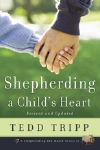
Tedd Tripp is a renowned Gospel-centered teacher.  His book, Shepherding  A Childs Heart is a must-read for Christian parents.  It is one fo the few resources I have run across that recognizes the heart as the center of development and change.  Most resources on parenting, including Christian parenting resources, focus more on various behavioristic techniques. Tripp recognizes that even if we can get our children to comply, outward obedience is not the objective of Christian discipleship, following the Lord out of heart-felt obedience is.  Tripp explores how targeting the hearts of our children – and revealing the passions and flaws in our own hearts – shapes the child from the inside out.

In October 2008 Tripp led a Biblical Parenting Conference at Mars Hill Church in Seattle.  Thanks to the folks at The Resurgence the audios of all five session of that conference are available for downloading:

God’s Own Fool

It seems I’ve imagined Him all of my life
As the wisest of all of mankind
But if God’s Holy wisdom is foolish to men
He must have seemed out of His mind

For even His family said He was mad
And the priests said a demon’s to blame
But God in the form of this angry young man
Could not have seemed perfectly sane

Chorus:

When we in our foolishness thought we were wise
He played the fool and He opened our eyes
When we in our weakness believed we were strong
He became helpless to show we were wrong
And so we follow God’s own fool
For only the foolish can tell-
Believe the unbelievable
And come be a fool as well

So come lose your life for a carpenter’s son
For a madman who died for a dream
And you’ll have the faith His first followers had
And you’ll feel the weight of the beam
So surrender the hunger to say you must know
Have the courage to say “I believe”
For the power of paradox opens your eyes
And blinds those who say they can see

Chorus:

When we in our foolishness thought we were wise
He played the fool and He opened our eyes
When we in our weakness believed we were strong
He became helpless to show we were wrong
So we follow God’s own Fool, For only the foolish can tell
Believe the unbelievable, And come be a fool as well

Putting Off My Procrastination

Here are some words I would be wise to regularly remind myself:

No unwelcome tasks become any the less unwelcome by putting them off till tomorrow. It is only when they are behind us and done, that we begin to find that there is a sweetness to be tasted afterward, and that the remembrance of unwelcome duties unhesitatingly done is welcome and pleasant. Accomplished, they are full of blessing, and there is a smile on their faces as they leave us. Undone, they stand threatening and disturbing our tranquility, and hindering our communion with God. If there be lying before you any bit of work from which you shrink, go straight up to it, and do it at once. The only way to get rid of it is to do it.

Alexander MacLaren (1826–1910)

Does Doctrine Merely Divide Us?

In this video, Lane Chaplin convincingly explains the God-given mandate to dig into theology. He also illustrates the practical importance.

Does doctrine divide us? Sadly, sometimes it does – or rather, sometime Christians do divide over doctrine.  But doctrine also unites. It unites us with other believers, both of our own day and of ages past.  And, when properly discerned, doctrine unites our minds with the mind of God.  I would say that is worth a little work.

Does Doctrine REALLY Matter?

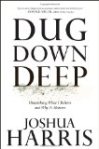
In the first chapter of his excellent book, Dug Down Deep, Joshua Harris writes:

I know the idea of “studying” God often rubs people the wrong way. It sounds cold and theoretical, as if God were a frog carcass to dissect in a lab or a set of ideas that we memorize like math proofs.

I know  many professing Christians who personify what Josh describes, including some within our church. There are a number of reasons they find theology – study of God – distasteful.  One reason is that it is difficult. Another reason is that doctrine has been a point of contention between Christians for ages, and no one with any sanity enjoys being at odds with others. And for many, previous exposure to theology has been just plain boring.

Harris goes on in his observation, and addresses the concern about doctrine being boring:

But studying God doesn’t have to be like that. You can study him the way you study a sunset that leaves you speechless. You can study him the way a man studies the wife he passionately loves. Does anyone fault him for noting her every like and dislike? Is it clinical for him to desire to know the thoughts and longings of her heart? Or to want to hear her speak?

Knowledge doesn’t have to be dry and lifeless. And when you think about it, exactly what is our alternative? Ignorance? Falsehood?

We’re either building our lives on the reality of what God is truly like and what he’s about, or we’re basing our lives on our own imagination and misconceptions.

We’re all theologians. The question is whether what we know about God true.

I think Josh is correct: The study of theology does not have to be boring.

My own motive for studying and teaching theology is not to put myself above anyone else, nor to find grounds to debate and prove others wrong.  My motive is that I have found what Josh describes to be true – I have found beauty in the nature of God.  I have found joy through the discovery of his amazing grace.  I have experienced – and I am experiencing – the transforming power of his promises and principles in the gospel. And while I have found points where I disagree with others, those disagreements do not diminish my friendships with anyone.  So I engage in the study of theology to enhance my own life. And I endeavor to teach theology to offer those same benefits to others who are willing to enjoy them.

As for the study of theology being difficult, well that might be true. Especially when dealing with some important complex issues, such as our Union with Christ.  However, in his book, Josh describes an epiphany he had while vacationing in Florida.  One morning, while at the beach, it dawned on him that in order to “build a house on rock not sand” requires that we dig until we find the rock.  (Matthew 7.24-27) And digging takes work.  But in the end the benefits are worth the work.

Prevailing: An Honest Look at Philippians 4.13

Sometimes I want to scream! One thing that makes me want to scream is people, Christian people, who under the guise of faith, take scripture out of it’s God-given context and apply it to their own pretentious favor.  ARGH!!

I wonder, is there any passage where this more frequently occurs than it does with Philippians 4.13:

“I can do all things through him who gives me strength.”

All too often, it seems, this is claimed as the “life verse” by athletes, coaches, and others facing various forms of adversity.  Those involved in athletics so commonly claim this verse that I sometimes, tongue-in-cheek, refer to this mindset as FCA Christianity. (OK.  I know that this is not fair to FCA.  While this mindset may commonly be heard around FCA Huddles and events, there are also many faithful, deep, godly folks involved with FCA.  In truth, I don’t know that this mindset is more prevalent with FCA-ers than it would be in my denomination, PCA, or even the church that I pastor.)

Philippians 4.13 is often invoked whenever the odds of success seem stacked against someone. The person reminds himself/herself: “I can do this… Like Rocky Balboa, I can defy the odds… I can do ALL things through Christ who gives me strength… I can win!!”

What is wrong with this perspective is not the desire to prevail, whatever the endeavor. There is nothing wrong with that. The problem is that to use this verse, and suppose the Bible here champions winning, takes this verse out of it’s context and redirects the aim of the gospel, the purpose of the Christian faith, to serve our agenda and goals.  It assumes that our personal success is the goal of the Kingdom.  It turns the gospel upside-down.

Continue reading

Pure Puritan

What is your view of the Puritans?  If you are like many people you may not think much of them.

Tim Keller maintains that the Puritans offer us great practical insights. In an article for CCEF, titled Puritan Resources for Biblical Counseling, Keller elaborates on these insights:

  1. The Puritans were committed to the functional authority of the Scripture. For them it was the comprehensive manual for dealing with all problems of the heart.
  2. The Puritans developed a sophisticated and sensitive system of diagnosis for personal problems, distinguishing a variety of physical, spiritual, tempermental and demonic causes.
  3. The Puritans developed a remarkable balance in their treatment because they were not invested in any one ‘personality theory’ other than biblical teaching about the heart.
  4. The Puritans were realistic about difficulties of the Christian life, especially conflicts with remaining, indwelling sin.
  5. The Puritans looked not just at behavior but at underlying root motives and desires. Man is a worshipper; all problems grow out of ‘sinful imagination’ or idol manufacturing.
  6. The Puritans considered the essential spiritual remedy to be belief in the gospel, used in both repentance and the development of proper self-understanding.

Reading the Puritans is not always easy. But thanks to Banner of Truth Trust there are number of Puritan materials offered in revised editions. Many of them are abridged. Most, if not all of them, are translated into more contemporary English. Check out Puritan Paperbacks. These are rich resources for spiritual formation.

Gospel-Centered Lives

From time to time I am asked by some in our church what I mean when I repeatedly declare that we are – and we must be – a Gospel-Centered Church. I think it may be the hyphen that confuses people.

To be “something”-centered is simply to focus on the relation an individual or a church has to a central value.  While there could be any number of things at the center of a persons or organizations values, in our case the point of emphasis is the Gospel (or the Cross).

As for what it means to be Gospel-centered, as an individual or as a church, I don’t think I could answer better than Joe Thorn did in a post titled: Gospel-Centered.  One of the things Joe points out is:

[T]he gospel-centered life is a life where a Christian experiences a growing personal reliance on the gospel that protects him from depending on his own religious performance and being seduced and overwhelmed by idols.

Don’t Waste Your Sports

There are seemingly few resources that help the athlete and the fan channel an enthusiasm for sports to the glory of God.  Many misapply Philippians 4.13, taking it out of context, disconnecting it from it’s gospel purpose, and using it as if it is merely a self-help positive thinking slogan.  Others assume that sports are just “worldly” banality that, while enjoyable, have no redeeming spiritual value, except perhaps for the platform provided to accomplished Christian athletes in this sport idolatrous culture.

As a life-long sports enthusiast, and former coach and athlete, I have longed for a substantive bridge that connects athletic endeavors with spiritual formation, yet that avoids the shallowness usually exhibited.

Two relatively recent resources provide the connection and substance I have long looked for:

Both these resources help show us how we can redeem our involvement with sports to God’s Glory and our spiritual development, whether an athlete or a fan.

Two related audio resources:

Bible Reading Plans for 2011

New Years Day has come and gone, and 2011 is trudging along.  You want to do some things different this year.  You’ve always wanted to read through the Bible, but you’ve never been quite sure how to do it.  Or, you have read through the Bible before but you are looking for a different approach.

If one of your Resolutions for 2011 is to make Bible reading a regular part of your daily disciplines, you are in luck (err, you are in Providence)!  It is not too late to get started. (It’s never too late.) There are several plans available from the publishers of the ESV.

Click: Bible Reading Plans

Come Worship the Lord

Come, worship the Lord
For we are His people, the flock that He shepherds
Aleluia

Come, let us sing to the Lord
And shout with joy to the Rock who saves us
Let us come with thanksgiving
And sing joyful songs to the Lord

The Lord is God, a mighty God
The great King o’er all the gods
He holds in His hands the depths of the earth
And the highest mountains as well
He made the sea; it belongs now to Him
The dry land, too, was formed by His hand

So…

Come, let us bow down in worship
Bending the knee before the Lord our Maker
For we are His people
We are the flock that He shepherds

So…

Aleluia, Aleluia