C.J. Mahaney reminds us of the importance and benefits of preaching the gospel to ourselves each and every day.
C.J. Mahaney
7 Principles for Conduct

“The chief end of man is to glorify God and enjoy him forever.”
C.J. Mahaney has compiled the following questions and relevant scripture passages to help in determining whether or not a particular activity is glorifying to God. I find these to be very helpful questions.
1. Does it present a temptation to sin?
Romans 13.14 -“Rather, clothe yourselves with the Lord Jesus Christ, and do not think about how to gratify the desires of the sinful nature.”
2 Timothy 2.22 -“Flee the evil desires of youth, and pursue righteousness, faith, love and peace, along with those who call on the Lord out of a pure heart.”
2. Is it beneficial?
1 Corinthians 6.12a -“‘Everything is permissible for me’—but not everything is beneficial.”
1 Corinthians 10.23 -“‘Everything is permissible’—but not everything is beneficial. ‘Everything is permissible’- but not everything is constructive.”
3. Is it enslaving?
1 Corinthians 6.12b – “‘Everything is permissible for me’—but I will not be mastered by anything.”
4. Does it honor and glorify God?
1 Corinthians 10.31 – “So whether you eat or drink or whatever you do, do it all for the glory of God.”
5. Does it promote the good of others?
1 Corinthians 10.33 – “even as I try to please everybody in every way. For I am not seeking my own good but the good of many, so that they may be saved.”
6. Does it cause anyone to stumble?
1 Corinthians 10.32 – “Do not cause anyone to stumble, whether Jews, Greeks or the church of God”
7. Does it arise from a pure motive?
Jeremiah 17.9 – “The heart is deceitful above all things and beyond cure. Who can understand it?”
Confession of a Recovering Legalist

The guy seemed somewhat indignant. “There are no legalists in this room”, he insisted in response to an indirect, and unintentional, indictment made by another member of the presbytery.
Little did he know.
“Absolutely there are legalists in the room”, I thought outloud.
I cannot say with certainty that this man, who felt compelled to defend himself and all those like him, is indeed a legalist. I suspect he is. There seems quite a bit of evidence that suggests he is. But I don’t know what is in his heart – or the heart of any other man in that room.
What I do know is my own heart. And even if no one else there in that room matched the description, at heart I am a legalist.
That would surprise many. In our presbytery, which is historically characterized as being very narrow and uptight, I am, I suspect, by comparison seen as being ‘looser’ and to the Left of center. (NOTE: It’s probably the only place I ever go where I am consisered Left of anything.) I am the guy who frequently points out the emptiness of Fundamentalism and all the associated rules as compared to the greatness of the grace offered us in Christ.
But as Craig Cabaniss articulately points out:
Legalism, however, is not a matter of having more rigourous rules. It’s far more lethal than that. It strikes at the very core of our relationship with God.
C.J. Mahaney explains:
Legalism is seeking to achieve forgiveness from God and acceptance by God through obedience to God. In other words, a legalist is anyone who behaves as if they can earn God’s approval and forgiveness through personal performance.
Now I am not usually so foolish as to think I can or will gain God’s forgiveness or acceptance by my behavior. I realize my only hope is in Christ. And I know that Jesus – and He alone – has already accomplished everything that is necessary to reconcile me to God. (This is known as forensic justification.)
But I often get the feeling that God likes me better than those uptight legalists because I am not as uptight. And I like that feeling. Furthermore, I like to think I am more committed to the advancement of Christ’s kingdom than they are. I am not sidetracked by mind-numbing minutia, as some others seem to be. In short, I like ‘knowing’ that I am ‘better’ than others because I am faithful -more or less – to a set of behavioral standards that others are not so visibly faithful to observe.
And that is what makes me a functional legalist.
A legalist is not defined by narrowness or the imposition of rules upon others. It is the erroneous sense that I can earn God’s favor by my behavior – by what I do and what I don’t do. And for me it is favor and not forgiveness that I desire through my legalism.
Cabaniss points out:
Legalism is a heart condition that can easily affect… and color any activity. Legalism can taint our Bible reading, praying, witnessing, eating, sleeping, lovemaking, working, recreating, joking, shopping – we can be legalistic about anything!
The solution is not lowering our standards. It is necessarily raising our understanding of and response to the glorious grace of God.
Idolotry pt 2 – C.J. Mahaney
As a follow up to some recent posts, one in particular, Disinfecting Ourselves of Spiritual Malware, I thought this video by C.J. Mahaney would be helpful and challenging. This is part 2 of 2.
Idolotry pt 1 – C.J. Mahaney
As a follow up to some recent posts, one in particular, Disinfecting Ourselves of Spiritual Malware, I thought this video by C.J. Mahaney would be helpful and challenging. This is part 1 of 2.
Choosing a Book

Richard Baxter wrote:
“Make careful choice of the books which you read.”
Baxter went on to state:
You need a judicious teacher at hand to direct you about what books to use or to refuse, for among good books there are some very good that are sound and lively, and some good but mediocre, and some weak and somewhat dull; and some are very good in part, but have mixtures of error, or incautious, injudicious expressions. These are fitter to puzzle than edify the weak.
The folks at Together for the Gospel (T4G) have published a series of posts offering counsel for Reading & Studying. While these posts are primarily directed to pastors, the wisdom should be appreciated, and insights appropriated, by anyone serious about growing in grace and godliness. C.J. Mahaney, Ligon Duncan, and Mark Dever serve as the “judicious teachers” Richard Baxter said we need.
Don’t Waste Your Sports

There are seemingly few resources that help the athlete and the fan channel an enthusiasm for sports to the glory of God. Many misapply Philippians 4.13, taking it out of context, disconnecting it from it’s gospel purpose, and using it as if it is merely a self-help positive thinking slogan. Others assume that sports are just “worldly” banality that, while enjoyable, have no redeeming spiritual value, except perhaps for the platform provided to accomplished Christian athletes in this sport idolatrous culture.
As a life-long sports enthusiast, and former coach and athlete, I have longed for a substantive bridge that connects athletic endeavors with spiritual formation, yet that avoids the shallowness usually exhibited.
Two relatively recent resources provide the connection and substance I have long looked for:
- Game Day for the Glory of God by Steven Altrogge
- Don’t Waste You Sports by C.J. Mahaney.
Both these resources help show us how we can redeem our involvement with sports to God’s Glory and our spiritual development, whether an athlete or a fan.
Two related audio resources:
- C.J. Mahaney interviews Steven Alrogge: Game Day
- The message that became Mahaney’s book is available as a free MP3: Don’t Wast Your Sports
I Want Change

Change is inevitable, but it is not always pleasant. But perhaps even less pleasant than unexpected change is the lack of change when it is desired and needed – particularly change in ourselves and in our spiritual development. The questions are common: How Can I Change? When Will I Change?
C.J. Mahaney & Robin Boisvert have written a helpful little book that addresses these very questions. Here is an excperpt from the Foreword:
“In a day when quick solutions to longstanding problems are too easily offered, we wish to recommend the old paths, having found them tried and true. There is no short course to Christian maturity. There is no cross-less way to follow Christ, no instant secret to the Christian life. But like distance running, if the way of the cross is not easy, neither is it complicated. God presents us with a pathway that is narrow yet straight. He makes his ways plain to those who are sincerely interested in following him, and he will show himself strong on behalf of all whose hearts are fully his.
Although our vigorous effort is required, all growth is by his grace. With that wonderful truth as our starting block, let us press on toward the mark, each confident that ‘he who began a good work in you will carry it on to completion until the day of Christ Jesus.’ (Philippians 1:6).”
Thanks to Sovereign Grace Ministrires, this little book is available in .pdf for FREE. Click on the Chapter Titles to read or download:
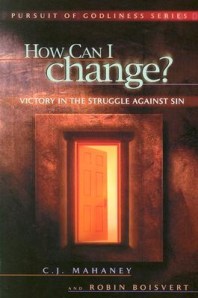
- Caught in the Gap Trap
- Where It All Begins
- United With Christ
- The Battle Against Sin
- Tools of the Trade – Part 1
- Tools of the Trade – Part 2
- Living for That Final Day
- Appendix A – Different Roads to Holiness
- Appendix B – The Old Man and the Flesh
Animated Gospel Song
Some very simple lyrics from Sovereign Grace Music coupled with simple animation equals a powerful and worshipful presentation of the Gospel.
Also heard in this video is a brief message from CJ Mahaney.
Here are the lyrics to The Gospel Song:
Holy God in love became
Perfect man to bear my blame.
On the cross he took my sin.
By his death I live again.
Idol Factory

John Calvin said:
“The human heart is a factory of idols… Every one of us is, from his mother’s womb, expert in inventing idols.”
This truth is difficult to convey. Few people think of themselves as idolators. And when I as a pastor, or a friend, suggest to people that they – like me – struggle from this affliction, the most common response is a grinning dismissal.
For most people the concept of idolatry conjurs mental images of statues and shrines. And since few people I encounter would knowingly do something as primitive as that, it is easy to understand why that notion is so easily ignored.
Nevertheless it is a condition that needs to be recognized. We need to recognize it as a general condition of humanity. And each of us needs to discover what kinds of idols our own hearts are producing. You see, what my production center cranks out is different than what your production center develops – both in product and in volume.
In a recent post, titled X-Ray Questions, Scott Thomas, President of Acts 29 Network succinctly addresses this subject. And in that post he offers 35 X-Ray Questions for the Heart. Thomas’ challenge:
Examine the following questions and ponder your heart for the existent idols and then crush the idols of our heart before they crush you.
- What do you love? Hate?
- What do you want, desire, crave, lust, and wish for? What desires do you serve and obey?
- What do you seek, aim for, and pursue?
- Where do you bank your hopes?
- What do you fear? What do you not want? What do you tend to worry about?
- What do you feel like doing?
- What do you think you need? What are your ‘felt needs’?
- What are your plans, agendas, strategies, and intentions designed to accomplish?
- What makes you tick? What sun does your planet revolve around? What do you organize your life around?
- Where do you find refuge, safety, comfort, escape, pleasure, and security?
- What or whom do you trust?
- Whose performance matters? On whose shoulders does the well being of your world rest? Who can make it better, make it work, make it safe, make it successful?
- Whom must you please? Whose opinion of you counts? From whom do you desire approval and fear rejection? Whose value system do you measure yourself against? In whose eyes are you living? Whose love and approval do you need?
- Who are your role models? What kind of person do you think you ought to be or want to be?
- On your deathbed, what would sum up your life as worthwhile? What gives your life meaning?
- How do you define and weigh success and failure, right or wrong, desirable or undesirable, in any particular situation?
- What would make you feel rich, secure, prosperous? What must you get to make life sing?
- What would bring you the greatest pleasure, happiness, and delight? The greatest pain or misery?
- Whose coming into political power would make everything better?
- Whose victory or success would make your life happy? How do you define victory and success?
- What do you see as your rights? What do you feel entitled to?
- In what situations do you feel pressured or tense? Confident and relaxed? When you are pressured, where do you turn? What do you think about? What are your escapes? What do you escape from?
- What do you want to get out of life? What payoff do you seek out of the things you do?
- What do you pray for?
- What do you think about most often? What preoccupies or obsesses you? In the morning, to what does your mind drift instinctively?
- What do you talk about? What is important to you? What attitudes do you communicate?
- How do you spend your time? What are your priorities?
- What are your characteristic fantasies, either pleasurable or fearful? Daydreams? What do your night dreams revolve around?
- What are the functional beliefs that control how you interpret your life and determine how you act?
- What are your idols and false gods? In what do you place your trust, or set your hopes? What do you turn to or seek? Where do you take refuge?
- How do you live for yourself?
- How do you live as a slave of the devil?
- How do you implicitly say, “If only…” (to get what you want, avoid what you don’t want, keep what you have)?
- What instinctively seems and feels right to you? What are your opinions, the things you feel true?
- Where do you find your identity? How do you define who you are?
Two other worthwhile resources on this subject:
Humble Calvinism: The Idol Factory
Idol Factory – A Series of messages by C.J. Mahaney & Mark Driscoll
Re-Gridding Revisited

A few days ago I penned a post suggesting that we consider the Christian Life through a different paradigm than what I believe is ordinary. I suggested the the fundamental gauge ought to be Humble vs. Proud, rather than Good vs. Bad and/or Right vs. Wrong. I have received several positive responses, and I have been asked a couple times for some clarification.
While I suspect few, if any, would suggest that Humble vs. Proud is not a valid grid, I understand how some might find it a bit audacious to say it should be the fundamental, or primary grid. What makes this the predominant paradigm?
Humble vs. Proud is the grid within which these other standards fit.
Let me explain:
First, Christianity is a substantive faith. Doctrine is the way we express and transfer the substance of Truth. So Right vs. Wrong is an important concept; an indispensible concept. But God tells us that there is a knowledge that merely “puffs up”, a knowledge that may be true but which is not helpful. It is not the substance of truth that it the problem. The problem is the condition of the heart that is receiving and processing this truth.
What is interesting is that understanding Truth also promotes humility. Paraphrasing C.J. Mahaney: “Humility is seeing ourselves in right relation to God.” In other words, the more we understand about God and about ourselves the more humble we wil feel. But paradoxically, before Truth produces humility the heart must already be humble before God.
Second, James tells us that we are known by our actions; that Faith without works is dead. This underscores the importance of Good vs. Bad. But our actions can be deceiving. Not only can we deceive others by our actions, but we often deceive ourselves. Many people think of themselves as being loved by God because of their actions. But this often stems from a false sense of righteousness. God tells us that our best efforts, if they are not generated from faith and a love for God, are as appealing as a filthy rag. And Jesus spoke to a group of people telling them that despite their “good deeds” he had no relationship with them. (See Matthew 7.21-23)
Again, while both the Good vs. Bad and Right vs. Wrong paradigms are important, and have their place, I still suggest that Humble vs. Proud is the most fundamental. Against this paradigm there is no warning. And it is only within this paradigm that the others get their meaning.
3 Short Books I Wish Everyone in My Church Would Read
I read a fair amount. I have been accused, and probably rightly so, of unrealistically pushing books and other reading materials on people who don’t read quite as much; who don’t have the time to read as much; who don’t get “paid” to read as much (as I, in part, am). But there are ideas and expressions I have benefited from, that I am not sure I can adequately convey, and I like to share them with others. I like to hear how others are struck by the same insights, when the authors’ words are not colored by my thoughts.
I know that I will never get everyone in my church to read all the things I’d like them to read. But there are three very short books that I have begun to encourage people to read:
The Prodigal God by Tim Keller
This book is subtitled: “Recovering the Heart of the Christian Faith”.
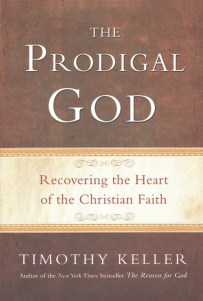
Keller elaborates on the well known story of the Prodigal Son, and offers a not-so-often recognized perspective: The story is not about a wild son who receives mercy and grace from his benevolent father. This is a story about two sons. In fact, this is a story about a Father who had two very different sons. It is THE story of God the Father and how people relate to Him in two different ways.
Each son is a reflection of the respective ways people relate to God.
The younger son is the picture of all who go astray from God and his Law and, having been broken, recognize the emptiness and hopelessness of life apart from the Father. When awakened to their desperate situation they find a grace and relationship with the Father that is ovewhelming.
The older son is the picture of all who try to relate to God, and please God, by being good; by following all the rules. This is a picture of religious people, of many Conservative Christians. Yet in their own goodness there is an evident lack of heartfelt fondness for the Father, a lack of joy, obvious to all except for them.
In this book Keller helps us to discern our own tendencies in our relation to God. Using this story Keller helps us see with keener insight that the ONLY way to have a relationship with God the Father is by recognizing that we are all in need and by being recipients of His compassion, grace, and generosity. Keller shows us that at the end of the story there is only one son, one type of person, still alienated from the Father. It is not the one who seems to have been the most egregious. It is the one who seems the most righteous.
Keller has also noted: “Our churches are full of Older Brother types… Is it any wonder, then, that the Younger Brother-types don’t want to come home (come to church)?”
OUCH!!
The Prodigal God is only 133 pages – and the pages are double-spaced.
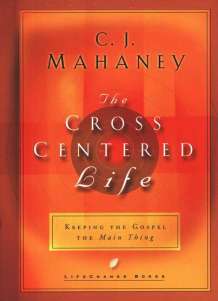
The Cross-Centered Life by C.J. Mahaney
In this 85 page, pocket sized, book Mahaney helps the reader to keep the Gospel at the center of our lives. He helps us to recognize various subtle substitutes that lead us from the Cross, but ultimatley are of little or no help in strengthening the soul.
Mahaney uses a plethora of annecdotes and illustrations to convey the simple, yet often forgotten and neglected, essential truth: The Gospel is the power to give and to transform life. Understanding how we can appropriate the present benefits of the Cross is key to vibrant spirituality and joy.
The Dangerous Duty of Delight by John Piper
I am a long-time fan of Piper’s writing. Nevertheless, I confess, for a long time I refused to read this simple book. I guess I thought this pocket sized 84 page primer of his contemporary classic, Desiring God, was beneath me. After all, I’ve read the BIG book – several times! But I was wrong.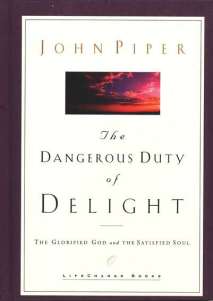
In this little book Piper conveys the essence of the Christian life: To glorify God by enjoying him forever. It is a great introduction to what Piper calls Christian Hedonism.
Christian Hedonism may sound like an oxymoron, and even inappropriate, to those who do not undertand what is behind Piper’s message. But I am convinced that what he espouses is thoroughly Biblical. It is the recognition that we are created to have a relationship with God; that we are commanded to take delight in God (i.e. Psalm 37.4); and that we are all prone to sell out the ultimate joy we can have in life, in God, for the cheap thrills and pleasures we find elsewhere.
While I still hope everyone will read Desiring God, this little book, Dangerous Duty, serves as a great introduction that will both lay a groundwork of understanding and whet the appetite for the whole feast found in Desiring God.
You can check out a sample of Dangerous Duty or the entirety of Desiring God online. Just click the highlighted titles.
What is the Gospel?

To say that we, as a church, are centered on the gospel, or Gospel-Driven, is realtively easy. It is quite another thing for the typical church member to know what such phrases actually mean.
The following post, by C.J. Mahaney, was originally published on the Together for the Gospel blog. I include it here in it’s entirety because it addresses and brings clarity to an issue of the utmost importance…
***
Recently, someone asked two excellent questions on my blog:
What is the gospel?
What is the most serious threat to the gospel?
The following is my attempt to answer these important questions with the help of those much smarter than myself:
1) What is the gospel?
No question is more important, and biblical clarity in response to this question is critical. Sadly, confusion about the gospel is quite common among professing evangelicals today. I find Graeme Goldsworthy’s comment all too relevant:
“The main message of the Bible about Jesus Christ can easily become mixed with all sorts of things that are related to it. We see this in the way people define or preach the gospel. But it is important to keep the gospel itself clearly distinct from our response to it or from the results of it in our lives and in the world.”
So here is my attempt to heed the counsel of Dr. Goldsworthy and keep the gospel “clearly distinct.”
The following definition of the gospel, provided by Jeff Purswell, the Dean of [Sovereign Grace] Pastors College, seeks to capture the substance of the gospel:
“The gospel is the good news of God’s saving activity in the person and work of Christ. This includes his incarnation in which he took to himself full (yet sinless) human nature; his sinless life which fulfilled the perfect law of God; his substitutionary death which paid the penalty for man’s sin and satisfied the righteous wrath of God; his resurrection demonstrating God’s satisfaction with his sacrifice; and his glorification and ascension to the right hand of the Father where he now reigns and intercedes for the church.”
“Such news is specific: there is a defined ‘thatness’ to the gospel which sets forth the content of both our saving faith and our proclamation. It is objective, and not to be confused with our response. It is sufficient: we can add nothing to what Christ has accomplished for us–it falls to us simply to believe this news, turning from our sins and receiving by faith all that God has done for us in Christ.”
I find this definition of the gospel faithful to the presentation of the four Gospels—they present the person and work of Christ as the good news. In the Apostle Paul’s concise summation of the gospel, he focuses more particularly on Christ’s death and resurrection as the core of his proclamation:
“For I delivered to you as of first importance what I also received: that Christ died for our sins, in accordance with the Scriptures, that he was buried, that he was raised on the third day in accordance with the Scriptures….” 1 Cor 15:3-4
Focusing more specifically still, the apostle encapsulates the work of Christ by focusing on the cross:
“For I decided to know nothing among you except Jesus Christ and him crucified.” – 1 Corinthians 2:2
So that is the gospel: God’s saving work in and through Christ. And the cross is the pinnacle of that work. Knox Chamblin helpfully notes this emphasis in Paul’s writing and ministry:
“His gospel is ‘the word of the cross’ (1 Cor. 1:17-18); nowhere is there a comparable reference to ‘the word of the resurrection.’ In I Corinthians 1:23-24 it is ‘Christ crucified’ who is identified as ‘the power of God and the wisdom of God,’ not as we might have expected (especially in the case of ‘power’), Christ resurrected…. Both the cross and the resurrection are ‘of first importance’ in Paul’s gospel (I Cor. 15:3-4). Unless Christ has risen from the dead, the preaching of the cross (and of the resurrection) is a waste of time (15:14); but once the resurrection has occurred, the cross remains central.”
And the centrality of the cross isn’t temporary. The cross remains on center stage even when we receive a glimpse of eternity in the New Testament’s final book:
“One is taken aback by the emphasis upon the Cross in Revelation. Heaven does not ‘get over’ the cross, as if there are better things to think about; heaven is not only Christ-centered, but cross-centered, and quite blaring about it.” – Jim Elliff
There is nothing more important than getting the gospel right. Years ago, John Stott made the following frightening observation of the evangelical church when he wrote,
“All around us we see Christians relaxing their grasp on the gospel, fumbling it, and in danger of letting it drop from their hands altogether.”
It is my prayer that God would use the Together for the Gospel conference to strengthen our grip upon the glorious gospel.
2) What is the most serious threat to the gospel?
For this question I think J.C. Ryle provides us with enduring discernment:
“You may spoil the gospel by substitution. You have only to withdraw from the eyes of the sinner the grand object which the Bible proposes to faith–Jesus Christ–and to substitute another object in His place… and the mischief is done.”
“You may spoil the gospel by addition. You have only to add to Christ, the grand object of faith, some other objects as equally worthy of honor, and the mischief is done.”
“You may spoil the gospel by disproportion. You have only to attach an exaggerated importance to the secondary things of Christianity, and a diminished importance to the first things, and the mischief is done.”
“Lastly, but not least, you may completely spoil the gospel by confused and contradictory directions… Confused and disorderly statements about Christianity are almost as bad as no statement at all. Religion of this sort is not evangelical.”
3) Personal Application
It’s not difficult to identify distortions of the gospel. But as a pastor, one of my main concerns for genuine Christians is a more subtle one: either assuming the gospel or neglecting the gospel. I have found this to be the greatest threat to the gospel in my own life.
Jerry Bridges echoes this concern when he writes,
“The gospel is not only the most important message in all of history; it is the only essential message in all of history. Yet we allow thousands of professing Christians to live their entire lives without clearly understanding it and experiencing the joy of living by it.”
So let us not only apply discernment to the church at large, but to our own hearts as well. Let us, in the words of Jerry Bridges, “Preach the gospel to ourselves daily.” Let us heed Charles Spurgeon’s exhortation: “Abide hard by the cross and search the mystery of his wounds.” Let us respond to John Stott’s invitation: “The Cross is a blazing fire at which the flame of our love is kindled, but we have to get near enough for its sparks to fall on us.”
So how can we get near enough?
The following are books that will position you to experience the transforming sparks of the gospel:
The Cross of Christ by John Stott. A personal favorite. Stott says of the Savior, “It was by his death that he wished above all else to be remembered.” This book won’t let you forget.
The Gospel for Real Life by Jerry Bridges. The man who taught me how to preach the gospel to myself will teach you to do the same.
The Message of Salvation by Philip Ryken. This excellent book deserves a broad readership. My oldest daughter recently thanked me for recommending this book to her and told me how much she was benefiting from this book. You will benefit as well.
The Message of the New Testament by Mark Dever. My good friend reveals the storyline of the Bible in each and every book of the New Testament. A must read for pastors but highly recommended for all. My wife has really enjoyed reading Mark’s book.
The Cross and Christian Ministry by D.A. Carson. For pastors this is another must-read. I’m indebted to Dr. Carson for this book. It has defined effective pastoral ministry for me, and I pray it will do the same for you.
That ought to get you started. Each of these books will draw you near enough to the “blazing fire of the cross so that its sparks” will fall on you and kindle fresh love for the Savior in your soul.
Worldliness in Prespective
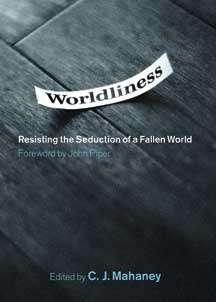
I recently finished reading the short book Worldliness, edited by C.J. Mahaney. Each chapter is written by different men from the Sovereign Grace family. I found it very insightful and practical.
I appreciate that the writers did not merely resort to the worn out separatist “Us vs. The World” rhetoric. Instead they wrestled intelligently, theologically, and bibilcally about the pertinent questions: What does worldliness actually mean? What actual problems does worldliness pose? Only once those questions are amply answered do the writers delve into practical applications in the various spheres of our culture.
I had given some thought to blogging about the book. Already in previous posts I have elaborated on some of the insights I have gained. But then on Crossway.blog I have found that Jonathan Leeman of 9 Marks has shared some highlights from each chapter. Leeman has done such a good job that it made my intentions unnecessary. I will still likely interact and expound upon some other insights in future posts, but for a good introduction to and overview of the book I encourage you to check out what Leeman has written. Click: Worldliness.
But don’t neglect the book. It is short, but beneficial. I’ve added it to my ‘must read’ list.
More Narrow Than Conservative

In the Foreword to CJ Mahaney’s book, Worldliness, John Piper writes:
“The gospel makes all the difference between whether you are merely conservative or whether you are conquering worldliness in the power of the Spirit for the glory of Christ.”
What an awesome and insightful statement. In my circles I encounter way too many people who assume conservatism is an ends, and not a means to an end; that conservatism in itself is akin to godliness; and that the only real battle for godliness is against liberalism. Yet Jesus tells us that the road is narrow (Matthew 7.13-14); and Proverbs warns us not to lean to the left or to the right (Proverbs 4.27).
 GRACE & PEACE