He-Man Woman Haters Club

There was a time when I wondered if at least some in my denomination ought to start wearing t-shirs with a picture bearing the image of Alfafa from the old Our Gang/Little Rascals’ shorts from the ’30’s & ’40’s.  Alfalfa was a founder and president of the He-Man Woman Haters Club. Now, I know that this was an unfair characterization of most – the clear majority – of my fellow churchmen.  But when discussing the role of women in the church, in the home, and in the world at large, sometimes statements were offered up that made me pause – and cringe.

I believe in the inherent equality of men and women.   But I am no feminist.  In fact, I would not even qualify as an Egalitarian.  Instead, I am more aligned among the Complimentarians.  But much to my chagrin, sometimes those of us in the Complimentarian camp are mistaken for being among the initiates of the He-Man Woman Haters Club.

Some time ago Rachel Miller, on her blog A Daughter of the Reformation,  wrote a very insightful piece, titled What’s Wrong With Biblical Patriarchy?.  In her post she distinguishes us Complimentarians from the more chauvinistic Modern Patriarchy movement, with whom we Complimentarians are often lumped.  (Rachel notes that proponents of this patriarchal position like to refer to themselves as “Biblical Patriarchy”, but I don’t want to equate them as being biblical.  As the article astutely observes and notes, those folks base their positions on some biblical principles but then mix them up with some very Victorian notions.)

While I know throwing around such terms as Complimentarian, Egalitarian, etc., is not likely to excite many readers, nevertheless, I think what Rachel Miller has to say is worth considering as you think biblically about this polarizing issue; and maybe just a little less important, to distinguish guys like me from the ecclesiastical Alfalfas.

***

Reblogged from A Daughter of the Reformation:

As a homeschooling family, we come in contact with people from a wide variety of backgrounds and beliefs. One of the groups that is fairly common within the homeschooling community is the modern patriarchy movement, or as they refer to it “Biblical Patriarchy.” Some of the big names in this group include, R.C. Sproul, Jr., Doug Phillips of Vision Forum, and Doug Wilson of Credenda Agenda magazine.


Read more… 2,203 more words

Living By Vows

While going through pre-marital counseling during our engagement, one of the things our pastor, Dr. Donald Hoke (here & here), required Carolyn and me to read was a little booklet written by his dear friend, Robertson McQuilkin, Living By Vows.  This short booklet chronicled a period in the life McQuilkin shared with his wife, Muriel – the last part.  It was a striking illustration that has stayed in my mind more than two decades later.

Now as a pastor, and as one who is given the privilege of preparing others for marriage, I have often included this little booklet as part of the required reading for those whom I counsel.  For a long time I have thought about posting McQuilkin’s story here on my blog. Now I finally do so.  Please read this and consider the example Dr. McQuilkin embodies of a godly husband (or spouse).  Let his heart compel you to renew your own commitment to your spouse.  And please share this with others.  I would love to see Dr. McQuilkin’s little booklet go viral one day.  ~ WDG

***

After his wife was diagnosed with Alzheimer’s disease, college and seminary president Robertson McQuilkin found himself torn between two commitments, two divine callings.  Here he shares the story of his struggle:

It has been a decade since that day in Florida when Muriel, my wife, repeated to the couple vacationing with us the story she had told just five minutes earlier. Funny, I thought, that’s never happened before. But it began to happen occasionally.

Continue reading

You Will Never Regret Loving This Much

Wedding season will be in full bloom within the next few weeks. But there is never a season when those already married or those contemplating marriage would not benefit from tending the soil of their souls by renewing their understanding of what marriage is and what marriage demands.  As I say at the beginning of every wedding I officiate:

“Marriage is an institution ordained by God, regulated by His commandments, and has been blessed by our Lord Jesus Christ.  Therefore marriage should be held in high honor by all.”

In this video of a Western Pennsylvania couple, Ian & Larissa Murphy, we see a unique but much needed perspective the essence of what God wants marriage to be; what he designed it to be.

…And if while watching this video you are not tempted to tear up… Check your pulse. You are either dead, or like the Tin Man in the Wizard of Oz you have no heart.

For those interested in learning more, here is a link to Larissa’s story: Part 1 – Why We Got Married; Part 2 – Learning Contentment in Suffering.  I love the way she opens part 1:

“You will never regret loving this much.”

Men & Woman and a Biblical Perspective

Here is a provocative post from Russell Moore concerning Men & Women and authority issues.  The Conservative Southern Baptist Moore may surprise a few people with his opening paragraphs:

Those of us who hold to so-called “traditional gender roles” are often assumed to believe that women should submit to men. This isn’t true.

Indeed, a primary problem in our culture and in our churches isn’t that women aren’t submissive enough to men, but instead that they are far too submissive.

Moore may even shock a few folks when they read the title of this post: Women, STOP Submitting to Men.

I wholeheartedly agree with Moore’s perspective.  So, let’s add this to the Egalitarian vs. Complementarian vs. He-Men Woman Haters Club debates!

To read the rest of Moore’s post, click: Women & Men

Parental Blindspots

  
***
NOTE: This is an excerpt from a longer article found at FamilyMinistries.com.  My Thanks to The Aquila Report for posting this edited version. 
 
The video above is to add some humor and to lighten things up. Lest anyone think I have aversions to homeschooling, I want it to be known that we homeschooled one of our children for two years. We have no doubt that his experience was crucial to the successes he has subsequently experienced in the classroom, on the football field, socially, and I suspect spiritually.
 
It should be noted that while this post addresses issues that have arisen in Homeschool families, these problems are not limited to Homeschoolers. The author has recognized spiritaul problems and idols that transcend school choice.  We all would do well to become aware of the subtle blindspots that occur whenever we functionally trust in a “thing” in addition to – or even more than – our Creator-Redeemer.
 
***
 
Those who have the most power to influence our hearts are those to whom we are drawn: those who succeed with our values (which is what a hero is), those who can benefit us, those who make us feel valuable, and those who have earned our respect.  If our children grow up motivated only by fear of consequence, they will eventually get away with what they can whenever we are not around (Ephesians 6.6). 
 
In the last couple of years, I have heard from multitudes of troubled homeschool parents around the country, a good many of whom were leaders. These parents have graduated their first batch of kids, only to discover that their children didn’t turn out the way they thought they would. Many of these children were model homeschoolers while growing up, but sometime after their 18th birthday they began to reveal that they didn’t hold to their parents’ values.
 
Some of these young people grew up and left home in defiance of their parents. Others got married against their parents’ wishes, and still others got involved with drugs, alcohol, and immorality. I have even heard of several exemplary young men who no longer even believe in God. My own adult children have gone through struggles I never guessed they would face.
 
Most of these parents remain stunned by their children’s choices, because they were fully confident their approach to parenting was going to prevent any such rebellion.
After several years of examining what went wrong in our own home and in the homes of so many conscientious parents, God has opened our eyes to a number of critical blind spots common to homeschoolers and other family-minded people.
 

Trophy Kids

Who would have thunk it? Parents being obedient to their kids.  It seems to be a growing phenomena.

I have been noticing it increasingly over the past several years.  Parents whose lives revolve around the unceasing activities of their kids – especially sports.  Parents desperate for the approval of  their children, and fearing rejection.  Parents who let their children decide matters like what the family will eat for dinner, and where (or if) the family will attend church. I don’t know how many times in recent years I have heard a parent confessing: “He/She does not want to come.  He/She says it’s not fun.”

In one sense I can understand the dilemma.  No conscientious parent wants to alienate their child.  Social scholars have for years pointed out the dangers of un-attuned parenting.  The Bible warns against exasperating our children. (Ephesians 6.4) Some translations use the words irritate, provoke, or embitter as things we parents are to avoid.  And we have seen the effects of some previous generations that seem to have been guilty of those very things.  Perhaps you even experienced it yourself.  So many parents have made conscious efforts to engage their children, to become involved in their lives, to sacrifice for them.  All noble intentions and ideals. Maybe even godly.

But sometimes it seems as if the pendulum has swung too far.  The parents stop parenting.  Instead, the aim for some seems to be to gain BFF status.  They become indulgent because, as we all know, the best way to win any campaign or pageant is to be “liked”.

Here I do not even have in mind those parents who seem to be trying to relive their own childhood and teens years vicariously through their children.  No, I am talking about mature adults – godly folks, who have a genuine love for their children.    Folks who coach t-ball.  Soccer moms.  Chaperones for the middle school dances.  I am talking about people I respect and admire.  I have in mind people whose desire it is to leverage their popularity with their kids to instill values, even faith. What harm could there be in that?

No doubt conscientious parenting involves interaction, effort, and time.  So I am not criticizing those things. In fact, I have made those things priorities in my own parenting.  But an article in the July 2011 edition of The Atlantic, How to Land Your Kid in Therapy, prompted me to reflect on some of the trends in parenting I have been observing.  In short, the author of the piece, Lori Gottlieb, suggests that the pendulum has swung too far in the direction of compliant parenting.

Continue reading

Biblical Parenting with Tedd Tripp

Tedd Tripp is a renowned Gospel-centered teacher.  His book, Shepherding  A Childs Heart is a must-read for Christian parents.  It is one fo the few resources I have run across that recognizes the heart as the center of development and change.  Most resources on parenting, including Christian parenting resources, focus more on various behavioristic techniques. Tripp recognizes that even if we can get our children to comply, outward obedience is not the objective of Christian discipleship, following the Lord out of heart-felt obedience is.  Tripp explores how targeting the hearts of our children – and revealing the passions and flaws in our own hearts – shapes the child from the inside out.

In October 2008 Tripp led a Biblical Parenting Conference at Mars Hill Church in Seattle.  Thanks to the folks at The Resurgence the audios of all five session of that conference are available for downloading:

5 Questions to Connect With Your Kids

Ever stumped about what to talk about with your children? I am. The following are 5 great questions from the National Fatherhood Initiative that will help connect parents to their children and their children’s world:

  1. What Is The Most Important Thing That Happened Today?  This is a great way to get more than a yes or no answer when you ask about your child’s life and day.
  2. How Are You And Your Friends Getting Along? You’ll get to know your child’s social circle and may get a heads up on drama that could be brewing and may cause some later problems.
  3. What Is Something I Should Know About You? This question is great for growing any relationship – and you’re guaranteed to learn something surprising.  Just be prepared to have an answer, too!
  4. What Should We Celebrate Today?  Make it a goal to have fun with your kids and bring joy into your family’s life on a regular basis.  It can be as simple as popsicles on the back porch, a good grade on a quiz, or your favorite show being on TV.  Savor the little things together.
  5. Do You Know That I Love You?  You can never say this too much.  Always tell your kids you love them – and for who they are, not just for what they do.

Teen Challenges

Does this description sound familiar:

Teens are unstable emotionally. One minute they feel wonderfully happy. The next minute they feel like the world has come to an end again for the third time that day. Their lives are emotional roller coasters. Solid ground is hard to find.

As the parent of three, relatively well-adjusted, teenagers, I recognize the description. As a former teenager myself – albeit long, long, ago – I remember this to be an apt portrayal. 

This is just one paragraph from an excellent article by Tedd Tripp that appeared in CCEF‘s Journal of Biblical Counseling: Communicate With Teens.

In this article Tripp not only describes the all too common symptoms of the teenager, but he lays out the foundational issues, identifies common pitfalls that we parents fall into, and offers some insightful goals for parenting through the teen years.

What are the foundational issues? 

Tripp observes three, taken from Proverbs 1:

  1. Need for Fear of the Lord. (Proverbs 1.7)
  2. Need to Remember Parents’ Words (Proverbs 1.8)
  3. Need to Dissociate from Wickedness (Proverbs 1.10)

As parents we need to be aware that the problems of the teenage years are not one-sided.  Tripp cites five common errors.  We need to honestly assess ourselves in light of them.  To what degree am I guilty of:

1. Spy vs. Spy. 

Teens often try to get away with as much as they can. Parents often try to catch them by spying on them. Sometimes the teens try to catch the parents trying to catch them…  Tripp says it becomes “a cat and mouse game”.

2. Disengaging.

Parents give up trying to be a nurturing influence in their teens’ lives. They limit their engagement to giving curfews and consequences. The result: Teens are more influenced by their friends than by their parents.

Parents often think, They don’t care about me and what I think. One word from me and they go in the other direction anyway. Instead of being in the thick of the battle in the most important time for teens, parents give up trying to have any influence on them at all.

3. Authoritarianism vs. influence.

By authoritarianism Tripp does not mean the proper exercise of authority. Instead he is referring to the practice of being overly tough: “You can’t get away with anything with me. I’ll stay one step ahead of you. I’ll make the punishment more onerous.”

“Rather than becoming a bigger authority”, says Tripp, “we need to come alongside our teens as bigger positive influences. We need to be someone who has their ear, who shows them love, who helps them be successful in the things they want to accomplish, and who gains the right to speak to them.  We want to become people who have influence with our teens. We want them to be willing to listen to what we say. In the years from infancy to adulthood, authority diminishes, but our influence should increase.”

4. Reckless words.

Reckless words, the proverb says, “wound like a sword, but the tongue of the wise brings healing.”

5. Majoring on the minors.

Parents tend to focus on matters of taste and style. But we must carefully choose our battles. We need to focus on things that have moral significance, with biblical truths at stake.

And so what is the overarching goal? 

Continue reading

6 Ways to Pursue Christ Thru Fatherhood

Scott Thomas, President of Acts 29 Network, has recently posted a brief article outlining Six Ways Fathers Pursue Christ in Their Fatherhood.  In other words, these six principles applied together help fathers to grow in grace even as we seek to lead our families in grace.

The 6 ways are:  

  1. See their children as a blessing from God
  2. Understand that their children are born with a bent toward evil
  3. Believe the gospel is the good news for children
  4. Train their children to honor and obey
  5. Practice and demonstrate submission
  6. Love their wives

To read the whole article click: 6 Ways.

Considerations for the Gay Marriage Discussion

While I suspect that the question of Gay Marriage is a settled issue for most of the readers of this blog, it seems anything but settled in our culture.  We are inundated by the rhetoric of both activists and those who are merely sincere and sympathetic to the seeming inequalities.

Christianity Today has published an informative article by Mollie Hemingway that brings some further insights to the table.  In short: Legalized Same-Sex Marriage WILL have a negative effect on our culture and, if not yours, the marriages of the rising generations.

Consider just opening paragraphs:

Same-sex marriage advocates frequently ask, “How would gay marriage affect your marriage?” The question is posed rhetorically, as if marriage is a private institution with no social consequences.

But The New York Times, of all papers, argues that gay unions could significantly alter marriage norms. A new study of gay couples in San Francisco shows that half are “open,” meaning that partners consent to each other having sex with other people. The Times says that the prevalence of such relationships could “rewrite the traditional rules of matrimony” by showing straight couples that monogamy need not be a “central feature” of marriage and that sexually open relationships might “point the way for the survival of the institution.”

To read the complete article, click: Same Sex, Different Marriage

Teenagers: Tendency Toward Legalism

Do you remember a Brady Bunch episode where Greg and his parents got into a debate about “Exact Words”?  Greg, who had been grounded from driving, when confronted about borrowing a friends wheels, insisted that his parents only instruction to him was that he was not drive the family car.    The rest of the episode is an illustration of the difficulty of livng by exact words.

What I never realized was that this episode also illustrated a more universal principle. 

According to Paul Tripp:

“Teenagers have a natural tendency toward legalism.”

What parent has not heard something like:

  • “You didn’t say I couldn’t…” or
  • “You didn’t tell me to.. today”  

I’ll have to be honest, sometimes my kids are technically correct. BUT still, …we all understand, by common sense, what should have been expected.

Such statements are merely expressions of this tendency toward legalism. 

There is no use trying to make certain we are right.  There is no sense in trying to be more clear in our instructions.  We need to recognize this for what it is: Legalism. And we need to get across to our teenagers that, in the end, legalism does no one any favors.

Our teenagers need to understand, not only the lesson Greg Brady learned in that episode, but more importantly they – and we – need to be reminded what Paul says in Galatians 3.10:

“All who rely on observing the law are under a curse, for it is written: “Cursed is everyone who does not continue to do everything written in the Book of the Law”

***

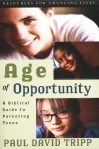
This is the Second in a series of six posts elaborating on the insights Paul Tripp offers in his book Age of Opportunity.  To read the others click: Teen Tendencies & Temptations.

Teenagers: Lacking a Hunger for Wisdom

No one likes to be corrected, but the wise person learns to appreciate correction that comes from a reliable source. 

Proverbs 13.18 tells us:

He who ignores discipline comes to poverty and shame,
       but whoever heeds correction is honored
.

This is a lesson all of us need to remind ourselves.

But according to Paul Tripp this lesson is perhaps especially appropriate for teenagers. According to Tripp, in his book, Age of Opportunity, teenagers have a “Lack of hunger for wisdom or correction.”

What Tripp is saying is: It is not only that teens generally are lacking wisdom, one of the common traits is that they don’t even look for it. They are not aware they are in need of it. 

That teens lack wisdom should easily be understood. Wisdom comes only from experience and correction. Teens have generally not lived long enough to have developed wisdom.  And sadly, even those teenagers who have experienced too much of the hard realities of this world still lack wisdom.  This is evident in that they are often the ones who are in the most trouble. Likely this is because, while teens who have had to grow up too fast have experience, they have usually not experienced necessary correction.  They have been left to their own instincts. They have not had wisdom imparted to help them assess their experiences and learn to discern right from wrong; wisdom from foolishness. 

Realizing that teenagers are in need of wisdom is a great place for parents and teachers and youth workers to begin. But, along with that knowledge, we must also remember that teenagers’ limited experience and perspective leaves them with a lack of felt need for wisdom. Put more susinctly, teens are not aware that they are in need of wisdom, so they don’t seek it, they don’t hunger for it.

So, what do I take from all this?

1. If we who work with teens want to make a positive impact we ought to remind ourselves of a few things:

  • the importance of wisdom,
  • the need for teens to develop wisdom
  • the understanding the usual teenage apathy, even antipathy, about developing wisdom   

2. Perhaps we will be diligent in our approach to:

  • Make a priority of cultivating wisdom
  • Whet the appetite for wisdom

3. Perhaps we will use the book of Proverbs as a guide and tool in our parenting and discipling. If we do, we can help the teenagers in our lives, and in our churches, develop a positive perspective to apply to their experiences.

***

This is the First in a series of six posts elaborating on the insights Paul Tripp offers in his book Age of Opportunity.  To read the others click: Teen Tendencies & Temptations.