Evangelical Typecasts

For God and Country

It is interesting. It is even more troubling.  CNN Religion Editor Daniel Burke has posted an article to CNN Politics titled 7 Types of Evangelicals: And How They’ll Effect the Presidential Race.  The post is interesting in that it describes differences among those who label themselves “Evangelical”, and creates categories for each.  It is troubling, at least to me, because little to nothing in the post conveys what an actual Evangelical essentially is.

Burke begins with the tired old refrain:

It’s an axiom in American politics, duly repeated every four years: Evangelicals are the country’s biggest and most powerful religious voting bloc, especially during the GOP primaries.

But then he offers something that offers a hint of something fresh:

Like many political axioms, though, it papers over a complex reality.

It is true, Evangelicals are not monolithic.  Evangelicals are individuals who have different ideas about different candidates for office – from both parties.  Many of us are able to see positive characteristics even in candidates with whom we disagree.  Few of us are likely to find any candidate that represents everything we would prefer.  At least not those of us who think for ourselves – as God gifted us (and all humanity) to do. So I appreciate Burke’s explanation to those who do not understand Evangelicalism that we Evangelicals reflect a complex reality.  Our complexity should not be confusing, just diverse.

Evangelicals are diverse in may ways. Some among us believe more water should be used in a baptism than others of us do; and some believe a lower age for that baptism is appropriate (maybe even preferable) than others of us.  Some among us like a little wine or a few beers, others prefer to stick with Iced Tea. Some among us like the excitement and activity of a large church, others among us prefer the intimacy of a small family-like church; most among us are somewhere in between. Some of us prefer newer songs, others the hymns from ages past; some prefer cheerful music, others tunes that set a more reflective tone; most enjoy a mix of all of the above.  Some of us appreciate the connectivity of a denominational affiliation; others, aware that no denomination has the corner on the market of God’s favor, choose to remain organizationally independent.  There are all sorts of ways in which Evangelicals are diverse, different, complex.  But none of these differences has anything to do with what makes us Evangelicals in the first place. Nor does Burke in his attempt to analyze and categorize an Evangelical political landscape.

Burke’s categories are interesting, even somewhat amusing. They are as follows:

  1. Old Guard
  2. Institutional Evangelicals
  3. Entrepreneurial Evangelicals
  4. Arm’s Length Evangelicals
  5. Millennial Evangelicals
  6. Liberal Evangelicals
  7. Cultural Evangelicals

Continue reading

Male & Female He Created Them

Being part of one of the relatively few denominations that still ordains to church office only those who meet the Biblical criteria, I sometimes resonate with whoever the comedian or cartoon character was who was noted for saying: “Nobody understands me.”  While that is a bit of an overstatement, as I do not stand alone, I do often find that there is need to explain myself; to defend the basis of our practice.  This is especially true as it applies to restriction of the office of Elder to men only.

I am not a sexist.  So I understand the raised eyebrows implicitly questioning if my church and I are somehow stuck in a time warp.  I understand the perplexity when I have the audacity to declare that I believe, and our church believes, in the equality of men and women.  If we truly believe in “equality” how can we continue with our traditional practices?  I will get to that in a moment.

Compounding the misunderstanding, I am afraid, are those who share our same practice, but have an entirely different attitude behind it.  Some even within our denomination. Those to whom I refer are those who embrace a position of patriarchy. (I often refer to these folks as the “He Men Women Haters Club”.)   Often such people refer to their position as “Biblical Patriarchy”, but aside from a few anecdotal illustrations they find in the Bible (usually devoid of appropriate context) I would suggest there is little to nothing Biblical about their position.  Nevertheless, I find that, because of our practices, many people see little difference between our views and and the patriarchy proponents.

Part of the reason for this misunderstanding is that many people seem to have bought into the premise that there are only two views on the subject: Patriarchal or Egalitarian. In short, Patriarchy is the view that men are created to and commanded to rule. Egalitarianism is the view that not only are men and women equal, they are essentially the same, and therefore interchangeable.  While in no way endorsing patriarchy,  I suspect the egalitarian view has contributed to the rise of gender confusion, though that is an entirely different subject, and outside the scope of my intent for this post.  Nevertheless, if it were true that there are really only these two theoretical options, then it would be reasonable to judge someone on this issue bases upon how close to which he or she stands, or how close church practices stand, in proximity to either of these two poles.

Continue reading

Intolerance of Contemporary Tolerance

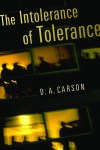
I recently finished reading D.A.Carson‘s excellent book, Intolerance of Tolerance.  It was a long time coming, with several starts and stops and re-starts along the way, but in the end it was well worthwhile.  The stops and starts were in no way reflective of the readability of the book.  It had more to do with my time, and demands requiring the reading of other things.  The book itself is a fascinating consideration of one of the most volatile foundations of our present cultural hostilities. At its essence, this book explores the radical difference of a very subtle shift in the definition and practice of the word tolerance.  As Carson points out, the tolerance has traditionally been understood to mean:

“accepting the existence of different views”

-or-

“recognizing and respecting others’ right to beliefs and practices without necessarily agreeing or sympathizing with them”

Pretty basic stuff in a free and pluralistic society, right?  It is this kind of understanding that causes a statement usually attributed to Voltaire to resonate with our sensibilities:

“I don’t agree with what you say, but I will defend to the death your right to say it.”

Carson notes that the newer, active, definition presently employed by the majority of our culture, or at least by the cultural elite and the ivory towers is slightly different:

“the accepting of different views”

Given just a simple glance, this newer definition seems to be just a shortened version of the more traditional understanding.  But given adequate consideration we quickly see that there is a vast difference. Taken as is, this newer definition of tolerance assumes that all views are equal, equally valid, and should thus be equally embraced.  That is what “accepting” a view is, as opposed to accepting that people have a right to hold a view.  This “acceptance” is rooted in the postmodern notion that there is no truth; or at least that there is no true Truth; as Truth varies with individual experience.  But this idea is absurd; and those who claim to hold to it are hypocritical.

First the absurdity. Certainly our experiences effect the way we perceive the world, and even the the way we experience the verifiable truths of this world.  But the truths transcend mere experience.  Green is green, whether I am color blind or not.  Day is day; Summer is summer; 2 plus 2 is always four.  I have heard it said that What I experience is my Reality, but Truth is what IS regardless of how I relate to it.  Of course there are also complexities that effect the way we experience Truth, but Truth is … well, it just IS.  And since Truth just IS, then it is not possible for ALL ideas to be equally valid.  Sometimes we are just wrong. The fact that we have a right to be wrong in no way validates our wrongness.

Second, any attempt to embrace this new definition will inevitably lead to hypocrisy.  For example, to maintain that all views are equally valid would require one to embrace the philosophies of the KKK and the Nazi’s.  Any thinking person would obviously reject the core beliefs of these groups, as well as most of the the subsidiary views.  And rightly so.  Further, to assert that all views are in themselves equally valid would require a level of cognitive dissonance that allows the embracing of mutually exclusive views, as certainly there are many examples of conflicting beliefs.   The reality is that no one is capable of living out what this new definition of tolerance demands.  And those who claim to do so, in practice show their hypocrisy in their (right) rejection of some views (such as those of racists, etc.), and at the very least in their disdain for those who do not embrace their definition of tolerance.

Intolerance of Tolerance is a worthwhile read for anyone who wants to understand the roots of our present cultural hostilities. In the above video, Carson offers a lecture from the substance of the book.  Also of interest may be an an article excerpted from the book, Contemporary Tolerance is Intrinsically Intolerant.   intolerance

Resources to Help Us Navigate Our New Cultural Reality

Ship in Narrow Passage

The Elders of the church where I serve as pastor met, as usual. Part of our discussion, however, was anything but usual.  While it is not uncommon for this group to discuss subjects to help us more effectively minister, even setting aside occasional Saturday mornings to delve into variant viewpoints of issues that affect peoples’ lives, this is the first time our discussions involved anything that approached the edges of civil laws.  In the end, what was requested at this point was a a handful of resources for our mutual consideration, some things that might prove helpful as we seek to remain faithful – in all respects – in this new cultural “reality” concerning marriage.

It seems to me that there are two aspects we – and other churches like ours – need to navigate: first, how to defend the biblical design for marriage with wisdom and in truth; second, how to wisely, sensitively, and effectively minister to individuals struggling with same-sex-attractions, as well as to individuals and families for whom this is a real and personal issue, and not just a theoretic and/or political hot potato.

What we do not want to do:

  • We do not want to over-react to the new legal definition of marriage, which we believe to be at odds with the biblical definition that directs us.
  • We do not want to act and speak in ways that are insensitive, and/or unnecessarily offensive to those who struggle with, or who are impacted with, issues related to same-sex attraction.
  • We do not want to alienate people we are called to love – some of whom we already love, and who number among our friends.
  • At the same time we do not want to – we cannot – capitulate to the culture, forsake God’s Word as our only ultimate authority, or compromise the gospel in any way.

While it is somewhat cliche, I have long asserted that our goal should be to live and minister in such a way that the gospel be our only offense.  Of course this is not possible, since my sin, and the sin of every other person associated with our church, is real, and our sin is often offensive to those around us.  But I think the phrase nevertheless has merit, as an aspiration, perhaps especially now, as we seek to navigate these new waters.

The resources I am providing here probably help more with the first issue, how to defend and teach our position; offering less help concerning the second, how to effectively love and minister to those with same-sex attractions, and how to effectively love and encourage those who love someone struggling with same-sex attractions and who may be in a same-sex relationship.  This is new ground for pretty much everyone, so I will be exploring to find all I can find, as I expect we will see an increase of people impacted – or at least more people coming forward with both questions and concerns.

Here is an annotated list of resources I have found helpful:

Making Sense of Scriptures “Inconsistencies” by Tim Keller

This is a very good, relatively short, and easily understandable response to those who suggest that by opposing or by not supporting homosexuality Christians are picking and choosing from the Bible.  Keller offers a short primer course on the relationship between the OT & NT, and why that matters in our current climate.

40 Questions for Christians Now Waving Rainbow Flags by Kevin DeYoung

DeYoung poses some thoughtful questions for those sitting on the fence on this issue, or who while being Christians are adopting the cultural narrative over the biblical narrative.  These questions could be misused, and become tools for confrontation; or they can be used thoughtfully to encourage honest reflection in a process to renew our minds toward biblical conformity.

50 Resources for Equipping the Church on Homosexuality & Same-sex Marriage

This is a fairly extensive resource list, with links to articles related to a variety of questions many Christians are asking.

The Bible and Same Sex Relationships by Tim Keller

A thorough and practical review of two of the primary books supporting same-sex marriage. In this review Keller outlines six categories that virtually all arguments favoring same-sex relationships fall into, and then Keller addresses each argument.  While this might seem merely academic, my experience is that any dialogue with proponents of same-sex marriage will inevitably involve one or more of these argument categories. Therefore, Keller’s reflections prove to be highly practical.

What Does the Bible Really Teach About Homosexuality? by Kevin DeYoung

This is a short book, comprehensive, yet readable.  It is essentially a Readers’ Digest version of a more technical academic book that is on the market.  DeYoung explores the issue from a number of angles, mining the Bible for its authoritative guidance.

Washed and Waiting by Wesley Hill

Written by an Evangelical who struggles with SSA, this is an absolutely helpful little book for those of us who do not struggle with this particular issue.  Hill helps the reader understand the heart & mind of those who experience SSA.  He is clear about homosexuality being sin, yet he also exposes some of the hurtful, insensitive, and unhelpful things that those of us in the church have done – and are prone to do – toward those who do have this inclination.  This is a tool that can help us minister to those struggling homosexuality.

Harvest USA

Harvest USA is a ministry that works with people struggling with all forms of sexual brokenness.  On their site they have a variety of articles, many of which could be of help and interest. What Harvest USA’s resources also can do is remind us that homosexualiuty is but one issue, and that there is a wide range of sexual brokenness that the people in our pews experience.  Homosexuality and SSA is but one expression of brokenness, no worse, and no better than any other expression.  What sets it apart now is that it is the only government sanctioned and culturally acceptable expression.  We must be careful to not over-react to this, nor to under-react.

This is a lot of stuff, but it is also not enough stuff.  I hope those who are concerned about the faithfulness of the church – both to purity and to our mission – will find at least some of these helpful.  But please keep in mind that while this issue has new status in our culture, that our mission and purity have always been held in tension.  We are called and sent into a broken world, a world which has been broken and corrupt in various ways for millenia. We ourselves are no better than the broken world, but rather redeemed from it by God’s grace, through the sacrificial death of Jesus.  When we were called, we were as corrupt and broken as whoever we may be tempted to see as the worst of humanity.  But in Christ we have found mercy and hope.  (1 Corinthians 1.26-31; Romans 5.6-8; Matthew 9.13; 1 Timothy 1.15)

When a Government Oversteps Its Authority

Shattered Dreams

During some of the darkest days of Germany, a faithful Lutheran presciently described how governments lose their claim to legitimate authority according to Romans 13.  Considering recent events here in the United States, where the unelected and unaccountable SCOTUS has decreed law, Hermann Sasse’s 1932 treatise, What is the State?, may warrant some thoughtful consideration:

The Caesar cult in its manifold forms, the deification of the state, is one great form of the defection from the [true] idea of the state. There are also other possibilities of such defection. The government can forget and neglect its tasks. When it no longer distinguishes between right and wrong, when its courts are no longer governed by the strict desire for justice, but by special interests, when government no longer has the courage to exercise its law, fails to exercise its duties, undermines its own legal order, when it weakens through its family law parental authority and the estate of marriage, then it ceases to be governing authority.

Raising such a question can lead to heavy conflicts of conscience. But it is fundamentally conceivable, and it has time and again become reality in history, that a governing authority has ceased to be governing authority. In such a case there may indeed exist a submission to a superior power. But the duty of obedience against this power no longer exists.

Here We Stand: An Evangelical Declaration on Marriage

Image processed by CodeCarvings Piczard ### FREE Community Edition ### on 2015-06-25 18:32:21Z | http://piczard.com | http://codecarvings.comÞâÚÙÝÿþÿýüþ¸ÏÀÿž¸¨ÿ”l²i¥W€0»

After the U.S. Supreme Court’s ruling on marriage yesterday, a diverse coalition of Evangelical leaders, gathered by the Ethics & Religious Liberty Commission, drafted and released the following statement.  Had I been asked – and if I am asked – I would gladly add my name.  ~ WDG

***

As evangelical Christians, we dissent from the court’s ruling that redefines marriage.

The state did not create the family, and should not try to recreate the family in its own image. We will not capitulate on marriage because biblical authority requires that we cannot. The outcome of the Supreme Court’s ruling to redefine marriage represents what seems like the result of a half-century of witnessing marriage’s decline through divorce, cohabitation, and a worldview of almost limitless sexual freedom. The Supreme Court’s actions pose incalculable risks to an already volatile social fabric by alienating those whose beliefs about marriage are motivated by deep biblical convictions and concern for the common good.

The Bible clearly teaches the enduring truth that marriage consists of one man and one woman.

From Genesis to Revelation, the authority of Scripture witnesses to the nature of biblical marriage as uniquely bound to the complementarity of man and woman. This truth is not negotiable. The Lord Jesus himself said that marriage is from the beginning (Matt. 19:4-6), so no human institution has the authority to redefine marriage any more than a human institution has the authority to redefine the gospel, which marriage mysteriously reflects (Eph. 5:32). The Supreme Court’s ruling to redefine marriage demonstrates mistaken judgment by disregarding what history and countless civilizations have passed on to us, but it also represents an aftermath that evangelicals themselves, sadly, are not guiltless in contributing to. Too often, professing evangelicals have failed to model the ideals we so dearly cherish and believe are central to gospel proclamation.

Evangelical churches must be faithful to the biblical witness on marriage regardless of the cultural shift.

Evangelical churches in America now find themselves in a new moral landscape that calls us to minister in a context growing more hostile to a biblical sexual ethic. This is not new in the history of the church. From its earliest beginnings, whether on the margins of society or in a place of influence, the church is defined by the gospel. We insist that the gospel brings good news to all people, regardless of whether the culture considers the news good or not.

The gospel must inform our approach to public witness.

As evangelicals animated by the good news that God offers reconciliation through the life, death, and resurrection of His Son, Jesus, we commit to:

  • Respect and pray for our governing authorities even as we work through the democratic process to rebuild a culture of marriage (Romans 13.1-7);
  • teach the truth about biblical marriage in a way that brings healing to a sexually broken culture;
  • affirm the biblical mandate that all persons, including LGBT persons, are created in the image of God and deserve dignity and respect;
  • love our neighbors regardless of whatever disagreements arise as a result of conflicting beliefs about marriage;
  • live respectfully and civilly alongside those who may disagree with us for the sake of the common good;
  • cultivate a common culture of religious liberty that allows the freedom to live and believe differently to prosper.

The redefinition of marriage should not entail the erosion of religious liberty.

In the coming years, evangelical institutions could be pressed to sacrifice their sacred beliefs about marriage and sexuality in order to accommodate whatever demands the culture and law require. We do not have the option to meet those demands without violating our consciences and surrendering the gospel. We will not allow the government to coerce or infringe upon the rights of institutions to live by the sacred belief that only men and women can enter into marriage.

The gospel of Jesus Christ determines the shape and tone of our ministry.

Christian theology considers its teachings about marriage both timeless and unchanging, and therefore we must stand firm in this belief. Outrage and panic are not the responses of those confident in the promises of a reigning Christ Jesus. While we believe the Supreme Court has erred in its ruling, we pledge to stand steadfastly, faithfully witnessing to the biblical teaching that marriage is the chief cornerstone of society, designed to unite men, women, and children. We promise to proclaim and live this truth at all costs, with convictions that are communicated with kindness and love.

***

To read the original post, and to find the names of the signatories, click: Here We Stand

Some Thoughts After the Supreme Court Ruling on Marriage

Star Gazing

With a landmark decision, and a monumental example of judicial overreach, the U.S. Supreme Court this morning announced their decision regarding same-sex-Marriage. By the awesome power vested in just five people, marriage has been redefined in our land.  This decision will continue to shake our cultural landscape for years to come, with the aftershocks of both unintended consequences (by some) and intentional-but-hidden agendas (of others).

While some who know me, or who read this blog, may assume my chagrin is in the validation of same-sex-marriage, it is actually far greater regarding the other implications related to this decision.  I am opposed to same-sex-marriage, on the grounds that it is clearly not in line with the design and decree of the Lord of Heaven and Earth.  So I am disappointed, though not surprised, by this decision.  But if this is the law of the land where I live, I can live with it being the law – as long as I am not compelled to comply. It is no greater difficulty than the first century apostles, and other Christians, faced in Rome, Corinth, Ephesus, and other ancient pagan territories.  What concerns me more is that I now live in a land where we officially believe that “Rights” are not endowed by our Creator, but rather bestowed by the government.  This is a very treacherous problem – especially in this case where it was not even by a democratic process; and where there is no court of appeal.

Think about it for a moment.  In Nazi Germany the government decided that those who were Jewish had no rights, and that the government had the right to exterminate them simply because they were Jews.  In the Antebellum South, those of African decent had no rights – with relative few exceptions – and were thus allowed to be held enslaved.  Some may argue that this example, especially the latter one, illustrates why the court decision this morning is a corrective, granting freedom to a group of people to marry who were previously denied that “right”.  But look at the root. Both illustrations are similar to the court ruling, all assuming that “rights” are bestowed by the government.  Yet if this is correct, that rights do come from the government, then why would one argue that the institution of slavery was so reprehensible?  Was it not the law of the land? Government dictating who had rights an who did not?  If one argues that the government has the inherent authority to determine rights, then what makes it appropriate to decry the decisions they make about who has rights and who has not?  If a government has the authority to determine who has rights and who does not, then what makes it morally wrong for a government to decide to eradicate some group it determines undesirable?

No, I have no sympathy for the institution of slavery, nor do I support any practice of genocide.  My point is not that the government should not be the protector of rights, but rather that it is not government that is the originator of any rights.  All good governments must protect the rights of all its citizens!  But what a “right” is is not ultimately determined by the government.  As Jefferson (with help from Franklin) wisely assessed and asserted, “rights are endowed by the Creator”, not by the throne of government.

In April, Justice Anthony Kennedy seemed to grasp the weightiness:

“This definition [of marriage] has been with us for millennia, and it’s very difficult for the court to say, ‘Well, we know better’”.

In the end Kennedy must not have found it all that difficult.  By siding with the majority, Kennedy essentially declares: “Well, we do know better.”

In response to the decision, in his published dissent, Chief Justice John Roberts writes:

If you are among the many Americans – of whatever sexual orientation – who favor expanding same-sex marriage, by all means celebrate today’s decision. Celebrate the achievement of a desired goal. Celebrate the opportunity for a new expression of commitment to a partner. Celebrate the availability of new benefits. But do not celebrate the Constitution. It had nothing to do with it.

While there is a sense that I appreciate these words, it still leaves me  – and others like me – with a practical dilemma: How should those of us who disagree with this decision – whether on its own merits, or because of the ripple effects that it will engender in days ahead, or both – how should we respond?  Especially as a Christian, how ought I respond?  Roberts’ words are merely philosophical and political.  They offer nothing practical to the question: So What Now?

My sincere hope is that I will, now and eventually, act faithfully to God, and lovingly to my neighbors (whether I am in agreement with them or not). In short, I hope in time to gain both perspective and wisdom – and wise perspective.  One thing I keep reminding myself is that God is still in control.  And while I mull over the realities of the day, I am also finding some food for thought in the counsel of some others:

Continue reading

Christian’s Cultural Assessment Toolbox

Tool Chest

Here’s an astute observation from Os Guinness:

“Christians simply haven’t developed Christian tools of analysis to examine culture properly. Or rather, the tools the church once had have grown rusty or been mislaid. What often happens is that Christians wake up to some incident or issue and suddenly realize they need to analyze what’s going on. Then, having no tools of their own, they lean across and borrow the tools nearest them.

They don’t realize that, in their haste, they are borrowing not an isolated tool but a whole philosophical toolbox laden with tools which have their own particular bias to every problem (a Trojan horse in the toolbox, if you like). The toolbox may be Freudian, Hindu or Marxist. Occasionally, the toolbox is right-wing; more often today it is liberal or left-wing (the former mainly in North America, the latter mainly in Europe). Rarely – and this is all that matters to us – is it consistently or coherently Christian.

When Christians use tools for analysis (or bandy certain terms of description) which have non-Christian assumptions embedded within them, these tools (and terms) eventually act back on them like wearing someone else’s glasses or walking in someone else’s shoes. The tools shape the user. Their recent failure to think critically about culture has made Christians uniquely susceptible to this.”

Jesus Outside the Lines

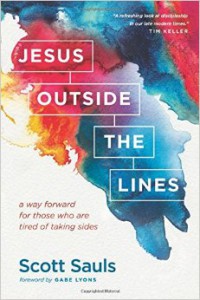
This afternoon I started reading Scott Sauls‘ refreshing new book, Jesus Outside the Lines: A Way Forward for Those Who Are Tired of Taking Sides. It seems timely – at least for me.

I for one am growing weary of a culture in which increasingly polemic debates seem never ending.  And while I was at first skeptical of the phrase, considering it a bit exaggerated and overblown, I am more-and-more inclined to agree that the United States is appropriately labeled a “post-truth society” – where what matters are not the facts, but rather striking a blow for your political side. That’s what it seems to me, as I read and watch the news regarding the Riots of Ferguson, Missouri, the RFRA in Indiana, among other items.

There is truth. There is wisdom. And what’s more, there are effective ways of finding the wisdom without sacrificing truth.That’s what I long for.  I want to engage in intelligent discussion, both with those with whom I agree and with those with whom I do not agree.  I want to understand, so I can process things from perspectives I may not presently possess. I want to be heard, without being demonized as either a bigot or a half-hearted traitor.  I want to align myself to truth and wisdom, and I want to see truth and wisdom win the day.  I get that most things are more complex than we may want to make them.  I get that we can act wrongly even in those times when we are in the right.  But call me naive, or utopian, but that is what I want.

That is what Scott Sauls advocates in these pages.  Having not yet finished the book, I cannot say that everything Sauls writes will be as music to my ears.  But I can say is, having read a couple of related interviews, what Sauls endeavors to do resonates with my sensibilities.

It is not compromise I desire, but something transcendent: I want to remember that God is truth, for his truth to reign. I want for God’s people to be the champions for the good of all humanity – which is, after all, created after God’s image.  And I want these truths and values brought wisely, winsomely, and effectively into the Public Square.  The fact that some – maybe many – don’t want these ideas in the Public Square is no reason to stop taking them there.  And the fact that some seem to despise these ideas is no excuse for Christians to act in a manner unworthy of the Gospel, as we engage those who oppose and even hate us.

So far, Scott Sauls is not disappointing.

Related articles:

Absence of Grace in the Culture Wars

Abstract Rainbow Birthday Cake

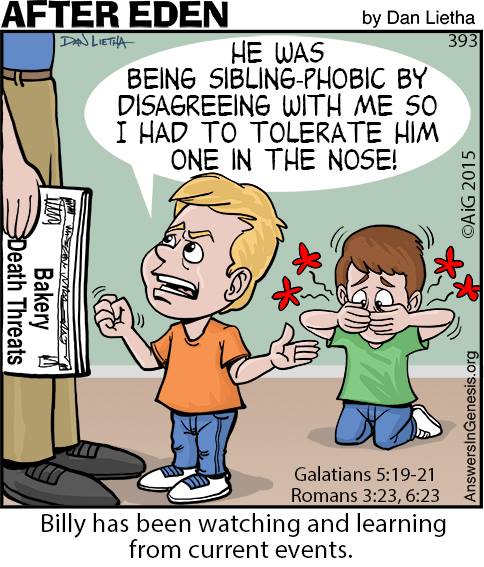
There has to be some way to better go about this.  The Washington Post reported last week of a man in Colorado, Bill Jack, who in attempt to demonstrate the hypocrisy of recent court rulings related to the Traditional Marriage vs. Gay Marriage debates, requested two cakes that together expressed clear anti-gay sentiments.  Jack seems to have chosen his target bakery knowing the owner supports LGBT positions.  Whether Marjorie Silva, the owner of Denver’s Azucar Bakery, is herself lesbian, none of the articles I read seemed to say.  But it really does not matter.

I too have been disappointed by some of the recent court rulings related to this issue – whether it is the bakers forced to close down their bakery for refusing to bake a cake for a gay wedding; the photographers who were legally penalized for declining an invitation to photograph a gay wedding; or the New York couple who have rented their barn to couples wanting rustic weddings, but  who have been fined so heavily that they may now have to sell their farm because they declined to acceopt a gay couples request to rent it for their wedding.  While the issues may be somewhat complex, and I have not kept up with the details of these incidents, the principles at stake, to my mind, are simple.  There is enough free commerce in this country that these folks – Azucar included – should not be required to accept business that violates their moral standards.  In a free market system, if these folks demonstrate egregious business practices, it is likely they will suffer the consequences at the hands of the public – i.e.  they will go bankrupt from lack of business.

Of course there are other issues at stake. High among them is whether these instances fall under the authority civil rights discrimination protection. But it is not the question of actual business practices that is no my mind at the moment. As disappointed as I am about some court rulings, I think I may be even more disappointed in the tactic employed by Bill Jack. (BTW, is that a real name? It sounds like the name of a morning D.J.?)

Sympathetic as I am to the frustration that led Mr. Jack to act, I find his tactic and, even worse, his stated motive to be dubious and misguided.  Acording to the Washington Post article:

“[Mr. Jack] believes Azucar Bakery ‘discriminated’ against him ‘based on my creed,’ which is Christian.”

Here is where I have my biggest problem.  While some may find reason to applaud Mr. Jack’s tactic in this culture war issue, I am deeply chagrined that he makes the suggestion that his action was compelled because he is a Christian.  Even if it can be argued that Mr. Jack did not say he acted because he was a Christian, he at the very least says he was discriminated against because Azcur Bakery refused to make his cake because of the “Christian” message. Either way, it seems quite evident that Mr. Jack is equating Christianity with his actions.  And for me, that is the rub – or that’s what rubs me the wrong way.

I am deeply disturbed when those who call themselves Christians conflate the culture wars with the only thing that makes any of us Christians – the gospel.  And however you slice this cake, neither Mr Jack’s action nor his message are distinctly “Christian”. In other words, while they may be in line with traditional biblical values, they have absolutely nothing to do with the gospel.

There does seem to be some disagreement about what Mr. Jack wanted on his cakes.

The Washington Times, quoting the owner of Azcur Bakery, says:

 Anti-gay phrases including “God hates gays” and an image of two men holding hands, covered in a big, red “X.”

To World Magaize Mr. Jack says:

[H]e requested two cakes in the shape of an open Bible. He asked that the first cake show on one page, “God hates sin – Psalm 45.7,” and on the facing page, “Homosexuality is a detestable sin – Leviticus 18.22.” He requested that the second cake have on one page, “God loves sinners,” and on the facing page, “While we were yet sinners Christ died for us – Romans 5.8.”

I tend to believe Mr. Jack in this. He is clear and intentional with his message. But I still maintain that, despite his use of Bible verses, there is nothing distinctly “Christian” in his message.  Further, his motive is certainly not driven by the gospel, but rather by the culture war.

I am not suggesting that Mr. Jack is not a Christian. Nor am I suggesting that Mr. Jack’s act is inherently wrong.  I am simply saying that while he may be free to act this way, and his values may be shaped by his faith, the action itself should not be viewed as Christian.

Jesus’ instruction to his followers is: “Be as shrewd as a serpent, and as innocent as doves.”  (Matthew 10.16) Mr Jack seems to me to have the serpents shrewdness down, but there seems to me to be no moral innocence here.  I stand on the same side as Mr. Jack in this cultural issue, but I do not stand with him.  I believe his actions – and actions like these – have actually served to distort the gospel, which will make it all the more difficult for critics of Christianity to hear the gospel and understand what followers of Jesus actually stand for.

I do not consider Mr. Jack to have been wronged, at least not for his faith.  As it stands, nothing in Mr. Jack’s actions, nor in the actions of similar cultural activists, communicates anything about the substitutionary death of Christ for sinners – i.e. the gospel.  So if there is nothing inherently Christian in his message, motives, or behavior to be discriminated against, it stands to reason that he was not discriminated against – at least not for the reasons he claims.

Bill Jack offers just another expression of a Christ-less culture warrior, under the guise of Christianity – just another one driven by values, but devoid of grace.

Repenting of “Biblical” Manhood

Abstract Balance (Sutton)

The following was written by Kyle Worley, from Village Church in Dallas, and was posted on CBMW‘s web.  I thought about editing, but realized there is nothing I could add, nor is there anything for me to delete.  So I post it here in its whole, as one who shares this complimentarian  perspective (here, here) and sentiment.  ~ WDG

***

As we have been reflecting on some of the corruptions of biblical manhood, I think that it is high time that we take an opportunity to apologize for the impact and influence any of these corruptions have had on the home, the church, or the culture. Without a doubt it is one of the most perverse aspects of sin that it can take the truth of scripture and bend it to the will and the ways of man. Like God in the garden, who enquires “who told you that you were naked?” What corruptions have you swallowed? What lies do you believe? Who told you that ‘biblical’ manhood looked like that?

While we firmly believe that God has ordained complementarianism as the governing sexual and marital ethic of the Christian life, we acknowledge that a corrupt complementarianism and those false ways of living that some may have treacherously called ‘biblical’ manhood have led to the perversion of the wonderful truth that God has laid out for human flourishing in the home, in the church, and in the culture.

So, in the vein of those prophets who pled for the sins of their kinsman, it is time that we corporately repent and lament the perverseness of a manhood that has been shaped by sin and not by the authority of Scripture.

Lord,

We confess that we are broken and are in need of your grace. May you draw our gaze to the God-man Jesus Christ and the full scope of scripture as the authoritative revelation for what biblical manhood should resemble.

We repent for the sins of our passive brothers, unwilling to lead when it counts.

We repent for the sins of our chauvinist brothers, covering up abuse in the name of authority and male leadership.

We repent for the sins of our brothers who refuse to grow up, Lord would you call them to greater maturity.

We repent for any machismo that has seeped into our churches , may we be disgusted with misogyny in all its forms.

We repent for men who are trying to escape from the responsibilities you have entrusted to them, may they find joy in their stewardship.

We repent for men who are attempting to “lone wolf” their lives, Lord may they find your church as beautiful as you do.

We repent for men unwilling to sacrifice their control and comfort to lead in all spheres of life , may they look to He who laid down His life for His bride.

We repent for men who are so jaded with cynicism that they lose love for the King and hope for his coming kingdom.

We pray that you would rescue women who are trapped in abuse and that you would crush the purposes of abusers who treacherously call themselves “complementarians” or “biblical men.” Bring them to repentance and comfort those who have been bruised and broken beneath their hands.

We pray for those men who are trapped in sexual immorality. Lord, would you break the chains of pornography in the life of the church. Those wicked chains that place men in shackles next to the sex trafficking victims, pornographers, and orphaned.

We pray that you would continue to renew a movement towards good, beautiful, and true complementarian practice. May the witness of those men and women who have been created in your image, given distinct roles in the world, and who treasure the gospel tell the true story of complementarianism. May the lies that creep in under the banner of complementarianism in churches, homes, and communities across the world be crushed by this witness.

Comfort the woman abused, the child orphaned, the widowed mother, the widowed father, the church filled with faithful women.

Comfort the young woman not righteously pursued, the young boy with no father to learn from, the wife who serves the belligerent and lazy husband.

Confront those trapped in sexual immorality, confront churches filled with passive men, confront the young men unwilling to grow up.

Crush abortion, crush the movement to undermine the beauty of Christian covenant marriage, crush the porn industry, crush abuse at home and in the church.

Come, Lord! Come, Lord! Come, Lord, would you come?

 ***

Kyle Worley is Connections Minister at the Village Church in Dallas, TX. He is the author of Pitfalls: Along the Path to Young and Reformed and blogs regularly at The Strife. You can find Kyle on Twitter @kyleworley.


Heaven Peeper Recants His Story

Stairway to Heaven (B&W)

Not long ago I wrote expressing my skepticism about the claims depicted in the heart tugging film Heaven is For Real.  I have no doubts about the reality of heaven, it is just the claims of the boy who claimed to have visited heaven that I found dubious.  It is nothing personal about him.  I am highly suspicious of all of those charlatans making claims of peeping into heaven.  I think John Piper expressed it most succinctly:

“If books go beyond scripture, I doubt what they say…”

Interestingly, one of those who has been marketed as a heaven peeper, Alex Malarkey, has come out publicly with an open letter to LifeWay, criticizing the Publisher/Bookstore chain for selling his book.  Malarkey, who was the co-author and the central figure of the book The Boy Who Came Back From Heaven, has recanted his story, and ironically is challenging LifeWay to use better theological judgment in the materials they produce and promote.

To read the story click: Boy Who ‘Came Back’ Rebukes Christian Retailer

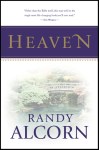
For those curious about Heaven – what God has revealed to us about Heaven in the Bible, I find Randy Alcorn‘s simple titled book, Heaven, to be the best I have read. I recommend it freely, and give it away often.

Heaven

To Stop It or Not to Stop It, That is a Question

Street Lights at Night

The ministry web site, ChurchLeaders.com, reported news of an unfortunate event in Colorado, and then asked the provocative rhetorical question: “How would you have handled it?” After a little thought I decided I would take a stab at taking the question, taking it beyond the mere rhetorical, and actually trying to answer it – albeit purely hypothetically.

Here’s the situation:

Pastors of a church in Lakewood, Colo., halted a funeral service in their church for a lesbian woman on Saturday, January 10, because the tribute video the family prepared showed photos of the woman kissing her partner. Fifteen minutes after the service was to begin, lead the pastor canceled the event when organizers would not edit the footage out of the video. Mourners, which numbered more than 150, then re-loaded the casket into the hearse, gathered the flowers and proceeded across the street to a mortuary, where the service continued.

Whether this account gives sufficient accurate details, I do not know. Assuming that it does, I still think I would have reacted differently than the pastor of the church.  But lingering questions also make my response conditional.

First, I would want to know if the deceased woman was a member of the congregation or not.  It would make a difference.  I am assuming that she was not, since there is no mention of any connection with the church. And what is stated would seem to suggest she was not; that this was simply a business arrangement the church had with the local funeral home.

New Hope Ministries was chosen for the memorial service because of its location – close to where Collier and her friends grew up, friends said.

So my first thought is that, to the degree it us up to me, I would not likely have voted to approve the service at our church in the first place.  However, since the service had been approved, I am uncomfortable with the decision of the pastor to stop the service in progress.

Someone might be curious as to why I would not have voted to approve the service in the first place.  Perhaps there may even be an assumption of my motives – whether one would be inclined to agree with or chafe at those presumed motives.  But my answer is in one sense simpler, and in another more complex, than might be assumed.

I would not have voted to approve the service, not because of the sexual orientation of the individual, but simply because it would require an unusual circumstance for me to vote to use the church building for a service for someone with no connection with the church.  I would not say never, but rarely – and only with very good reason.  This is both a practical and communal issue.  Practically, funerals and weddings take a lot of manpower.  I would prefer to respect the time demands upon the deacons of our church, and our other volunteers, and not embrace a service for mere commercial reasons.  If, however, it is someone who is part of the church family, well then I think every reasonable effort ought to be made to honor the person and support the family.

Would sexual orientation have any effect on my decision?  No, not really. At least not to do what the pastor in this situation reportedly did.

Continue reading

Heaven is for Real… But What About Near-Death Experience Claims?

Stairway to Heaven

Debuting this weekend in theaters across the USA is a heart tugging film, Heaven is For Real.  Based on the book of the same title, the story is about a young boy who ostensibly died and revived. In between his death and his resuscitation he made a brief stop-over in heaven.  At least that’s the story.  In the story, as I understand (having not read the book), the “risen” boy gains inexplicable knowledge, compelling his skeptical family of the genuineness of his experience, and thus the reality of heaven.

This is just one of scores of such books – people claiming to have “seen the light”, then returning to this present life.  Perhaps most well known, at least before this weekend, is Don Piper’s 90 Minutes in Heaven.  (Though I wonder how many people who bought his book mistakenly thought it had been penned by JOHN Piper.)

I suppose the intrigue with such books is understandable.  People are looking for hope and assurance. And what better way to learn about heaven than to hear testimonials of those who have ostensibly been there?

And I get why the release of a film like Heaven is For Real would be scheduled for Easter weekend.  Easter is a day associated with religious hope, resurrection, etc.  So a film like this, especially in a widely biblically illiterate culture, tugs the heart strings while feeding religious (and superstitious) hunger pangs.  I suspect that the film will widen the belief in – or at least interest in – many such claims to these experiences.

But what should a Christian think about such claims?

While I cannot claim definitive expertise on this subject, I have some significant qualms about claims to near-death experiences.  For one reason, it seems to me that “near-death” is like “near pregnant” – either one is, or is not.  I get that some flat-line and then resuscitate.  But is that actual death?  Second, the claims I have heard regarding this experience are dubious.  For instance, I have read that in the case of the Heaven Is For Real kid, that there is no record of him having coded…  My greatest skepticism is because few (if any) of those who claim to have gone to heaven for a time make any mention of necessity of Jesus for access.  While this may not be troubling for non-Christians, the Believer must reconcile these claims to what Jesus taught us in such passages as John 14.6.

Scripture is largely silent about this subject.  In fact, when I think about it, I find it interesting God did not include a testimony from Lazarus about his experience or the reality of heaven anywhere in the New Testament. Perhaps that is because there are things about heaven that are intended to remain a mystery to us for a time.

In a recent podcast, John Piper does discuss this subject.  In short, Piper says: “If books go beyond scripture, I doubt what they say…”  But take a moment to listen to what Piper has to say:  Heaven Is For Real