Finding Your Place in God’s Story

Knowing scripture is vital. But it is not the essence of Christianity.  That may sound surprising, but it really should not be.  Knowing the Bible is foundational, even essential, to vibrant faith and life. But it is also possible to have great knowledge yet have little understanding. The essence of the Faith is not information but formation.  It is understanding who God is, what he has done and is doing, and what he expects from you and me.  It is, borrowing a good popular phrase, finding your place in God’s story and living it out in light of the gospel.

I started reading D.A. Carson’s The God Who Is There.   This is a tremendous resource.  Carson does a wonderful job in walking the reader through the narrative of the Bible, or what he calls “the Big Story of Scripture”.  He touches on the major themes, comprehensively yet easily readable. And in doing this, Carson helps us understand the grand narrative of scripture, thus assisting and enabling us to more easily find our place in it.

As it so happened, in February 2009 Carson presented a 14-part seminar  at Bethlehem Baptist Church in Minneapolis. The book was developed from those messages.  And thanks to The Gospel Coalition, the MP3s and videos of the conference that closely correspond with the book are available for all 14 chapters:

  1. The God Who Made Everything | MP3 | Video
  2. The God Who Does Not Wipe Out Rebels | MP3 | Video
  3. The God Who Writes His Own Agreements | MP3 | Video
  4. The God Who Legislates | MP3 | Video
  5. The God Who Reigns | MP3 | Video
  6. The God Who Is Unfathomably Wise | MP3 | Video
  7. The God Who Becomes a Human Being | MP3 | Video
  8. The God Who Grants New Birth | MP3 | Video
  9. The God Who Loves | MP3 | Video
  10. The God Who Dies—and Lives Again | MP3 | Video
  11. The God Who Declares the Guilty Just | MP3 | Video
  12. The God Who Gathers and Transforms His People | MP3 | Video
  13. The God Who Is Very Angry | MP3 | Video
  14. The God Who Triumphs | MP3 | Video

When Helping Hurts

With the re-emergence of ministries of mercy by Evangelicals have also come definite challenges.  I am delighted that this trend of compassion continues on the upswing. But I am also aware of both the theological and practical dilemmas that inevitably face anyone who is engaged in such outreach.

The video above in an interview with two highly qualified mercy ministry experts, Brian Fikkert and Steven Corbett. I don’t know much about Corbett, but it was my privilege to get to know Brian when he was establishing the Chalmers Center.  (Brian’s son was also on my daughters first soccer team. )  And Brian, along with a few of his colleagues, were instrumental in helping the church I then served to develop our ministry among the poor in Walker County Georgia.

In the video Fikkert and Corbett discuss the premiss behind their excellent, must-read, book: When Helping Hurts.  They address practical and philosophical dimensions of such issues as cultivationg dependency, etc.

Suggested Reading for Season of Lent

The Season of Lent is a time of preparation and anticipation.  It is a season that should be characterized reflection, soul-searching, repentance, and ultimately looking forward to celebration – the celebration of all Jesus accomplished for us on the Cross. As Daniel Montgomery, of Sojourn Church writes: “Lent helps us focus on why He had to die.”

Traditionally speaking, Lent is often associated with fasting – whether from certain foods, or some other habit or practice.  It is important we understand that there is no merit n fasting. Benefit, maybe. Merit, no.  The purpose of fasting is to remind us how dependent we become on things rather than God.  This reveals to us our need to repent. It whets our appetite for the grace of God in Christ.

With this in mind, here are a few readings I suggest for the Season of Lent:

You Can Change

I started reading You Can Change by Tim Chester of The Crowded House.  It is different from most books about transformation and personal growth because Chester roots everything in the dual truths of the Christian’s new identities and the power of the gospel. 

This video is Tim’s introduction and explanation of the book.

Here is what a couple others are saying about You Can Change:

A book about Christian growth that is neither quietistic nor moralistic is rare. A book that is truly practical is even rarer. Tim Chester’s new volume falls into both categories and therefore fills a gap.  ~ Tim Keller

There are few books that are shockingly honest, carefully theological, and gloriously hopeful all at the same time. Tim Chester’s book, You Can Change, is all of these and more. He skilfully uses the deepest insights of the theology of the Word as a lens to help you understand yourself and the way of change, and, in so doing, helps you to experience practically what you thought you already knew. The carefully crafted personal ‘reflection’ and ‘change project’ sections are worth the price of the book by themselves. It is wonderful to be reminded that you and I are not stuck, and it’s comforting to be guided by someone who knows well the road from where we are to where we need to be. ~ Paul Tripp

The Great Omission

I’ve been reading Dallas Willard’s The Great Omission.  This book is a compilation of essay’s Willard has written through the years.  Most of those essays are available online.  They are each able to stand alone, and all are worth the read.

Rare Jewel of Christian Contentment

Having recently posted some thoughts and resources about dealing with our discontent, I thought I might offer something from the other direction – how to cultivate godly contentment.  As Paul wrote to his protege, Timothy: “Godliness with contentment is great gain.”  (1 Timothy 6.6)

Thanks to the folks at Monergism, Jeremiah Burroughs‘ classic The Rare Jewel of Christian Contentment can be read free online.

  1. Christian Contentment Described
  2. Mystery of Contentment
  3. How Christ Teaches Contentment
  4. The Excellence of Contentment
  5. Evils of a Murmuring Spirit
  6. Aggravations of the Sin of Murmuring
  7. Excuses of a Discontented Heart
  8. How to Attain Contentment

Love Wins… Does Anyone Lose – Part 2

Now that the advanced copies of the book have been sent out, people have had opportunity to read it and reflect.

Kevin DeYoung has thoughtfully analyzed Rob Bell’s Love Wins and published his observations and concerns in a compelling review.  DeYoung’s opening paragraph offers a summary of Bell’s premise:

Love Wins, by mega-church pastor Rob Bell, is, as the subtitle suggests, “a book about heaven, hell, and the fate of every person who ever lived.” Here’s the gist: Hell is what we create for ourselves when we reject God’s love. Hell is both a present reality for those who resist God and a future reality for those who die unready for God’s love. Hell is what we make of heaven when we cannot accept the good news of God’s forgiveness and mercy. But hell is not forever. God will have his way. How can his good purposes fail? Every sinner will turn to God and realize he has already been reconciled to God, in this life or in the next. There will be no eternal conscious torment. God says no to injustice in the age to come, but he does not pour out wrath (we bring the temporary suffering upon ourselves), and he certainly does not punish for eternity. In the end, love wins.

I am not sure what the allure of Bell’s thesis is.  Oh, I understand why it appeals to some who are not Christians.  What perplexes me is why some – maybe many – who consider themselves Christ followers are intrigued with this notion of Universalism that has been debunked repeatedly by every expression of Christ’s Church for nearly 1500 years.   Could it be that we, in our feigned wisdom, imagine we might out-do God in compassion?

It is unusual for me to publish critical posts, and very unusual for me to harp on a trendy issue through repeated posts.  But I do so because I see the intrigue this book has stirred, even among some I know.  As a pastor I would urge folks not to even bother reading it.  There are so many great things out there to feed our minds and our souls, why should we choose warmed over heresy?  What spiritual benefit do you imagine you might gain?

But should you be among those who succumb to the temptation… please also read DeYoung’s review.

NOTE: This review is also available in .pdf.

Click: God is Still Holy and What You Learned in Sunday School is Still True

Love Wins… Does Anyone Lose?

Apparently the dance goes on and on!

That is in reference to the opening statement I made in a post yesterday.  A debate about the Doctrine of Hell has been spreading like a wild fire for a couple weeks now.  I only made mention of it because it is a subject that has subsequently been raised by some from our local congregation.  I wanted to touch on it, offer a few insightful links, and move on.

I am surprised by the interest that post has raised, especially since I came to the dance so late.  Not only are there discussions going on in the comment section, but quite a few folks have visited that post without commenting.

One of the most practical comments was that some people who are objecting to a book by Rob Bell, which is what apparently sparked the debates, had in fact not even read the book before offering criticisms.  This is true.  I appreciated John Armstrong and Mark Galli, two prominent voices who pointed out this glaring neglect and calling for patience that will lead to clarity once the book is released.  I did point out, however, that the responses were not only to the book, which had not been read, but to the publicity video, which many have viewed.  (See Love Wins).  Therefore, while being slow to speak is always wise counsel, those who wrote were not entirely without basis.

Now, however, some are chiming in who HAVE read the book; or who at least read the manuscript provided to reviewers.  In particular I commend Tim Challies’ & Aaron Armstorng’s Love Wins – A Review of Rob Bell’s New Book.  For those who were awaiting informed voices to chime in, I think you will find the tune still sounds quite the same.

Choosing a Book

Richard Baxter wrote:

“Make careful choice of the books which you read.”

Baxter went on to state:

You need a judicious teacher at hand to direct you about what books to use or to refuse, for among good books there are some very good that are sound and lively, and some good but mediocre, and some weak and somewhat dull; and some are very good in part, but have mixtures of error, or incautious, injudicious expressions.  These are fitter to puzzle than edify the weak.

The folks at Together for the Gospel (T4G) have published a series of posts offering counsel for Reading & Studying. While these posts are primarily directed to pastors, the wisdom should be appreciated, and insights appropriated, by anyone serious about growing in grace and godliness.   C.J. Mahaney, Ligon Duncan, and Mark Dever serve as the “judicious teachers” Richard Baxter said we need.

Measuring the Value of a Book

Puritan Richard Baxter offers a few simple questions to guide us in evaluating the value of any book:

While reading ask oneself:

  1. Could I spend this time any better?
  2. Are there better books that would edify me more?
  3. Are the lovers of this book the greatest lovers of the Book of God – the Bible – and of a holy life?
  4. Does this book increase my love for the Word of God, kill my sin, and prepare me for the life to come?

Some Thoughts About Reading

The writings of  the Divines are nothing else but a preaching of the gospel to the eye, as the voice preaches it to the ear.

Vocal preaching has the pre-eminence in moving the affections, whenever it is applied to the condition of the hearts in the congregation which hears it.  This way the milk comes warmest from the breast.

But books have the advantage in many other respects:

  • You may read an able preacher when you have only an average one to hear.  Every congregation cannot hear the most judicious or powerful preachers, but every single person may read the books of the most powerful and judicious.
  • Preachers may be silenced or banished, while books may still be at hand.
  • Books may be kept at a smaller charge than preachers.
  • We may choose books that address the very subject which we desire to hear about; but we cannot choose what subject the preacher shall treat us.
  • Books we may have at hand every day and hour, when we can have sermons but seldom and at set times.
  • If sermons are forgotten, they are gone. But a book we may read over and over, till we remember it. And if we forget it, we may again peruse it at our pleasure, or at our leisure.

So, good books are a very great blessing to the world.  The Holy Ghost chose writing to preserve His doctrine and laws for the Church, knowing how easy and surely it is a way of keeping it safe for all generations, in comparison with mere verbal traditions.

~ adapted from the Works of Richard Baxter

Advice on Reading

Make careful choices of the books which you read:

  • Let the holy scriptures ever have the pre-eminence.
  • Next to Scripture, those solid, lively, heavenly treatises that best expound and apply the scriptures.
  • Next, credible historical books – especially Church History…
  • But be careful about false teachers who will corrupt your understanding.

~ from the Works of Richard Baxter.

I Want Change

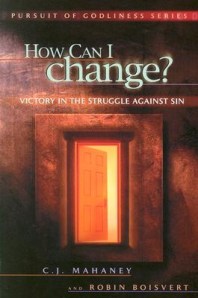
Change is inevitable, but it is not always pleasant.  But perhaps even less pleasant than unexpected change is the lack of change when it is desired and needed – particularly change in ourselves and in our spiritual development.  The questions are common: How Can I Change? When Will I Change? 

C.J. Mahaney & Robin Boisvert have written a helpful little book that addresses these very questions.  Here is an excperpt from the Foreword:

“In a day when quick solutions to longstanding problems are too easily offered, we wish to recommend the old paths, having found them tried and true. There is no short course to Christian maturity. There is no cross-less way to follow Christ, no instant secret to the Christian life. But like distance running, if the way of the cross is not easy, neither is it complicated. God presents us with a pathway that is narrow yet straight. He makes his ways plain to those who are sincerely interested in following him, and he will show himself strong on behalf of all whose hearts are fully his.

Although our vigorous effort is required, all growth is by his grace. With that wonderful truth as our starting block, let us press on toward the mark, each confident that ‘he who began a good work in you will carry it on to completion until the day of Christ Jesus.’ (Philippians 1:6).”

Thanks to Sovereign Grace Ministrires, this little book is available in .pdf for FREE.  Click on the Chapter Titles to read or download:

Introduction

  1. Caught in the Gap Trap
  2. Where It All Begins
  3. United With Christ
  4. The Battle Against Sin
  5. Tools of the Trade – Part 1
  6. Tools of the Trade – Part 2
  7. Living for That Final Day

Appendices

  • Appendix A – Different Roads to Holiness
  • Appendix B – The Old Man and the Flesh 

10 Dumbest Things Christians Do

There is a book out there with the title: The 10 Dumbest Things Christians Do. I feel compelled to pick up a book with a title like that. I want to see how many of these 10 dumb things I am guilty of doing.

I don’t know if the list the author, Mark Atteberry, compiled is right or not.  Are these the DUMBEST things Christians do? Some of us do so many dumb things, it is tough to tell which are the dumbest.  But I must concur. He is right. These are some stupid things many Evangelical Christians do:

  1. Slinging Mud on the Bride of Christ
  2. Winning People to Church Rather Than to Jesus
  3. Living Below the Level of Our Beliefs
  4. Speaking Above the Level of Our Knowledge
  5. Hopping From Church to Church
  6. Fighting Among Oursleves
  7. Missing Golden Opportunities
  8. Settling for Mediocrity
  9. Allowing Wolves to Live Among the Sheep
  10. Accepting the Unacceptable

What is God Like?

What is God like?  Describe to me the God you say you believe in. 

In the first chapter of his best selling book, Crazy Love, Francis Chan challenges his readers to ponder who God is. “Who is it that you are praying to?” Chan wants us to ask.  I really appreciate that challenge and that exercise because, quite frankly, I am not sure most people, even in our churches, can offer a substantial answer.

J.I. Packer wrote:

“Those who know God have great thoughts of Him.”

Donald Carson wrote:

“The better we know God, the more we will want all of our existence to revolve around him, and we will see that the only goals and plans that really matter are those that are somehow tied to God himself, and to our eternity with him.”

How well do you know God?

While there is no substitute for Scripture, sometimes the insights of others can help us notice things that we might otherwise not see. Like a tourguide who has navigated a trail many times is able to point out things of importance, of beauty, and of danger, so is one who has walked with God and given himself to careful study of God.

I have found the following books are faithful to Scriptureand helpful in shaping my knowledge of God:

Knowledge of the Holy by A.W. Tozer 

Attributes of God by A.W. Tozer

Holiness of God by R.C. Sproul

The Pleasures of God by John Piper

Knowing God by J.I. Packer