Who says learning theology has to be boring?
In this video Shai Linne raps about the Atonement in Q & A catechetical fashion. Sound dull? Check it out…
I’ll bet you’ll be rappin’ along.
Who says learning theology has to be boring?
In this video Shai Linne raps about the Atonement in Q & A catechetical fashion. Sound dull? Check it out…
I’ll bet you’ll be rappin’ along.

Lord, teach me to be generous. Teach me to serve you as you deserve; to give and not to count the cost, to fight and not to heed the wounds, to toil and not to seek for rest, to labor and not to ask for reward, save that of knowing that I do your will.
– Ignatius

Now the probing question for you and me:
“When was the last time you invited an un-churched person to church?”
We in the church are searcning and agonizing over ways to reach the lost… yet research indicates a simple invitation may be the most cutting-edge approach we can employ.
– Thom Rainer, The Unchurched Next Door

Christian A. Schwarz, head of the Institute for Natural Church Development in Germany, conducted reportedly the most comprehensive church-growth study ever, drawn from more than one thousand churches in thirty-two countries. His study revealed eight qualities in healthy churches.
1. Empowering Leadership
Leaders of growing churches … do not use lay workers as “helpers” in attaining their goals and fullfilling their visions. Rather, leaders invert the pyramid of authority so they assist Christians to attain the spiritual potential God has for them.
2. Gift Oriented Ministry
When Christians serve in their area of giftedness, they generally function less in their own strength and more in the power of the Holy Spirit. Thus, ordinary people can accomplish the extraordinary!
3. Passionate Spirituality
The concept of spiritual passion and the widespread notion of the walk of faith as “performing one’s duty” seem to be mutually exclusive.
4. Functional Structures
Anyone who accepts this perspective will continually evaluate to what extent church structures improve the self-organization of the church. Elements not meeting this standard (such as discouraging leadership structures, inconvenient worship-service times, demotivating financial concepts) will be changed or eliminated.
5. Inspiring Worship Service
Services may target Christians or non-Christians, the style may be liturgical or free, the language may be “churchy” or secular–it makes no difference…. Whenever the Holy Spirit is truly at work (and his presence is not merely presumed), he will have a concrete effect upon the way a worship service is conducted.
6. Holistic Small Groups
[These groups] go beyond just discussing Bible passages to applying its message to daily life. In these groups, members are able to bring up issues and questions that are immediate personal concerns.
7. Need Oriented Evangelism
The key … is for the local congregation to focus its evangelistic efforts on the questions and needs of non-Christians. This “need-oriented” approach is different from “manipulative programs.”
8. Loving Relationships
Unfeigned, practical love has a divinely generated magnetic power far more effective than evangelistic programs, which depend almost entirely on verbal communication. People do not want to hear us talk about love, they want to experience how Christian love really works.

Every church is called to be a “missional church”. The fact that we have turned the word mission into an adjective testifies to the American church’s frayed ecclesiology. A non-missional church is not a church in the first place, but in a culture largely devoid of theological vocabulary, this language has become necessary to remind us that the church exists not for ourselves, but for the world.

“If all we do in our meditations is to repent of a few petty acts called sins that have accumulated over the last day (and this is not to belittle the importance of doing that), we have not known the deep power of purifying grace that repentance is supposed to offer. Israel and its stories help me to understand the deep underlying currents of evil response and intent, the tragic aquifers far beneath my conscious life that will continually feed my daily life with impurity unless they are identified and replaced with alternatives of the kind of character God built into Abraham.”

This past spring my wife and I would spend a few afternoons each week attending the track meets of our junior high daughter and our high school Senior son. While each child has different specialties, both particpated on relay teams. Few things offered as much pleasure as sitting out in the Spring-time sun, and watching our kids receive, run, and pass their batons.
Bob Kauflin uses that analogy, the passing of a baton in a relay race, to express the importance of ministry to the next generation. For those of us who now see more sand in the botton half of our hour glass than is reamining in the top, Kauflin offers some important thoughts.
Click: Receiving the Baton.

Some truths really are stranger than fiction.
The Heidelberg Catechsim is one of the oldest confessional expressions of Faith in use. Developed in the 16th Century, it is one of the Standards of the Dutch Reformed Tradition. The Dutch Reformed, with their “Mecca” in Grand Rapids, are often caricatured (perhaps unfairly) for their stoicism, stuffiness, and for being sticklers for the old traditions.
But now there is a Rap song celebrating the Heidelberg Catechism. It’s by a guy named Curtis Allen, aka Voice. Who would have ever thought?
To listen, and to get the background, watch this video:
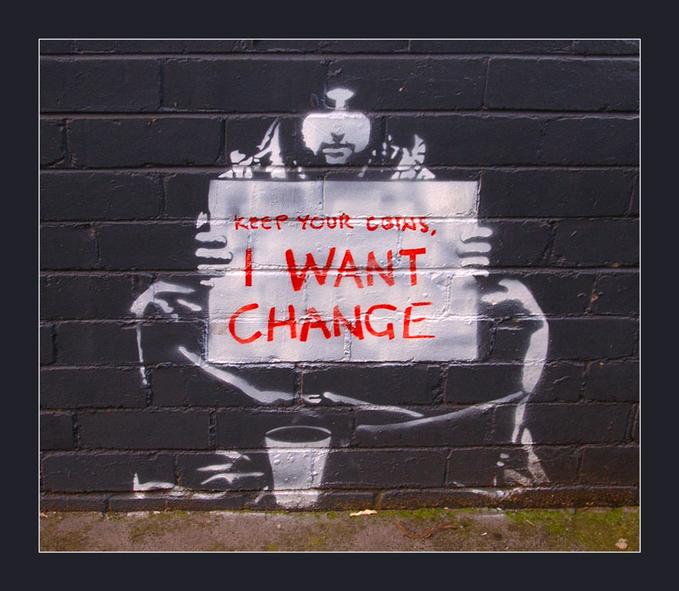
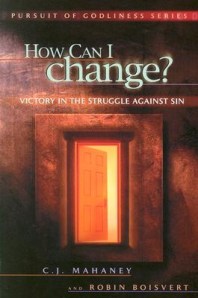
Change is inevitable, but it is not always pleasant. But perhaps even less pleasant than unexpected change is the lack of change when it is desired and needed – particularly change in ourselves and in our spiritual development. The questions are common: How Can I Change? When Will I Change?
C.J. Mahaney & Robin Boisvert have written a helpful little book that addresses these very questions. Here is an excperpt from the Foreword:
“In a day when quick solutions to longstanding problems are too easily offered, we wish to recommend the old paths, having found them tried and true. There is no short course to Christian maturity. There is no cross-less way to follow Christ, no instant secret to the Christian life. But like distance running, if the way of the cross is not easy, neither is it complicated. God presents us with a pathway that is narrow yet straight. He makes his ways plain to those who are sincerely interested in following him, and he will show himself strong on behalf of all whose hearts are fully his.
Although our vigorous effort is required, all growth is by his grace. With that wonderful truth as our starting block, let us press on toward the mark, each confident that ‘he who began a good work in you will carry it on to completion until the day of Christ Jesus.’ (Philippians 1:6).”
Thanks to Sovereign Grace Ministrires, this little book is available in .pdf for FREE. Click on the Chapter Titles to read or download:
- Appendix A – Different Roads to Holiness
- Appendix B – The Old Man and the Flesh

One of my ecclesiastical/theological heroes, John Piper, came under a slew of criticism earlier this year for inviting “Purpose Diven” Rick Warren to be one of the speakers for the Desiring God 2010 Conference.
I like the way Collin Hansen introduces the controversy, in his article, Piper, Warren, and the Perils of Movement Building:
You only thought junior high was over. But lately the evangelical blog world has been abuzz because John Piper invited Rick Warren to speak for his Desiring God National Conference… You see, a lot of folks who like John don’t like Rick. So now some of John’s friends aren’t sure they want to hang out with him anymore. They may not come to his party in Minneapolis. And they aren’t sure that you should either.
I’ll admit I was a little surprised when I heard about it. But I really gave it no thought, until these past few days. There was nothing specific that compelled me to reconsider the issue. I stumbled upon a few articles that made reference to the matter. And as I began to think about it I wondered to myself: “What is the real problem here?”
Frankly, I see only possible benefits. I am no Warren proponent. But honestly, I find much admirable about the guy and his ministry. I may have concerns about some aspects of his ministry style, and I do have some theological differences with him. But then again, I have theological differences with many people I admire – Piper included. Nevertheless I gain insights from many people in areas where I do agree. And I am challenged to think more deeply by thoughtful expressions with which I disagree.
Some time ago I posted The Jesus Pledge, authored by my friend, Paul Miller. Those embracing that pledge declare a willingness to “learn from all types of Christians”. That is something that I don’t think we Evangelicals do enough. And it is something that Piper appears to be attempting to explore. At least that is the sense that I get from him in a video he did explaining and defending his reasons for inviting Warren to his party. (Click: Why Rick Warren?)
Two final thoughts:
First, do we implicitly endorse what someone from another Christian tradtion, or with a different ministry methodology, believes and practices simply by entering into conversation and fellowship? I don’t think so. Without such conversations, though, how would we become acquainted with anyone outside our own circles? We can maintain our own convictions, even distinctions, without isolating ourselves from others.
Second, I wonder if there is a possibility of synthesizing Piper’s Christian Hedonism and Warren’s Purpose-Driven Life/Church. I don’t know what that would look like, and I am not sure I would embrce it, but I know I would not ignore it. In fact, I am intrigued by the possibility.

Like many churches throughout the land, our church is entering into a season of officer nominations. As a presbyterian congregation, specifically, we are inviting the members of our congregation to submit the names of fellow church members who they believe fit the Biblical requirements, found in Titus & 1 Timothy 3, for the offices of Elder and Deacon.
Also, like many in other congregations, some of the members of our church are not quite sure what exactly these offices mean, nor what those who serve them are responsible to do.
In a post on Coram Deo, Bob Thune offers a brief but helpful explanation, dispelling one of the more common misconceptions about Elders…
Click: Elder vs. Board Member
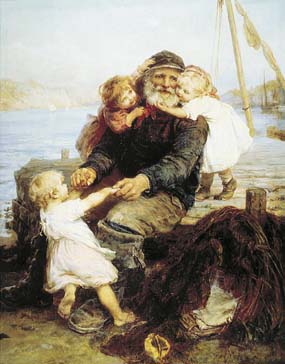
Ever stumped about what to talk about with your children? I am. The following are 5 great questions from the National Fatherhood Initiative that will help connect parents to their children and their children’s world:
 GRACE & PEACE