by Ray Ortland
Therefore a man shall leave his father and his mother and hold fast to his wife, and they shall become one flesh. Genesis 2:24
It is not true that the Bible teaches multiple views of marriage, and therefore the Bible’s clarity is diminished on this question. The Bible does record, for example, that “Lamech took two wives” (Genesis 4:19). But the Bible is not thereby endorsing polygamy, but indeed is casting doubt on polygamy. The role of Lamech in the text is to show “a progressive hardening in sin” (Waltke, Genesis, page 100). We invented polygamy, along with other social evils. But God gave us marriage.
The Bible defines marriage in Genesis 2:24, quoted above. Here is what this very significant verse is saying:
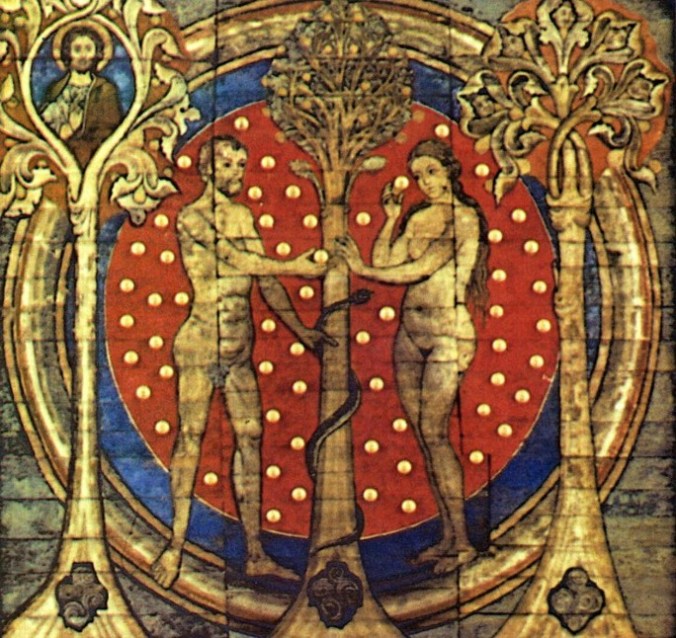
Therefore. This word signals that Moses is adding an aside to his narrative. It’s as if we are sitting in Moses’ living room, watching his DVD of the creation of the universe (Genesis 1) and of man and woman (Genesis 2). At this point he hits the pause button on the remote, the screen freezes, he turns to us post-fall people watching these amazing events and he says, “Now let me explain how what God did so long ago is normative for us today. Amazingly, we still retain something beautiful from the Garden of Eden.”
A man shall leave his father and his mother. In a culture of strong bonds between the generations, this is striking. A man’s primary human relationship is no longer with his parents or ancestors. He breaks away from them for the sake of a more profound loyalty.
And hold fast to his wife. A man, in marrying, enfolds his wife into his heart. He rejoices to identify with her: “This at last is bone of my bones and flesh of my flesh” (verse 23). At every level of his being, he becomes wholeheartedly devoted to her, as to no other.
And they shall become one flesh. “One flesh” is essential to the biblical view of marriage. It means, one mortal life fully shared. Two selfish me’s start learning to think like one unified us, sharing one everything: one life, one reputation, one bed, one suffering, one budget, one family, one mission, and so forth. No barriers. No hiding. No aloofness. Now total openness with total sharing and total solidarity, until death parts them. Moreover, Jesus explained that, behind the word “become,” God is there: “What therefore God has joined together . . .” (Matthew 19:6). Marriage is not a product of human social evolution. Marriage came down from God. And he defined it for us. He has the right to. It belongs to him.
One mortal life fully shared between a man and a woman — this is marriage, according to the Bible, because Genesis 2:24 is not a throw-away line. Its very purpose is to define.
What’s more, the apostle Paul quotes Genesis 2:24 to take our understanding a step further — an amazing step: “We are members of [Christ’s] body. ‘Therefore a man shall leave his father and mother and hold fast to his wife, and the two shall become one flesh’” (Ephesians 5:30-31). Did you notice his logic? “We are members of Christ’s body. He loved us. He chose us. He gave himself up for us. He embraced us. He is with us. He will present us someday in splendor. All of this glory is ours, because we are united with him now and forever. Therefore, this is why, our union with Christ is the reason why, a man and women get married and live united as ‘one flesh.’ Human marriages are miniature social platforms on which the gospel is to be displayed.”
Marriage is a gospel issue. That is the ultimate reason why clarity about its definition matters. People who depart from, or fail to stand up for, the biblical view of marriage are taking a step away from the gospel itself. The whole Bible is the story of the marital love of God, as I demonstrate in this book. Our whole lives are that story, if we have eyes to see.
Marriage is more than human romance, wonderful as that is. Marriage is the display of Christ and his Bride in love together. A beautiful, tender, thriving, Ephesians 5-kind of marriage makes the gospel visible on earth, bringing hope to people who have given up believing there could be any love anywhere for them. That is why biblical marriage deserves our courageous loyalty today. And that is why, in our increasingly secular times, biblical marriage is under pressure. Its true meaning is understood and embodied and sustained only by the power of the gospel.
We can’t turn the clock back to the days of the Christian social consensus the West has foolishly thrown away. But we who say we believe the gospel can and must stand up for the biblical definition of marriage. We must cultivate beautiful marriages ourselves. We must suffer social rejection bravely. We must pray for revival. We must wait for the inevitable collapse of every false view of marriage. We must lovingly serve all who suffer for their foolish attempts at false “marriages.” And we must go to church this Sunday and worship the living God with all our hearts, so that we ourselves are sustained for faithfulness over the long haul, because this isn’t going to be easy.
***
Read more from Ray Ortland’s excellent blog: Christ is Deeper Still


 GRACE & PEACE