“Truly, the Bible as the Word of God has an inherent power, but it is not a coercive power. That is, the Bible does not work it’s effects mechanically. We don’t change just because we read it. Out minds may be engaged in the text, but something must happen in our hearts as well. In the parable of the Sower (Matthew 13.18-23), the seed does not miraculously and independently transform itself into a flowering plant. The condition of the soil effects how well the seed takes root. Our hearts must be receptive to God’s Word in the same way the soil must be rich and conducive to the development of deep roots and luxurient growth. As Oliver Wendell Holmes once said: ‘What you bring away from the Bible depends to some extent on what you carry to it.'”
Personal Growth
Growing People for Service

Have you ever wondered why we are not born as adults? Probably not, I would wager. Seriously, though, have you ever considered the fact that God could very easily birth us as grown-ups? We could come out of the womb fully formed intellectually and spiritually, with only our physical dimensions to catch up. Honestly, it would save quite a bit of hassle, particularly in the teen years. Clearly there is something special about our growth, something in the process of development that is very important to our Creator. I believe that God values the growth process as highly as He values the end result.
And yet, have you ever noticed how frustrated we can be with the need to grow? From childhood, we are anxious to be better, stronger, faster, smarter, and don’t want to have to wait for it. As humans, we resist the reality that we must move so slowly from a place of incompetence to effectiveness, from clumsiness to acumen and hate the fact that there is often so much pain along the way. We long to be complete now, and not have to struggle through the process of becoming, whether that process is physical, intellectual or spiritual.
Unfortunately, this tendency can also inform many of our churches and their ministries, in that we are sometimes hesitant to bring people into ministry who are not fully developed in their skill sets. This bias can greatly impact our worship and music ministries. In all honesty, we are probably more interested in those singers, dramatists, speakers and players whose skills are already well-developed than in those we must train to reach their potential. I understand, because I struggle with this issue as well.
Moreover, our worship services easily become a place in which we highlight those with the most extravagant development in their skills and abilities, and neglect the ones who are still growing and developing. Of course, we will march out the occasional children’s choir and listen with gilded ears, but for the most part, we are not that excited about working with those who are further back on their growth curve. I often wonder if maybe we have become more interested in collecting a group of ideal musicians than in growing all of those that we have been given.
We all understand why. If we are offering a sacrifice of praise to the Lord, then we want to bring forward the very best in our presentations. That makes good biblical sense. Moreover, it takes a lot of time and work to grow people in their abilities, time that we rarely have to spare. I know that I would rather have a guitarist who can nail something right out of the gate, then have to work with someone in his or her musicianship to help produce growth.
However, I think that there might be a deeper reason, and perhaps it is the result of the first. I think that we are probably more interested in the quality of performance for the program than in the quality of growth for the individual. Many in the church seem to have slipped into the belief that the needs of the many outweigh the needs of the few. I wonder if this philosophy is truly biblical. I could be wrong, but it seems that the church is subtly becoming a culture in which we are more concerned with pleasing the whole than in deeply blessing the few—a kind of blessing that is truly life-changing. Maybe we need to grow deeper before we grow wider.
I have been at both ends of this spectrum. I have been the one who was weeded out of the worship team because I just didn’t seem to fit the sound of the group. I have also been the one who became part of the inner circle, the one who performed at every big event, because I had the potential to bless the people without fail.
At the end of the day, I believe that the growth of people is more important to God than performance. I believe that God is probably more blessed by the long-term shepherding of a few as tools for ministry than by a thousand of the most breathtaking productions that we could create upon our church platforms. I believe that He is more interested in seeing us form well-rounded servants of the gospel than in music teams that could win a Grammy for their sheer prowess of musicality. Otherwise, why wouldn’t I have come out of the womb singing like an angel? God loves and blesses growth in people, and so should we.
5 Gospel Perspectives That Shape Lives
Tim Lane & Paul Tripp, in their helpful book How People Change, suggest that there are 5 Gospel Perspectives that shape lives. In other words when we understand these principles, and regularly consider our own lives in relation to them, we see change. These principles, considered collectively, cultivate the best conditions to see fruitful sanctification.
- The need to recognize that God calls for ongoing and continual growth and change in all of us.
- The need to understand the extent and gravity of our sin.
- The need to understand that the heart is central; that behavior and attitude is a reflection of the heart.
- The need to understand the present benefits of Christ.
- The need to live a Lifestyle of Repentance & Faith
If you are curious, you might want to check out an interview with Lane & Tripp, where they describe their motivation for writing the book, and explain how to apply the gospel to real life to bring about real change: Interview
More Tips for Taking Criticism

In a post last week I shared 5 Suggestions for Receiving Criticism. The bulk of that piece was taken from a post by Mark Altrogge at The Blazing Center titled How to Receive Criticism Like a Champ.
Since criticism is inevitable for all of us, I felt Altrogge’s insights were helpful. As he reminds us:
Like I said last week, I don’t love being corrected. But Jesus can help us grow.
Now, in a second round, Altrogge expands his previous points. Here are a handful of additional helps:
- Don’t be quick to defend yourself.
“Hey I thwacked Junior on the head with my iPad because he had a bad attitude!” Don’t make excuses: “Well, I didn’t actually lie. It was theater. You know, drama. I just exaggerated a little bit for effect.” Sometimes it’s fine to offer reasons for our actions, but defensiveness usually comes from pride.
- Don’t write someone off because they fail to deliver criticism perfectly.
“Hey! You corrected me harshly! Your stinking attitude invalidates all you said.” Even if they sin, make your primary focus your failure, not theirs. You can talk about their sin some other time.
- Ask clarifying questions.
Don’t require them to produce video footage, finger prints, and DNA evidence before you accept what they say, but if they have some examples that could help you see more clearly, welcome them.
- Watch your facial expression and body language.
I know, your face feels like it’s going to crack into a thousand pieces. Don’t sit there with your arms crossed and an “I dare you to say something negative” scowl on your face. Try not to start breathing heavily when someone is correcting you, like a snorting bull. Remember, you’re trying to make it easy for them.
- If you see what they’re saying, acknowledge it.
James says, “Confess your sins to one another.” Say, “You’re right, honey. I should not have thwacked Junior on the head with my iPad. I was angry and that was sin. Junior, would you please forgive Daddy for his anger and for thwacking you on the head? I won’t thwack you any more. And anyway, my iPad’s broken now.”
- If you can’t see what someone is saying, don’t immediately write it off.
You could say, “I’m having a hard time seeing what you’re saying right now, but I certainly could be wrong. I know I have blind spots.” Another thing you can do is ask others if they have observed the same thing. Good chance if one person has seen a weakness or fault of yours, others have too (thanks Julian Freeman for this addition!).
- Ask them to please point it out again if you do it again.
…Because most likely you will.
Thanks, Mark. These are helpful.
While I can paste his points, I can’t do justice to the wisdom and humor found at The Blazing Center. I recommend clicking the link and checking out the original posts – and bookmarking the page.
Alrogge’s Bottom line:
We all need correction, input, reproof, adjustment, suggestions and help. A wise man or woman grows wiser by receiving these from others.
OK, now go out there and get criticized!
5 Life Changing Gospel Perspectives

There are 5 perspectives from the gospel that, when embraced and frequently pondered, shape lives:
- The need to recognize that God calls for ongoing and continual growth and change in all of us.
- The need to understand the extent and gravity of our sin.
- The need to understand that the heart is central; that behavior and attitude is a reflection of the heart.
- The need to understand the present benefits of Christ.
- The need to live a Lifestyle of Repentance & Faith.
Source: How People Change by Tim Lane & Paul David Tripp
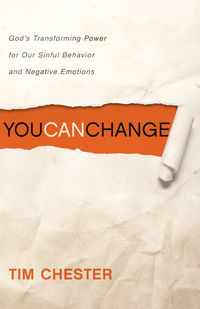
You Can Change
I started reading You Can Change by Tim Chester of The Crowded House. It is different from most books about transformation and personal growth because Chester roots everything in the dual truths of the Christian’s new identities and the power of the gospel.
This video is Tim’s introduction and explanation of the book.
Here is what a couple others are saying about You Can Change:
A book about Christian growth that is neither quietistic nor moralistic is rare. A book that is truly practical is even rarer. Tim Chester’s new volume falls into both categories and therefore fills a gap. ~ Tim Keller
There are few books that are shockingly honest, carefully theological, and gloriously hopeful all at the same time. Tim Chester’s book, You Can Change, is all of these and more. He skilfully uses the deepest insights of the theology of the Word as a lens to help you understand yourself and the way of change, and, in so doing, helps you to experience practically what you thought you already knew. The carefully crafted personal ‘reflection’ and ‘change project’ sections are worth the price of the book by themselves. It is wonderful to be reminded that you and I are not stuck, and it’s comforting to be guided by someone who knows well the road from where we are to where we need to be. ~ Paul Tripp