More Like Jesus

Aqua

“To become more like Jesus is to feel increasingly unable to do life, increasingly wary of your heart. Paradoxically, you get holier while you are feeling less holy. The very thing you were trying to escape – your inability – opens the door to prayer and then grace.”

 – Paul Miller, A Praying Life

Grace Will…

Paradox Hand

I was blown away as I thought about the paradoxes of the Gospel as it was described by Paul Tripp in his book, Broken-Down House.  Don’t just read through quickly. Stop and consider the contrasts:

Grace is a story and grace is a gift. It is God’s character and it is your hope. Grace is a transforming tool and a state of relationship.  Grace is a theology and an invitation. Grace is an experience and a calling. Grace will turn your life upside down while giving you a rest you have never known.  Grace will convince you of you unworthiness without ever making you feel unloved.

Grace will make you acknowledge that you cannot earn God’s favor, and it will remove your fear of not measuring up to his standards. Grace will confront you with the fact that you are much less than you thought you were, even as it assures you that you can be far more than you had ever imagined. Grace will put you in your place without ever putting you down.

Grace will enable you to face truths about yourself that you have hesitated to consider, while freeing you from being self-consciously introspective. Grace will confront you with profound weaknesses, and at the same time introduce you to new-found strength. Grace will tell you what you aren’t, while welcoming you to what you can now be. Grace will make you as uncomfortable as you have ever been, while offering you more comfort than you have ever known. Grace will drive you to the end of yourself, while it invites you to fresh starts and new beginnings.  Grace will dash your hopes, but never leave you hopeless. Grace will decimate your kingdom as it introduces you to a better King. Grace will expose your blindness as it gives you eyes to see. Grace will make you sadder than you have ever been, while it gives you greater cause for celebration than you have ever known.

Grace enters your life in a moment and will occupy you for eternity. You simply cannot live a productive life in this broken-down world unless you have a practical grasp of the grace you have been given.

But You Are Not Invited

 In the Corn

There is a scene in the film Field of Dreams where Kevin Costner’s Ray Kinsella gently argues with Ray Liotta’s Shoeless Joe Jackson.  Shoeless Joe had just invited the writer, Terrance Mann (played by James Earl Jones), to follow him into the corn, which in the film is the symbol of heaven.  Ray (Kinsella, not Liotta) grew excited with anticipation of what would be experienced on the other side of the corn. He expected to go. But Shoeless Joe informs him: “You’re not invited.”  That’s when Ray grew irritated and began to argue his case. “What do you mean I am not invited?!  After all I’ve done! What’s in it for me?” Shoeless Joe rhetorically asks: “Is that why you did it, Ray? For you?”

That scene intrigues me, because it reflects a conversation that many people will have one day with Jesus.  And it is not only people in general that come to mind, but many who are wonderful, committed, churched people, who will be told,  “You’re not invited,” while many less “worthy” are receiving gold-clustered engraved invites. 

Why won’t these who gave themsleves to much for the sake of the church be invited?  Because they don’t understand the basis of the invitation; they don’t understand the heart of the Host. 

Brennan Manning, in The Ragamuffin Gospel, writes:

“Jesus says the kingdom of His Father is not a subdivision for the self-righteous nor for those who feel they possess the state secret of salvation. The kingdom is not an exclusive, well-trimmed suburb with snobbish rules about who can live there. No, it is for a larger, homelier, less self-conscious caste of people who understand they are sinners because they have experienced the yaw and pitch of moral struggle.”

In Isaiah 55 the Lord extends an invitation:

“Come, all you who are thirsty, come to the waters; and you who have no money, come, buy and eat! Come, buy wine and milk without money and without cost.

Why spend money on what is not bread, and your labor on what does not satisfy? Listen, listen to me, and eat what is good, and your soul will delight in the richest of fare.

Notice that this invitation is eerily akin to the one depicted in Field of Dreams. The invitation is made by the Lord of Hosts to those he wants to invite. Those he invites here are those who are not able to pay their own way; spiritually those who don’t have enough righteousness to warrant an invite.  Conversely, there are some, like Ray in the movie, who feel desering; who have stored up some moral savings, i.e. good deeds or righteousness. To them the Lord says, “What that’ll get you isn’t as good as if you come to my party purely as another  invited ‘unworthy’ guest”.

Among the most difficult things I have to deal with as a pastor are people who are much like Ray Kinsella – maybe even better.  These are good people, kind people, people who have sacrificed much, qualities Ray has in the movie.  In addition to Ray’s qualities, many of these people are also responsible and exercise wisdom in their daily lives. In other words, they have their act together – far more than I do.  Ray did not exercise those traits in the film. In fact, he was raging against the fact that his who life up to that point had been lived out in practicality.  But he was good; he was deserving.  He just wasn’t invited.

It seems that to be around such people would be a pleasure.   And it is.  And that’s part of what makes it so difficult.  They are wonderful people to be around, but it is very difficult for many of them to accept that those God invites to the party – those Jesus died for – are not the prim and proper but people who are a mess, people more like me. Only those who are willing to come as unworthy guests are invited.

But Isaiah 55 does give me comfort about this matter. It shows that God says that polished people can come to the party too, if only they will put away the wallets in which they store their own goodness and righteousness.

3 Responses to Sin

Howl of Indifference

“When we as Christians sin, we can react in one of three ways:

1) We can become hardened to our sin. 

2) We can sink into utter despair and say, ‘Its all over.’  I’ve known Christians who have spent twenty years despairing over one sin….

[T]he only right course of action for us as Christians is to…

3) become increasingly sensitive to our sin, but also increasingly to know the forgiveness that is ours on the basis of the blood of Christ – to have the assurance that, if Jesus died for me when I was a sinner before my salvation, how much more He must love me now!” 

-Francis Schaeffer, The Finished Work of Christ.

3 Short Books I Wish Everyone in My Church Would Read

I read a fair amount.  I have been accused, and probably rightly so, of unrealistically pushing books and other reading materials on people who don’t read quite as much; who don’t have the time to read as much; who don’t get “paid” to read as much (as I, in part, am).  But there are ideas and expressions I have benefited from, that I am not sure I can adequately convey, and I like to share them with others. I like to hear how others are struck by the same insights, when the authors’ words are not colored by my thoughts.

I know that I will never get everyone in my church to read all the things I’d like them to read.  But there are three very short books that I have begun to encourage people to read:


The Prodigal God by Tim Keller

This book is subtitled: “Recovering the Heart of the Christian Faith”.    
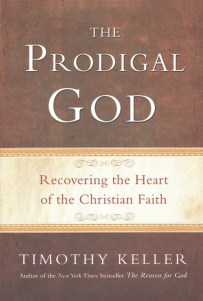
Cover Prodigal God

Keller elaborates on the well known story of the Prodigal Son, and offers a not-so-often recognized perspective:  The story is not about a wild son who receives mercy and grace from his benevolent father.  This is a story about two sons. In fact, this is a story about a Father who had two very different sons. It is THE story of God the Father and how people relate to Him in two different ways.

Each son is a reflection of the respective ways people relate to God.   

The younger son is the picture of all who go astray from God and his Law and, having been broken, recognize the emptiness and hopelessness of life apart from the Father.  When awakened to their desperate situation they find a grace and relationship with the Father that is ovewhelming.

The older son is the picture of all who try to relate to God, and please God, by being good; by following all the rules.  This is a picture of religious people, of many Conservative Christians. Yet in their own goodness there is an evident lack of heartfelt fondness for the Father, a lack of joy, obvious to all except for them.

In this book Keller helps us to discern our own tendencies in our relation to God.  Using this story Keller helps us see with keener insight that the ONLY way to have a relationship with God the Father is by recognizing that we are all in need and by being recipients of His compassion, grace, and generosity.  Keller shows us that at the end of the story there is only one son, one type of person, still alienated from the Father. It is not the one who seems to have been the most egregious.  It is the one who seems the most righteous.

Keller has also noted: “Our churches are full of Older Brother types… Is it any wonder, then, that the Younger Brother-types don’t want to come home (come to church)?”

OUCH!! 

The Prodigal God is only 133 pages – and the pages are double-spaced.
 Cover Cross Centered Life

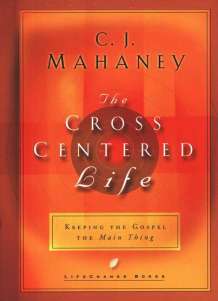
The Cross-Centered Life by C.J. Mahaney

In this 85 page, pocket sized, book Mahaney helps the reader to keep the Gospel at the center of our lives. He helps us to recognize various subtle substitutes that lead us from the Cross, but ultimatley are of little or no help in strengthening the soul. 

Mahaney uses a plethora of annecdotes and illustrations to convey the simple, yet often forgotten and neglected, essential truth: The Gospel is the power to give and to transform life.  Understanding how we can appropriate the present benefits of the Cross is key to vibrant spirituality and joy.


The Dangerous Duty of Delight by John Piper

 I am a long-time fan of Piper’s writing. Nevertheless, I confess, for a long time I refused to read this simple book. I guess I thought this pocket sized 84 page primer of his contemporary classic, Desiring God, was beneath me. After all, I’ve read the BIG book – several times!  But I was wrong.Cover Dangerous Duty
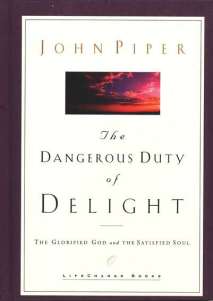
In this little book Piper conveys the essence of the Christian life: To glorify God by enjoying him forever.  It is a great introduction to what Piper calls Christian Hedonism. 

Christian Hedonism may sound like an oxymoron, and even inappropriate, to those who do not undertand what is behind Piper’s message.  But I am convinced that what he espouses is thoroughly Biblical.  It is the recognition that we are created to have a relationship with God; that we are commanded to take delight in God (i.e. Psalm 37.4); and that we are all prone to sell out the ultimate joy we can have in life, in God, for the cheap thrills and pleasures we find elsewhere. 

While I still hope everyone will read Desiring God, this little book, Dangerous Duty, serves as a great introduction that will both lay a groundwork of understanding and whet the appetite for the whole feast found in Desiring God.

You can check out a sample of Dangerous Duty or the entirety of Desiring God online. Just click the highlighted titles.

Diamond in the Rough

The NFL Draft commences in a little more than an hour from the time I write this post.  Not surprising, the pre-draft headlines are focused on Matt Stafford, out of the University of Georgia, and Marc Sanchez, out of Southern Cal, two high profile quarterbacks.  But the real story of this draft, no matter where he ends up, is Ole Miss Offensive Lineman Michael Oher.

The video above gives an overview.  The best video I’ve seen, giving much more of the whole story, was on ESPN earlier this afternoon, which you can watch by clicking: Adopted Family Helps Oher

Oher grew up on the streets of Memphis. His mother was a crack addict. His father had been murdered.  Oher was homeless and left fending for himself by age 6.  He didn’t know his correct birthday or his own real name.  Because of his size and athleticism someone sent him to Briarcrest Christian School to see if he might help out the athletic program.  Briarcrest officials recognized that Oher was completely unprepared for the academic rigors of the school, but also knew that he had no place to turn. So they allowed him in school, on academic probation and inelligible for any athletic competition until he was caught up in school. 

As amazing as that part of the story is, there is more.  While enrolled at Briarcrest Oher was still largely on his own. That is until one cold Thanksgiving night, a school classmate driving with her family spotted Michael on the street wearing shorts and a thin T-shirt.  The Tuohy family turned their car around picked Oher up and took him to their home.  Over time the Tuohy family bought Michael clothes and food, and allowed him to stay with them – until they finally adopted him into their family. Loved for the first time in his life Oher progressed in the classroom and on the football field. He enrolled at Ole Miss and became an All American. Today he will become a first round draft choice – and a millionaire.  But I suspect Michael Oher will be the one man drafted who understands that love far outvalues cash.

The story has already been made a book, The Blind Side, which has been on the New York Times Bestseller list.  It has been featured on NPR’s All Things Considered. And a motion picture is in the works.  But it is the story that may not be told that also fascinates me. It is the story of those whose faith was expressed through tangible love. It is the story of the Tuohy family and the folks at Briarcrest Christian School.the-blind-side

Think about it. The Tuohy’s were a well-to-do Memphis family.  They had children, including an attractive teenage daughter, who I’m sure they were concerned to protect.  And here is this big, huge, black guy, from the streets, that they invited into their home.  I know race should not matter, but it is Memphis. But even apart from race, this is a huge, undisciplined, teenager off the streets.  Most people would have just kept driving. Some kind folks may have bought food and clothes. Others may have gone so far as to make sure he found a home.  But risk the unknown, and with children in the home? I imagine few would have done that.  But the Tuohy’s did. They were compelled by love. And their love transformed a life.

I also have to commend the headmaster at Briarcrest.  Not many administrators would have done the same thing. Some may have admitted Oher because of his athletic prowess. But how many would admit him simply to help him?  Briarcrest had no reasonable reason to expect that Oher would ever succeed in the classroom. When he got to the school he carried a 0.4 gpa.  But these people cared. They lived out their faith, and helped this helpless young giant, even when they had little hope to benefit from it. They reflect what Christian Education ought to be about.

This story makes you feel-good, no matter how it is told. But I stand in awe as I see the Apostle Paul’s words come to life on ESPN:  “The only thing that matters is faith expressing itself through love.” (Galatians 5.6)

Triumph Over Tragedy Illustrates Grace

What an amazing story of triumph over tragedy, forgiveness, reconciliation, and grace.

The name Bouniconti will ring a bell for sports fans over 40. Nick Bouniconti was a Hall of Fame Middle Linebacker for the Miami Dolphins during their dynasty years of the ’70’s.  But this story is not about Nick, nor is it really about football. The story is about Nick’s son, Marc Bouniconti, who, while following in his fathers football footstseps, was tragically parlyzed while making a tackle during a game in 1985.

The above video from ESPN tells the story of how the paralysis caused a subsequent 20 year alienation with his alma mater, The Citadel, and how that relationship has now been healed. 

As nice as that story is, it is not the story I have in mind. I think it pales in comparison to another reconciliation in Marc Bouniconti’s life. 

The story I have in mind is one I heard just this morning on the radio. It is the story of Bouniconti reuniting with the player who caused the paralysis, Herman Jacobs of East Tennessee State University.  It is a wonderful story of grace: how one man gave “life” to the one who had hurt him.  After more than 20 years of separation, Bouniconti and Jacobs reconnected, and Bouniconti reached out to help Jacobs realize his life dream.

Click the link to watch the news clip of this uplifitng story: Bouniconti & Jacobs.

Real Christians SHOULD Dance

dance-to-the-music

I received this quote from my friends at Graced Again.  The author, Bob Flayhart, is minister at Oak Mountain Presbyterian Church in Birmingham, AL. 

A Gospel-centered life is the Christian Waltz. A waltz is a dance made up of three steps. Christians need to consider the Christian three step when it comes to growth.

In the first step, we acknowledge our need as we see our sin in light of the Law. In the second step, we look to Christ to change us. In the third step, we fight against sin and fight to choose righteousness in the strength of the Holy Spirit. Repent! Believe! Fight!…Repent! Believe! Fight!…Repent! Believe! Fight!

An emphasis on the love and grace of God lays the dance floor,or the foundation, for the waltz. Unless Christians are convinced of God’s love for them and His favor over them by virtue of their union with Christ, they will minimize their sin and engage in blame-shifting and excuse- making in order to feel justified before God.

Unfortunately, many in the Church today teach believers a Two-step. The two-step is to simply repent and fight. They acknowledge their sin and proceed with new resolve to try harder to avoid sin. The problem with this approach is it bypasses the cross of Christ and the power of the resurrection.  -Bob Flayhart

This was such a good insight and great illustration I wanted to post the whole thing rather than just the link.  But check out Graced Again and subscribe to their weekly e-mail.  They regulalrly provide thought provoking and insightful quotes.

Natural Born Skeptics

luther

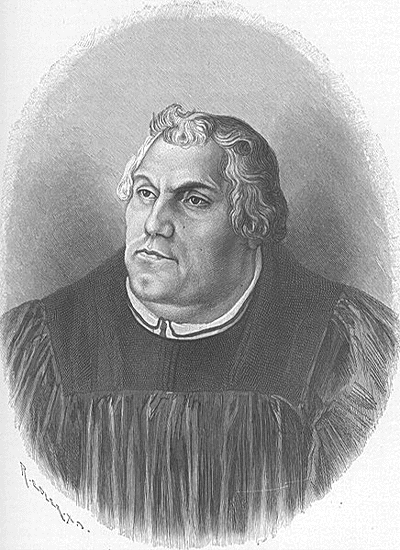
To doubt the good will of God is an inborn suspicion of God with all of us.

Besides, the devil…goes about seeking to devour us by roaring: ‘God is angry at you and is going to destroy you forever.’

In all these difficulties we have only one support, the Gospel of Christ. To hold on to it, that is the trick. 

Christ cannot be perceived with the senses…

The heart does not feel His helpful presence…

Especially in times of trials a Christian feels the power of sin, the infirmity of his flesh, the goading darts of the devil…the scowl and judgment of God.  All these things cry out against us, death thunders at us, the devil roars at us.

In the midst of the clamor the Spirit of Christ cries in our hearts, ‘Abba, Father.’ 

And this little cry of the Spirit transcends the hullabaloo of the Law, sin, death, and the devil, and finds a hearing with God.  The Spirit cries because of our weakness…(and) is sent forth into our hearts…to assure us of the grace of God.”  

– Martin Luther, Commentary on Galatians

The Jesus Pledge


cross-in-the-sky1


What does it mean to be a disciple of Christ? What does it mean to be Gospel-driven?  I think my friend, Paul Miller, expresses it beautifully in The Jesus Pledge:

I pledge my life to Jesus and the Gospel.  I want Jesus not to be just part of my life or something that makes me feel good, but to be the very center – controlling everything.  I want only the knowledge of the love of God.  I want to know Christ. 

I want no desire, idol, or sinful way of dealing with hurt to control any part of my life no matter how small.  I put away from myself the love of money, power, comfort, and success.  I count everything rubbish. 

I bind myself to Christ as bond-servant for life.  I want no master other than Christ.  I purpose to own nothing.  I surrender to Jesus my family, my friends, my ministry, my ideas, my possessions, and my future. 

I commit myself to submission to others and a willingness to learn from all kinds of Christians.  I commit myself to speak only your words, not my own.  I commit myself to speak the truth in love to others.

I want to love people.  I want to lay down my life for others, especially those closest to me, as God gives us grace.  I want to love people by telling them about Jesus.

I understand that this will mean suffering in my life, that I will join in the sufferings of Christ.  But that I always want to be dying, so that I can always be living in Christ. 

Dynamics of the Spiritual Life

Christians who are no longer sure that God loves and accepts them in Jesus, apart from their present spiritual achievements, are subconsciously radically insecure persons – much less secure than non-Christians, because they have too much light to rest easily under the constant bulletins they receive from their Christian environment about the holiness of God and the righteousness they are supposed to have.  Their insecurity shows itself in pride, a fierce defensive assertion of their own righteousness and defensive criticism of others… They cling desperately to legal, pharisaical righteousness, but envy, jealousy and other branches on the tree of sin grow out of their fundamental insecurity…

[I]t is often necessary to convince sinners (even sinful Christians) of the grace and love of God toward them, before we can get them to look at their problems.  Then the vision of grace and the sense of God’s forgiving acceptance may actually cure most of the problems.

This may account for Paul’s frequent fusing of justification and sanctification.  

~ Richard Lovelace, Dynamics of Spiritual Life

Sharing the Father’s Welcome

Tim Keller’s new book, The Prodigal God: Recovering the Heart of the Christian Faith, will be released in a few weeks, on October 31. In the book Keller presents a powerful expression of the gospel, rooted in the parable of the Prodigal Son.  Having heard Keller teach from this parable, I am looking forward to the written form.

But Keller’s insights were not developed in a vacuum.  They were cultivated by careful and thoughtful study and prayer. They were built upon a foundation of those who had walked before him, like Edwards and Chalmers. And they were influenced by the wisdom of those who invested in him. Among them, Dr. Ed Clowney, former president of Westminster Seminary, whom Keller credits in the Introduction of this upcoming book as having provided the inspiration: 

Many excellent studies have been written on this Biblical text over the last several years, but the foundation for my understanding of it was a sermon I heard preached over thirty years ago by Dr. Edmund P. Clowney. Listening to that sermon changed the way I understood Christianity. I almost felt I had discovered the secret heart of Christianity.  (Click: article.)

Crossway Books has made available Clowney’s sermon, Sharing the Father’s Welcome.  I hope it not only whets you appetite for Keller’s upcoming book, but that it opens your eyes to see how high and wide and long and deep is the love of God for we, his children.

(NOTE: My thanks to Justin Taylor of Between Two Worlds for tipping me off about this.)

Valley of Vision


My friend David Zavadil has begun posting the beautiful prayers from The Valley of Vision, a collection of Puritan prayers & devotions.  Inspired by his example I want to do the same thing. 

I don’t plan to make this a regular practice, but one prayer, the one giving the title to the book, has always been particularly moving to me.  I also think it is appropriate, both spiritually and geographically, for Walnut Hill, the church I serve as pastor.  Take a moment to read and reflect.  And I invite you to pray this for our church:

Lord, High and Holy, Meek and Lowly, You have brought me to the valley of vision, where I live in the depths but see you in the heights; hemmed in by mountains of sin I behold your glory.

Let me learn by paradox: that the way down is the way up, that to be low is to be high, that the broken heart is the healed heart, that the contrite spirit is the rejoicing spirit, that the repenting soul is the victorious soul, that to have nothing is to posess all, that to bear the Cross is to wear the crown, that to give is to receive, that the valley is the place of vision.

Lord, in the daytime stars can be seen from the deepest wells, and the deeper the wells the brighter your stars shine; Let me find your light in my darkness, your life in my death, your joy in my sorrow, your grace in my sin, your riches in my poverty, your glory in my valley. 

The Gospel in 6 Minutes

What is the Gospel? 

While in many ways this should be a simple question to answer, experience has taught me that many people are confused about what the Gsopel is.  Most agree that the Gospel is something good.  But they are confused about what particularly defines the Gospel. 

Some see the Gospel as merely that message necessary to receive salvation, but have no idea it has a huge impact on how we live our lives even after becomming Christians. Some associate it with a style of music often found in a rural church.  Some view at is as a synonym for “Truth”.  Others simply think of the whole Bible, or at least the New Testament, as being the Gospel. 

While the latter statement is true in a sense, there is a particular message that runs throughout the Bible that is most properly seen as the Gospel; and by which the entirely of Scripture can be said to be Gospel. This message is at times more detectable than  at other times.  It may be said to be like a stream that runs both above and under ground. Even when it is not obvious, if you look closely its presence can be seen.

Getting the Gospel right is essential to a healthy and vibrant spiritual life.  Many problems experienced by Christians in their spiritual and emotional lives, and in evangelsim and mission, can be traced to a misunderstanding or masapplication of the Gospel.  That’s why I want to take every opportunity to clearly declare and define the Gospel.

John Piper succinctly explains this vital message in this brief video.  (It is well worth the few minutes.)

Hard Grace

“Even though we are now in faith, the heart is always ready to boast itself before God and say: ‘After all, I have preached the law, and lived so well and done so much that surely He will take this into account ‘.  

We even want to haggle with God to make Him regard our life, but it cannot be done. With men you may boast: ‘I have done the best I could… If anything is lacking, I will still try to make recompense.’  But when you come before God, leave all that boasting at home.  Remember to appeal from justice into grace. 

But let anybody try this and he will see and experience how exceedingly hard and bitter a thing it is for a man who, all his life, has been marred and has worked righteousness to pull himself out of it with all his heart, to rise up through faith in the one mediator.

I myself have been preaching and cultivating it through reading and writing for almost twenty years and still feel the old clinging dirt of wanting to deal so with God that I may contribute something so that He will give me His grace in exchange for my holiness. Still I cannot get it into my head that I should surrender myself completely to sheer grace. 

Yet I know that this is what I should and must do.”  

– Excerpted and edited from Martin Luther, Commentary on Galatians