The Gospel Saves From Morality

It sounds like a contradiction, doesn’t it?  The Gospel saves you from morality.  Can this be true?

It is true. And it is an important truth.  And understanding what John Piper is saying in this video can free people from the crushing weight of trying to be good. For others it will free them from self-righteousness, which is a cancer that eats away at the spiritual sensitivity system.

Ambition

I’ve been listening to the audio of sessions from Acts 29 Network’s 2009 Bootcamp: Ambition. While not everyone will find these talks of interest, I think they are challenging and stimulating for those of us in ministry and church leadership.

Ministry for the Long Haul & Ambition (Matt Chandler)

Decoding Your City & Ambition (Kevin Cawley)

Discipleship & Ambition (Bob Thune)

Preaching as Expository Exorcism (Russell Moore)

Leadership & Ambition (Darrin Patrick)

The Church & Ambition (Steve Timmis)

Church Planting & Ambition (Ed Stetzer)

The Gospel & Ambition (Dave Harvey)

My thanks to the folks at Sojourn Community Church, who have made all the above sessions available to be listened to online and/or downloaded. Click: Ambition Conference.

Acts 29 is a missional church planting network of Reformed Evangelicals.  Each year they hold Boot Camps to train and re-energize like minded church planters and church leaders.  Many of these, and other, talks are available on the Resource section of thier web page.

Prayer Mirrors the Gospel

“Prayer mirrors the gospel. In the gospel, the Father takes us as we are because of Jesus and gives us his gift of salvation. In prayer, the Father receives us as we are because of Jesus and gives us the gift of help. We look at the inadequacy of our praying and give up, thinking something is wrong with us. God looks at the adequacy of his Son and delights in our sloppy, meandering prayers.”

– Paul Miller, A Praying Life

Grace Will…

Paradox Hand

I was blown away as I thought about the paradoxes of the Gospel as it was described by Paul Tripp in his book, Broken-Down House.  Don’t just read through quickly. Stop and consider the contrasts:

Grace is a story and grace is a gift. It is God’s character and it is your hope. Grace is a transforming tool and a state of relationship.  Grace is a theology and an invitation. Grace is an experience and a calling. Grace will turn your life upside down while giving you a rest you have never known.  Grace will convince you of you unworthiness without ever making you feel unloved.

Grace will make you acknowledge that you cannot earn God’s favor, and it will remove your fear of not measuring up to his standards. Grace will confront you with the fact that you are much less than you thought you were, even as it assures you that you can be far more than you had ever imagined. Grace will put you in your place without ever putting you down.

Grace will enable you to face truths about yourself that you have hesitated to consider, while freeing you from being self-consciously introspective. Grace will confront you with profound weaknesses, and at the same time introduce you to new-found strength. Grace will tell you what you aren’t, while welcoming you to what you can now be. Grace will make you as uncomfortable as you have ever been, while offering you more comfort than you have ever known. Grace will drive you to the end of yourself, while it invites you to fresh starts and new beginnings.  Grace will dash your hopes, but never leave you hopeless. Grace will decimate your kingdom as it introduces you to a better King. Grace will expose your blindness as it gives you eyes to see. Grace will make you sadder than you have ever been, while it gives you greater cause for celebration than you have ever known.

Grace enters your life in a moment and will occupy you for eternity. You simply cannot live a productive life in this broken-down world unless you have a practical grasp of the grace you have been given.

But You Are Not Invited

 In the Corn

There is a scene in the film Field of Dreams where Kevin Costner’s Ray Kinsella gently argues with Ray Liotta’s Shoeless Joe Jackson.  Shoeless Joe had just invited the writer, Terrance Mann (played by James Earl Jones), to follow him into the corn, which in the film is the symbol of heaven.  Ray (Kinsella, not Liotta) grew excited with anticipation of what would be experienced on the other side of the corn. He expected to go. But Shoeless Joe informs him: “You’re not invited.”  That’s when Ray grew irritated and began to argue his case. “What do you mean I am not invited?!  After all I’ve done! What’s in it for me?” Shoeless Joe rhetorically asks: “Is that why you did it, Ray? For you?”

That scene intrigues me, because it reflects a conversation that many people will have one day with Jesus.  And it is not only people in general that come to mind, but many who are wonderful, committed, churched people, who will be told,  “You’re not invited,” while many less “worthy” are receiving gold-clustered engraved invites. 

Why won’t these who gave themsleves to much for the sake of the church be invited?  Because they don’t understand the basis of the invitation; they don’t understand the heart of the Host. 

Brennan Manning, in The Ragamuffin Gospel, writes:

“Jesus says the kingdom of His Father is not a subdivision for the self-righteous nor for those who feel they possess the state secret of salvation. The kingdom is not an exclusive, well-trimmed suburb with snobbish rules about who can live there. No, it is for a larger, homelier, less self-conscious caste of people who understand they are sinners because they have experienced the yaw and pitch of moral struggle.”

In Isaiah 55 the Lord extends an invitation:

“Come, all you who are thirsty, come to the waters; and you who have no money, come, buy and eat! Come, buy wine and milk without money and without cost.

Why spend money on what is not bread, and your labor on what does not satisfy? Listen, listen to me, and eat what is good, and your soul will delight in the richest of fare.

Notice that this invitation is eerily akin to the one depicted in Field of Dreams. The invitation is made by the Lord of Hosts to those he wants to invite. Those he invites here are those who are not able to pay their own way; spiritually those who don’t have enough righteousness to warrant an invite.  Conversely, there are some, like Ray in the movie, who feel desering; who have stored up some moral savings, i.e. good deeds or righteousness. To them the Lord says, “What that’ll get you isn’t as good as if you come to my party purely as another  invited ‘unworthy’ guest”.

Among the most difficult things I have to deal with as a pastor are people who are much like Ray Kinsella – maybe even better.  These are good people, kind people, people who have sacrificed much, qualities Ray has in the movie.  In addition to Ray’s qualities, many of these people are also responsible and exercise wisdom in their daily lives. In other words, they have their act together – far more than I do.  Ray did not exercise those traits in the film. In fact, he was raging against the fact that his who life up to that point had been lived out in practicality.  But he was good; he was deserving.  He just wasn’t invited.

It seems that to be around such people would be a pleasure.   And it is.  And that’s part of what makes it so difficult.  They are wonderful people to be around, but it is very difficult for many of them to accept that those God invites to the party – those Jesus died for – are not the prim and proper but people who are a mess, people more like me. Only those who are willing to come as unworthy guests are invited.

But Isaiah 55 does give me comfort about this matter. It shows that God says that polished people can come to the party too, if only they will put away the wallets in which they store their own goodness and righteousness.

3 Responses to Sin

Howl of Indifference

“When we as Christians sin, we can react in one of three ways:

1) We can become hardened to our sin. 

2) We can sink into utter despair and say, ‘Its all over.’  I’ve known Christians who have spent twenty years despairing over one sin….

[T]he only right course of action for us as Christians is to…

3) become increasingly sensitive to our sin, but also increasingly to know the forgiveness that is ours on the basis of the blood of Christ – to have the assurance that, if Jesus died for me when I was a sinner before my salvation, how much more He must love me now!” 

-Francis Schaeffer, The Finished Work of Christ.

Crazy Love

I don’t know Francis Chan, but I think I like him.  I know I like what I see so far.

A friend, who is also an Elder in our church, introduced me to Chan a few months ago. He had just finished reading Chan’s book, Crazy Love, and said that Chan was teaching the same things I had been introducing to Walnut Hill Church – namely a Gospel-driven, missional approach to living.  He wanted to know if I was familiar with Chan, and what my thoughts were.  At the time I had none.  But obviously I was curious. I was curious to see what this guy was saying, if indeed we were teaching similarly.  I was curious to see what my friend and colleague percieved I was teaching, since he thought we were teaching the same things.

I did some investigation on the Internet.  The only negatives I found, or rather the only criticisms of Chan I found, were a couple of Asian-American bloggers who thought Chan acted too “White” or Anglo; and someone who seemed put off by Chan’s frequent application of the Gospel to the use of money.  I didn’t find either of these charges to be anything to discredit Chan, so I conintued with my investigation.

Now, a few months after first hearing Chan’s name, I find myself impressed.  I don’t know all he has said or written, so the day may come when I find myself disagreeing with Chan about something. But that day is not today.  And even if, or when, it does come I suspect it won’t be too big a deal.  It’ll only be a matter of degree.  Francis Chan is a man who loves God, who loves people, and who knows how God has loved His people.  He is passionate about telling people about God’s Crazy Love. He is faithful to call people to love God and each other in tangible ways, in seemingly crazy ways.

So not only has my friend stumbled upon a faithful teacher, I have become a student as well.    

To get acqauinted with Francis Chan, check out the above video, and the related website, Just Stop and Think.

3 Short Books I Wish Everyone in My Church Would Read

I read a fair amount.  I have been accused, and probably rightly so, of unrealistically pushing books and other reading materials on people who don’t read quite as much; who don’t have the time to read as much; who don’t get “paid” to read as much (as I, in part, am).  But there are ideas and expressions I have benefited from, that I am not sure I can adequately convey, and I like to share them with others. I like to hear how others are struck by the same insights, when the authors’ words are not colored by my thoughts.

I know that I will never get everyone in my church to read all the things I’d like them to read.  But there are three very short books that I have begun to encourage people to read:


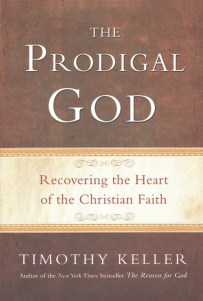
The Prodigal God by Tim Keller

This book is subtitled: “Recovering the Heart of the Christian Faith”.    

Cover Prodigal God

Keller elaborates on the well known story of the Prodigal Son, and offers a not-so-often recognized perspective:  The story is not about a wild son who receives mercy and grace from his benevolent father.  This is a story about two sons. In fact, this is a story about a Father who had two very different sons. It is THE story of God the Father and how people relate to Him in two different ways.

Each son is a reflection of the respective ways people relate to God.   

The younger son is the picture of all who go astray from God and his Law and, having been broken, recognize the emptiness and hopelessness of life apart from the Father.  When awakened to their desperate situation they find a grace and relationship with the Father that is ovewhelming.

The older son is the picture of all who try to relate to God, and please God, by being good; by following all the rules.  This is a picture of religious people, of many Conservative Christians. Yet in their own goodness there is an evident lack of heartfelt fondness for the Father, a lack of joy, obvious to all except for them.

In this book Keller helps us to discern our own tendencies in our relation to God.  Using this story Keller helps us see with keener insight that the ONLY way to have a relationship with God the Father is by recognizing that we are all in need and by being recipients of His compassion, grace, and generosity.  Keller shows us that at the end of the story there is only one son, one type of person, still alienated from the Father. It is not the one who seems to have been the most egregious.  It is the one who seems the most righteous.

Keller has also noted: “Our churches are full of Older Brother types… Is it any wonder, then, that the Younger Brother-types don’t want to come home (come to church)?”

OUCH!! 

The Prodigal God is only 133 pages – and the pages are double-spaced.

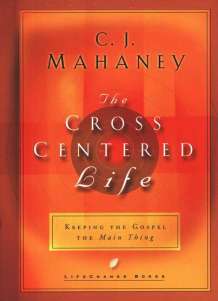
 Cover Cross Centered Life

The Cross-Centered Life by C.J. Mahaney

In this 85 page, pocket sized, book Mahaney helps the reader to keep the Gospel at the center of our lives. He helps us to recognize various subtle substitutes that lead us from the Cross, but ultimatley are of little or no help in strengthening the soul. 

Mahaney uses a plethora of annecdotes and illustrations to convey the simple, yet often forgotten and neglected, essential truth: The Gospel is the power to give and to transform life.  Understanding how we can appropriate the present benefits of the Cross is key to vibrant spirituality and joy.


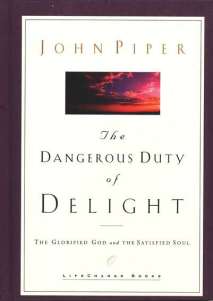
The Dangerous Duty of Delight by John Piper

 I am a long-time fan of Piper’s writing. Nevertheless, I confess, for a long time I refused to read this simple book. I guess I thought this pocket sized 84 page primer of his contemporary classic, Desiring God, was beneath me. After all, I’ve read the BIG book – several times!  But I was wrong.Cover Dangerous Duty

In this little book Piper conveys the essence of the Christian life: To glorify God by enjoying him forever.  It is a great introduction to what Piper calls Christian Hedonism. 

Christian Hedonism may sound like an oxymoron, and even inappropriate, to those who do not undertand what is behind Piper’s message.  But I am convinced that what he espouses is thoroughly Biblical.  It is the recognition that we are created to have a relationship with God; that we are commanded to take delight in God (i.e. Psalm 37.4); and that we are all prone to sell out the ultimate joy we can have in life, in God, for the cheap thrills and pleasures we find elsewhere. 

While I still hope everyone will read Desiring God, this little book, Dangerous Duty, serves as a great introduction that will both lay a groundwork of understanding and whet the appetite for the whole feast found in Desiring God.

You can check out a sample of Dangerous Duty or the entirety of Desiring God online. Just click the highlighted titles.

What is the Gospel?

Wild is the Wind

To say that we, as a church, are centered on the gospel, or Gospel-Driven, is realtively easy. It is quite another thing for the typical church member to know what such phrases actually mean.

The following post, by C.J. Mahaney, was originally published on the Together for the Gospel blog.  I include it here in it’s entirety because it addresses and brings clarity to an issue of the utmost importance…

***

Recently, someone asked two excellent questions on my blog: 

What is the gospel?

What is the most serious threat to the gospel?

The following is my attempt to answer these important questions with the help of those much smarter than myself:

1) What is the gospel?

No question is more important, and biblical clarity in response to this question is critical. Sadly, confusion about the gospel is quite common among professing evangelicals today. I find Graeme Goldsworthy’s comment all too relevant: 

“The main message of the Bible about Jesus Christ can easily become mixed with all sorts of things that are related to it. We see this in the way people define or preach the gospel. But it is important to keep the gospel itself clearly distinct from our response to it or from the results of it in our lives and in the world.” 

So here is my attempt to heed the counsel of Dr. Goldsworthy and keep the gospel “clearly distinct.”

The following definition of the gospel, provided by Jeff Purswell, the Dean of [Sovereign Grace] Pastors College, seeks to capture the substance of the gospel:

“The gospel is the good news of God’s saving activity in the person and work of Christ. This includes his incarnation in which he took to himself full (yet sinless) human nature; his sinless life which fulfilled the perfect law of God; his substitutionary death which paid the penalty for man’s sin and satisfied the righteous wrath of God; his resurrection demonstrating God’s satisfaction with his sacrifice; and his glorification and ascension to the right hand of the Father where he now reigns and intercedes for the church.”

“Such news is specific: there is a defined ‘thatness’ to the gospel which sets forth the content of both our saving faith and our proclamation. It is objective, and not to be confused with our response. It is sufficient: we can add nothing to what Christ has accomplished for us–it falls to us simply to believe this news, turning from our sins and receiving by faith all that God has done for us in Christ.” 

I find this definition of the gospel faithful to the presentation of the four Gospels—they present the person and work of Christ as the good news. In the Apostle Paul’s concise summation of the gospel, he focuses more particularly on Christ’s death and resurrection as the core of his proclamation:

 “For I delivered to you as of first importance what I also received: that Christ died for our sins, in accordance with the Scriptures, that he was buried, that he was raised on the third day in accordance with the Scriptures….” 1 Cor 15:3-4

Focusing more specifically still, the apostle encapsulates the work of Christ by focusing on the cross:

“For I decided to know nothing among you except Jesus Christ and him crucified.” – 1 Corinthians 2:2

So that is the gospel: God’s saving work in and through Christ. And the cross is the pinnacle of that work. Knox Chamblin helpfully notes this emphasis in Paul’s writing and ministry:

“His gospel is ‘the word of the cross’ (1 Cor. 1:17-18); nowhere is there a comparable reference to ‘the word of the resurrection.’ In I Corinthians 1:23-24 it is ‘Christ crucified’ who is identified as ‘the power of God and the wisdom of God,’ not as we might have expected (especially in the case of ‘power’), Christ resurrected…. Both the cross and the resurrection are ‘of first importance’ in Paul’s gospel (I Cor. 15:3-4). Unless Christ has risen from the dead, the preaching of the cross (and of the resurrection) is a waste of time (15:14); but once the resurrection has occurred, the cross remains central.”

And the centrality of the cross isn’t temporary. The cross remains on center stage even when we receive a glimpse of eternity in the New Testament’s final book:

“One is taken aback by the emphasis upon the Cross in Revelation. Heaven does not ‘get over’ the cross, as if there are better things to think about; heaven is not only Christ-centered, but cross-centered, and quite blaring about it.”       – Jim Elliff

There is nothing more important than getting the gospel right. Years ago, John Stott made the following frightening observation of the evangelical church when he wrote, 

“All around us we see Christians relaxing their grasp on the gospel, fumbling it, and in danger of letting it drop from their hands altogether.” 

It is my prayer that God would use the Together for the Gospel conference to strengthen our grip upon the glorious gospel.

2) What is the most serious threat to the gospel?

For this question I think J.C. Ryle provides us with enduring discernment:

“You may spoil the gospel by substitution. You have only to withdraw from the eyes of the sinner the grand object which the Bible proposes to faith–Jesus Christ–and to substitute another object in His place… and the mischief is done.”

“You may spoil the gospel by addition. You have only to add to Christ, the grand object of faith, some other objects as equally worthy of honor, and the mischief is done.”

“You may spoil the gospel by disproportion. You have only to attach an exaggerated importance to the secondary things of Christianity, and a diminished importance to the first things, and the mischief is done.”

“Lastly, but not least, you may completely spoil the gospel by confused and contradictory directions… Confused and disorderly statements about Christianity are almost as bad as no statement at all. Religion of this sort is not evangelical.”

3) Personal Application

It’s not difficult to identify distortions of the gospel. But as a pastor, one of my main concerns for genuine Christians is a more subtle one: either assuming the gospel or neglecting the gospel. I have found this to be the greatest threat to the gospel in my own life. 

Jerry Bridges echoes this concern when he writes, 

“The gospel is not only the most important message in all of history; it is the only essential message in all of history. Yet we allow thousands of professing Christians to live their entire lives without clearly understanding it and experiencing the joy of living by it.”

So let us not only apply discernment to the church at large, but to our own hearts as well. Let us, in the words of Jerry Bridges, “Preach the gospel to ourselves daily.” Let us heed Charles Spurgeon’s exhortation: “Abide hard by the cross and search the mystery of his wounds.” Let us respond to John Stott’s invitation: “The Cross is a blazing fire at which the flame of our love is kindled, but we have to get near enough for its sparks to fall on us.”

So how can we get near enough?

The following are books that will position you to experience the transforming sparks of the gospel:

The Cross of Christ by John Stott. A personal favorite. Stott says of the Savior, “It was by his death that he wished above all else to be remembered.” This book won’t let you forget.

The Gospel for Real Life by Jerry Bridges. The man who taught me how to preach the gospel to myself will teach you to do the same.

The Message of Salvation by Philip Ryken. This excellent book deserves a broad readership. My oldest daughter recently thanked me for recommending this book to her and told me how much she was benefiting from this book. You will benefit as well.

The Message of the New Testament by Mark Dever. My good friend reveals the storyline of the Bible in each and every book of the New Testament. A must read for pastors but highly recommended for all. My wife has really enjoyed reading Mark’s book.

The Cross and Christian Ministry by D.A. Carson. For pastors this is another must-read. I’m indebted to Dr. Carson for this book. It has defined effective pastoral ministry for me, and I pray it will do the same for you.

That ought to get you started. Each of these books will draw you near enough to the “blazing fire of the cross so that its sparks” will fall on you and kindle fresh love for the Savior in your soul.

Gospel in Context

At the Louvre

The gospel is always conveyed through the medium of culture. It becomes good news to lost and broken humanity as it is incarnated in the world through God’s sent people, the church. To be faithful to its calling, the church must be contextual, that is, it must be culturally relevant within a specific setting. The church relates constantly and dynamically both to the Gospel and to its contextual reality. …In order to contextualize responsibly, the church must assess its culture critically, discerning and unmasking its philosophical foundations and values.

– Craig Van Gelder, in Missional Church

Real Christians SHOULD Dance

dance-to-the-music

I received this quote from my friends at Graced Again.  The author, Bob Flayhart, is minister at Oak Mountain Presbyterian Church in Birmingham, AL. 

A Gospel-centered life is the Christian Waltz. A waltz is a dance made up of three steps. Christians need to consider the Christian three step when it comes to growth.

In the first step, we acknowledge our need as we see our sin in light of the Law. In the second step, we look to Christ to change us. In the third step, we fight against sin and fight to choose righteousness in the strength of the Holy Spirit. Repent! Believe! Fight!…Repent! Believe! Fight!…Repent! Believe! Fight!

An emphasis on the love and grace of God lays the dance floor,or the foundation, for the waltz. Unless Christians are convinced of God’s love for them and His favor over them by virtue of their union with Christ, they will minimize their sin and engage in blame-shifting and excuse- making in order to feel justified before God.

Unfortunately, many in the Church today teach believers a Two-step. The two-step is to simply repent and fight. They acknowledge their sin and proceed with new resolve to try harder to avoid sin. The problem with this approach is it bypasses the cross of Christ and the power of the resurrection.  -Bob Flayhart

This was such a good insight and great illustration I wanted to post the whole thing rather than just the link.  But check out Graced Again and subscribe to their weekly e-mail.  They regulalrly provide thought provoking and insightful quotes.

Maundy Thursday Matters

help-me

Today is Maundy Thursday.  It is a special day on the Christian calendar. But many Christians don’t know what maundy means. I imagine for some this day could easily fall just after Manic Monday, Ruby Tuesday… You get the idea. So if the term Maundy Thursday sounds foreign to you, relax, you are far from alone. 

The term Maundy is generally held to be derived through Middle English and old French, mande’; which comes from the Latin mandatum, meaning mandate or command.  This is the first word of the Latin phrase:

Mandatum novum do vobis ut diligatis invicem sicut dilexi vos.”

Or more familiar:

“A new command I give to you: Love one another.  As I have loved you so you must love one another.” (John 13.34)

This is a special day in the life of Christ’s People. It is a day when we remember that Jesus has commissioned us, not only to believe the Gospel of his life which was to be – and has been – given for the redemption of all who believe, but to live out the Gospel in relation to one another.  We are to love one another in the same tangible way, and to the same extent, as Jesus has loved us. 

This is what Jesus commanded of his believers only hours before he willingly gave his life for ours. (John 15.12-14)