Check out this simple, original Christmas song by my old, dear friend, Ginny Owens. You can also check out Ginny’s Christmas Album, Bring Us Peace, on I-tunes.
Christmas
The Santa Question

Years ago, as a newly minted minister in my first year out of seminary, I made an off-the-cuff comment in one of my Christmas season messages. I don’t recall exactly what I said, but it was something to the effect of: “I don’t really care what you do with Santa”. My intent was to demonstrate that Christmas Santa is nothing when compared to the Christmas Child – Jesus.
Honestly, I thought I made my point. If I had it to do over – and I do get to do it over every year – I would still say the same thing. But not everyone shares my perspective on this issue.
The next day, along with our regular mail, in our mailbox was a hand delivered, unstamped letter, from a man in the congregation. It was thick. Nearly 10 pages – each of which made the same point from various angles: I had been derelict in my responsibility to the congregation by giving any wiggle room for families to include Santa Claus in their Christmas traditions. At least that was his take. (Frankly, he was a pretty uptight guy about a lot of issues.) Believe it or not, he even used the lame “Re-arrange the letters of Santa = Satan” rationale.
While my view has not changed, and I would still not hesitate to say something similar in a Christmas message, what has changed is my appreciation that not everyone shares my view on this matter. And over the years I have been asked a number of times by conscientious parents how Christian families should deal with the Santa Question. I try to be more sensitive to the fact that there are several appropriate perspectives.
I recently read a piece by John Murchison touching on this very subject. He observes: “As parents who want our kids to worship Jesus and have fun at Christmas, it can be hard to know if Santa should be included in our traditions, and if so, to what degree.” I agree.
Murchison observes, “I know of four different types of families when it comes to Santa”:
- Families who do not include Santa in any of their Christmas celebrations
- Families who tell their kids up front that Santa is “a fun game that we all play at Christmas”
- Families who focus on the “historical” Santa, St. Nick
- Families who go all-in on Santa
Murchison concludes: “I believe that any of these options can be valid options for a family, as long as two guidelines are followed”:
- Jesus must be more prominent in your home than Santa at Christmas.
- When “the Santa question” comes, don’t lie to your kids.
I concur. Murchison wisely and concisely gives counsel, without elevating his own view.
In our home, we never really did anything with Santa. We never encouraged belief in him, nor did we ever instruct our children against him. Never did they receive a gift with Santa’s name on the tag. While our children were certainly aware of Santa because of the symbols that permeate our culture this time of year, not the least of which are the Christmas season television specials, which we did allow them to watch if they wanted, none of our kids ever really thought much about Santa. Our focus was always on God’s gift to us in the sending of his Son. (See Galatians 4.4-5)
I appreciate Murchison’s ultimate insight, which is in line with the counsel I would want to offer to anyone wondering about The Santa Question:
As long as you’re praying, reading Scripture, and searching out wise counsel, then I believe that you should follow the guidance of the Holy Spirit and the convictions that He places on your hearts.
And like Murchison, “I pray that our homes will be filled with talk of Jesus and His birth this season, whatever you decide about Santa.”
To read John Murchison’s article, click: The Santa Question
Christmas Gospel: Glory Triumphs Over Tragedy
What happens when the glory of God’s grace collides with the tragedy of man’s sin and consequential brokenness? Paul Tripp’s answer: “Christmas!” God’s glory triumphs over the tragedy of our brokenness.
Star of Bethlehem
As a follow up to my post Saturday concerning the debate about the date of Jesus’ birth, (which was an excerpt from the message I delivered Sunday,) a friend from church sent me this video to check out. It is filled with fascinating, coroborating information.
Good News From the Front in the War on Christmas
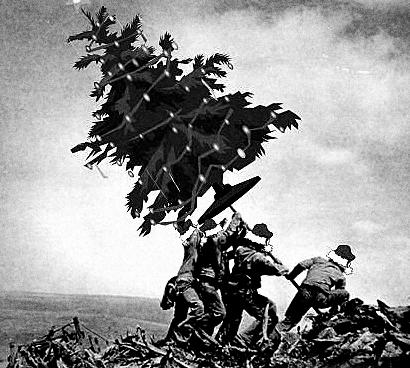
With all the War on Christmas rhetoric that has seemingly spewed these past few years, LifeWay Research has some good news from the front lines. While I am not certain any full fledged war has actually existed, it seems there have certainly been a variety of insurgences erupting. Such things have probably almost always existed but, as the culture wars rage, reporting of instances opposing Christmas – some quite ludicrous – seemed more numerous than ever. But now a recent study offers some calm.
LifeWay Research data now shows that most Americans favor more traditional expressions of Christmas, and want more emphasis on Jesus during this season of the year. In fact, even most of those with no faith affiliations, dubbed by some as the “Nones”, say they have no problems with expressions celebrating Christ.
Over on his blog at Christianity Today, The Exchange, Ed Stetzer analyzes the research data, and provides a link to the downloadable research report. Click: Americans Want to Keep Christ in Christmas.
Advent Conspiracy
Advent Conspiracy is designed to remind us of what really matters during this Christmas season. While there is nothing inherently wrong with our traditions of gift giving and celebration, consumeristic forces are constantly at work, eroding our connection with the reason we celebrate. What is helpful to remember is that Christ Jesus came into the world to redeem sinners, to set free those captive to their sin and their situations. And he has commissioned his followers to be his agents to continue what he began – in the power of his Spirit. Consider how you can make a difference in some small way.
A Christmas Reflection: Allowing God to Work in Us
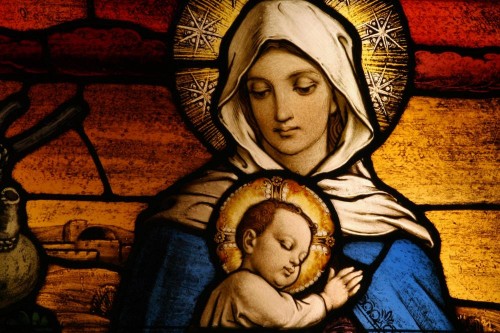
Consider Mary’s response to the angel. The angel has come to Mary and says: “Mary, you are going to give birth to the long-promised Messiah.”
This was a unique promise, and unrepeatable. There is something totally unique here: the birth of the eternal second Person of the Trinity into this world.
What was her response?
- She could have rejected the idea and said: “I do not want it: I want to withdraw; I want to run…”
- She could have said: “I now have the promises, so I will exert my force, my character, and my energy, to bring forth the promised thing.”
But what she did say is beautiful, it is wonderful. She says:
“Behold, the bondmaid of the Lord; be it unto me according to thy Word.” – Luke 1.38
There is an active passivity here. She took her own body, by choice, and put it into the hands of God to do the thing that he said he would do, and Jesus was born. She gave herself to God…
This is a beautiful, exciting, personal expression of a relationship between a finite person and the God she loves.
~ Francis Schaeffer, from True Spirituality
10 Questions to Ask at a Christmas Gathering

Do you have any Chrstmas gatherings to attend this holiday season? My thanks to Don Whitney for suggesting the following questions to spruce up the conversation, especially at church:
- What’s the best thing that’s happened to you since last Christmas?
- What was your best Christmas ever? Why?
- What’s the most meaningful Christmas gift you’ve ever received?
- What was the most appreciated Christmas gift you’ve ever given?
- What was your favorite Christmas tradition as a child?
- What is your favorite Christmas tradition now?
- What do you do to try to keep Christ in Christmas?
- Why do you think people started celebrating the birth of Jesus?
- Do you think the birth of Jesus deserves such a nearly worldwide celebration?
- Why do you think Jesus came to earth?
This is the Christ (Christmas)
The Virgin Shall Conceive and Bear a Son

Here’s a poignant insight from Martyn Lloyd-Jones regarding Christmas:
What is taught in Scripture is not that Mary had been either born or made sinless, but that portion of Mary, that cell out of Mary that was to be developed into the body of the Son of God was cleansed from sin; and that only.
So Mary remained sinful, but this portion that she transmits to her Son has been delivered, set free from sin; and it is to that that the Son of God is joined. That is the human nature He takes unto Himself. It is a miracle, of course; and we are told specifically that it is a miracle. It was because she did not realize that a miracle was to happen that Mary stumbled at the announcement of the Archangel Gabriel, and his reply to her is: “Do not try to understand this. The power of the Highest shall overshadow you, the Holy Ghost will come upon you, you are going to conceive of the Holy Ghost” – who has power to work this cleansing so that the body of the human nature of the Son of God who is to be born of you shall be entirely free from sin.
So we reject the so-called doctrine of the “Immaculate Conception”; but we assert with all our power the doctrine that the human nature of the Son of God was entirely free from sin.
A Social Network Christmas
The Advent of Humility

The following article, by Tim Keller, first appeared in the December 2008 edition of Christianity Today Magazine. In this article Keller explains why the Advent of Jesus gives us reason to stop concentrating on ourselves.
***
Innumerable Christmas devotionals point out the humble circumstances of Jesus’ birth—among shepherds, in a crude stable, with a feed trough for a bassinet. When Jesus himself tried to summarize why people should take up the yoke of following him, he said it was because he was meek and humble (Matt. 11.29). Seldom, however, do we explore the full implications of how Jesus’ radical humility shapes the way we live our lives every day.
Humility is crucial for Christians. We can only receive Christ through meekness and humility (Matt. 5.3, 5; Matt 18.3-4). Jesus humbled himself and was exalted by God (Phil. 2:8-9); therefore joy and power through humility is the very dynamic of the Christian life (Luke 14.11; 18.14; 1 Peter 5.5).
The teaching seems simple and obvious. The problem is that it takes great humility to understand humility, and even more to resist the pride that comes so naturally with even a discussion of the subject.
We are on slippery ground because humility cannot be attained directly. Once we become aware of the poison of pride, we begin to notice it all around us. We hear it in the sarcastic, snarky voices in newspaper columns and weblogs. We see it in civic, cultural, and business leaders who never admit weakness or failure. We see it in our neighbors and some friends with their jealousy, self-pity, and boasting.
And so we vow not to talk or act like that. If we then notice “a humble turn of mind” in ourselves, we immediately become smug—but that is pride in our humility. If we catch ourselves doing that we will be particularly impressed with how nuanced and subtle we have become. Humility is so shy. If you begin talking about it, it leaves. To even ask the question, “Am I humble?” is to not be so. Examining your own heart, even for pride, often leads to being proud about your diligence and circumspection.
Christian humility is not thinking less of yourself; it is thinking of yourself less, as C. S. Lewis so memorably said. It is to be no longer always noticing yourself and how you are doing and how you are being treated. It is “blessed self-forgetfulness.”
Humility is a byproduct of belief in the gospel of Christ. In the gospel, we have a confidence not based in our performance but in the love of God in Christ (Romans 3.22-24). This frees us from having to always be looking at ourselves. Our sin was so great, nothing less than the death of Jesus could save us. He had to die for us. But his love for us was so great, Jesus was glad to die for us. Continue reading
Salvation is Born
10 Questions to Ask at a Christmas Gathering

Do you have any Chrstmas gatherings to attend this holiday season? My thanks to Don Whitney for suggesting the following questions to spruce up the conversation – perhaps especially at church:
- What’s the best thing that’s happened to you since last Christmas?
- What was your best Christmas ever? Why?
- What’s the most meaningful Christmas gift you’ve ever received?
- What was the most appreciated Christmas gift you’ve ever given?
- What was your favorite Christmas tradition as a child?
- What is your favorite Christmas tradition now?
- What do you do to try to keep Christ in Christmas?
- Why do you think people started celebrating the birth of Jesus?
- Do you think the birth of Jesus deserves such a nearly worldwide celebration?
- Why do you think Jesus came to earth?
That’s Christmas
The resounding cry of this season seems to be: “Remember what Christmas is about.” I think I’ve heard people say that, and seen people write and post that, and similar sentiments, more this year than ever before. At least, I am aware of it more this year. And I concur.
The above video, from the UK, takes us through the wide range of perspectives people have about this holiday, and presents the viewer with a penetrating proposition: Christmas is about Jesus – God becoming man, miraculously conceived in and born of a virgin, to remove all the guess-work from quizical and philosophical minds about what God is like and how God feels about humanity. It is the first observable stage of God’s plan to redeem humanity and reconcile with those that had rebelled against him and neglected to give him the honor he is due.
Christmas is not really about time with the family. It is certainly not about the gifts. It is not about a quiet day. It’s certainly not about the hubub that leads up to it. It is a time to be still and know that God is God, and he has made his dwelling among us, to deliver his people from a bondage of our own making. It is a time for reflection. (See Psalm 46.10; John 1.14) Above all it is a time to worship the God who is able and who was willing to do this for us.
In short, Christmas really points to something more. To paraphrase one writer: Christmas is God’s Good News – BUT only because we know the story of Easter.
So to all who want to remember the meaning of Christmas: Happy Easter!
 GRACE & PEACE