5 Reasons Church Should Not Be the Primary Place Where Children Learn About God

It Takes a Village

I agree with those who suggest that a vibrant children’s ministry is one of the five core programs essential to a healthy church or church plant.  We are fortunate at the church where I serve to have a very capable godly Children’s Ministry Coordinator on our staff.  But even having the best Children’s Ministry Coordinator or the best Children’s Ministry program is no substitute for God’s design.

In a post found on Relevant Children’s Ministry, titled: 5 Reasons Church Should Not Be the Primary Place Where Children Learn About God, we are reminded of what I consider to be the God-given pattern for raising children to grow in the Christian faith. While the church plays an important, even a vital, supplemental role, the church should never usurp the authority or the primacy of the parents.

Here are the five reasons:

  1. God has Called Parents to be the Primary Spiritual Leaders of Their Children
  2. No One Has More Influence in a Child’s Life Than His or Her Parents
  3. Kids Spend Much More Time at Home than They Do at Church
  4. The Church Compliments What Parents Are Teaching Their Kids at Home, but Cannot Replace It
  5. The Church’s Job is to Equip Parents to Lead Their Kids Spiritually

These principles are reflective of what I (and many others) would call a Covenantal Children’s Ministry.

Interesting that while studies have been conducted to discover why so many leave the church upon emerging adulthood (after high school graduation) most of those studies are revealing that in homes and churches where the principles of Covenantal Children’s Ministry are followed, not only do the kids not end up leaving church as often as they do from churches where kids are segregated and entertained, but the vast majority of Covenantal Kids don’t leave the church at all.

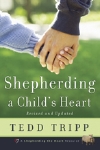
Biblical Parenting with Tedd Tripp

Tedd Tripp is a renowned Gospel-centered teacher.  His book, Shepherding  A Childs Heart is a must-read for Christian parents.  It is one fo the few resources I have run across that recognizes the heart as the center of development and change.  Most resources on parenting, including Christian parenting resources, focus more on various behavioristic techniques. Tripp recognizes that even if we can get our children to comply, outward obedience is not the objective of Christian discipleship, following the Lord out of heart-felt obedience is.  Tripp explores how targeting the hearts of our children – and revealing the passions and flaws in our own hearts – shapes the child from the inside out.

In October 2008 Tripp led a Biblical Parenting Conference at Mars Hill Church in Seattle.  Thanks to the folks at The Resurgence the audios of all five session of that conference are available for downloading:

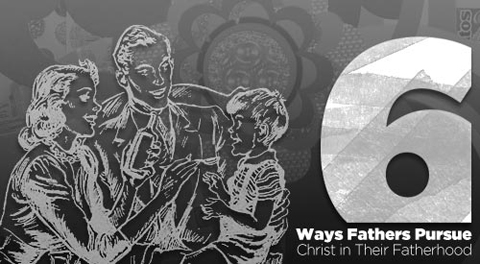
6 Ways to Pursue Christ Thru Fatherhood

Scott Thomas, President of Acts 29 Network, has recently posted a brief article outlining Six Ways Fathers Pursue Christ in Their Fatherhood.  In other words, these six principles applied together help fathers to grow in grace even as we seek to lead our families in grace.

The 6 ways are:  

  1. See their children as a blessing from God
  2. Understand that their children are born with a bent toward evil
  3. Believe the gospel is the good news for children
  4. Train their children to honor and obey
  5. Practice and demonstrate submission
  6. Love their wives

To read the whole article click: 6 Ways.

Pastor Dad: E-book by Mark Driscoll

Pastor Dad

Father’s Day has passed, but I just read a resource I thought I’d pass along to Dads and aspiring dads-to-be.  It is another e-book by Mark Driscoll of Resurgence and Mars Hill Church, this one titled Pastor Dad: Scriptural Insights on Fatherhood

The premise behind this free 48 page book is:

Every dad is a pastor. The important thing is that he is caring for his flock well.

Typical of Driscoll, this book combines sound Biblical insights with some of Driscoll’s brash, over-the-top, in-your-face applications.  So it is not a book for the overly sensitive or the timid.  But, while after a quick read I can say I don’t agree with all his positions, Driscoll’s thoughts are Biblial, practical, and worth considering for those who appreciate, or are at least willing to engage, his style.

The Gospel & Parental Sin

Last week I became rightfully angry at one of my children. (I won’t say which one.)  But in my anger I sinned against him. (Okay, the ‘him’ narrows it down some.) I had neglected the counsel of King David, who wrote: “In your anger do not sin.” (Psalm 4:4)  In my reprimand I was way too harsh.

A few moments later I went back and apologized. While remaining firm about his offense, I told him my offense was even worse and asked for his forgiveness.

Things are normal now.

I am sure I am not the only parent who has crossed this line. In fact we all do. And we may wonder what the lingering effect will be on our child, and on our relationship… 

At such times we need to remind oursleves of the hope of the Gospel.

I appreciate C.J. Mahaney and, right now in particular, a very brief message of his I stumbled across this week titled: The Gospel + Parental Sin.    C.J. discusses our moments of failure as parents, and how the Gospel relates.

If you, like me, ever cross the line as a parent, I recommend taking the time to hear what C.J. has to say. (Run time = 2:39)