In Defense of Christmas Day

christmas-time

There is considerable debate concerning the birth date of Jesus Christ.  Many suspect he was born in April or May. Others suggest, and even celebrate, a January birth. 

Traditionally, of course, we cling to the 25th of December. 

The earliest recorded celebration of Christmas was in the year 86AD. It was about 40 years later before Christmas became a regular custom of the church, and even then it was only in some parts of the world.

Some people feel that celebrating Christmas at all is a prostitution of the event, citing both commercialism & possible pagan influence as reasons. 

A Roman holiday, Saturnalia, was annually celebrated from December 17-24, a week long celebration to Saturn.  This celebration marked the coming increase of daylight, and the diminishing of winter. It was the anticipation of Spring.  The people exchanged gifts, closed down schools & government offices. All official functions virtually ceased. And there was an increase of partying. 

With the excesses in gift giving and the antics at many parties during this season of the year, it is not difficult to sympathize with those who suggest that Christmas is no more than an attempt to “Christianize” a pagan holiday.

But, despite those non-Christians who rationalize that Christmas was just an attempt to copy & “Christen” Saturnalia; and the arguments of faithful Christians who want to determine a date more feasible to the world,  I cannot bring myself to accept that, in fact, Jesus was not born on December 25.   While I cannot be certain, I choose to accept the traditional date. 

Here’s why:

In the late 19th Century historian Alfred Edersheim wrote The Life & Times of Jesus the Messiah. It is sorta the standard for studying the life of Christ.  In Appendix VII Edershim offers a very interesting hypothesis of why it is most likely that Jesus was born on December 25. 

Let me summarize his reasoning:

We know that on August 5, AD70 the Temple in Jerusalem was destroyed by the Roman General Titus.  At that time, Jewish history records, and Josephus confirms, a group of priests, the Jehoiarib, was serving at the Temple. 

Some background: If you look back into OT history you will find that David divided the priesthood into 24 groupings – or 24 Courses – with each group serving for about two weeks at a time in the Temple.  This particular group – Jehoiarib – was the first Course. And they were serving at the particular time the Temple was destroyed. 

If you trace the service of the various Courses back through time, when you come to October a year before Christ was likely to have been born, you will find the Division of Abijah serving the first week of October. 

Now, who do we know that would be serving in the Temple with the Division of Abijah? 

Check out Luke 1.

We find that a certain godly priest named Zechariah, who had a wife named Elizabeth – but no children – served the Temple with the Course of Abijah. 

While serving at that time the Lord visited Zechariah, declaring that he & his elderly, barren wife would have a child.  Zechariah laughed at the very thought, and was struck speechless as a sign of the promise.  I suspect you know the story: Elizabeth did conceive and gave birth to John the Baptist. 

From Luke we also know that John the Baptist was six months older than his cousin Jesus. 

Now, if you begin in early October, add nine months, then add six months to that, it brings us to mid to late December of the following year. 

It is very possible Jesus was born December 25. So it is historically & biblically appropriate to celebrate Christmas on the traditional date

Just something to think about; an interesting historical note…

If you are interested, check out Edersheim: On the Date of the Nativity of Our Lord.  It’s a short chapter.

A Christmas Quiz

german-manger-scene

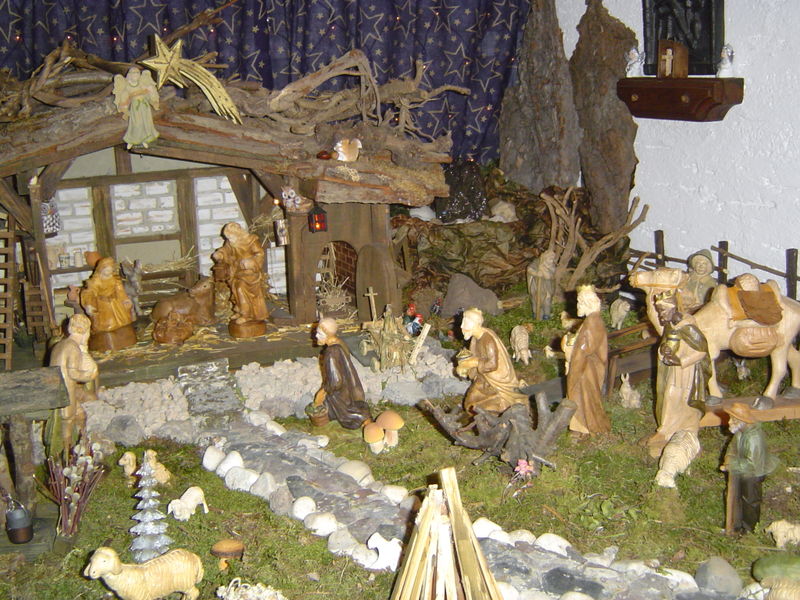
Test your knowledge of the Christmas Story using this quiz edited from LeadershipU & Probe Ministries.  A link to an answer key can be found at the bottom of the page. 

  1. Can you name the parents of Jesus?
  2. Where did Joseph and Mary live before they were married?
  3. What was the name of the angel who appeared to Mary?
  4. Where did Joseph and Mary live after their marriage?
  5. Where was Mary when the angel appeared to her?
  6. Whom did Mary visit immediately after Gabriel appeared to her?
  7. How far along in her pregnancy was Elizabeth when Gabriel appeared to Mary?
  8. How long did Mary stay with Elizabeth?
  9. Why didn’t Mary stay to celebrate the birth of John?
  10. How far along in her pregnancy was Mary when she broke the news to Joseph?
  11. Why were Joseph and Mary going to Bethlehem?
  12. Why did Mary accompany Joseph?
  13. What determined the city to which each Jew had to travel in order to be taxed?
  14. Who, then, would be in Bethlehem?
  15.  Why couldn’t Joseph and Mary find space in the inn?
  16. Who were the first people to come to see Jesus according to Scripture?
  17. What chorus did the angels sing to the shepherds?
  18. What sign did the angels tell the shepherds to look for?
  19. What was the manger?
  20. In what way do the meaning of the Hebrew term for Bethlehem and the sign given by the angels prepare us for Jesus’ later ministry?
  21. What are two reasons that Joseph and Mary took Jesus to Jerusalem?
  22. What are magi?
  23. How many wise men came to see Jesus?
  24. How many gifts did the wise men bring and to whom did they present their gifts?
  25. What was curious about the star?
  26. How did Herod use the star?
  27. Where were Jesus, Mary, and Joseph when the wise men reached them?
  28. How old was Jesus at this time?
  29. In what year was Jesus born?
  30. How long was Jesus in Egypt with His parents?
  31. How did Joseph and Mary finance the trip to Egypt?
  32. Where was Jesus raised upon His return to Israel?

 Click: Answer Key

Jimmy V Week for Cancer Research

According to ESPN, this is Jimmy V Week.  It is a week when ESPN, in conjunction with the V Foundation, remember former North Carolina State Basketball Coach Jim Valvano, and raise funds for Cancer Research. 

Watch Coach V’s powerful message that kicked off this foundation shortly before his passing in ’93: 

I don’t comment about it often, but because I am a cancer survivor, and because I see how many people are struck by this awful disease, this cause is one I wholeheartedly endorse.

Enduring Aroma of the Gospel

painters-cup

People don’t earn God’s approval or receive life and salvation because of anything they’ve done. Rather, the only reason they receive life and salvation is because of God’s kindness through Christ. There is no other way.

Many Christians are tired of hearing this teaching over and over. They think that they learned it all long ago. However, they barely understand how important it really is. If it continues to be taught as truth, the Christian church will remain united and pure — free from decay. This truth alone makes and sustains Christianity. You might hear an immature Christian brag about how well he knows that we receive God’s approval through God’s kindness and not because of anything we do to earn it. But if he goes on to say that this is easy to put into practice, then have no doubt he doesn’t know what he’s talking about, and he probably never will. We can never learn this truth completely or brag that we understand it fully. Learning this truth is an art. We will always remain students of it, and it will always be our teacher.

The people who truly understand that they receive God’s approval by faith and put this into practice don’t brag that they have fully mastered it. Rather, they think of it as a pleasant taste or aroma that they are always pursuing. These people are astonished that they can’t comprehend it as fully as they would like. They hunger and thirst for it. They yearn for it more and more. They never get tired of hearing about this truth.

– Martin Luther

The Times They Are A-Changin’

With proper dues to Bob Dylan, “The times they are a-changin'”.   I found that glaringly evident when, earlier this week, someone sent me the following video that was oringianlly presented to a gathering of SONY executives.

When I watch this video I find myself wondering about the implications for the church, especially as it relates to our mission to extend the Gospel to the ends of the Earth.  Some things are exciting, others a little unnerving.  See what you think.

I’d be interested in any thoughts that come to mind.

Prerequisites for Effective Prayer

7635039-lg

In order to have an effective prayer life Scripture teaches that there are certain prerequisites.  Among them:

1. Relationship

We must have a relationship with God the Father, which comes only through a relationship with Jesus. (John 14.6)  The preface to the Lord’s Prayer makes a distinction between those who have a right to call God Father and Hypocrites (those who claim the name but have no real interest in or connection with God), and Pagans (those who worship the things of the earth: Nature, self, etc.).  Only those who are Children of God are promised that their prayers will be heard. (See Matthew 6.5-9)

2. Reflection

It is required that we come with some understanding of who God is, and who we are; that God is Holy and Almighty, and we sinners and needy.

3. Righteousness

James 5.16 tells us that the prayers of the righteous are powerful and effective.  There must be some elelment of righteounsess in our lives.

Righteousness defined is: right actions motivated by genuine faith.  Both components are necessary.  Faith comes first, as a gracious gift from God.  It is not something we muster, but receive.  But our faith, if it is genuine, will express itself through outward behaviors.  These behaviors themselves merit us nothing, but are evidences of Faith; they are evidences of a relationship with the Father.

Conclusion

There are requirements in prayer, such as asking, and asking for right things in accordance with God’s Will, and asking with right motives.  But those are not what this post is about.  This post addresses some prerequisites, conditions of our lives enabling us to pray effectively.

The first of these three prerequisites is enduring, it does not change back and forth.  (However, if one does not have a relaionship with God through Jesus, that status can be changed.  But once changed, God does not forget those whom he knows.  John 10.28-29

The last two can change somewhat.  While we are not likely to “un-know” what we know; and once declared righteous by God through faith in Christ (see Galatians 3.6) we do not loose that status, there are actual or functional aspects to both Faith and Righteousness.  Reflection is the exercise of Faith, which like a muscle needs to be used to be strengthened, otherwise it may experience something like atrophy.  Righteousness is the active living out our faith. 

If our prayer lives are dull or ineffective, we would do well to examine if we are negligent in either of these areas.

What About Gay Marriage?

 comet-mcnaught

Anger at the disproportionate number of African Americans who voted for California’s same-sex marriage ban “has been widely noted”, says Jeff Jacoby in the Boston Globe. But “for sheer hatefuless” the “hatemongering” directed against Mormons for pushing the ballot measure can’t be beat.  (See The Week for full article.)

I’ve watched the news with some amazement at the craze taking place in the streets of California.  I have little sympathy for the protesters, at least for the position that is mobilizing them.  But I find myself reacting the the charges they levy: bigotry and fear. 

While concerned about the cultural repercussions if “gay marriage” receives constitutional support, I don’t believe I live in “fear”. In one sense, if this measure passes, some things will become more vividly clear, such as those who are committed to Biblical standards concerning marriage and those who are not.  The words of the Apostle Paul come to mind:

Do everything without complaining or arguing, so that you may become blameless and pure, children of God without fault in a crooked and depraved generation, in which you shine like stars in the universe as you hold out the Word of Life. ” (Philippians 2.14-16

In other words, those who maintain the characteristics of godliness shine like stars against the dark backdrop of the culture.  Therefore, if this measure passes in California, and elsewhere, it is not a cause for fear, necessarily, but an opportunity to shine in contrast. 

However, Paul’s words also cause me a little discomfort. 

First, while faithful believers may stand firm and shine in contrast to darkness in the culture, there are others who share our opposition to same-sex marriages who do not shine in the same way. In fact, some don’t shine at all. They are just what they are accused of being: bigoted and fearful.  I’m not sure that the differences of standards behind the sharing of  moral/political positions are always so obvious to those who hold the opposing view.  How, then, can we stand out like stars shining in the darkness, when some who stand with us are only a different shade of darkness from the culture they oppose? 

I’m sure that this difference is all the more distorted because many of us who are driven by Biblical standards are also tainted, to some degree or another, with the sins of bigotry and fear.  Our righteous motives are blended with unrighteous, sometimes even without our being conscious of the mixture.  To whatever extent this is true, the shine on our star is dimmed, at least somewhat.

Second, Paul’s words encourage us to do everything without complaining or arguing.  I’m not sure that from the perspective of the gay community, and their allies, that we Evangelicals have lived up to that counsel.  I’m not sure even from my own perspective that we’ve met that standard. 

Certainly the most militant proponents of “gay rights” don’t want to hear any Evangelical voice (nor do they support our right to a voice), but I am not confident we have exhausted all the means to express our voice.  We have used politics and the media to protect our position.  But have we expressed the full grace of the gospel with equal effort?  I’m not talking about a cheap grace that simply overlooks sin and calls it acceptable. I’m talking about the demanding gospel that demonstrates brokenness over our own sin – past and present – the experience of forgiveness in Chirst that reconciles us to God AND moves us out to love a broken and decaying world.  While this verse in no way mitigates our responsibility – and right – to stand up for righteous things, I have to wonder, if we lived out the gospel, if this was our primary voice, if there would be as many of our opponents who would hope we would just “shut up”.   Our civil rights are not abrogated, but we must not mistake exercsing our common civil rights as that which makes us stars.  It is the gospel embraced, lived out, and faithfully expressed, that makes us shine.  I suspect that is a voice that would be more readily heard.

Let me conclude with this: Many people are quite clear as to what their position is, but not as well thought out about the “why’s” behind the positions. 

Honestly, that is probably true of me.  I’ve given some thought, perhaps more thought than some others have, to this issue, but I’ve been pretty set in my position without wondering if there were some aspects I have been neglecting.  To the extent I have failed to clearly think through this polarizing issue, remaining ignorantly contented in my position, I suspect I am exercsing a form of bigotry.   And to the extent that I am willing to maintian my position without discerning how the gospel can be brought to bear to bring about reconciliation and greater resolution,  I am failing to shine.  I am not suggesting compromise and retreat, but reflection and humility. 

Dr. Geri Huminski has written a thought provoking article for Harvest USA titled: What About Gay Marriage?   Harvest USA is an uncompromising Evangelical ministry that reaches out to those who are effected by sexual addictions.  They offer a perspective, both experientially and biblically, that I don’t find elsewhere.  This article has helped me think more clearly about this culture defining issue.  I am still not sure I am ready to embrace all that is suggested (particularly in regard to taxes and shared benefits), but it is helping me think through both my “what” and my “why’s”.  

My hope is that I will be more shaped by the gospel and the advancement of the Kingdom of God than by the mere maintaining of the political status quo.  I suspect my “position” won’t change much, but maybe my shine can get a polish.

God Made Us to Pray

a-man-brought-to-his-knees

While studying this afternoon I stumbled upon this thought from J.I. Packer:

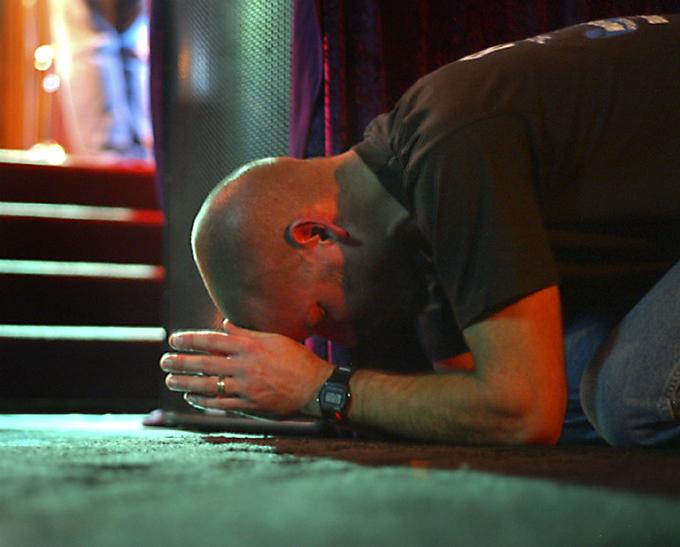
It is not too much to say that God made us to pray; that prayer is (not the easiest, but) the most natural activity in which in which we ever engage; and that prayer is the measure of a man in God’s sight. ‘What a man is alone on his knees before God,’ said the saintly Murray McCheyne, ‘that he is, and no more.’

Hi Ho, Hi Ho… It’s Off to the Polls I Go

abstractionxxxii

Call me old fashioned, but I don’t open presents before Christmas morning. And I don’t vote before election day. That’s not a point of pride. It’s just what I do.  I am comfortable that way.

I go off the the polls this morning comforted by these thoughts:

1.  I am confident about the “class” of both major candidates. Unlike in the last couple of elections, I don’t expect the loser to act with sour grapes, and threaten lawsuits to prolong the race.  I recognize that the election is likely to be close, and therefore perhaps not resolved tonight. I understand there is widespread concern about voter fraud that needs to be rectified, which may require some additonal time.  But I am not expecting a poor loser who will, even years later, still claim to have had the election “stolen”.  This year will be a refreshing change.

2. Regardless of who wins, God is still in control.  While he has not promised that all things will go to our liking, or even that we will experience only bliss if we follow Christ, nevertheless, my hope is in him.  My aim is to align myself to His eternal purpose, not to try to sway him to my determined purposes. 

My prayer: “Your will be done, not mine, O Lord.”

Gridiron Warriors

The final game of my sons’ 2008 football season has come and gone.  While in most respects it was a disappointing season for their teams, both of them accounted for themselves fairly well. 

This picture above was taken after the final game – a “W”.  It was special because our younger son, Matthew, a Freshman, who plays TE and DE, was invited to dress out with the varsity. This is the first time our boys have been on the same team, so we thought we would take a picture.  Also somewhat unique is that Matthew was given #1, while Andrew, a Junior, wears #2.

Work of Prayer

Prayer is work.  To be effective in prayer takes discipline and diligence, both of which are necessary ingredients in any successful endeavor.  If we suggest prayer is not work then I think we deceive people, and perhaps ourselves.  We may enjoy praying, as we might our jobs, but it is work nevertheless.

But prayer also works.  I don’t mean this as a simple cliche.  I have in mind the power and effectiveness that results from the labor of prayer. 

I was reminded of this a few weeks ago when I passed by an adult bookstore semingly too close to a local elementary school.

I wondered: How much effort would it take for one person to clean out an adult bookstore, or a seedy bar, and turn it into something useful and beneficial?  How much actual labor?  One would have to go in and discard all the inventory. That would certainly be hours and hours of work, to haul that stuff to a rented dumpster or the back of a pick-up truck.  If someone was undertaking this project on his spare time, it is reasonable that this initial phase alone could take days, or even spread out over a few weeks.  Then would come the need to clean up (which might even come first).  Everything would need to be scrubbed down and sanitized.  I imagine that would be several more hours, at least.  Then comes the fix-up, when painting and other details are put in place…

You get the idea.  To make a dent, even in a small facilty, would take hours and hours of backbreaking work.  Obviously, the time and energy would be cut down if others help in this project. 

It strikes me that effective intercessory prayer is like that. 

Let me explain:

God, in his sovereignty and providence, has placed his people (the Church) in particular places at particular times in history in order that we might be living expressions of the Kingdom of God. Our goal should not be to merely carve out a niche within our neighborhoods but the transformation of the whole community where God has placed us. (See Jeremiah 29.7)  To be satisfied with having a safe place within the community seems to me like just cleaning out one room in that adult bookstore and leaving the rest in tact.

Such transformation takes time and diligent effort.  But little by little things change and can shape up. However, it is God who does the heavy lifting for what would be back-breaking work for us. In many cases this work would be impossible for us.

Our work is to be diligent in prayer, focused and clear about what we see needing to be accomplished in a particualr place, or in a specific life.  We are not always certain about the amount of work that really needs to be done, or how much time it might take; and we may not find those things out until the work is underway. Change takes time, but it comes.  And if we are assisted by others who partner with us in intercession, the job is a little easier, and more enjoyable.

Prayer is the work we do.  And prayer works.

Mundane is Glorious

Mark Altrogge is a name some may recognize as the author of such worship songs as I Stand in Awe and I’m Forever Grateful.  Most probably won’t recognize the name or the songs.  Mark is also a pastor in Western Pennsylvania, affiliated with the Sovereign Grace Ministries network.

Mark has written a recent post, Mundane is Glorious, that touches on something the Lord is – and has been – teaching me.  I’m a slow learner. But Mark’s post is encouraging.  It helps me deal with my glaring lack of greatness.  He reminds me that it is not greatness that necessarily honors God, but faithfulness:

[God is] no more glorified by the pastor preaching to thousands than he is by the Mom trying to get her one-year-old to eat his Gerber peas for the hundredth time.

[God is] no more blessed by the man who leads thousands in worship than by the dad who runs a high lift all day, plays catch with his kids after dinner, and falls asleep reading a Bible story to his kids before bed.

If you ever wrestle with wonder about how God can, and does, view a life that is common, ordinary, and seemingly unremarkable, check out Mark’s post.  It is is a refreshing, and godly, perspective.

Prayer at the Plate

The World Series begins tonight, and I’ve been thinking about prayer. What do those things have in common?  Perhaps not much. But consider:

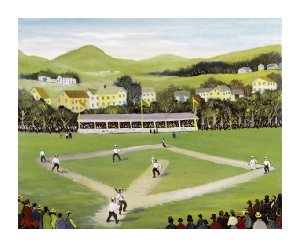
We all like home runs. We like to watch them. And if we are playing, we like to hit them.  But if a player goes to the plate trying to hit a home run with every swing, he will usually strike out and end up on the bench.  Effectiveness is found in making contact, and usually hitting a lot of singles that add up to runs.  

I think this is where baseball and prayer might connect. 

In prayer we also like the home runs – those things that are so amazing that we stand in awe when we see God at work and our prayers answered.  Even if we are not the one who offered the prayer, we like to watch and hear stories of others who had prayers answered in a BIG way.  We seem to admire those who are gifted for prayer, and may even be a little envious.  But the fact is, when we pray most of the time we will not hit homers.  Many times the situation does not even call for it. Yet faithful singles add up.  If we understand this we are less prone to get frustrated or disappointed.  And occasionally a surge of power will amaze us.

By the way: Go Phillies!!