To Speak or Not to Speak

I am torn.

According to a recent article by the Florida Baptist Witness, a group of concerned citizens are recruiting pastors to challenge a 55 year old law that prohibits non-profit organizations, including churches, from endorsing specific political candidates.  Practically speaking this law empowers the IRS to censor the content that is offered from church pulpits. 

On the one hand, I am sympathetic to this cause because I do not believe that anyone should censor legitimate speach.  In a free society political speach should not be censored. Further, while not being an alarmist, I am concerned that allowing the government this authority to regulate what is proclaimed from a church pulpit may one day broaden and include other issues that are moral-theological in nature but that have political implications – or that have simply become politicized.  The IRS is an agency with all authority and functions with a “guilty until proven innocent” M.O.  Having them as regulators is a dangerous proposition.

On the other hand, the pulpit is a place that should be unconditionally reserved for the proclamation of the Gospel.  PERIOD! While I do not like my civil rights infringed, I have no right, under God’s direction, to use the pulpit for anything other than declaring, teaching, and applying God’s Word.  Political speach becomes an easy – and often seductive – substitute for the real responsibility that ministers of the Gospel are charged to do.  Loosening the present law will not change my conviction, nor my practice, whatsoever.  But if the present law will keep some of my clergical colleagues focused on our collective purpose, well, that seems to be a good thing.

For those interested in this discussion, you might want to check out: Speak Up Movement

Idol Factory

John Calvin said:

“The human heart is a factory of idols… Every one of us is, from his mother’s womb, expert in inventing idols.”

This truth is difficult to convey. Few people think of themselves as idolators. And when I as a pastor, or a friend, suggest to people that they – like me – struggle from this affliction, the most common response is a grinning dismissal.

For most people the concept of idolatry conjurs mental images of statues and shrines. And since few people I encounter would knowingly do something as primitive as that, it is easy to understand why that notion is so easily ignored.

Nevertheless it is a condition that needs to be recognized.  We need to recognize it as a general condition of humanity. And each of us needs to discover what kinds of idols our own hearts are producing. You see, what my production center cranks out is different than what your production center develops – both in product and in volume.

In a recent post, titled X-Ray Questions, Scott Thomas, President of Acts 29 Network succinctly addresses this subject. And in that post he offers 35 X-Ray Questions for the Heart.  Thomas’ challenge:

Examine the following questions and ponder your heart for the existent idols and then crush the idols of our heart before they crush you.

  1. What do you love? Hate?
  2. What do you want, desire, crave, lust, and wish for? What desires do you serve and obey?
  3. What do you seek, aim for, and pursue?
  4. Where do you bank your hopes?
  5. What do you fear? What do you not want? What do you tend to worry about?
  6. What do you feel like doing?
  7. What do you think you need? What are your ‘felt needs’?
  8. What are your plans, agendas, strategies, and intentions designed to accomplish?
  9. What makes you tick? What sun does your planet revolve around? What do you organize your life around?
  10. Where do you find refuge, safety, comfort, escape, pleasure, and security?
  11. What or whom do you trust?
  12. Whose performance matters? On whose shoulders does the well being of your world rest? Who can make it better, make it work, make it safe, make it successful?
  13. Whom must you please? Whose opinion of you counts? From whom do you desire approval and fear rejection? Whose value system do you measure yourself against? In whose eyes are you living? Whose love and approval do you need?
  14. Who are your role models? What kind of person do you think you ought to be or want to be?
  15. On your deathbed, what would sum up your life as worthwhile? What gives your life meaning?
  16. How do you define and weigh success and failure, right or wrong, desirable or undesirable, in any particular situation?
  17. What would make you feel rich, secure, prosperous? What must you get to make life sing?
  18. What would bring you the greatest pleasure, happiness, and delight? The greatest pain or misery?
  19. Whose coming into political power would make everything better?
  20. Whose victory or success would make your life happy? How do you define victory and success?
  21. What do you see as your rights? What do you feel entitled to?
  22. In what situations do you feel pressured or tense? Confident and relaxed? When you are pressured, where do you turn? What do you think about? What are your escapes? What do you escape from?
  23. What do you want to get out of life? What payoff do you seek out of the things you do?
  24. What do you pray for?
  25. What do you think about most often? What preoccupies or obsesses you? In the morning, to what does your mind drift instinctively?
  26. What do you talk about? What is important to you? What attitudes do you communicate?
  27. How do you spend your time? What are your priorities?
  28. What are your characteristic fantasies, either pleasurable or fearful? Daydreams? What do your night dreams revolve around?
  29. What are the functional beliefs that control how you interpret your life and determine how you act?
  30. What are your idols and false gods? In what do you place your trust, or set your hopes? What do you turn to or seek? Where do you take refuge?
  31. How do you live for yourself?
  32. How do you live as a slave of the devil?
  33. How do you implicitly say, “If only…” (to get what you want, avoid what you don’t want, keep what you have)?
  34. What instinctively seems and feels right to you? What are your opinions, the things you feel true?
  35. Where do you find your identity? How do you define who you are?

Two other worthwhile resources on this subject:

Humble Calvinism: The Idol Factory

Idol Factory – A Series of messages by C.J. Mahaney & Mark Driscoll

Centered on the Gospel

What does it mean for a church to be gospel-centered?  That’s a popular concept these days.  What if we were scrambling to be law-centered?  The difference may not be so easy to see.

Ray Ortland adresses this question with keen insight and simplicity in his brief post: Centered On One or the Other

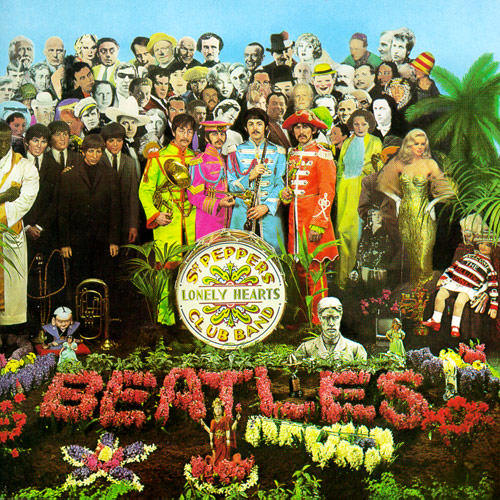
And what does the cover from the Beatles’ Sgt Pepper album have to do with anything?

Well, you’ll have to read the post. Ray explains that too.

2010 NCAA Basketball Championships – South Region


 Here are my bracket predictions for the South Region of the 2010 NCAA Basketball Championship.  Where there are parentheses it simply indicates I predict the team I want to see win will be defeated.

First Round

  • Duke > Arkansas-Pine Bluff
  • Louisville > California
  • Texas A&M > Utah State
  • Purdue > Siena
  • Old Dominion > Notre Dame
  • Baylor > Sam Houston State
  • Richmond > St. Mary’s
  • Villanova > Robert Morris

Second Round

  • Duke > Louisville (Lousiville)
  • Texas A&M > Purdue
  • Baylor > Old Dominion
  • Villanova > Richmond

Third Round – Sweet 16

  • Duke > Texas A&M
  • Villanova > Baylor (Toss Up)

Fourth Round – Elite 8

  • Villanova > Duke

2010 NCAA Basketball Championships – West Region

Here are my bracket predictions for the West Region of the 2010 NCAA Basketball Championship.  Where there are parentheses it simply indicates I predict the team I want to see win will be defeated.

First Round

  • Syracuse > Vermont
  • Gonzaga > Florida State
  • UTEP > Butler
  • Vanderbilt > Murray State
  • Xavier > Minnesota
  • Pittsburgh > Oakland
  • Florida > BYU
  • Kansas State > North Texas

Second Round

  • Syracuse > Gonzaga
  • Vanderbilt > UTEP
  • Pittsburgh > Xavier
  • Kansas State > Florida (Florida)

Third Round – Sweet 16

  • Vanderbilt > Syracuse
  • Pittsburgh > Kansas State

Fourth Round – Elite 8

  • Pittsburgh > Vanderbilt
  • 2010 NCAA Basketball Championships – East Region

    Here are my bracket predictions for theEast Region of the 2010 NCAA Basketball Championship.  Where there are parentheses it simply indicates I predict the team I want to see win will be defeated.

    First Round

    • Kentucky > East Tennessee State (ETSU)
    • Wake Forest > Texas
    • Temple > Cornell
    • Wisconsin > Wofford
    • Marquette > Washington
    • New Mexico > Montana
    • Clemson > Missouri
    • West Virginia > Morgan State

    Second Round

    • Kentucky > Wake Forest
    • Temple > Wisconsin
    • New Mexico > Marquette
    • West Virgnia > Clemson

    Third Round – Sweet 16

    • Kentucky > Temple
    • West Virginia > New Mexico  (Toss Up)

    Fourth Round – Elite 8

  • Kentucky > West Virginia
  • 2010 NCAA Basketball Championships – Midwest Region

    Here is my prediction for the Midwest Region of the 2010 NCAA Basketball Championship.  Where there are parentheses it indicates the team I wanted to see win but I predict will be defeated.

    First Round

    • Kansas > Lehigh
    • UNLV > Northern Iowa
    • Michigan State > New Mexico State
    • Houston > Maryland
    • Tennessee > San Diego State
    • Oklahoma State > Georgia Tech
    • Ohio State > Cal – Santa Barbara

    Second Round 

    • Kansas > UNLV
    • Michigan State > Houston
    • Georgetown > Tennessee (Tennessee)
    • Oklahoma State > Ohio State

    Third Round – Sweet 16

    • Kansas > Michigan State
    • Georgetown > Oklahoma State (OSU)

    Fourth Round – Elite 8

  • Kansas > Georgetown (Georgetown)
  • Teenagers: Tendency Toward Legalism

    Do you remember a Brady Bunch episode where Greg and his parents got into a debate about “Exact Words”?  Greg, who had been grounded from driving, when confronted about borrowing a friends wheels, insisted that his parents only instruction to him was that he was not drive the family car.    The rest of the episode is an illustration of the difficulty of livng by exact words.

    What I never realized was that this episode also illustrated a more universal principle. 

    According to Paul Tripp:

    “Teenagers have a natural tendency toward legalism.”

    What parent has not heard something like:

    • “You didn’t say I couldn’t…” or
    • “You didn’t tell me to.. today”  

    I’ll have to be honest, sometimes my kids are technically correct. BUT still, …we all understand, by common sense, what should have been expected.

    Such statements are merely expressions of this tendency toward legalism. 

    There is no use trying to make certain we are right.  There is no sense in trying to be more clear in our instructions.  We need to recognize this for what it is: Legalism. And we need to get across to our teenagers that, in the end, legalism does no one any favors.

    Our teenagers need to understand, not only the lesson Greg Brady learned in that episode, but more importantly they – and we – need to be reminded what Paul says in Galatians 3.10:

    “All who rely on observing the law are under a curse, for it is written: “Cursed is everyone who does not continue to do everything written in the Book of the Law”

    ***

    This is the Second in a series of six posts elaborating on the insights Paul Tripp offers in his book Age of Opportunity.  To read the others click: Teen Tendencies & Temptations.

    Is “Missional” Just “Evangelistic”?

    In his book The Present Future, Reggie McNeal reveals the contrasts in the different ways leaders can think about the church and its ministry. McNeal reveals the different paradigms that pastors can have as they fulfill their ministry in the church.  Being missional is first a shift in thinking about the nature of the church. Once a missional understanding is adopted, the way we do church begins to change.

    1. A missional church stresses community transformation over growing the church.
    2. A missional church strives to turn members into missionaries over turning members into ministers. 
    3. A missional church focuses on recovering Christian mission over doing church better.

    In the above video, Tim Keller also offers some insights about the missional church. Keller explains why this label – Missional – is not just new slang for being Evangelistic.

    For those who want to explore a little more, let me suggest reading Timothy Corwin’s blog post Being Missional: Is There Really a Difference?  Tim is pastor of The Rock Church of Saint Louis, and has written several thoughtful pieces about the missional church.

    Revivals Begin With God’s People

    “Revivals begin with God’s own people; the Holy Spirit touches their heart anew, and gives them new fervor and compassion, and zeal, new light and life, and when He has thus come to you, He next goes forth to the Valley of Dry Bones…

    Oh, what responsibility this lays on the Church of God! If you grieve Him away from yourselves, or hinder His visit, then the poor perishing world suffers sorely!”

    ~ Andrew Bonar

    A Missional Church IS…

    A missional church is rooted in the purpose of God, and understands that God is on a mission to reclaim a People for himself and restore a Creation to it’s orignal beauty. This is known as missio dei – Mission of God.

    A missional church recognizes that our culture in North America is no longer an expression of Christendom.

    Christendom was a period in history when Christianity was the prevailing religion. During this time Christian thought, directed by the Bible, provided the lense through which people evaluated the world.

    We can no longer assume that:

    • People are part of a congregation.   In the past, most people had some affiliation with a church. Now, most people have no connection with a church, increasing numbers of people have never even been in a church.
    • People define Right vs. Wrong based upon some understanding of God’s Standard.
    • People necessarily care what the Bible says, much less that most people have any understanding of what it teaches. 

    Consequently:

    1. The church can no longer serve as chaplain to a culture, and a People, as if they only need encouragement along Life’s Journey.
    2. Each congregation must engage the culture(s) in the community where God has sovereignly placed us in the same way that a missionary must engage a foreign culture:
    • Learning to understand before trying to be understood.
    • Presuming our neighbors have no previous understanding of God and the Gospel – or at best they have a fragmented and distorted understading.
    • Look for Redemptive Analogies – stories from within the culture that reflect the truths of God and the Gospel.
    • Loving a People who may reject us, and even hate and harm us.

    The church must:

    1. Grow inwardlay strong yet Outwardly Focused.
    2. Be MORE Incarnational than Attractional
    3. Evaluate all ministries with a missional lense.

    In summary: A Missional Church pours itself out on the community, seeking cultural transformation more than its own prosperity.

    Teenagers: Lacking a Hunger for Wisdom

    No one likes to be corrected, but the wise person learns to appreciate correction that comes from a reliable source. 

    Proverbs 13.18 tells us:

    He who ignores discipline comes to poverty and shame,
           but whoever heeds correction is honored
    .

    This is a lesson all of us need to remind ourselves.

    But according to Paul Tripp this lesson is perhaps especially appropriate for teenagers. According to Tripp, in his book, Age of Opportunity, teenagers have a “Lack of hunger for wisdom or correction.”

    What Tripp is saying is: It is not only that teens generally are lacking wisdom, one of the common traits is that they don’t even look for it. They are not aware they are in need of it. 

    That teens lack wisdom should easily be understood. Wisdom comes only from experience and correction. Teens have generally not lived long enough to have developed wisdom.  And sadly, even those teenagers who have experienced too much of the hard realities of this world still lack wisdom.  This is evident in that they are often the ones who are in the most trouble. Likely this is because, while teens who have had to grow up too fast have experience, they have usually not experienced necessary correction.  They have been left to their own instincts. They have not had wisdom imparted to help them assess their experiences and learn to discern right from wrong; wisdom from foolishness. 

    Realizing that teenagers are in need of wisdom is a great place for parents and teachers and youth workers to begin. But, along with that knowledge, we must also remember that teenagers’ limited experience and perspective leaves them with a lack of felt need for wisdom. Put more susinctly, teens are not aware that they are in need of wisdom, so they don’t seek it, they don’t hunger for it.

    So, what do I take from all this?

    1. If we who work with teens want to make a positive impact we ought to remind ourselves of a few things:

    • the importance of wisdom,
    • the need for teens to develop wisdom
    • the understanding the usual teenage apathy, even antipathy, about developing wisdom   

    2. Perhaps we will be diligent in our approach to:

    • Make a priority of cultivating wisdom
    • Whet the appetite for wisdom

    3. Perhaps we will use the book of Proverbs as a guide and tool in our parenting and discipling. If we do, we can help the teenagers in our lives, and in our churches, develop a positive perspective to apply to their experiences.

    ***

    This is the First in a series of six posts elaborating on the insights Paul Tripp offers in his book Age of Opportunity.  To read the others click: Teen Tendencies & Temptations.

    Resurging Calvinism

    Jonathan Dodson, of Acts 29 Network, has posted a great synopsis of beliefs in an article titled: The Message of Resurging Calvinsm.  This falls into the category of: I Wish I’d Written That –  it so simply and concisely summarizes what I have been teaching at Walnut Hill Church.

    Dodson clearly describes 5 areas of important Faith distinctives:

    1. Gospel vs. Religion
    2. Us vs. Them
    3. Big vs. Small
    4. Conservative vs. Liberal
    5. Suburban & Urban

    In this post there are some references to the New Calvinism. In some respects this label seems a bit of a misnomer since, it seems to me, it is really a just a great expression of healthy Calvinism… But I don’t want to be nit-picky.

    Teen Tendencies & Temptations

    The teen years are both exciting and exasperating as young men and young women try to find themsleves and find their place in this world. 

    When I think back to my own teen years I am regularly filled with a feeling wishing I could have a do-over, in every sense of that phrase.  There are some aspects of my teen years that were so exciting and memorable that, were it possible, like a fun ride at an amusement park, I’d like to do them all over, and over again.  Then there are other parts of my teen years, as I think of them, with a feeling like one gets when just receiving a bad grade on an exam, I wish I could go back and do everything all over again differently

    I know that, while my personal experiences may be unique, almost everyone has those same sentiments about their own teen years.

    What is it about those years that makes them so turbulent?

    Paul Tripp, in his book, Age of Opportunity, writes:

    If you were to look in your Bible concordance for all the verses about teeneagers, you would find none. The period of life we call adolescence is a fairly recent invention. Yet, at the same time, the Bible gives us wonderful descriptions of the tendencies of youth. Many of these are found in the book of Proverbs.

    The first several chapters of Proverbs record a wise father giving practical life advice to his son. AS I have studied these chapters, I have found the sorts of things we will encounter with our teenagers.

    What Tripp writes is in line with something I have told my own teenagers and the high school students in our church: If there is any book of the Bible written for teenagers, it is the book of Proverbs. 

    Tripp outlines 6 characteristics common in teenagers that would be helpful for parents and youth workers to consider. In fact, I think they might be helpful for teenagers to consider as they try to find themsleves and find their place in this world.  Not all of these will be equally true of all adolescents, but I suspect it would be a rare teenager who does not exhibit some combination of these traits:

    1. Lack of Hunger for Wisdom or Correction
    2. Tendency toward Legalism
    3. Tendency to be Unwise in Choice of Companions
    4. Susceptibility to Tempations to Sexual Sin
    5. Absence of Eschatological (Eternal) Perspective
    6. Lack of Heart Awareness

    Continue reading