Worship
Why Do We Read Prayers & Creeds?
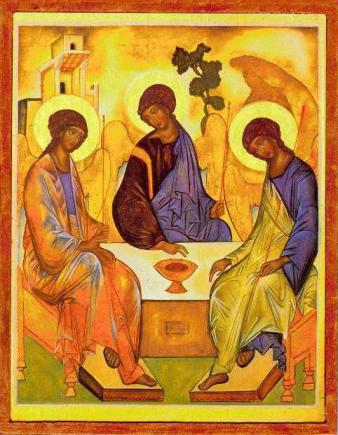
Why do we read prayers and creeds in our worship services?
The answer is simple. It is because the WHOLE Church is called a priesthood.
But you are a chosen race, a royal priesthood, a holy nation, a people for his own possession, that you may proclaim the excellencies of him who called you out of darkness into his marvelous light. (1 Peter 2.9)
So, since ALL the people of God are priests, shouldn’t we all be actively involved in the priestly function – worship? If we are all priests, we should all not only be present for and participating in worship, we should all be conducting worship.
In worship services, the worship leaders & musicians lead, but the people are actually performing the worship. The people are enabled to do this when they are given tools to read & respond. These tools are not replacements of the Bible. On the contrary, many even most tools are excerpts from the Bible. These tools should be seen as to the liturgy of worship what the hymnal is to the musical aspect of worship. They are intended to equip the people for doing the work of the priesthood.
The recited prayers are also part of the training manual for worship. They are not the only kind of prayers we should use during a service. Usually there will also be “free” prayer during worship. But the set prayers follow Biblical examples such as The Lord’s Prayer. They are usually well-stated prayers that uniquely express the common needs of God’s people. They are sometimes called collects because they are a collection of the needs of Christians that are brought to God by those who pray.
Set prayers are prayers that have a unique history to them. The following prayer has a special story attached to it:
“O God, who art the author of peace and lover of concord, in knowledge of whom standeth our eternal life, whose service is perfect freedom; defend us thy humble servants in all assault of our enemies; that we, surely trusting in thy defense, may not fear the power of any adversaries, through the might of Jesus Christ our Lord. Amen.”
This prayer was written by a minister in the city of Rome sometime during the fourth century A.D. It was composed at a time when barbarians were about to conquer the city. On the night on which it was prayed, the barbarians mysteriously left and never came back. The Church has kept this prayer which God so profoundly honored.
While this prayer was offered at a particular time in history, if one considers what is expressed we will see the near universality of what is expressed. We all, at one time or another, face assault from some enemy; we all, at times, have our freedom threatened. So, while the origin of the prayer may have been in the fourth century, we can easily see the adaptability and the contemporary applicability it posesses.
The common objection, though to such “read prayers” is that they are not sincere. They are someone else’s words. They did not originate in our hearts or minds. They are therefore somehow inauthentic, or disingenuous. But this is not necessarily the case. People read vows at a wedding or even memorize what they want to say. Does this mean that they are insincere? Hardly. In fact, people very carefully choose their words when they are important and they really have to mean them. Remember, this is how people act at special occasions before special people. And to assume that offering to God words that someone else wrote in inherently inauthentic, inappropriate, would effectively eliminate any singing at church. We sing songs with lyrics written by others. Yet we understand that when we embrace the words written for us, when we personalize the sentiment, something very real, very personal often occurs through our singing in worship. I don’t think I have ever heard anyone object to that.
Just imagine what worship would be like if we placed the same restraints on singing as some want to place on praying. If everyone could only sing songs they had themselves written, or at least sing only lyrics they had composed – composed spontaneously on the spot – we would have a cacophony, not harmony! It would be a horrible experience! Are songs we sing – musical prayer, or musical expressions of praise – supposed to be any less intimate than spoken prayers? Yet we do not place such artificial restraints on our singing. (Thankfully!)
But how about the repetition? Doesn’t this lead to deadness? Again: No. People usually benefit from repeating what they love. Favorite, oft-recited portions of scripture such as Psalm 23, The Lord’s Prayer, and The Beatitudes all serve to illustrate this. How about certain hymns, Christmas carols, or simple songs such as Jesus Loves Me? These are repeated by the same people over and over. Does the repetition mean they are insincere or don’t mean what they say? Not at all. They are repeating what they love. More important, they are repeating what they mean. In fact, repetition is sometimes more difficult for people when they don’t mean what they are saying. And so it is true of every aspect of worship.
Finally, repetition has been called the “mother of learning.” Repetition is a way of learning basic elements of anything, including worship. Most Christians don’t know how to worship because they have been led to believe that it only comes naturally. But tt doesn’t come naturally. Perhaps it should, but it does not. At least not since the Fall, when sin entered into our world. In fact, nothing in the Christian life come naturally. It must be learned. (Why else would Jesus have to teach us to pray, as he does by the Lord’s Prayer?) And since repetition is the most basic way of learning, the worship service involves repeating certain important parts, which leads to learning.
Now Why This Fear
Now why this fear and unbelief?
Has not the Father put to grief
His spotless Son for us?
And will the righteous Judge of men
Condemn me for that debt of sin
Now canceled at the cross?Chorus
Jesus, all my trust is in Your blood
Jesus, You’ve rescued us
Through Your great loveVerse 2
Complete atonement You have made
And by Your death have fully paid
The debt Your people owed
No wrath remains for us to face
We’re sheltered by Your saving grace
And sprinkled with Your bloodBridge
How sweet the sound of saving grace
How sweet the sound of saving grace
Christ died for meVerse 3
Be still my soul and know this peace
The merits of your great high priest
Have bought your liberty
Rely then on His precious blood
Don’t fear your banishment from God
Since Jesus sets you free
~ from The Gathering: Live from WorshipGod11
Lyrics by Augustus Toplady
Why Do We Come For Worship?

The answer to the question, “Why do we come for worship?” determines everything about the service. And it can only be answered one of two ways: We are in worship for God or we are there for man.
If we come to worship for man, we become principally concerned with such questions as:
- Are we having a good time?
- Is this service giving us a good feeling?
- Are we getting good fellowship?
- Do we like the preacher?
- Are we moved by the sermons?
These questions have one common denominator: They reflect man-centered purposes for worship, because they all have to do with man.
Don’t misunderstand. Many of these question touch legitimate concerns. But they are not sound Biblical purposes for worship.
The Bible clearly teaches that the purpose of worship is for God. The Apostle Paul rebuked a group of Christians for putting their own selfish desires before God’s glory, for “coming together” for man-centered reasons. The Corinthian church cared only about stuffing their own mouths, having a good time, and celebrating together. They had lost sight of the real purpose which was to “show forth the Lord’s death” (1 Corinthians 11:26). They were not to be taking the Supper primarily for themselves, but for the Lord. How they felt and what they liked were not reasons for coming to worship.
As a matter of fact, Christians may not feel good when they come together. In the same passage the Apostle Paul says Biblical worship will make some people sick if they come for the wrong reason (1 Corinthians 11:30). They may begin to feel miserable or sick because there is sin in their lives. They are made to feel this way so that they will repent. How we feel or even what we think about Biblical worship is not the point. We are not the point at all. God is. We come to worship Him!
Once we’ve settled why we come for worship, the rest falls into its Biblical place.
Cell Phones in Church
This seems reasonable to me…
Sentimentality in Worship

In his book, Worship: Together We Celebrate, Leslie Flynn notes:
In many churches the art of worship has markedly declined. The so-called hour of worship has become a time when mind and emotions are anesthetized into neutral. Out of habit, church obligation, affection for the minister, peer pressure, family togetherness, patriotism, or community expectation, people sink into their usual pews.
I don’t know Leslie Flynn, nor much about him. (In fact, I didn’t even know Leslie was a “him” when I wrote the first draft of this post.) But while I may not know much about Leslie Flynn, I do concur with his assessment.
Worship of the One True God, which is an action hardwired into the essence of humanity and, as John Calvin once said, is “our highest calling and most noble endeavor”, is a largely misunderstood and vainly practiced experience. Genuine worship, as Tozer lamented, has too often been replaced by a “program” or “show”.
While I sympathize with Flynn’s lament of vapid reasons that motivate many people to occupy a pew, his assessment that emotions have been “anesthetized” resonates even more. I am disappointed whenever I participate in an emotionless worship service, whether the absence is from within me or in the general atmosphere. Genuine and acceptable worship carries deep and real passions, and engages both the head and the heart. But I am at least equally chagrined when I participate in a service where emotion is present but substance is lacking. In such cases, which are all too common, what is passing for worship is really various forms of sentimentalism.
What’s the difference?
I am thankful that the folks from the Center for Christian Study in St Louis have taken the time and effort to describe the differences, giving both examples and historical patterns. Their perspective in a Q & A session below is worth consideration:
Q: You say biblical music is emotional, but you reject sentimental music in corporate worship. What’s the problem with sentimentality, and how can you develop emotion in worship?
Sentimental music is music with lyrics directly addressing the affections. All worship music should work on the affections, but there are two ways of doing this.
The biblically faithful way to work the emotions in music is indirect – through God-centered content. A song addressed to God, a song that proclaims his holiness, power, transcendence or grace, or which expresses to him our utter needfulness of him; such songs work the heart with the head.
A sentimental song seeks to bypass the mind and speak to the emotions directly. It’s the “I’m so happy” syndrome. If you sing about being happy, you won’t necessarily be happy. In corporate worship, sentimental lyrics communicate how we’re supposed to feel, rather than directing us to a God who is altogether desirable.
Sentimentality can work in private worship, provided you actually feel the way the lyrics say you should feel. It doesn’t work in corporate worship, however. What actually frees us to worship God is a demonstration of who God is and how he is committed to us. It’s the truth that sets us free, not singing about how syrupy we feel (or don’t feel, turning us further inward on ourselves).
All I Have is Christ
I once was lost in darkest night/Yet thought I knew the way/The sin that promised joy and life/Had led me to the grave/I had no hope that You would own/A rebel to Your will/And if You had not loved me first/I would refuse You still
But as I ran my hell-bound race/Indifferent to the cost/You looked upon my helpless state/And led me to the cross/And I beheld God’s love displayed/You suffered in my place/You bore the wrath reserved for me/Now all I know is grace
Hallelujah! All I have is Christ
Hallelujah! Jesus is my lifeNow, Lord, I would be Yours alone/And live so all might see/The strength to follow Your commands/Could never come from me/Oh Father, use my ransomed life/In any way You choose/And let my song forever be/My only boast is You
Rock of Ages
Some Guiding Principles for Worship

Most Christians would probably acknowledge that worship is important, essential even. But what exactly are we supposed to do? What is worship, exactly. Is it any thought or action offered to God?
Below are a few simple thoughts that I hope will be helpful to shape your practical expectations…
Corporateness
God calls us to worship Him together. The pictures of worship in the Pentateuch, Psalms, Revelation, etc., for example, are of throngs of people worshipping God… TOGETHER. We do not come to Sunday worship service to worship God individually. We come to worship Him as a church family together.
Costliness
We should be on time to worship service. We should sing our best and give attention to all that goes on in the service. We should make sure our children know the importance of going to worship. If we are leading in worship, we should maintain high standards of performance. Why? Because we should want to give God the best. He deserves it.
Our attitude ought to be like King David’s, who said:
“I will not offer to God that which costs me nothing” (2 Samuel 24.24)
Drama
Worship should engage our intellect and emotions. Our worship service is designed to have intellectual and emotional tension, challenging and stimulating the mind and heart.
Physical Expression
Not only should worship engage our intellect and emotions, but it should involve our bodies, too. The Bible gives us examples of how to use our bodies to worship God:
- Standing – Nehemiah 9.2-3
- Kneeling – Psalm 95.6
- Clapping – Psalm 47.1
- Raised Hands – Psalm 134.2
Each of these actions demonstrates a recognition of a different attribute of God:
- His majesty
- His creatorship
- His victoriousness
- His power for healing
Newness
In the Bible, we see the use of both that which is ancient & time-honored, as well as that which is new & spontaneous. Our worship is a blend of the use of traditional music & liturgies, which ground us in the worship of the Church Universal, and contemporary songs and newly-created prayers, creeds and litanies, which allow us to express ourselves in our contemporary culture and to use the creative imagination God has given us.
Responsibilities
> Of the Congregation
The members of the congregation are, ultimately, all responsible for worshipping God. This is one of the implications of the priesthood of all believers. (1 Peter 2.5) Our attitudes and actions are the primary elements of the worship service. We should participate fully in all elements of the liturgy because they are not meant solely, or even primarily, for our benefit, but for the glory of God. Our main concern should be: “Is God pleased with our worship?”
> Of Worship Leaders
There are many ways in which one can assist the congregation in worship:
- designing the worship service
- ushers & greeters
- managing the lighting and audio systems
- song leaders/cantors & singers
- instrumentalist
- leading in public prayer
- offering public testimony
- serving The Lord’s Supper
- collecting the tithes & offerings
- explaining God’s Word
All of these roles are meant not only to benefit the congregation directly, but to encourage the congregation to worship God… to give to Him the glory due His name.
Rock of Ages (When the Day Seems Long)
Out of the Depths
Holy is His Name
Indelible Grace: Roots & Wings
On the evening of June 30, 2010 I was in the Ryman Auditorium with a large group of great friends, rocking the rafters singing praises to our God. This video introduces the DVD that recollects that evening and celebrates the influence of the movement launched by Kevin Twit and Indelible Grace – a movement that reintroduced old hymns to a new generation, often putting substantive the old words with fresh new tunes.
The documentary DVD Roots & Wings is available at the Indelible Grace Music Store.
 GRACE & PEACE