Balance of Faith

Balance Act

A true, vibrant Christian faith is someting akin to a balancing act.

In a post this morning, Tim Keller suggested:

If we are going to grow in grace, we must stay aware of being both sinners and also loved children in Christ.

Keller’s paradigm reminded me of something Edward Payson – “Praying Payson of Portland” – wrote long ago:

True Christianity consists of a proper mixture of fear of God, and of hope in his mercy; and wherever either of these is entirely wanting, there can be no true Faith. God has joined these things, and we ought by no means to put them asunder.

He cannot take pleasure in those who fear him with a slavish fear, without hoping in his mercy, because they seem to consider him a cruel and tyrannical being, who has no mercy or goodness in his nature. And, besides, they implicitly charge him with falsehood, by refusing to believe and hope in his invitations and offers of mercy.

On the other hand, he cannot be pleased with those who pretend to hope in his mercy without fearing him. For they insult him by supposing there is nothing in him which ought to be feared. And in addition to this, they make him a liar, by disbelieving his awful threatenings denounced against sinners, and call in question his authority, by refusing to obey him.

Those only who both fear him and hope in his mercy, give him the honor that is due to his name.

Both Payson and Keller give credence to thw wisdom of Puritan Thomas Watson:

The two great graces essential to a saint in this life are faith and repentance. These are the two wings by which he flies to heaven.

10 Questions to Diagnose Your Spiritual Health

Da Vinci Anatomy (Red)

How are you doing, Spiritually?

That is an important question.  God repeatedly encourages us to examine our hearts.  And while many are aware that it ought to be our regular practice to take a spiritual pulse, I suspect that relatively few know how to read the gauges even if we were to try.

Consequently, if we are not sure what we are looking for, it follows that we are not always quite sure how to answer my initial question.

Don Whitney, of The Center for Biblical Spirituality, provides us with a helpful tool for use in measuring our spiritual health.  The 10 questions below are excerpted from his short book 10 Questions to Diagnose Your Spiritual Health.

Immediately below is a brief Introduction written by Don Whitney.  At the bottom of this post are the 10 Questions Whitney asks, each with a link to a brief post devoted to the particular question.

Let’s see how we are doing… And let’s ask ourselves – and each other – these questions often.

********

One of the early explorers to the North Pole charted his journey hourly to ensure that he stayed on course through the white wasteland. At one point a strange phenomenon began to occur. As he checked his position, his instruments indicated that even though he had been moving northward, he was actually farther south than he had been an hour before. Regardless of the speed at which he walked in the direction of the Pole, he continued to get farther from it. Finally he discovered that he had ventured onto an enormous iceberg that was drifting in one direction as he was walking in the other.

There is a world of difference between activity and progress. That is as true on a Christian’s journey toward the Celestial City of heaven as it is on a North Pole expedition. The Christian life is meant to be one of growth and progress. We are even commanded in 2 Pet. 3:18 , “But grow in the grace and knowledge of our Lord and Savior Jesus Christ.”

How can we know that we are growing in grace—that we are making real progress and not merely deceiving ourselves with activity?

It’s often hard to recognize spiritual advance over a week’s time or maybe even a month’s time. Trying to determine the progress of a soul is like looking at the growth of an oak—you can’t actually see it growing at the moment, but you can compare it to where it was some time ago and see that there has indeed been growth. The following 10 questions can help you discern whether you are maturing spiritually. Use them to evaluate the past six to 12 months.

  1. Are you more thirsty for God than ever before?
  2. Are you more and more loving? 
  3. Are you more sensitive to and aware of God than ever before?
  4. Are you governed more and more by God’s Word?
  5. Are you concerned more and more with the physical and spiritual needs of others? 
  6. Are you more and more concerned with the Church and the Kingdom of God?
  7. Are the disciplines of the Christian life more and more important to you?
  8. Are you more and more aware of your sin? 
  9. Are you more and more willing to forgive others? 
  10. Are you thinking more and more of heaven and of being with the Lord Jesus?

10 Building Blocks for On-going Discipleship

Following Footsteps

by Stephen Smallman

I went away with our elders for a time apart to re-examine our priorities as a church. The word “discipleship” started as one of many things on a “to do” list, and the more we talked and prayed, the more that word pushed its way to the top of the list.

That was all well and good, but almost immediately the discussion turned into a program — how could the elders begin “discipling” people, and how could that, in turn, multiply discipling throughout the congregation? Before we got too far down that road, I encouraged the group to substitute the phrase “making disciples,” from the Great Commission, for the word “discipleship.” That makes us stop and think biblically and comprehensively about just what Jesus’ mandate should mean in the life of our congregations.

A disciple of Jesus is a person who has heard the call of Jesus and has responded by repenting, believing the gospel, and following Him.

The positive reaction of our elders to the call to “make disciples” is part of a healthy refocus by many PCA churches. The importance of discipleship as a core activity of church life is certainly not new, but it doesn’t hurt to ask ourselves whether this clear biblical mandate has been relegated to a Wednesday-night men’s group, or some such program. Several months ago Presbyterian & Reformed (P&R) Publishing invited me to speak to this question in a booklet for its “Basics of the Faith” series. Here is a brief summary of what I wrote, trying to form a list of key issues to be included in a discussion of “making disciples” in our churches. I hope this serves as a conversation starter that leads to reflection and action on the part of ministry leaders.

1. True believers must think of themselves as disciples of Jesus.

Continue reading

Living Dangerously

Danger Sign (Black)

One of the dangers of [obedience based Christianity] is that it can lead people to think God owes them a reward for their obedience. Their perspective in life is:

  • ‘If I do certain things, I expect God to come through for me’.   And when He doesn’t, they think: What’s wrong? Why isn’t He doing something to help me, and what can I do?
  • In the opposite direction, some people live in fear that because of their sin, God will punish them…This is a trap.

If we think we earn God’s favor by our obedience or disfavor by our disobedience, we will expect God to come through for us or, at the other extreme, will always be living in fear that ‘the other shoe will eventually drop’.

~ Jerry Bridges, from The Transforming Power of the Gospel

7 Principles for Conduct

Reaching

The chief end of man is to glorify God and enjoy him forever.”

C.J. Mahaney has compiled the following questions and relevant scripture passages to help in determining whether or not a particular activity is glorifying to God.  I find these to be very helpful questions.

1. Does it present a temptation to sin?

Romans 13.14 -“Rather, clothe yourselves with the Lord Jesus Christ, and do not think about how to gratify the desires of the sinful nature.”

2 Timothy 2.22 -“Flee the evil desires of youth, and pursue righteousness, faith, love and peace, along with those who call on the Lord out of a pure heart.”

2. Is it beneficial?

1 Corinthians 6.12a -“‘Everything is permissible for me’—but not everything is beneficial.”

1 Corinthians 10.23 -“‘Everything is permissible’—but not everything is beneficial. ‘Everything is permissible’- but not everything is constructive.”

3. Is it enslaving?

1 Corinthians 6.12b – “‘Everything is permissible for me’—but I will not be mastered by anything.”

4. Does it honor and glorify God?

1 Corinthians 10.31 – “So whether you eat or drink or whatever you do, do it all for the glory of God.”

5. Does it promote the good of others?

1 Corinthians 10.33 – “even as I try to please everybody in every way. For I am not seeking my own good but the good of many, so that they may be saved.”

6. Does it cause anyone to stumble?

1 Corinthians 10.32 – “Do not cause anyone to stumble, whether Jews, Greeks or the church of God”

7. Does it arise from a pure motive?

Jeremiah 17.9 – “The heart is deceitful above all things and beyond cure. Who can understand it?”

5 Gospel Perspectives That Shape Lives

Tim Lane & Paul Tripp, in their helpful book How People Change, suggest that there are 5 Gospel Perspectives that shape lives.  In other words when we understand these principles, and regularly consider our own lives in relation to them, we see change.  These principles, considered collectively,  cultivate the best conditions to see fruitful sanctification.

  1. The need to recognize that God calls for ongoing and continual growth and change in all of us.
  2. The need to understand the extent and gravity of our sin.
  3. The need to understand that the heart is central; that behavior and attitude is a reflection of the heart.
  4. The need to understand the present benefits of Christ.
  5. The need to live a Lifestyle of Repentance & Faith

If you are curious, you might want to check out an interview with Lane & Tripp, where they describe their motivation for writing the book, and explain how to apply the gospel to real life to bring about real change: Interview

Appropriating Grace

Circle of Life (Celtic)

Here is an important reminder and challenge from Richard Lovelace, from his monumental Dynamics of Spiritual Life:

Only a fraction of the present body of professing Christians are solidly appropriating the justifying work of Christ in their lives… Many… have a theoretical commitment to this doctrine, but in their day-to-day existence they rely on their sanctification for their justification… drawing their assurance of acceptance with God from their sincerity, their past experience of conversion, their recent religious performance or the relative infrequency of their conscious, willful disobedience. Few know enough to start each day with a thoroughgoing stand upon Luther’s platform: you are accepted, looking outward in faith and claiming the wholly alien righteousness of Christ as the only ground for acceptance… Christians who are no longer sure that God loves and accepts them in Jesus, apart from their present spiritual achievements, are subconsciously radically insecure persons… Their insecurity shows itself in pride, a fierce, defensive assertion of their own righteousness, and defensive criticism of others. They come naturally to hate other cultural styles and other races in order to bolster their own security and discharge their suppressed anger.

This paragraph, surprisingly, caused somewhat of a stir when I posted it on my Facebook page yesterday.  Most appreciated it. Some who expressed appreciation, I wondered if they really understood what Lovelacve was saying.  I hope so.

So, how do we respond if we find ourselves among the majority who are not functionally appropriating the justifying work of Christ?

Continue reading

Sailboat Spirituality

Do you sometimes have difficulty understanding or remembering who does what in our Spiritual maturation? We get that it is God who must make us alive to believe (regeneration), and that he gives us the gift of faith to believe, which leads to salvation (justification).  But then what?  Surely there is something we must do.  What about spiritual disciplines? But then, how does grace work? What does the Holy Spirit do?

I love the imagery Jared Wilson offers in his excellent book Gospel-Wakefulness:

As long as we are thinking of achieving the fruit of the Spirit by our own efforts to be more fruitful and joyful, we may be working in their direction, but we’re getting there by the sweat of our brow.  We’ve embraced rowboat spirituality.   But think of the obedient work of the Christian life like a sailboat.  There are lots of things to do on a sailboat. Sailors don’t just sit there – at least, not for too long.  There are lots of working parts on a sailboat and lots of things to pay attention to. But none of those things make the boat go.  The boat doesn’t go unless the wind catches the sail.

What we are picturing here is the work of the Spiritual Disciplines in conformity with the law of God found in Scriptures, not as the means of propulsion, but as the means of setting the conditions for Spiritual fertility. In obedience, we till the soil of our hearts so that they are more receptive for the planting and growth of the Word in our lives.  We obey both in response to the Spirit’s awakening us and in order to raise the sail for the Spirit’s movement.

“If we live by the Spirit, let us also walk by the Spirit.” ~ Galatians 5.25

Killing Me Softly: Putting Sin to Death

In Colossians 3.5, the Apostle Paul commands:

Put to death, therefore, whatever belongs to your earthly nature: sexual immorality, impurity, lust, evil desires and greed, which is idolatry.

Based on the language Paul uses it is clear that sin is in our hearts, and it will not just go away on its own.  We need to take an active role and kill it within ourselves, like any other form of heart disease – or like weeds from a garden.  And this list is suggestive, not exhaustive – a starting point, not a few last details.

In other words, we have a need to die to sin while we grow in grace.

But just how do we actually do this?

Puritan John Owen offered these profoundly helpful insights in his book, The Holy Spirit,

Determine that you will, everyday and in every duty abolish and destroy this ruling principle of sin.  it will not die unless it is gradually and constantly weakened.  Spare it, and it heals its wounds and recovers its strength.  Negligence allows sin to regain such power that we may never recover our former state as long as we live.

We are continually to watch out for the rising up of this ruling principle of sin and immediately subdue it.  This is to be done in all that we are and do.  We are to be watchful in our behaviour to others, watchful when we are alone, watchful when in trouble or joy.  We are to be particularly watchful in the use of our pleasure times and in temptations.

Determine that you will no longer serve sin  (Rom. 6:6).  See it as the worst service of which a rational creature is capable.  If you serve sin it will bring you to a dreadful end.  Determine that though sin remains in you, yet you will not serve it.  Remember, if the ‘old ma’ is not crucified with Christ, you are still a servant of sin, whatever you might think of yourself.

Realise that it is no easy task to mortify sin.  Sin is a powerful and dreadful enemy.  There is no living thing that will not do everything in its power to save its life.  So sin also will fight to save its life.  If sin is not diligently hunted down and dealt with by holy violence, it will escape all our attempts at killing it.  It is a great mistake to think that we can at any time rest from this duty.  The ruling principle of sin to be slain is in us, and so has hold of all our faculties.  Sin cannot be killed without a sense of pain and trouble.  So Christ compared it to ‘cutting of the right hand’ and ‘plucking out the right eye’.  The battle is not against any particular lust but against all sinful lusts which war against the soul.

Mortification arising from convictions of the law leads only to dealing with particular sins, and always proves fruitless.  True mortifying of sin deals with the entire body of sin.  It goes tot the heart of the matter and lays the axe to the root of the tree.  This is the mortification which the Holy Spirit drives the believer to do.

Mortification of particular sins arises from a guilty conscience.  But mortification arising from gospel principles deals with the whole body of sin in its opposition to the renewing of the image of God in us.

Brokeness, Contrition, and Repentance = Marks of a Growing Christian

“So Repentance begins with an attitude of brokenness over our sin. But true repentance will be followed by an earnest desire and a sincere effort to put away  the sin we are repenting of – to put on the Christlike virtues that we see missing in our lives. These efforts often seem to be characterized by failure as much as by success. But the frequent failures should bring us back to a broken and contrite heart that mourns over our sin. Brokenness, contrition, and repentance are all marks of a growing Christian, a person who is experiencing the work of the Spirit in being transformed gradually more into the image of God’s Son.”

~ Jerry Bridges, The Transforming Power of the Gospel

Fighting the Sin in Our Hearts

In Colossians 3, the Apostle Paul commands us:

Put to death therefore what is earthly in you:sexual immorality, impurity, passion, evil desire, and covetousness, which is idolatry. (v. 5)

His list should not be seen as exhaustive, but rather suggestive.  There are many other things that could be included in this list – things which are mentioned in many other passages throughout the Old and New Testaments.

But while Paul’s list here may not be complete, his message is clear:  “Put your sin to death!”

For those who cling to the notion that once we are secured in the grace of Jesus that we have little or no need to give serious and ongoing thought to our sin and the lingering effects it has upon us – that all we need to do is look at the positives of the promises of the gospel – Paul’s words provide a much needed corrective.

Certainly, the promises of the gospel give us a tremendous status. But there is still much to be done; much we need to be doing.  The gospel gives us the confidence that no matter what we may find when we look deep into the recesses of our own hearts, we will never be forsaken.  Whatever we may find in the dark and dank depths of our souls, it is no surprise to God.  He already knows. And he is the one who is encouraging us to take a look for ourselves. God, our Father, does this with the reassuring promise that no matter what we find he will not love us any less.

Still, easier said than done.

I appreciate the work Jonathan Dodson has done to  develop the concept of Fight Clubs to help us put our sin to death.   Dodson bases Fight Clubs on three essential principles:

1. Know Your Sin

Look for the sinful patterns in your life and trace them to the “identity of the moment” that you are looking to for worth and/or meaning (good person, faithful parent, creative artist, successful entrepreneur, etc.).   For instance, your sin could be sulking and your false identity could be victim

2. Fight Your Sin

Once you know your sin/identity issue, you can begin to fight it.

There are two primary ways God calls us to fight our sin.

First, confess your sin to God and ask for his forgiveness for your God-belittling desires and decisions. (1 John 1.9)  Follow your confession to God with confession to community so you can experience healing and encouragement of the church.  (James 5.16)

Second, encourage one another to take sin seriously, to “put sin to death”. (Romans 8.13 & Colossians 3.5) Don’t let identity-twisting sin just roll off your back. Get tenacious about glorifying and enjoying God!

In short, you could summarize it this way:

  • Confess your sin (to God and one another)
  • Get serious about fighting for true joy

3. Trust Your Savior

Trusting our Savior for gospel identity instead of an identity-of-the-moment is the most difficult and important part of being a disciple.

Robert Murray McCheyene said:

“For every look at sin, look ten times at Christ.”

How does Christ offer you a better identity than the false identity?

Dodson writes:

If my sin was sulking and my identity was victim, 2 Peter 1.3 reminds me that my identity is godly, a partaker of the divine nature. I was sulking in ungodliness because I thought I deserved better circumstances. I felt weak. Peter reminds us that we have “divine power granted to us for life and godliness.”

This scripture reminded me of my identity — godly — but it does not stop there.

It also offers us a Savior to trust, a counter-promise of divine power necessary to live a godly life, not a sulking life. What a relief! Our identity is godly, and our promise is divine power!

So, again, in short:

  • Find your Gospel counter-Identity
  • Trust your Biblical Promise

Looking Heaven-ward

“There are two methods which the Lord graciously adopts, in order to draw our heart away from this present world:

  • The first is by setting before it the attractiveness and stability of “things above:”
  • The second is, by faithfully declaring the evanescent [temporary] and shakable nature of ‘things of earth.’

… Now it is much better to be drawn by the joys of heaven than driven by the sorrows of earth.

The believer should not wait to be shaken out of the present things…There is no difficulty in giving up the world when we have, by faith, laid hold of Christ: the difficulty then would be to hold it.”

~adapted from C.H. Macintosh, Notes on Genesis (1879)

12 Signs of a Transformed Life

What does a life transformed by the gospel look like? Well, in some ways that might depend upon what it looked like before gospel impact. Yet, Gordon MacDonald took a stab at describing a transformed life in an excellent article for Leadership Journal.

Below are the 12 marks MacDonald identifies:

  1. Has an undiluted devotion to Jesus
  2. Pursues a biblically informed view of the world
  3. Is intentional and disciplined in seeking God’s direction in life
  4. Worships, and has a spirit of continuous repentance
  5. Builds healthy, reciprocal human relationships
  6. Knows how to engage the larger world where faith is not necessarily understood
  7.  Is aware of personal “call” and unique competencies
  8. Is merciful and generous
  9. Appreciates that suffering is part of faithfulness to Jesus
  10. Is eager and ready to express the content of his faith
  11. Overflows with thankfulness
  12. Has a passion for reconciliation

To read MacDonald’s whole excellent article, click: How to Spot a Transformed Life

Schaeffer’s Theorem

Francis Schaeffer was a prophetic voice to Christianity for the latter half of the 20th Century.  His treatises such as Mark of the Christian and Two Contents, Two Realities were excellent primers for Gospel-Centered & Missional Christianity long before either Gospel-Centered or Missional were coined terms.

The premise behind his philosophy has been has been summarized in this mathematical equation:

  • Truth – Love = Ugliness
  • Love – Truth = Compromise

How might this theorem, if lived out, effect the church? How could it impact your life?

Fear, Worry, and Our Sovereign God

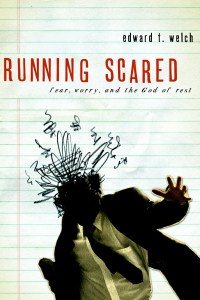
In preparation for a message on Psalm 27, I began reading Ed Welch‘s book, Running Scared.  Penetrating. Convicting.  Comforting.  All of those words are appropriate, at least for me.  For as I have aged I have come to see how fear, often very subtle, effects my thought, actions, and reactions.  My fears may not show, but they are very present.  I have to regularly identify them and subject them to the Gospel.

Perhaps this does not seem to be a topic for you. You may feel you have no fears.  For a long time I would have said similarly of myself – not that I had no fear, but few fears.  But I learned differently about myself.

Interestingly, not long ago I was watching a rerun of the film First Knight, with Sean Connery & Richard Gere, set in King Arthur’s Camelot.  In one scene I overheard an interesting conversation between Connery’s Arthur and Gere’s Lancelot.  Arthur mused:

“A man who fears nothing is a man who loves nothing; and if you love nothing, what joy is there in your life?”

This was not the turning point in my thinking. But I did find it an interesting illustration of what I had learned. And while I do not think that it is necessarily a universally true, I do think it is a question worth pondering.

It may not be universally true because one who loves God with all of his heart, mind, and strength, loves what is good and yet should fear little.  After all, “Perfect love casts out fear.” (1 John 4.18)   But then, which of us loves perfectly?

But I do think, in a sense, Arthur’s statement is widely, if not universally, true.  There are many who mistake apathy for peace.  It may be that some do not fear because they do not love; And they do not love because they fear fear.  I know that is a dizzying statement. But think of it as the opposite of Franklin Roosevelt’s famous words: “There is nothing to fear but fear itself.”  What if people do fear fear?  If one knows that love is often risky, and fears fear enough, could that person not repress love because of fear?

OK. Enough philosophizing… In short, I suspect there must be a reason God says 300+ times in the Scripture: “Do not fear.”  There must be a reason that this is the most frequently repeated command in the Bible.  My suspicion is it is because fear is a near universal component of our personalities in this fallen world. And we would be wise to recognize both our fears and their effects on our hearts and lives.

Above is a video preview of Running Scared, featuring the author, Ed Welch.  His insights and application of God’s Word to our plight are freeing.