Nothing More to Gain, Nothing to Lose

Sojourn (1)

“We are not citizens of this world trying to make our way to heaven; we are citizens of heaven trying to make our way through this world. That radical Christian insight can be life-changing. We are not to live so as to earn God’s love, inherit heaven, and purchase our salvation. All those are given to us as gifts; gifts bought by Jesus on the cross and handed over to us. We are to live as God’s redeemed, as heirs of heaven, and as citizens of another land: the Kingdom of God. We live as those who are on a journey home: a home we know will have the lights on and the door open and our Father waiting for us when we arrive. That means in all adversity our worship of God is joyful, our life is hopeful, our future is secure. There is nothing we can lose on earth that can rob us of the treasures God has given and will give us. ”

~ from The Landisfarne

Two Sides of Holiness

east-knox-reflections

Jerry Bridges offered a powerful insight and challenge to Christians about the nature and focus of the Christian life:

“Scripture speaks of both a holiness which we have in Christ before God, and a holiness which we are to strive after. God has made provision for us to live holy, but He has also given us definite responsibilities to pursue holiness. Only as we accept our responsibility and appropriate God’s provisions will we make any progress in our pursuit of holiness.”

Seeing the Cross With Bi-Focals

Bi Focal 3

Is is essential to keep together these two complementary ways of looking at the cross. On the human level, Judas gave him up to the priests, who gave him up to Pilate, who gave him up to the soldiers, who crucified him. But on the divine level, the Father gave him up, and he gave himself up, to die for us. As we face the cross, then, we can say to ourselves both, “did it, my sins sent him there,” and “He did it, his love took him there.” The apostle Peter brought the two truths together in his remarkable statement on the Day of Pentecost, both that “this man was handed over to you by God’s set purpose and foreknowledge” and that “you, with the help of wicked men, put him to death by nailing him to the cross” Peter thus attributed Jesus’ death simultaneously to the plan of God and to the wickedness of men. For the cross which, as we have particularly considered in this chapter, is an exposure of human evil, is at the same time a revelation of the divine purpose to overcome the human evil thus exposed.

~ John Stott

In the Cross

Orange Cross (La Croix)

In the Cross is salvation, in the Cross is life, in the Cross is protection from our enemies, in the Cross is infusion of heavenly sweetness, in the Cross is strength of mind,  in the Cross is joy of spirit, in the Cross is the height of virtue, in the Cross is perfection of sanctity. There is no salvation of the soul, nor hope of everlasting life, but in the Cross.

~ Thomas á Kempis, The Imitation of Christ

Seed of the Word in the Soil of the Heart

Sprout in Hand

“Truly, the Bible as the Word of God has an inherent power, but it is not a coercive power. That is, the Bible does not work it’s effects mechanically. We don’t change just because we read it. Out minds may be engaged in the text, but something must happen in our hearts as well. In the parable of the Sower (Matthew 13.18-23), the seed does not miraculously and independently transform itself into a flowering plant. The condition of the soil effects how well the seed takes root. Our hearts must be receptive to God’s Word in the same way the soil must be rich and conducive to the development of deep roots and luxurient growth. As Oliver Wendell Holmes once said: ‘What you bring away from the Bible depends to some extent on what you carry to it.'”

Tremper Longman, from Reading the Bible With Heart & Mind

REAL Christians Waltz

French Waltz

Listen to how Bob Flayhart, Senior Pator at Oak Mountain Presbyterian Church in Birmingham, AL, describes a Gospel-centered Christian Life:

A Gospel-centered life is the Christian Waltz. A waltz is a dance made up of three steps. Christians need to consider the Christian three step when it comes to growth.

In the first step, we acknowledge our need as we see our sin in light of the Law. In the second step, we look to Christ to change us. In the third step, we fight against sin and fight to choose righteousness in the strength of the Holy Spirit. Repent! Believe! Fight!…Repent! Believe! Fight!…Repent! Believe! Fight!

An emphasis on the love and grace of God lays the dance floor,or the foundation, for the waltz. Unless Christians are convinced of God’s love for them and His favor over them by virtue of their union with Christ, they will minimize their sin and engage in blame-shifting and excuse- making in order to feel justified before God.

Unfortunately, many in the Church today teach believers a Two-step. The two-step is to simply repent and fight. They acknowledge their sin and proceed with new resolve to try harder to avoid sin. The problem with this approach is it bypasses the cross of Christ and the power of the resurrection.

Inebriated by the Gospel

Smoky Mountain Moonshine

Great grace laced imagery from Robert Capon:

The Reformation was a time when men went blind, staggering drunk because they had discovered, in the dusty basement of late medievilism, a whole cellarful of fifteen-hundred-year-old, two-hundred-proof grace – of bottle after bottle of pure distillate of Scripture, one sip of which would convince anyone that God saves us single-handedly. The word of the gospel – after all those centuries of trying to lift yourself into heaven by worrying about the perfection of your bootstraps – suddenly turned out to be a flat announcement that the saved were home before they started… Grace has to be drunk straight: no water, no ice, and certainly no ginger ale; neither goodness, nor badness, nor the flowers that bloom in the spring of super-spirituality could be allowed to enter into the case.

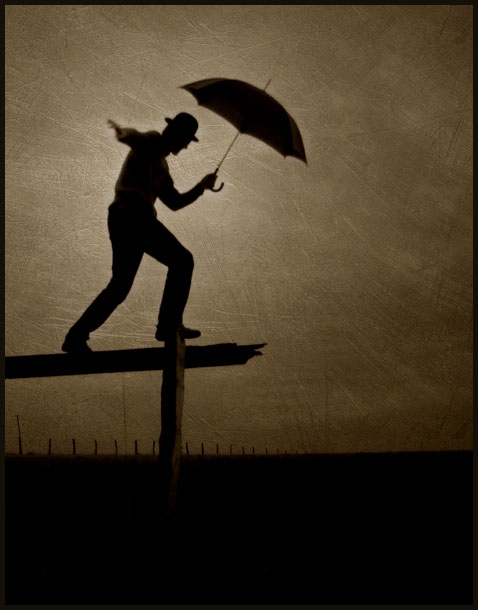
Balance of Faith

Balance Act

A true, vibrant Christian faith is someting akin to a balancing act.

In a post this morning, Tim Keller suggested:

If we are going to grow in grace, we must stay aware of being both sinners and also loved children in Christ.

Keller’s paradigm reminded me of something Edward Payson – “Praying Payson of Portland” – wrote long ago:

True Christianity consists of a proper mixture of fear of God, and of hope in his mercy; and wherever either of these is entirely wanting, there can be no true Faith. God has joined these things, and we ought by no means to put them asunder.

He cannot take pleasure in those who fear him with a slavish fear, without hoping in his mercy, because they seem to consider him a cruel and tyrannical being, who has no mercy or goodness in his nature. And, besides, they implicitly charge him with falsehood, by refusing to believe and hope in his invitations and offers of mercy.

On the other hand, he cannot be pleased with those who pretend to hope in his mercy without fearing him. For they insult him by supposing there is nothing in him which ought to be feared. And in addition to this, they make him a liar, by disbelieving his awful threatenings denounced against sinners, and call in question his authority, by refusing to obey him.

Those only who both fear him and hope in his mercy, give him the honor that is due to his name.

Both Payson and Keller give credence to thw wisdom of Puritan Thomas Watson:

The two great graces essential to a saint in this life are faith and repentance. These are the two wings by which he flies to heaven.

2 Mistakes Christians Make

Redemption Acccomplished But Not Applied

People tend to make two mistakes when they think about the redeemed life. The first is to underestimate the sin that remains in us; it’s still there and it can still hurt us. The second is to underestimate the strength of God’s grace; God is determined to make us new. As a result, all Christians need to say two things. We admit that we are redeemed sinners. But we also say boldly and joyously that we are redeemed sinners.

~ from Cornelius Plantings, in Beyond Doubt

Brokeness, Contrition, and Repentance = Marks of a Growing Christian

“So Repentance begins with an attitude of brokenness over our sin. But true repentance will be followed by an earnest desire and a sincere effort to put away  the sin we are repenting of – to put on the Christlike virtues that we see missing in our lives. These efforts often seem to be characterized by failure as much as by success. But the frequent failures should bring us back to a broken and contrite heart that mourns over our sin. Brokenness, contrition, and repentance are all marks of a growing Christian, a person who is experiencing the work of the Spirit in being transformed gradually more into the image of God’s Son.”

~ Jerry Bridges, The Transforming Power of the Gospel

Too Much Religion

Eugene Peterson, in the Introduction to the book of Hebrews in his book The Message, writes:

“It seems odd to have to say so, but too much religion is a bad thing. We can’t get too much of God, can’t get too much faith and obedience, can’t get too much love and worship. But religion – the well intentioned efforts we make to ‘get it all together’ for God – can very well get in the way of what God is doing for us. The main & central action is everywhere, and always what God has done, is doing and will do for us. Jesus is the revelation of that action”.

Paradoxes of Grace

In his excellent, perspective shaping book, Broken-Down House, Paul Tripp reflects some of the amazing paradoxes of the gospel.  Take some time to ponder these; feel the tension. This is what genuine grace is and does:

So grace is a story and grace is a gift. It is God’s character and it is your hope. Grace is a transforming tool and a state of relationship. Grace is a theology and an invitation. Grace is an experience and a calling. Grace will turn your life upside-down while giving you a rest you have never known. Grace will convince you of your unworthiness without ever making you feel unloved.

Grace will make you acknowledge that you cannot earn God’s favor, and it will remove your fear of not measuring up to his standards. Grace will confront you with the fact that you are much less than you thought you were, even as it assures you that you can be far more than you had ever imagined. Grace will put you in your place without ever putting you down.

Grace will enable you to face truths about yourself that you have hesitated to consider, while freeing you from being self-consciously introspective. Grace will confront you with profound weaknesses, and at the same time introduce you to new-found strength. Grace will tell you what you aren’t, while welcoming you to what you can now be. Grace will make you as uncomfortable as you have ever been, while offering you more comfort than you have ever known. Grace will drive you to the end of yourself, while it invites you to fresh starts and new beginnings. Grace will dash your hopes, but never leave you hopeless. Grace will decimate your kingdom as it introduces you to a better King. Grace will expose your blindness as it gives you eyes to see. Grace will make you sadder than you have ever been, while it gives you greater cause for celebration than you have ever known.

Grace enters your life in a moment and will occupy you for eternity. You simply cannot live a productive life in this broken-down world unless you have a practical grasp of the grace you have been given [in Christ].

Lost in Wonder, Love, and Praise


Surely one of the greatest problems of our times is that we have become so nonchalent about the Lord of the cosmos.  Certainly if we were more immersed in God’s splendor we would find ourselves thoroughly “lost in wonder, love, and praise”.  With all the amazing sights and sounds of our cyberspace world, however, many of us no longer recognize that if we but catch a glimpse of GOD – the imperial Lord of the cosmos, the almighty King of the universe – we will be compelled to fall on our faces.  Our awareness of God’s absolute otherness would give us the sense that we could die now because we have seen God.  We would shout with the prophet: “Woe is me, for I am annihilated”. (Isaiah 6.5; Martin Luther’s rendering.)

Marva Dawn, A Royal “Waste” of Time