Weak from the journey, the long travelling days/ Hungry to worship, to join in the praise/ Shock mad with anger that burned on His face/ As He entered the wasteland of that barren place
Chorus:
And the Lamb is a Lion who’s roaring with rage/At the empty religion that’s filling their days/ They’ll flee from the hug of the Carpenter’s strong arm/ And come to know the scourging anger of the Lord
Priests and the merchants demanded some proof/ For their hearts were hardened and blind to the Truth/ But Satan’s own law is to sell and to buy/ But God’s only way is to give and to die
– Repeat Chorus-
The noise and confusion gave way to His word At last sacred silence so God could be heard…
Author: Dennis Griffith
-
The Lamb is a Lion
-
A Basic Quiet Time Plan

OK. You sit down in a quiet place, Bible in hand – or at least on the table in front of you. You really mean it this time. You are going to begin having regular “Quiet Times”. But then the practical questions come to mind: How do I do this? What am I supposed to do? Is that all there is to it?
Been there, done that. And been there and NOT done that. I didn’t know what to do, so I didn’t do anything.
There are so many different ways to approach personal devotional time that sometimes the whole idea can seem simultaneously appealing and daunting. At other times it can feel stale – and even boring.
If any of this sounds familiar to you, let me suggest a solid and diverse plan that I ran across some time ago. I do not recall where I found it, so I cannot give proper credit. But I have found this plan provides a good foundation and flexibility.
***
Step One: BIBLE STUDY – Goal: To understand the truth
First: Slowly read a paragraph or chapter 3-4 times. When a thought or phrase or word captures your attention, pause for a moment and thank God for it.
Then: Write down answers to any one of the following sets of questions. Don’t try to do them all (though you may mix questions from different sets).
Set #1.
1. What do these verses teach me about God?
2. What do these verses teach me about myself (or mankind in general or believers)?
3. How do these verses point me to Jesus as Savior?
4. List examples to follow or avoid, commands to obey, or promises to claimSet #2.
1. Write down the key verse or thought that impressed you.
2. Write the verse out in your own words.
3. Make sure you look at the context. What is the thought just before the verse and just after?
4. Give 2-3 reasons it impressed you.Set #3.
1. What was beautiful about this verse?
2. What surprised you about this verse?
3. To what in this verse do you need to give more thought?
4. What didn’t you understand?
5. How does the verse connect to your life and/or the life of your church?Step Two: MEDITATION – Goal: To drive the truth down into your heart
First: Write out one or two (at most!) of the main truths you got out of your Bible study.
Then: For each truth, write out the answers to each of these questions:
- If you have little time, just answer the following:
1. “How would I be different if this truth caught fire in my inner most being?”
2. “Why is God showing me these particular things today?”- If you have more time:
- Adoration: How can I praise God or Christ for what this reveals about him? (Think of at least 2 or 3)
- Confession: What wrong behavior, harmful emotions, false attitudes result in me when I forget he is like this? (Think of at least 2 or 3)
- Thanksgiving: Thank God that you are saved by grace through Jesus, not by your performance. How can this grace in Christ help you overcome the sins you just confessed?
- Supplication: What do I need to become and do in light of this truth? Ask him for it!
Step Three: PRAYER – Goal: To commune with God and ask Him to work out His purposes in the world and in your life.
First: Pray especially for the things that came out of your meditation.
Then:
- Pray through a prayer list of things to ask God for regularly.
- Praise and thank him for the things you saw today.
- Confess sins that were brought to your attention today.
- New items for supplication you saw today (add some to your prayer list).
- Pray for former items on your prayer list: for family, for church, for friends, for world, for self.
Suggested passages to start:
- Psalm 1
- Psalm 4
- Psalm 8
- Psalm 19
- Psalm 62:1-2, 5-7
- Psalm 103
- Psalm 106 (particularly verses 28-31
Please Note that while this is a good pattern for personal devotions, it is simply a suggestion. By no means is this the RIGHT plan. If you have something that works for you, keep at it. I post this simply because I know there are many who get stuck right out of the gate, not knowing what to do.
For a .pdf of this plan, click: Basic Quiet Time Plan
-
Centering Our Lives On Something

“Since we are made to worship, we are always centering our lives on something whether we realize it or not. It is like a fire hose that is stuck in the ‘on’ position and shooting water out endlessly with great force. We must decide where we aim the hose as the focus of our worship. The idols of our modern world are not necessarily the hand-carved statues of the ancient world. In our autonomous self-seeking ways, people have instead come to serve or worship the self-erected idols of approval, comfort, and security. We must ruthlessly inspect the sin in our heart for these idols… so it is vital that [we] get to the heart. As Tim Keller puts it, ‘The solution to our sin problem is not simply to change our behavior, but to reorient and center our entire heart and life on God.’ Therefore, we must go after the nature of the sin by going after its root and not just the fruit of the sin. Oftentimes people repent of sin that is simply the fruit of the idols in their hearts. We must find out the why of the behavior and not just the what”.
~Tom Wood & Scott Thomas, Gospel Coach
From Graced Again
-
Gospel: Where Rubber Meets Road

It is one thing to affirm the gospel; It is something altogether different to experience it’s power where the rubber meets the road.
-
Resurrection

O GOD OF MY EXODUS,
Great was the joy of Israel’s sons
when Egypt died upon the shore,
Far greater the joy
when the Redeemer’s foe lay crushed in the dust.
Jesus strides forth as the victor,
conqueror of death, hell, and all opposing might;
He bursts the bands of death,
tramples the powers of darkness down,
and lives for ever.He, my gracious surety,
apprehended for payment of my debt,
comes forth from the prison house of the grave
free, and triumphant over sin, Satan, and death.Show me herein the proof that his vicarious offering is accepted,
that the claims of justice are satisfied,
that the devil’s sceptre is shivered,
that his wrongful throne is levelled.Give me the assurance that in Christ I died, in Him I rose,
in His life I live, in His victory I triumph,
in His ascension I shall be glorified.Adorable Redeemer,
Thou who wast lifted up upon a cross
art ascended to highest heaven.
Thou, who as man of sorrows wast crowned with thorns,
art now as Lord of life wreathed with glory.
Once, no shame more deep than Thine,
no agony more bitter, no death more cruel.
Now, no exaltation more high,
no life more glorious, no advocate more effective.Thou art in the triumph car leading captive Thine enemies behind Thee.
What more could be done than Thou hast done!
Thy death is my life, Thy resurrection my peace,
Thy ascension my hope, Thy prayers my comfort.from: Valley of Vision
-
There is a Fountain Filled With Blood
There is a fountain filled with blood
drawn from Emmanuel’s veins;
and sinners plunged beneath that flood
lose all their guilty stains.
and sinners plunged beneath that flood
lose all their guilty stains.The dying thief rejoiced to see
that fountain in his day;
and there may I, though vile as he,
wash all my sins away.
and there may I, though vile as he,
wash all my sins away.Dear dying Lamb, thy precious blood
shall never lose its power
’till all the ransomed church of God
be saved, to sin no more.
’till all the ransomed church of God
be saved, to sin no more.E’er since, by faith, I saw the stream
thy flowing wounds supply,
redeeming love has been my theme,
and shall be till I die.
redeeming love has been my theme,
and shall be till I die.Words: William Cowper
Video: Red Mountain Music
-
5 Songs for Good Friday

With Easter coming Sunday, the MOST Holy day on the Christian calendar, it is easy to overlook or undervalue Good Friday. But to do so deprives us of great opportunity to glory in the Cross.
When I was a kid, I remember asking my mother one day: “Why do they call it Good Friday, if that’s the day they killed Jesus?” My mother, who is not a theologian, gave the best answer she could: “Well, I guess it because we know he rose again.”
My mother was right. No doubt the death of Jesus cannot be considered apart from the Resurrection that was to follow. All our blessings are wrapped up in these two inseparable events.
But there is even more to it than that. The death of Christ itself, not alone but as a distinct redemptive act, carries it’s own beauty when viewed from this side of the Cross. It was Jesus’ blood shed on the Cross that paid the debt for all my depravity, and set my sin into remission. It is by Jesus’ voluntary death that we most vividly view the love of God – that we most clearly see nearly all of God’s attributes, really.
So with this in mind, and in hope to redeem the day for our greatest good, here are 5 songs for Good Friday that focus us on the blessing of that GREAT first Good Friday:
- Before the Cross by Sovereign Grace Music
- Alas! and Did My Savior Bleed? by Sovereign Grace Music
- The Precious Blood by Sovereign Grace Music
- It Is Finished by Red Mountain Church
- There is a Fountain Filled With Blood by Red Mountain Church
NOTE: All songs played on MOG. You may have to sign up for this free app to listen. But once you listen, you’ll agree it was worth it.
-
Crucifixion & Resurrection

Here is a reflection, taken from Valley of Vision, for Good Friday:
O Lord,
I marvel that thou shouldst become incarnate,
be crucified, dead, and buried.The sepulchre calls forth my adoring wonder,
for it is empty and thou art risen;
the four-fold gospel attests it,
the living witnesses prove it,
my heart’s experience knows it.Give me to die with thee that I may rise to new life,
for I wish to be as dead and buried to sin, to selfishness, to the world;
that I might not hear the voice of the charmer,
and might be delivered from his lusts.O Lord, there is much ill about me – crucify it,
much flesh within me – mortify it.
Purge me from selfishness,
the fear of man, the love of approbation,
the shame of being thought old-fashioned,
the desire to be cultivated or modern.
Let me reckon my old life dead
because of crucifixion,
and never feed it as a living thing.Grant me to stand with my dying Saviour,
to be content to be rejected,
to be willing to take up unpopular truths,
and to hold fast despised teachings until death.Help me to be resolute and Christ-contained.
Never let me wander from the path of obedience to thy will.Strengthen me for the battles ahead.
Give me courage for all the trials,
and grace for all the joys.
Help me to be a holy, happy person,
free from every wrong desire,
from everything contrary to thy mind.Grant me more and more of the resurrection life:
may it rule me,
may I walk in its power,
and be strengthened through its influence. -
Finding Your Place in God’s Story

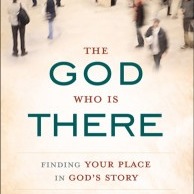
Knowing scripture is vital. But it is not the essence of Christianity. That may sound surprising, but it really should not be. Knowing the Bible is foundational, even essential, to vibrant faith and life. But it is also possible to have great knowledge yet have little understanding. The essence of the Faith is not information but formation. It is understanding who God is, what he has done and is doing, and what he expects from you and me. It is, borrowing a good popular phrase, finding your place in God’s story and living it out in light of the gospel.
I started reading D.A. Carson’s The God Who Is There. This is a tremendous resource. Carson does a wonderful job in walking the reader through the narrative of the Bible, or what he calls “the Big Story of Scripture”. He touches on the major themes, comprehensively yet easily readable. And in doing this, Carson helps us understand the grand narrative of scripture, thus assisting and enabling us to more easily find our place in it.
As it so happened, in February 2009 Carson presented a 14-part seminar at Bethlehem Baptist Church in Minneapolis. The book was developed from those messages. And thanks to The Gospel Coalition, the MP3s and videos of the conference that closely correspond with the book are available for all 14 chapters:
- The God Who Made Everything | MP3 | Video
- The God Who Does Not Wipe Out Rebels | MP3 | Video
- The God Who Writes His Own Agreements | MP3 | Video
- The God Who Legislates | MP3 | Video
- The God Who Reigns | MP3 | Video
- The God Who Is Unfathomably Wise | MP3 | Video
- The God Who Becomes a Human Being | MP3 | Video
- The God Who Grants New Birth | MP3 | Video
- The God Who Loves | MP3 | Video
- The God Who Dies—and Lives Again | MP3 | Video
- The God Who Declares the Guilty Just | MP3 | Video
- The God Who Gathers and Transforms His People | MP3 | Video
- The God Who Is Very Angry | MP3 | Video
- The God Who Triumphs | MP3 | Video
-
Hosanna in the Highest!
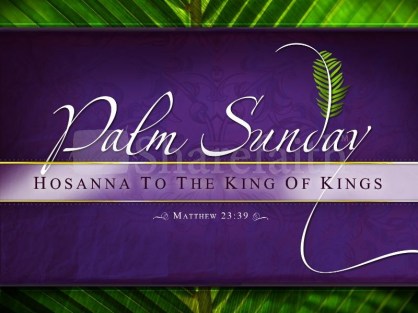
Most of the crowd spread their cloaks on the road, and others cut branches from the trees and spread them on the road.And the crowds that went before him and that followed him were shouting, “Hosanna to the Son of David! Blessed is he who comes in the name of the Lord! Hosanna in the highest!” And when he entered Jerusalem, the whole city was stirred up, saying, “Who is this?” And the crowds said, “This is the prophet Jesus, from Nazareth of Galilee.”
-
Sabbath Rest: The Above All Commandment

Like many people, I get easily wearied by many of the Sabbath debates. What can you do? What can’t you do? While not unimportant, these questions miss the point.
Jesus told us:
“Sabbath was made for man, not man for the Sabbath.” (Mark 2.27)
In other words, Sabbath is a gift made or established by God for us. True, it is for God’s glory, and is therefore to be kept holy. (Exodus 20.8) But we must remember that our greatest good is wrapped up in God’s glory. And as John Piper reminds us: “God is most glorified when we are most satisfied in him.”
God gave us the gift of the Sabbath as a means that we might be satisfied in him and thereby glorify him.
Sadly, the debate seems to revolve around polarized positions, with contemporary Pharisees on the one side and supposed free spirited antinomians on the other. The Pharisee says: “Do”, or mostly “Don’t Do”. The antinomian (which means “against Law”) holds to the notion that he can do as he pleases, and has no obligation. The one squeezes the life out of the gift. The other, perhaps unwittingly, responds to God’s gift by saying: “No Thanks”.
In an article from Christianity Today magazine, Kevin Emmert winsomely makes a case for Sabbath observation. Emmert rightly describes it as a spiritual discipline of resting. And he acknowledges that this notion somehow seems antithetical to both our spiritual growth and God’s glory:
It is difficult, and ironic, to imagine rest as the most transformative element in the Christian life. For evangelicals especially, transformation and sanctification are closely linked to activity. We appropriately begin with the idea that our works do not merit justification (being declared righteous by God). We can do nothing to earn our salvation. But most of us imagine we must play an active role in our sanctification, the ongoing process of becoming more like Christ. Sanctification, we assume, involves work and effort on our part.
This is good news to evangelical ears. We like activities. We conduct Bible studies, participate in small groups, and attend prayer meetings. We engage in worship services and outreach. We like inspirational books that teach us how to become better Christians. We have a sense of duty that compels us to evangelize and demonstrate Christ’s love to those around us. Indeed, these activities are good and find their foundation in biblical teachings.
And this is precisely why we find it so difficult to imagine rest as the most transformative feature of the Christian life.
Yet Emmert convincingly contends that this discipline, perhaps more than any other, and certainly no less than any other, provides the greatest spiritual benefits:
Why is the Sabbath so important? After all, it’s a command to do nothing; it requires no activity or effort. And that may be precisely the point.
This “above all” command encourages us to trust in God in a way that no other activity can. So much more could be accomplished by adding another day of labor, but the Sabbath requires us to trust that God will provide for all our needs and that he will continue to manage the world without our help. The Sabbath is a practical reminder that we are completely dependent on God.
It is when we realize our complete dependence upon God that we experience how great a thing it is to have the right to call him “Father”.
Check out Emmert’s short article: The Above All Commandment
-
More Tips for Taking Criticism

In a post last week I shared 5 Suggestions for Receiving Criticism. The bulk of that piece was taken from a post by Mark Altrogge at The Blazing Center titled How to Receive Criticism Like a Champ.
Since criticism is inevitable for all of us, I felt Altrogge’s insights were helpful. As he reminds us:
Like I said last week, I don’t love being corrected. But Jesus can help us grow.
Now, in a second round, Altrogge expands his previous points. Here are a handful of additional helps:
- Don’t be quick to defend yourself.
“Hey I thwacked Junior on the head with my iPad because he had a bad attitude!” Don’t make excuses: “Well, I didn’t actually lie. It was theater. You know, drama. I just exaggerated a little bit for effect.” Sometimes it’s fine to offer reasons for our actions, but defensiveness usually comes from pride.
- Don’t write someone off because they fail to deliver criticism perfectly.
“Hey! You corrected me harshly! Your stinking attitude invalidates all you said.” Even if they sin, make your primary focus your failure, not theirs. You can talk about their sin some other time.
- Ask clarifying questions.
Don’t require them to produce video footage, finger prints, and DNA evidence before you accept what they say, but if they have some examples that could help you see more clearly, welcome them.
- Watch your facial expression and body language.
I know, your face feels like it’s going to crack into a thousand pieces. Don’t sit there with your arms crossed and an “I dare you to say something negative” scowl on your face. Try not to start breathing heavily when someone is correcting you, like a snorting bull. Remember, you’re trying to make it easy for them.
- If you see what they’re saying, acknowledge it.
James says, “Confess your sins to one another.” Say, “You’re right, honey. I should not have thwacked Junior on the head with my iPad. I was angry and that was sin. Junior, would you please forgive Daddy for his anger and for thwacking you on the head? I won’t thwack you any more. And anyway, my iPad’s broken now.”
- If you can’t see what someone is saying, don’t immediately write it off.
You could say, “I’m having a hard time seeing what you’re saying right now, but I certainly could be wrong. I know I have blind spots.” Another thing you can do is ask others if they have observed the same thing. Good chance if one person has seen a weakness or fault of yours, others have too (thanks Julian Freeman for this addition!).
- Ask them to please point it out again if you do it again.
…Because most likely you will.
Thanks, Mark. These are helpful.
While I can paste his points, I can’t do justice to the wisdom and humor found at The Blazing Center. I recommend clicking the link and checking out the original posts – and bookmarking the page.
Alrogge’s Bottom line:
We all need correction, input, reproof, adjustment, suggestions and help. A wise man or woman grows wiser by receiving these from others.
OK, now go out there and get criticized!
-
Our Great Shepherd
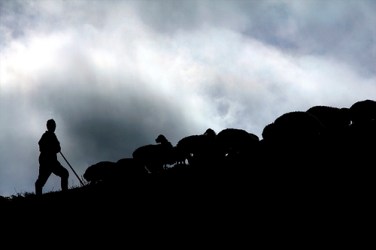
“The Lord’s my shepherd – I shall not be in want.”
I am completely satisfied with his management of my life. Why? Because He is the sheepman to whom no trouble is too great as He cares for His flock. He is the rancher who is outstanding because of His fondness for sheep – Who loves them for their own sake as well as his personal pleasure in them. He will, if necessary, be on the job twenty-four hours a day to see that they are properly provided for in every detail. Above all, He is very jealous of His name and high reputation as ‘The Good Shepherd’.
-
Lost Art of Discipleship

Sometimes we need to face up to difficult questions. Michael Horton, in his book The Gospel Commission, asks some really tough ones that every church, every church leader, every church member needs to ask themselves:
Instead of reaching the lost, are we losing the reached? Or are those reared in our own churches being truly reached in the first place? Do they know what they believe and why they believe it? Are we making disciples even of our own members – our own children – much less the Nations?
I honestly wonder if making disciples is even really the goal of many Christians or churches. Some are apathetic and/or complacent. Some seem to think taking the time to instruct people in sound doctrine (what we must believe about God and Man) somehow gets in the way with mission. Some are so contented in their own activity and busyness for the Lord that they sense no need to spend time with the Lord. And many seem to be satisfied with sheer increase in numbers.
Perhaps the task of making disciples seems daunting. But Jesus gave good news to those who are willing to reclaim this priority:
- All authority in heaven and on earth has been given to me. …And behold, I am with you always, to the end of the age.” (Matthew 28.18, 20)
- But you will receive power when the Holy Spirit has come upon you, and you will be my witnesses in Jerusalem and in all Judea and Samaria, and to the end of the earth.” (Acts 1.8)
He provides his authority, his power, and his presence to all who endeavor to make disciples.
 GRACE & PEACE