The Christmas Distraction

Christmas Distraction

Jared Wilson counsels:

There is a great danger this Christmas season of missing the point. And I’m not referring simply to idolatrous consumption and materialism. I’m talking about Christmas religiosity. It is very easy around this time to set up our Nativity scenes, host our Christmas pageants and cantatas, read the Christmas story with our families, attend church every time the door is open, and insist to ourselves and others that Jesus is the reason for the season, and yet not see Jesus. With the eyes of our heart, I mean.

I suppose there is something about indulging in the religious Christmas routine that lulls us into thinking we are dwelling in Christ when we are really just set to seasonal autopilot, going through the festive and sentimental motions. Meanwhile the real person Jesus the Christ goes neglected in favor of his plastic, paper, and video representations. Don’t get distracted from Jesus by “Jesus.” This year, plead with the Spirit to interrupt your nice Christmas with the power of Jesus’ gospel.

Healthy Couples Don’t…

Hands Together

An article by Ruthie Dean, appearing in Relevant Magazine, offers helpful marriage advice from the negative side – i.e. 8 Things Healthy Couple DON’T Do:

  1. Healthy Couples Don’t Post Negatively About Each Other on Social Media
  2. Healthy Couples Don’t Make Their Career a Priority Rather Than Their Relationship
  3. Healthy Couples Don’t Have All Their ‘Together-Time’ With Technology
  4. Healthy Couples Don’t Avoid Hard Subjects
  5. Healthy Couples Don’t Punish One Another
  6. Healthy Couples Don’t Withhold Forgiveness
  7. Healthy Couples Don’t Say ‘Yes’ to Everything
  8. Healthy Couples Don’t Throw In the Towel

Read more of what Ruthie has to say, including the details that accompany her list, at: 8 Thing Healthy Couples Don’t Do

5 Questions to Read the Bible With Heart & Mind

Clock Lit

Tremper Longman summarizes the entire thrust of his book, Reading the Bible With Heart & Mind, in five simple questions:

1. What does this passage of the Bible teach me about God and my relationship with Him?

2. What does this passage tell me about how God has acted in the past?

3. How does this passage change the way I think about the world and how does it impact the way I live my life?

4. How has God chosen to communicate these truths to me through the Scriptures?

5. How does this passage present Christ?

Great questions to help us get the most of our Bible study.

The Santa Question

Santa (Rockwell)

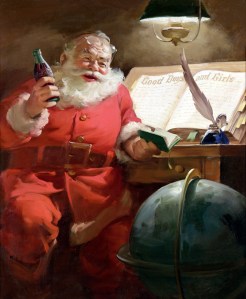
Years ago, as a newly minted minister in my first year out of seminary, I made an off-the-cuff comment in one of my Christmas season messages.  I don’t recall exactly what I said, but it was something to the effect of: “I don’t really care what you do with Santa”.  My intent was to demonstrate that Christmas Santa is nothing when compared to the Christmas Child – Jesus.

Honestly, I thought I made my point. If I had it to do over – and I do get to do it over every year – I would still say the same thing. But not everyone shares my perspective on this issue.

The next day, along with our regular mail, in our mailbox was a hand delivered, unstamped letter, from a man in the congregation.  It was thick. Nearly 10 pages – each of which made the same point from various angles: I had been derelict in my responsibility to the congregation by giving any wiggle room for families to include Santa Claus in their Christmas traditions.  At least that was his take. (Frankly, he was a pretty uptight guy about a lot of issues.)  Believe it or not, he even used the lame “Re-arrange the letters of Santa = Satan” rationale.

While my view has not changed, and I would still not hesitate to say something similar in a Christmas message, what has changed is my appreciation that not everyone shares my view on this matter.  And over the years I have been asked a number of times by conscientious parents how Christian families should deal with the Santa Question. I try to be more sensitive to the fact that there are several appropriate perspectives.

I recently read a piece by John Murchison touching on this very subject. He observes: “As parents who want our kids to worship Jesus and have fun at Christmas, it can be hard to know if Santa should be included in our traditions, and if so, to what degree.”  I agree.

Murchison observes, “I know of four different types of families when it comes to Santa”:

  • Families who do not include Santa in any of their Christmas celebrations
  • Families who tell their kids up front that Santa is “a fun game that we all play at Christmas”
  • Families who focus on the “historical” Santa, St. Nick
  • Families who go all-in on Santa

Murchison concludes: “I believe that any of these options can be valid options for a family, as long as two guidelines are followed”:

  1. Jesus must be more prominent in your home than Santa at Christmas.
  2. When “the Santa question” comes, don’t lie to your kids.

I concur. Murchison wisely and concisely gives counsel, without elevating his own view.

In our home, we never really did anything with Santa.  We never encouraged belief in him, nor did we ever instruct our children against him. Never did they receive a gift with Santa’s name on the tag.  While our children were certainly aware of Santa because of the symbols that permeate our culture this time of year, not the least of which are the Christmas season television specials, which we did allow them to watch if they wanted, none of our kids ever really thought much about Santa.  Our focus was always on God’s gift to us in the sending of his Son. (See Galatians 4.4-5)

I appreciate Murchison’s ultimate insight, which is in line with the counsel I would want to offer to anyone wondering about The Santa Question:

As long as you’re praying, reading Scripture, and searching out wise counsel, then I believe that you should follow the guidance of the Holy Spirit and the convictions that He places on your hearts.

And like Murchison, “I pray that our homes will be filled with talk of Jesus and His birth this season, whatever you decide about Santa.”

To read John Murchison’s article, click: The Santa Question

Date of the Nativity of the Christ

Nativity

Much debate arises, in some circles, during this time of the year concerning the actual birth date of Christ.  While the traditional date for most of the world is observed on December 25, many are adament that this is erroenous, perhaps even heretical.  Many of the most passionate insist that Jesus’ birth must have been sometime in the Spring, and that the December date is little more than a co-opting of a pagan holiday, Saturnalia.

I am not sure the actual date matters.  It seems to me that if the Lord wanted us to know, he would have made it abundantly clear in his Word – just as he did for various other occasions that were to be observed.  That said, I appreciate the musings of 19th century historian Alfred Edersheim on this subject.  In his monumental work, Life & Times of Jesus the Messiah (which has pretty much been the standard on the life of Christ since its publication in 1883) Edersheim makes a pretty good case for the traditional December date.

Here is the pertinent excerpt from Life & Times, Appendix VII:  On the Date of the Nativity of Our Lord, slightly edited to contemporaize some of the language:

So much has been written on this subject, and such accord exists regarding the general question, that only the briefest statement seems required in this place. More space should be reserved for subjects which have either not been treated by previous writers, or that offer some manner or form that makes a fresh investigation desirable.

At the outset it must be admitted, that absolute certainty is impossible to determine as to the exact date of Christ’s Nativity – the precise year, and even more so the month and the day.

But in regard to the year, we do possess such data as to invest it with such probability, it almost amounts to certainty.

1. The first and most certain date is that of the death of Herod the Great.

Our Lord was born before the death of Herod, and, as we judge from the Gospel-history, very shortly before that event.

Now the year of Herod’s death has been ascertained with, we may say, absolute certainty, to have been shortly before the Passover of the year 750 A.U.C., – which corresponds to about the 12th of April of the year 4 before Christ, according to our common reckoning. More particularly, shortly before the death of Herod there was a lunar eclipse, which, it is astronomically ascertained, occurred on the night from the 12th to the 13th of March in the year 4 b.c.  Thus the death of Herod must have taken place between the 12th of March and the 12th of April – or, say, about the end of March.

Again, the Gospel-history necessitates an interval of, at the least, seven or eight weeks before that date for the birth of Christ. (We have to insert the purification of the Virgin, at the earliest, six weeks after the Birth; The Visit of the Magi; and the murder of the children at Bethlehem; and, at any rate, some days more before the death of Herod.)  Thus the Birth of Christ could not have possibly occurred after the beginning of February 4 b.c., and most likely several weeks earlier.

This brings us close to the ecclesiastical date, the 25th of December, in confirmation of which we refer to what has already been stated in Book II, Chapter 6 (of Life & Times; see especially note 955).

At any rate, the often repeated, but very superficial objection, as to the impossibility of shepherds tending flocks out in the open during that season of the year, must now be dismissed as utterly untenable, not only for the reasons stated in Book II, Chapter 6, but even for this: that if the question is to be decided on the ground of rain-fall, the probabilities are in favor of a December date as compared with a February date – later than which it is impossible to place the birth of Christ.

2. No certain inference can, of course, be drawn from the appearance of ‘the star’ that guided the Magi.

This, and the grounds of our investigations, have pointed to a confirmation of the date of the Nativity, as given above, to have likely been in December. This has been fully explained in Book II, Chapter 8, paragraph 11

3. On the taxing of Cyrinius, see Book II, Chapter 6, paragraphs 4 & 5

4. The next historical datum furnished by the Gospels is that of the beginning of St. John the Baptist’s ministry, which, according to St. Luke, was in the fifteenth year of Tiberius, and when Jesus was ‘about thirty years old’. (Luke 3.23)  The account of this with our reckoning with the date of the Nativity has been shown in Book II, Chapter 11, paragraphs 14-15.

5. A similar conclusion would be reached by following the somewhat vague and general indication furnished in John 2.20.

6. Lastly, we reach the same goal if we follow the historically somewhat uncertain guidance of the date of the Birth of John the Baptist.

Luke 1.5 tells us that that the annunication of John’s coming birth occured while his father,  Zacharias, officiated in the Temple during ‘the Course (or Division) of Abijah’. (see Book II, Chapter 3, paragraph 4)

Josephus tells us that at the time of the destruction of the Temple, ‘the Course (or Division) of Jehoiarib,’ which was the first of the priestly courses/divisions, was on duty. That was on the 9-10 a.b of the year 823 A.U.C., or the 5th August of the year 70 a.d. of our era. If this calculation is correct (of which, however, we cannot feel quite sure), then by counting ‘the courses’/divisions of priests backwards, the Course of Abijah would, in the year 748 A.U.C. (the year before the birth of Christ) have been on duty from the 2nd to the 9th of October. This also would place the birth of Christ in the end of December of the following year (749 a.u.c), taking the expression ‘sixth month’ in Luke 1.26, 36, in the sense of the running month (i.e. from the 5th to the 6th month, Luke 1.24).

But we repeat that absolute reliance cannot be placed on such calculations, at least so far as regards month and day.

Again, while perhaps the actual date of Jesus’ birth is not essential to our faith, Edersheim gives us something to think about.

Famous and Forgotten

Shooting Star

On the Plains of Shinar, according to Genesis 11, the people verbalized both their plan and the motivation driving it:

“Come, let us build ourselves a city and a tower with its top in the heavens, and let us make a name for ourselves..” (v. 4)

It was a quest for fame that compelled them to action.  Unfortunately for them, they soon reaped the consequences of their vanity, and in a sad ironic way they reached their goal of lasting notoriety.  They aspired to fame; they achieved infamy.

I am breaking no new ground when I suggest that our present culture – perhaps especially our youth culture – may benefit from some reflection about aspiring to fame.  While there is nothing inherently wrong with fame, it has been said that fame used to be a by-product of success or achievement, or of some tremendous virtue; but in our media crazy world fame has seemingly become a virtue of it’s own.  There is perhaps no better illustration than the proliferation of Reality TV, and the – which has fastly made famous many with no apparent talents, and many with no apparent virtues.

The Wall Street Journal recently offered an interesting reflection on the fleetingness of fame: Famous Today, Forgotten Tomorrow.  In this cultural commentary the author recounts the astronomical statures of Bing Crosby, Bob Hope, among others, and how each is all but forgotten – virtually unknown to this present generation.

It got me thinking.

While Proverbs 22.1 tells us: “A good name is to be chosen rather than great riches…”, a good name does not necessarily mean a known name.  A good name is one that is respected by all who know it – or rather, appreciated by all who know the person who wears the name.  Just as fame used to be, a good name is inseparably linked to one’s virtues.  And gaining a good name, not a known name, is a noble ambition.

Good News From the Front in the War on Christmas

War on Christmas

With all the War on Christmas rhetoric that has seemingly spewed these past few years, LifeWay Research has some good news from the front lines.  While I am not certain any full fledged war has actually existed, it seems there have certainly been a variety of insurgences erupting.  Such things have probably almost always existed but, as the culture wars rage, reporting of instances opposing Christmas – some quite ludicrous – seemed more numerous than ever.  But now a recent study offers some calm.

LifeWay Research data now shows that most Americans favor more traditional expressions of Christmas, and want more emphasis on Jesus during this season of the year. In fact, even most of those with no faith affiliations, dubbed by some as the “Nones”, say they have no problems with expressions celebrating Christ.

Over on his blog at Christianity Today, The Exchange, Ed Stetzer analyzes the research data, and provides a link to the downloadable research report.  Click: Americans Want to Keep Christ in Christmas.

Advent Conspiracy

Advent Conspiracy is designed to remind us of what really matters during this Christmas season.  While there is nothing inherently wrong with our traditions of gift giving and celebration, consumeristic forces are constantly at work, eroding our connection with the reason we celebrate.  What is helpful to remember is that Christ Jesus came into the world to redeem sinners, to set free those captive to their sin and their situations.  And he has commissioned his followers to be his agents to continue what he began – in the power of his Spirit.  Consider how you can make a difference in some small way.

A Christmas Reflection: Allowing God to Work in Us

Christmas Mary

Consider Mary’s response to the angel. The angel has come to Mary and says: “Mary, you are going to give birth to the long-promised Messiah.”

This was a unique promise, and unrepeatable. There is something totally unique here: the birth of the eternal second Person of the Trinity into this world.

What was her response?

  • She could have rejected the idea and said: “I do not want it: I want to withdraw; I want to run…”
  • She could have said: “I now have the promises, so I will exert my force, my character, and my energy, to bring forth the promised thing.”

But what she did say is beautiful, it is wonderful. She says:

“Behold, the bondmaid of the Lord; be it unto me according to thy Word.” – Luke 1.38

There is an active passivity here. She took her own body, by choice, and put it into the hands of God to do the thing that he said he would do, and Jesus was born. She gave herself to God…

This is a beautiful, exciting, personal expression of a relationship between a finite person and the God she loves.

~ Francis Schaeffer, from True Spirituality