Puritan Perspective Pertaining to Our Present Pandemic

Pandemic2

Puritan Thomas Watson, in his Body of Divinity, gave thought to circumstances that presently pertain to us today in the midst of pandemic. Perhaps most particularly for Americans, who have been blessed with a measure of freedoms rarely matched, and certainly never exceeded, in all of history, the current “stay at home” mandates by a number of our Nations governors causes many to chafe.  There is a feared oppression of religious freedoms. Whether those fears are valid or merely presumed may yet to be determined.

Watson wrote, applying the 6th Commandment:

“Thou shalt not hurt thy own body.  One may be guilty of self-murder…  Indirectly and occasionally, as:

First, When a man thrusts himself into danger which he might prevent; as if a company of archers were shooting, and one should go and stand in the place where the arrows fly, if the arrow did kill him, he is accessory to his own death.

In the law, God would have the leper shut up, to keep others from being infected. Now, if any would be so presumptuous as to go in to the leper, and get the plague of leprosy, he might thank himself; he occasioned his own death.

Secondly, A person may be in some sense guilty of his own death, by neglecting the use of means.  If sick, and use no physic, if he has received a wound and will not apply balsam, he hastens his own death.  God appointed Hezekiah to lay a “lump of figs upon the boil”. (Isaiah 38.21)  If he had not used the lump of figs, he had been the cause of his own death.

And on the 7th Commandment:

Come not into the company of a whorish woman; avoid her house, as a seaman does a rock. Proverbs 5.8: “Come not near the door of her house.”  He who would not have the plague, must not come near houses infected; every whore-house has the plague in it.

Not to beware of the occasion of sin, and yet pray, “Lead us not into temptation,” is, as if one should put his finger into the candle, and yet pray that it may not be burnt.

Balance of Faith

Balance Act

A true, vibrant Christian faith is someting akin to a balancing act.

In a post this morning, Tim Keller suggested:

If we are going to grow in grace, we must stay aware of being both sinners and also loved children in Christ.

Keller’s paradigm reminded me of something Edward Payson – “Praying Payson of Portland” – wrote long ago:

True Christianity consists of a proper mixture of fear of God, and of hope in his mercy; and wherever either of these is entirely wanting, there can be no true Faith. God has joined these things, and we ought by no means to put them asunder.

He cannot take pleasure in those who fear him with a slavish fear, without hoping in his mercy, because they seem to consider him a cruel and tyrannical being, who has no mercy or goodness in his nature. And, besides, they implicitly charge him with falsehood, by refusing to believe and hope in his invitations and offers of mercy.

On the other hand, he cannot be pleased with those who pretend to hope in his mercy without fearing him. For they insult him by supposing there is nothing in him which ought to be feared. And in addition to this, they make him a liar, by disbelieving his awful threatenings denounced against sinners, and call in question his authority, by refusing to obey him.

Those only who both fear him and hope in his mercy, give him the honor that is due to his name.

Both Payson and Keller give credence to thw wisdom of Puritan Thomas Watson:

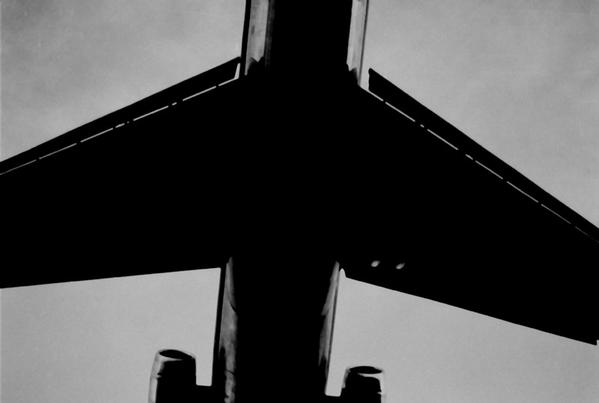
The two great graces essential to a saint in this life are faith and repentance. These are the two wings by which he flies to heaven.

Grace of Repentance


Today is Ash Wednesday. That does not mean much to many in my theological circles.  But for many other Christians it is a day that launches the Season leading to Easter – the Season of Lent.  This day is designated Ash Wednesday because of an ancient practice of marking believers with ashes as a symbol of repentance. 

Hopefully it is more than symblolic, but is also a reminder that, as Martin Luther said, “When Christ said ‘Repent’ he called for the entire lives of Believers to be lived out in repentance.” 

Repentance is a lost art.  Repentance is also a neglected practice.  I suspect that many assume repentance is someting to be avoided; that repentance is what we must do if we have sinned; but if we can avoid sin we have no need of repentance. 

Seems logical. Except it mischaracterizes the nature of sin.  Sin is not what we do, sin is the condition we have, whether we are aware of it or not.  I find helpful the old saying: “We are not sinners because we sin. We sin because we are sinners.”  Thus, as Luther suggested, the necessity of life lived out in repentance. 

Perhaps a better way of putting it might be that our lives should include repentance.  I say that because repentance never stands alone. Repentance should always accompany Faith; and Faith should always accompany Repentance.  They are two sides of the same coin of Gospel Christianity.

I like the way the old Puritan Thomas Watson says it:

“Faith and Repentance are the two wings by which we fly toward heaven.” 

I love the imagery. It shows us that our salvation involves not only our conversions (which, by the way, requires both Faith & Repentance), but is a sanctifying journey which requires us to grow in our awarenss of both our ungodliness and the greatness of the Gospel.  To have one wing longer than the other; or worse, to have only one wing, would be disastrous.  Try it for yourself.  Try flying one of those balsa wood planes, with one wing longer than the other and see how it flies.  But this is life without both Faith & Repentance.

Three books I have found helpful in shaping my understanding and appreciation of the need of ongoing repentance:

Repentance & 21st Century Man by C. John Miller

The Doctrine of Repentance by Thomas Watson

Repentance: The First Word of the Gospel by Richard Owen Roberts