Does Doctrine REALLY Matter?

In the first chapter of his excellent book, Dug Down Deep, Joshua Harris writes:

I know the idea of “studying” God often rubs people the wrong way. It sounds cold and theoretical, as if God were a frog carcass to dissect in a lab or a set of ideas that we memorize like math proofs.

I know  many professing Christians who personify what Josh describes, including some within our church. There are a number of reasons they find theology – study of God – distasteful.  One reason is that it is difficult. Another reason is that doctrine has been a point of contention between Christians for ages, and no one with any sanity enjoys being at odds with others. And for many, previous exposure to theology has been just plain boring.

Harris goes on in his observation, and addresses the concern about doctrine being boring:

But studying God doesn’t have to be like that. You can study him the way you study a sunset that leaves you speechless. You can study him the way a man studies the wife he passionately loves. Does anyone fault him for noting her every like and dislike? Is it clinical for him to desire to know the thoughts and longings of her heart? Or to want to hear her speak?

Knowledge doesn’t have to be dry and lifeless. And when you think about it, exactly what is our alternative? Ignorance? Falsehood?

We’re either building our lives on the reality of what God is truly like and what he’s about, or we’re basing our lives on our own imagination and misconceptions.

We’re all theologians. The question is whether what we know about God true.
I think Josh is correct: The study of theology does not have to be boring.

My own motive for studying and teaching theology is not to put myself above anyone else, nor to find grounds to debate and prove others wrong.  My motive is that I have found what Josh describes to be true – I have found beauty in the nature of God.  I have found joy through the discovery of his amazing grace.  I have experienced – and I am experiencing – the transforming power of his promises and principles in the gospel. And while I have found points where I disagree with others, those disagreements do not diminish my friendships with anyone.  So I engage in the study of theology to enhance my own life. And I endeavor to teach theology to offer those same benefits to others who are willing to enjoy them.

As for the study of theology being difficult, well that might be true. Especially when dealing with some important complex issues, such as our Union with Christ.  However, in his book, Josh describes an epiphany he had while vacationing in Florida.  One morning, while at the beach, it dawned on him that in order to “build a house on rock not sand” requires that we dig until we find the rock.  (Matthew 7.24-27) And digging takes work.  But in the end the benefits are worth the work.

The Connection of the Law With the Gospel

There is a common question about how the Law of God and the Grace of God relate to one another. Some seem to wonder how they even co-exist. 

Spurgeon, though, when once asked how he reconciled the Law and the Gospel, replied:

“There is no need to reconcile friends.”

Granted, there is some tension between these two great Biblical themes. But there is an answer – a wonderful, glorious answer. 

Charles Bridges, a 19th Century Anglican pastor-theologian, takes up this  issue and offers some profound and practical answers in an essay titled: The Connection of the Law With the Gospel. 

Bridges’ language is a bit archaic, but with some effort most people should be able to grasp the richness of his insights. Having found it nowhere else on the web, I post his essay below for the benefit those willing to work through it.

But I have been thinking: Perhaps one day I will edit and translate this essay to language for our day… and post it again.

Continue reading

Beauty & Purpose of the Cross

Sadly not everyone recognizes the requisite necessity for God to be Just. Many picture him exclusively as absolute and unconditional love, thinking he will dismiss the the legal demands that result from mankind’s sin on that basis alone. This approach is offensive to God because it demeans two of the other essential facets of his unfathomable nature: Holiness & Justice. In addition, to see God solely as love is to overlook the beauty and the purpose of the Cross. For at the Cross, the perfect holiness of God meets his perfect love in action.

-Jerry Bridges & Bob Bevington, The Great Exchange

Easy Chairs & Hard Words

Some time ago I posted a series of fictional discussions between a young man from a Broadly Evangelical background and a seasoned minister in a more historical theological tradition.  The series is titled Easy Chairs & Hard Words. It was penned by Douglas Wilson of Christ Church of Moscow, Idaho, and first appeared in Credenda Agenda.

These engaging instructive narratives have come to mind in a few discussions over the past couple weeks, so I decided it might be good to republish them. At least I will post links to each of the six chapters: 

Easy Chairs & Hard Words – Part 1

Easy Chairs & Hard Words – Part 2

Easy Chairs & Hard Words – Part 3

Easy Chairs & Hard Words – Part 4

Easy Chairs & Hard Words – Part 5

Easy Chairs & Hard Words – Part 6

What is God Like?

What is God like?  Describe to me the God you say you believe in. 

In the first chapter of his best selling book, Crazy Love, Francis Chan challenges his readers to ponder who God is. “Who is it that you are praying to?” Chan wants us to ask.  I really appreciate that challenge and that exercise because, quite frankly, I am not sure most people, even in our churches, can offer a substantial answer.

J.I. Packer wrote:

“Those who know God have great thoughts of Him.”

Donald Carson wrote:

“The better we know God, the more we will want all of our existence to revolve around him, and we will see that the only goals and plans that really matter are those that are somehow tied to God himself, and to our eternity with him.”

How well do you know God?

While there is no substitute for Scripture, sometimes the insights of others can help us notice things that we might otherwise not see. Like a tourguide who has navigated a trail many times is able to point out things of importance, of beauty, and of danger, so is one who has walked with God and given himself to careful study of God.

I have found the following books are faithful to Scriptureand helpful in shaping my knowledge of God:

Knowledge of the Holy by A.W. Tozer 

Attributes of God by A.W. Tozer

Holiness of God by R.C. Sproul

The Pleasures of God by John Piper

Knowing God by J.I. Packer

Doctrine

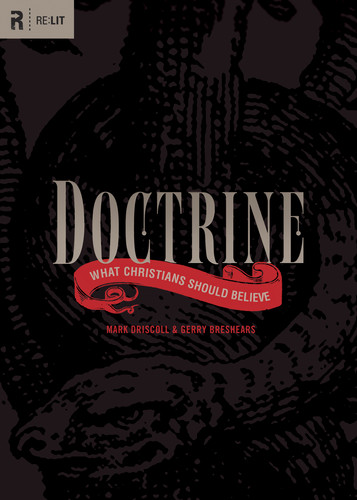
Do you want a good overview of the doctrines of the Christian faith? Would you be open to a introductory course, but are afraid people in your church might think lesser of you because of what you don’t know? (Most of them don’t know either, by the way.)  re:Lit publications has developed Doctine by Mark Driscoll & Gerry Breshear to introduce an overview of the themes of the Bible.

On the web site, across the top of the screen are icons that provide a brief synopsis of each doctrine. Additionally at the top right of the synopsis is a link to an audio/video of messages Driscoll delivered at Mars Hill Church that served as a foundation for each chapter.

Crossway Books has an e-book available free online.

  • Click: Doctrine
  • Scroll down to Contents
  • Click the Chapter Ttile

Resurging Calvinism

Jonathan Dodson, of Acts 29 Network, has posted a great synopsis of beliefs in an article titled: The Message of Resurging Calvinsm.  This falls into the category of: I Wish I’d Written That –  it so simply and concisely summarizes what I have been teaching at Walnut Hill Church.

Dodson clearly describes 5 areas of important Faith distinctives:

  1. Gospel vs. Religion
  2. Us vs. Them
  3. Big vs. Small
  4. Conservative vs. Liberal
  5. Suburban & Urban

In this post there are some references to the New Calvinism. In some respects this label seems a bit of a misnomer since, it seems to me, it is really a just a great expression of healthy Calvinism… But I don’t want to be nit-picky.

Theology for Life

As a pastor from a confessional denomination one of the more difficult tasks I regularly – even constantly – encounter is helping people past a distatse for doctrine. 

I understand why so many are so often hesitant to embrace any system of doctrine.  “Doctrine divides” is a commen lament. And, regretably, it is often an accurate one.  I see many who are at odds with others over secondary principles.  Another issue is that sometimes those who are the strongest proponents of sound theology carry rather “ugly” attitudes.  Looking at life, and the church, with a singular perspective (as opposed to tri-perspectival) some assume that mere apprehension and submission to a system of doctrine is the only thing that matters.  As one of my old pastors often said: “Their theology is dead right – but mostly dead.” 

Of course there are other reasons to be considered. 

The historical influence of the Second Great Awakening continues to infect large portions of the American church.  One of the most significant effects is that many Christians, and a number of church traditions, are flarly anti-intellectual.  Their faith is almost entirely “feelings” built aroud a few simple theological propositions.

And maybe the biggest hurdle is that developing a comprehensive understanding of a system of theology is, simply, hard work.  Like learning anything, it is challenging and takes time and study. 

Whatever the reasons for hesitancy, I maintain it is still important.  In this brief video Tim Keller affirms the benefits of sound doctrine. In fact he asserts, I believe correctly, that everyone already lives out their theology…

If this so, it would seem important to think it all through.

Danger of Christian Complacency

It may defy common wisdom, but sound doctrine is important to the renewal of the contemporary church.  While many view doctrine as divisive and unecesary trivia, recent studies by Thom Rainer, Ed Stetzer, and others, reveal that sound doctrine is a hallmark of churches that are the most effective in evangelism.  Further, both writers, in addition to Collin Hansen’s experience, suggest that open discussion about sound doctine is what younger, unchurced spiritual seekers are clamoring for.  So while it may defy common wisdom, we also need to remember that some things are more common than wise.

The following is a short article by 19th Century Anglican Bishop, J.C. Ryle, who makes the case for the necessity of sound teaching in our lives and ministries.  See what you think.

*** 

The times require distinct and decided views of Christian doctrine. I cannot withhold my conviction that the professing Church is as much damaged by laxity and indistinctness about matters of doctrine within, as it is by skeptics and unbelievers without. Myriads of professing Christians nowadays seem utterly unable to distinguish things that differ. Like people afflicted with color–blindness, they are incapable of discerning what is true and what is false, what is sound and what is unsound. If a preacher of religion is only clever and eloquent and earnest, they appear to think he is all right, however strange and heterogeneous his sermons may be. They are destitute of spiritual sense, apparently, and cannot detect error. The only positive thing about them is that they dislike distinctiveness and think all extreme and decided and positive views are very naughty and very wrong!

These people live in a kind of mist or fog. They see things unclearly, and do not know what they believe. They have not made up their minds about any great point in the Gospel, and seem content to be honorary members of all schools of thought. For their lives they could not tell you what they think is truth about justification, or regeneration, or sanctification, or the Lord’s Supper, or baptism, or faith or conversion, or inspiration, or the future state. They are eaten up with a morbid dread of controversy and an ignorant dislike of party spirit; and yet they really cannot define what they mean by these phrases. And so they live on undecided; and too often undecided; they drift down to the grave, without comfort in their religion, and, I am afraid, often without hope. Continue reading

Do You Know…?

Cracked Glass

Do you know the Christ of the Gospels? Or have you fallen into the trap to which Christians (especially, perhaps, Reformed Christians) who love doctrine and systematic theology are sometimes susceptible (unlike John Calvin, it should be said): fascination with dogmatic formula at the expense of love for the Savior’s person?

Sinclair Ferguson, from Yesterday, Today, and Forever

Contemporary Evangelical Creed


Crumbling Steeple

The following is a spoof on the substance of much of contemporary Evangelicalism.  It is taken from a past edition of Modern Reformation, probably Jan/Feb 1997, but I am not sure of the original publication date. 

I know I may be stepping into a hornets nest here, but I post it because I find it funny – sad, but funny:

I believe in God who once was Almighty, but sovereignly chose not to be sovereign;  and in Jesus, my personaLordandSavior, Who loves me and has a wonderful plan for my life, Who came into my heart when I asked him to, and is now seated at the right ventricle of my belief in him, Who walks with me and talks with me along life’s narrow way, and tells me I am his own, Who shall come again with secrecy to rapture us outta’ here, Whose kingdom shall last exactly one thousand years; And in the Holy Ghost, who did some weird stuff at Pentecost, but doesn’t do much more anymore except speak to the hearts of individual believers.

And I believe in this local, independent, and powerless church, insofar as it is in line with my personal interpretation of the Bible and does stuff I like;  in one Believer’s baptism for the public proof of my decision for Christ; and in giving my personal testimony for soul winning.

And I look for the identity of the Antichrist, and know that the Last Days are upon us.

– Ay-men

Glory Story: The Joel Osteen Phenomena

Osteen v. Horton

I’ve never quite understood the attraction.  His words melt like cotton candy.  Yet he has amassed the largest church and largest television audience in the United States.  Sure, he may be a nice guy, but what is the allure of Joel Osteen?

Like him or loathe him, Osteen’s influence is pervasive. I am frequently asked my opinion of him by members of my own church – usually old ladies, who I assume think he would be a fine son or grandson.

Mike Horton has written a piece I find informative: Joel Osteen and the Story of Glory.

Check it out.

Keller Kiosk

 Christianity Today has published an interesting interview with Tim Keller of Redeemer Church in New York City titled, Tim Keller Reasons With America.  If you have enjoyed Keller’s writing or teaching you may appreciate the insight behind his philosophy and ministry.  Or, if you are one who may be a little curious about this guy who is so frequently cited and quoted in Evangelical cirlces, this interview might be a good introduction.

On another front, from Justin Taylor, at Between Two Worlds, I have learned that Keller has a new book due out in October.  The new book, The Prodigal God, will describe and define Christianity in light of the parable of the Prodigal Son.  Having heard Keller teach on this topic, it should be radically profound. I am looking forward to the read.

“Shack”-ed

I don’t know where I’ve been, but I’ve missed it.  Apparently there is a self published book out there called The Shack that has become one of the most widely read works in country. It is in the process of becomming a major motion picture.  And it is a book about theology! Well, it is a fictional story aimed at communicating theology, akin to Bunyan’s classic Pilgrim’s Progress. 

The story behind the book’s publishing is… well, quite a story itself. Written by a man to give as a Christmas present to his children, it was never intended to be published beyond a couple copies at Kinko’s.  It has risen to reach the Top 10 List at Amazon, USA Today, and Barnes & Noble

But the book is also apparently polarizing.  Some say the theology is questionable. People I appreciate have expressed varying opinions.

As I already stated, I had never even heard of the book, or at the least I never took notice.  I do regularly check out the Best Seller Lists to see if there is anything that might catch my interest, but the Shack apparently slipped by.  But now, in just the past two or three days I’ve heard Steve Brown do an interview with the author and read a review of the book by Tim Challies.  (Click for .pdf the-shack-review)   

I’m not sure what I’m likely to think about it once I read it, but I guess I’ve found at least one book for my Summer Reading List.