Lord Dissolve My Frozen Heart

Lord, dissolve my frozen heart/ By the beams of Love Divine;/ This alone can warmth impart/ To dissolve a heart like mine.

O that love, how vast it is!/ Vast, it seems, though known in part;/ Strange indeed, if love like this/ Should not melt the frozen heart.

Chorus: The love of Christ passes knowledge./ The Love of Christ eases fear./ The love of Christ hits a man’s heart;/ It pierces him like a spear.

Savior, let thy love be felt,/ Let it’s power be felt by me,/ Then my frozen heart shall melt,/ Melt in love, o Lord to thee.

Source: Red Mountain Music

Graceful Break-in

“The Bible’s purpose is not so much to show you how to live a good life. The Bible’s purpose is to show you how God’s grace breaks into your life against your will and saves you from the sin and brokenness otherwise you would never be able to overcome…”

-Tim Keller

Re-Gridding Revisited

Measure of a Heart

A few days ago I penned a post suggesting that we consider the Christian Life through a different paradigm than what I believe is ordinary.  I suggested the the fundamental gauge ought to be Humble vs. Proud, rather than Good vs. Bad and/or Right vs. Wrong.  I have received several positive responses, and I have been asked a couple times for some clarification. 

While I suspect few, if any, would suggest that Humble vs. Proud is not a valid grid, I understand how some might find it a bit audacious to say it should be the fundamental, or primary grid.  What makes this the predominant paradigm?

Humble vs. Proud is the grid within which these other standards fit.  

Let me explain:

First, Christianity is a substantive faith.  Doctrine is the way we express and transfer the substance of Truth.  So Right vs. Wrong is an important concept; an indispensible concept.  But God tells us that there is a knowledge that merely “puffs up”, a knowledge that may be true but which is not helpful.   It is not the substance of truth that it the problem. The problem is the condition of the heart that is receiving and processing this truth. 

What is interesting is that understanding  Truth also promotes humility.  Paraphrasing C.J. Mahaney: “Humility is seeing ourselves in right relation to God.”  In other words, the more we understand about God and about ourselves the more humble we wil feel. But paradoxically, before Truth produces humility the heart must already be humble before God.

Second, James tells us that we are known by our actions; that Faith without works is dead.  This underscores the importance of Good vs. Bad.  But our actions can be deceiving. Not only can we deceive others by our actions, but we often deceive ourselves.  Many people think of themselves as being loved by God because of their actions.  But this often stems from a false sense of righteousness. God tells us that our best efforts, if they are not generated from faith and a love for God, are as appealing as a filthy rag. And Jesus spoke to a group of people telling them that despite their “good deeds” he had no relationship with them. (See Matthew 7.21-23)

Again, while both the Good vs. Bad and Right vs. Wrong paradigms are important, and have their place, I still suggest that Humble vs. Proud is the most fundamental. Against this paradigm there is no warning. And it is only within this paradigm that the others get their meaning.

Re-Gridding the Christian Life

Measures

Not long ago, while a friend of mine was preaching in my place at Walnut HIll Church, I had somewhat of an epiphany.  I understood something that had been nagging at me for a long, long time, but that I had never before been able to express – even to myself.  I realized: We have it all wrong. We are using the wrong standard to measure our spiritual lives.  We need a new grid.

Too often, I am afraid, we gauge the Christian Life through a grid of Good vs. Bad, or of Right vs. Wrong.  The more serious of us may see that both ought to be wedded together.  But I am convinced that, while both of these grids have some value, the real grid that God fundamentally calls us to use is Humble vs. Proud.

Good vs. Bad gauges our behavior.   Right vs. Wrong evaluates our doctrine, or our Worldview.  But Humble vs. Proud reflects our heart – and that is where everything must begin. If we get that out of whack, everything else will be too.

God opposes the proud but He gives grace to the humble.”

Slow Like Oak

Great Oak

In a culture conditioned to instant everything, perhaps we would do well to pause and consider these words from John Newton, author of the hymn Amazing Grace:

“A Christian is not of hasty growth, like a mushroom, but rather like the oak, the progress of which is hardly perceptible, but in time becomes a great deep-rooted tree.”

-from The Letters of John Newton

Worldliness in Prespective

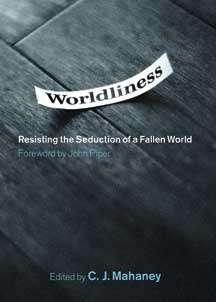
worldliness1

I recently finished reading the short book Worldliness, edited by C.J. Mahaney.  Each chapter is written by different men from the Sovereign Grace family.  I found it very insightful and practical. 

I appreciate that the writers did not merely resort to the worn out separatist “Us vs. The World” rhetoric.  Instead they wrestled intelligently, theologically, and bibilcally about the pertinent questions: What does worldliness actually mean?  What actual problems does worldliness pose?  Only once those questions are amply answered do the writers delve into practical applications in the various spheres of our culture.

I had given some thought to blogging about the book.  Already in previous posts I have elaborated on some of the insights I have gained.  But then on Crossway.blog I have found that Jonathan Leeman of 9 Marks has shared some highlights from each chapter.  Leeman has done such a good job that it made my intentions unnecessary.  I will still likely interact and expound upon some other insights in future posts, but for a good introduction to and overview of the book I encourage you to check out what Leeman has written.  Click: Worldliness

But don’t neglect the book. It is short, but beneficial. I’ve added it to my ‘must read’ list.

Grace of Repentance


Today is Ash Wednesday. That does not mean much to many in my theological circles.  But for many other Christians it is a day that launches the Season leading to Easter – the Season of Lent.  This day is designated Ash Wednesday because of an ancient practice of marking believers with ashes as a symbol of repentance. 

Hopefully it is more than symblolic, but is also a reminder that, as Martin Luther said, “When Christ said ‘Repent’ he called for the entire lives of Believers to be lived out in repentance.” 

Repentance is a lost art.  Repentance is also a neglected practice.  I suspect that many assume repentance is someting to be avoided; that repentance is what we must do if we have sinned; but if we can avoid sin we have no need of repentance. 

Seems logical. Except it mischaracterizes the nature of sin.  Sin is not what we do, sin is the condition we have, whether we are aware of it or not.  I find helpful the old saying: “We are not sinners because we sin. We sin because we are sinners.”  Thus, as Luther suggested, the necessity of life lived out in repentance. 

Perhaps a better way of putting it might be that our lives should include repentance.  I say that because repentance never stands alone. Repentance should always accompany Faith; and Faith should always accompany Repentance.  They are two sides of the same coin of Gospel Christianity.

I like the way the old Puritan Thomas Watson says it:

“Faith and Repentance are the two wings by which we fly toward heaven.” 

I love the imagery. It shows us that our salvation involves not only our conversions (which, by the way, requires both Faith & Repentance), but is a sanctifying journey which requires us to grow in our awarenss of both our ungodliness and the greatness of the Gospel.  To have one wing longer than the other; or worse, to have only one wing, would be disastrous.  Try it for yourself.  Try flying one of those balsa wood planes, with one wing longer than the other and see how it flies.  But this is life without both Faith & Repentance.

Three books I have found helpful in shaping my understanding and appreciation of the need of ongoing repentance:

Repentance & 21st Century Man by C. John Miller

The Doctrine of Repentance by Thomas Watson

Repentance: The First Word of the Gospel by Richard Owen Roberts

Faithfulness vs. Floating Along

Here is a helpful insight from D.A. Carson, in his book For the Love of God, that reminds us that while, as  Christians, we are Justified and freely forgiven by God through Faith alone in Christ alone, we grow in Spiritual maturity by God’s grace AND our diligent faithfulness:

People do not drift toward holiness. Apart from grace-driven effort, people do not gravitate toward godliness, prayer, obedience to Scripture, faith, and delight in the Lord.  We drift toward compromise and call it tolerance; we drift toward disobedience and call it freedom; we drift toward superstition and call it faith. We cherish the indiscipline of lost self-control and call it relaxation; we slouch toward prayerlessness and delude ourselves into thinking we have escaped legalism; we slide toward godlessness and convince ourselves we have been liberated.

A sobering reminder to avail ourselves in the means of grace.

Enduring Aroma of the Gospel

painters-cup

People don’t earn God’s approval or receive life and salvation because of anything they’ve done. Rather, the only reason they receive life and salvation is because of God’s kindness through Christ. There is no other way.

Many Christians are tired of hearing this teaching over and over. They think that they learned it all long ago. However, they barely understand how important it really is. If it continues to be taught as truth, the Christian church will remain united and pure — free from decay. This truth alone makes and sustains Christianity. You might hear an immature Christian brag about how well he knows that we receive God’s approval through God’s kindness and not because of anything we do to earn it. But if he goes on to say that this is easy to put into practice, then have no doubt he doesn’t know what he’s talking about, and he probably never will. We can never learn this truth completely or brag that we understand it fully. Learning this truth is an art. We will always remain students of it, and it will always be our teacher.

The people who truly understand that they receive God’s approval by faith and put this into practice don’t brag that they have fully mastered it. Rather, they think of it as a pleasant taste or aroma that they are always pursuing. These people are astonished that they can’t comprehend it as fully as they would like. They hunger and thirst for it. They yearn for it more and more. They never get tired of hearing about this truth.

– Martin Luther

Mundane is Glorious

Mark Altrogge is a name some may recognize as the author of such worship songs as I Stand in Awe and I’m Forever Grateful.  Most probably won’t recognize the name or the songs.  Mark is also a pastor in Western Pennsylvania, affiliated with the Sovereign Grace Ministries network.

Mark has written a recent post, Mundane is Glorious, that touches on something the Lord is – and has been – teaching me.  I’m a slow learner. But Mark’s post is encouraging.  It helps me deal with my glaring lack of greatness.  He reminds me that it is not greatness that necessarily honors God, but faithfulness:

[God is] no more glorified by the pastor preaching to thousands than he is by the Mom trying to get her one-year-old to eat his Gerber peas for the hundredth time.

[God is] no more blessed by the man who leads thousands in worship than by the dad who runs a high lift all day, plays catch with his kids after dinner, and falls asleep reading a Bible story to his kids before bed.

If you ever wrestle with wonder about how God can, and does, view a life that is common, ordinary, and seemingly unremarkable, check out Mark’s post.  It is is a refreshing, and godly, perspective.

The Gospel in 6 Minutes

What is the Gospel? 

While in many ways this should be a simple question to answer, experience has taught me that many people are confused about what the Gsopel is.  Most agree that the Gospel is something good.  But they are confused about what particularly defines the Gospel. 

Some see the Gospel as merely that message necessary to receive salvation, but have no idea it has a huge impact on how we live our lives even after becomming Christians. Some associate it with a style of music often found in a rural church.  Some view at is as a synonym for “Truth”.  Others simply think of the whole Bible, or at least the New Testament, as being the Gospel. 

While the latter statement is true in a sense, there is a particular message that runs throughout the Bible that is most properly seen as the Gospel; and by which the entirely of Scripture can be said to be Gospel. This message is at times more detectable than  at other times.  It may be said to be like a stream that runs both above and under ground. Even when it is not obvious, if you look closely its presence can be seen.

Getting the Gospel right is essential to a healthy and vibrant spiritual life.  Many problems experienced by Christians in their spiritual and emotional lives, and in evangelsim and mission, can be traced to a misunderstanding or masapplication of the Gospel.  That’s why I want to take every opportunity to clearly declare and define the Gospel.

John Piper succinctly explains this vital message in this brief video.  (It is well worth the few minutes.)

Easy Chairs & Hard Words – Part 4

by Douglas Wilson

We join a conservation in progress; it is between a young theological questioner who grew up in a typical Evangelical church, and an older pastor from a historical theological tradition.  

 ***** 

Pastor Spenser shifted easily in his seat while I carefully thought over my next question. “Some of my friends at my church have figured out that I have been coming to see you,” I said.  

Pastor Spenser nodded, and waited.  

“Naturally,” I said, “they are somewhat concerned.”  

“Naturally. About what?”  

“Well, they say that Christians who believe in the exhaustive sovereignty of God are setting themselves up.”  

“For…?”  

“For the temptation which says that because God controls everything, then the way I live doesn’t really matter.”  

“I see. In other words, if I am elect, then my sins won’t damn me, and if I am not, then all the good works in the world won’t save me. Is that it?”  

“Yes. That is exactly it. If the whole thing was settled before the world began, then why bother? My friends know that there are true Christians who believe this, but they think that, because of this theology, these Christians will tend to become careless about how they live.”  

“Why should we take responsibility for our actions after we have embraced a theology which cuts the nerve of personal responsibility?”  

“Right. If God controls everything, then what room is there for personal holiness?”  

Pastor Spenser thought for a moment. “The problem is not with your friends’ concern for personal holiness. That is admirable. All Christians should set their faces against carnal living on the part of professing Christians. But it does no good to oppose carnal living with carnal reasoning.”  

“What do you mean?”  

“When someone is whooping it up down at the bars, or sleeping with their girlfriend, why do we say it is sin?”  

“Is this a trick question?”  

Pastor Spenser grinned. “You might say that. Why do we call such things sin?”  

“Because the Bible does.”  

“Exactly. So this carnal living we have been talking about is a lifestyle that is not in submission to the clear teaching of the Word of God.”  

“Well, sure. But I still don’t see where you are going with this.”  

“Now if carnal living is a lifestyle that does not submit to God’s Word, then how should we define carnal reasoning?” 

“The same way, I suppose?”  

“Right. It is not enough to submit what we do externally to God; we must also submit the way we think. Your friends are trying to defend God’s standards for living by abandoning His standards for thinking. It cannot be successful.”  

“Is there a passage where this point is clear?”  

“Yes, in Philippians. Chapter 2, verses 12 and 13.”  

I turned to Philippians and read. “Therefore, my beloved, as you have always obeyed, not as in my presence only, but now much more in my absence, work out your own salvation with fear and trembling; for it is God who works in you both to will and to do for His good pleasure.” I looked up.  

“What does the passage say God is doing?” Pastor Spenser asked.  

I looked down again. “It says that He is working in the Philippians, both in willing and doing, and that the result is His good pleasure.”  

“And what would carnal reasoning do with that?”  

“Well, the response would be that if God is doing the willing, and if God is doing the doing, and the result is whatever He wants, then there is no reason for me to put myself out. It is going to happen anyway.”  

“Right. The reasoning says that if God is going to do the work, then why should I have to?”  

I nodded, and Pastor Spenser went on.  

“But what application of this truth does Paul command the Philippians to obey?”  

I looked at the passage again. “He tells them to work out their own salvation, with fear and trembling.” I glanced down further. “And in the next verse he goes on to specific ethical instruction – to avoid murmuring and disputing.”  

I sat and thought for a moment. “But my friends would say that the application they are making is obvious – common sense.”  

“Well, it certainly is common. But is it biblical?”  

“Why do so many Christians fall for this line of reasoning then? It seems like a trap that is extremely easy to fall into.”  

“Well, yes, it easy to fall into. But it is also easy to drink too much, not watch your tongue, lust after women, and so forth. And these are things which the church recognizes as sin, and warns the people against. But carnal reasoning is also easy, and almost no one warns the people.”  

“Why not?”  

“Sheep are hungry because shepherds don’t feed them. Shepherds don’t feed them because shepherds don’t have food.” Pastor Spenser leaned forward in his seat. “The shepherds don’t have food because they don’t study their Bibles.”  

“You think it is obvious in the Word?”  

“Certainly. When the apostle Paul magnified the prerogatives of the sovereign God, he fully anticipated the response of carnal reasoning.” Pastor Spenser leaned back, closed his eyes, and quoted, “You will say to me then, ‘Why does He still find fault? For who has resisted His will?’” A modern pastor, in the unlikely event that someone asked him this, would say that it was a good question, and that he wrestles with it often himself. Paul tells the questioner to shut up and sit down. ‘But indeed, O man, who are you to reply against God?’”  

“Paul doesn’t answer the question then?”  

Pastor Spenser opened his eyes. “Oh, he does. It just isn’t the answer carnal reason wants.”  

“So what is the answer?”  

“The answer is God – the same answer that is given at the end of the book of Job. Carnal reason doesn’t see a real answer there either. But believe me, it is a real answer. The answer is the ground of reality; the answer is God.”  

“What happens at the end of the book of Job?”  

“The questions raised in the book are conducive to carnal reason; indeed, even non-Christians are attracted to the first part of the book of Job. As they would put it, ‘It addresses the human condition.’ But then, at the end of the book, God comes in, with glory and thunder. And do you know what? He doesn’t answer any of the impertinent questions; rather, He poses some sobering questions of His own. ‘Who is this who darkens counsel by words without knowledge? Now prepare yourself like a man; I will question you, and you shall answer Me.’”  

I nodded. “And He asks where Job was when the universe was created.”  

“The question is not irrelevant. It is the heart of the matter. Discussions of God’s sovereignty and human responsibility very rarely display any understanding at all of Who the Creator is.”  

“But my friends would say that you are making God responsible for evil, and that they are concerned to protect God’s honor and glory.”  

Pastor Spenser looked at me intently. “It is true that the affirmation of God’s total control over all things causes some to blaspheme. But your friends need not be concerned for God’s glory; man’s slanders and blasphemies do not touch Him. Such slanderers are pelting the sun with wadded-up balls of tissue paper.”  

“They are stumbling over something though.”  

“They stumble, being disobedient to the word, to which they also were appointed.”  

“Now, see? Why do you have to put these things so strongly? Doesn’t that cause people to react to what you are teaching? They were appointed to stumble?”  

“That wasn’t my choice of words. I was quoting 1 Peter 2:8.”  

“Oh. Oops.”  

“Your friends are concerned that God be seen as good. But seen as good by whom? Those who believe the Word of God will know that God is light and in Him is no darkness at all. Of course He is good – by definition. And those who do not believe the Word of God will persist in thinking that there is a tribunal or court somewhere in which God will one day be arraigned. On the day of judgment, their folly will be apparent to all – even to them.”  

“So how do we bring this back to the original point?”  

“The original point was the concern that the doctrine of God’s sovereignty would be made into a cushion for sin. My answer to this is that we must, in all things, recognize God as God. We must do so in how we live holy lives, but we must also do so in why we live holy lives. We are to live in a holy way because God has commanded it.”  

“But you would also say that what God has commanded the believer He has also given the believer.”  

“Well, certainly.”  

“I honestly see why carnal reason has a problem with this.”  

“And I honestly see why carnal men want to lust after beautiful women. But what does the Bible say?”  

“What do you mean?”  

“What is the greatest commandment?”  

“That we love God.”  

“And what is the first fruit of the Spirit?”  

“Love.” I said. “I see.”  

“What do you see?” Pastor Spenser asked.  

“This takes us back to Philippians. We are commanded to work out what God works in.”  

“Right.” he said. “Nothing less.”

***

This is Part 4 in a series of 6 posts titled Easy Chairs & Hard Words.

Good Enough!

Are You Tired of Trying to Measure Up? Paula Rinehart wrote the article below for Discipleship Journal.

***

One fall evening, after months of recurring chest pain   and a rather hectic schedule, I found myself  thinking out loud with my husband as we watched the sun sink lower and lower in the Colorado sky.

We had been discussing the various pressures that clogged our lives–mostly good things, but too many and too much. It seemed the more we did, the more we had yet to do. I never felt I could get to the end of all the “doing.” Where was the off-button? What kept me pushing so hard, so long?

Finally, I posed a question I didn’t even know I was asking until it popped out. “Why do you suppose,” I asked my husband, Stacy, “that God makes it so hard to serve Him?”

That question was like a peek behind a wall for me. It plagued me for months, dogging my steps with the tenacity of an old hound. It hinted of a God who could not be pleased. After years of trafficking in the great truths of God, might there be a large gap between what I knew about Him, and what I personally believed, I wondered? Could the image I held of God be vastly different from who, in truth, He is?

Stuck on the Treadmill

My chest pain hinted that I should look further, especially after a battery of medical tests failed to reveal a physical reason for the pain. I decided to accept it as a talisman to help me see what I really believed, on an emotional level, about following Christ.

What I discovered in that quest was the utter shallowness of my understanding of grace.

As I read the Bible, I would ask myself what I knew in my mind to be true . . . and what I actually believed. The discrepancy, in many cases, was unnerving. I came upon old, familiar passages, one in particular that I had memorized as a young Christian.

Come to me, all you who are weary and burdened and I will give you rest.Take my yoke upon you and learn from me, for I am gentle and humble in heart,and you shall find rest for your souls. For my yoke is easy and my burden is light.-Mt. 11:28-30

Here were wonderful words of Jesus about rest and a lightened load, but I had never been able to apply them to myself. They spoke of something so contrary to my experience that I had, in effect, deleted them from the text.

I slowly began to realize that I had been reading Scripture for years through the lens of personal effort and discipline, as though the great weight of following Christ rested squarely on my shoulders. And the crazy, destructive part of living out of personal effort and zeal is that you can never know when you’ve done enough. You are stuck on a treadmill with the off-button forever out of reach.

I had lived by “the tyranny of the oughts.” You ought to do more. You ought to do better. There might be 30 things wrong with you, but with God’s help, the list could be narrowed to 20 or with extra effort, even 10. Someday, you might even be “fixed.” Then you could relax . . . once you were a little closer to the ideal. Until then, like the Eveready Bunny, you just keep going and going and going. No wonder I felt tired all the time!

I began to see that while the grace of God had been the booster rocket that launched me into the faith, I knew more about explaining the message than the actual experience of living under grace. God’s grace had become just a familiar part of the backdrop to the real business–and busyness–of life. It did not describe an address where I actually lived.

As I went through this period where I felt I could never do enough, I became aware of a rather harsh, inner critic, a “voice” that provided a walking commentary on my life.

Hadn’t I had a pretty good devotional time this morning? “Well yes, Paula, but you know you aren’t doing much serious Bible study these days.”

Reading was a struggle for our son despite everyone’s efforts. “And you know, Paula, that a really good mother would tackle this problem with home schooling.”

A close friend was going through a rough time in her marriage. “But you let her walk out of your door yesterday with a rather weak word of comfort.”

In whatever direction I looked, I felt I was not measuring up. And the faint but relentless little voice inside rarely failed to point out that fact.

Turning Points

A major turning point in my quest to live under God’s grace came when I finally realized that my “inner critic” was not the voice of God. I was hearing an echo of myself and my longing to be loved and affirmed. Maybe I could finally do enough to feel loved. And doing enough to merit God’s approval would be, of course, the ultimate silencer of any thoughts of unworthiness. The emotional logic behind a lifestyle of personal effort is that someday, if I work hard enough, I will be received with open arms and a big smile.

One of God’s best gifts to me was chest pain and fatigue. They forced me to face the empty, scary vacuum that opens up when you are stopped in your tracks. And what I stumbled upon was an experiential understanding of God’s grace, one that comes when you are too empty-handed to do anything but humbly receive.

I came to realize that for years I had been relating to God as more of a “hired hand” than a daughter. David Seamands was the first to make this distinction, and it’s an important one. A hired hand is always in a rather tentative position. She may, by hard work and faithfulness, be promoted to a higher position–or she may be dismissed summarily and replaced by another. There’s no security, and hence, no rest.

But the relationship that God has invited us into is different altogether. By His grace, we are counted as His children. “How great is the love the Father has lavished on us, that we should be called children of God! And that is what we are!” the Apostle John said (1 John. 3:1). My relationship, then, is that of a daughter. A daughter may grieve her Father, she may encounter His discipline–but she has the basic confidence of belonging and being loved. A daughter can work and serve and give–and a daughter can play and rest and receive. There is a world of difference between living as a hired hand (as though God had some “need” of our services) and living as a daughter or a son.

An Emotional Home

I began to see that the frustrated feeling that I might never “get there,” a feeling I carried beneath my chest pain, was accurate. No amount of “doing well and doing enough” would bring the sense of peace and acceptance I longed for. Rather, grace begins in a different place altogether. It grows out of believing that I am already there, already declared His daughter, pronounced His. He has been there waiting for the prodigal to return from the fields of her own self-effort, ready to speak the words He said to the elder son, “I have always loved you and all that I have is yours.”

Grace is our emotional home, the new place on the far side of the cross from which we begin, the very air we are meant to breathe. It can never be earned–only claimed. As Paul said, “Since we have been justified through faith, we have peace with God through our Lord Jesus Christ, through whom we have gained access by faith into this grace in which we now stand. And we rejoice in the hope of the glory of God” (Ro. 5:1-2). Grace describes the ontological reality of our existence: We are already loved, already accepted, already made secure by the blood of Christ.

Living under grace is best described in terms of being, rather than doing. In fact, grace is the being that makes all the real doing possible. What does it mean to live from a place that the Scripture calls “this grace in which we stand”? The experience of grace is about living from a place where we know we are really loved. That may sound simple enough, but the truth is that any time we encounter the experience of being loved by God, it comes with an element of surprise.

A Welcome for the Unworthy

We are conditioned from childhood on to expect to encounter acceptance and love when we have been good boys and girls. That is the way life works. If we perform well, then we have a chance at winning the prize. Our talents, our strengths, our good attitudes provide our best hope of ever feeling wanted and valued. But the strangest thing happens in the gospel. If we read the text right, we realize that God looks at our “best” and claims that He is not terribly impressed. Yet He reaches past that, into the unseemly, weak, broken–and even sinful–aspects of who we are and loves us as we have never been loved before.

Frederick Buechner writes of a rather ordinary moment in his life when this kind of reality stung him. He was receiving communion one morning in a small village church where he knew the local priest well. As the priest moved nearer, Buechner could hear him intoning the familiar words, “The body of Christ, the bread of heaven.” Over and over he repeated the phrase.

But when the priest came to him, on an impulse he inserted another word. “The body of Christ, Freddy, the bread of heaven.” It was not unusual that the priest knew his name. But the effect on Buechner was extraordinary – it caught him off guard. He says,

For the first time in my life, maybe, it struck me that when Jesus picked up the bread at His last meal and said, “This is my body which is for you,” He was doing it not just in a ritual way . . . but in an unthinkably personal way for every particular man or woman or child who ever existed or someday would exist. Most unthinkable of all: maybe He was doing it for me.

The truth of the cross, the truth about grace, Buechner writes, is that “we are welcomed not as the solid citizens that our Sunday best suggests we are, but in all our tackiness and tatteredness that nobody in the world knows better than each of us knows about ourselves–the bitterness and the phoniness and the confusion and the irritability and the prurience and the half-heartedness. The bread of heaven, Freddy, of all people.”

Grace invites us to return, over and over and over, to the surprising reality of being loved in the midst of failure, weakness, and sin–in all the unworthy places of our lives where we would least expect ever to encounter such a response.

Grace and Obedience

The experience of grace is about letting our obedience grow out of our relationship with God.

David Seamands tells the story of a woman he helped, a woman who had known many disappointments in her bruised background. She was faced with a terribly attractive temptation. Amazingly, she was able to resist. Seamands asked her how she summoned the strength to turn away from an offer that symbolized so much of what she’d missed in her life.

“I’ve thought long and hard about it,” she said, “but it would be a real departure from Christ, and I just cannot bring myself to turn my back on that kind of love.”

I often ponder her response. The “ought-to’s” and the “have-to’s” and the “shoulds” were not what she was relying on to force her to make the right choice. Rather, she let the relationship she enjoyed with the Lord be what drew her to obedience. She could not turn her back on that kind of love, she said. What God asked of her was not viewed as a burden. It was the evidence of His care and protection, the proof of His unfailing pursuit of her.

Paul makes this point in his letter to the Romans. He says it is the kindness of God that is meant to lead us to repentance–not His severity, not the harshness of the judgment we deserve (Ro. 2:4). His kindness in the face of our sin is meant to melt the stubbornness in our hearts. We are responding to Someone who loves us and went to incredible lengths to demonstrate that love.

Grace and Rest

The experience of grace is also about letting ourselves relax in His embrace. There is something about experiencing grace that brings to mind the image of a weaned and satisfied child. For grace requires a willingness just to be with God in a way that we can receive, rather than perform. In his book Silence on Fire, William Shannon suggests that we often make the mistake of feeling we must do something in order to gain some entrance with the Lord, some hearing. He says, rather, that we need only pray to be made aware that we are already there, already at home with Him. His grace has brought Him near.

Sometimes when I pray and I am having a hard time settling into a sense of being with the Lord, a picture flashes before my eyes. I see myself standing behind a large bush, straightening my skirt and trying rather frantically to untangle something in my hand. I think it is my life I am trying to untangle! The idea is that if I could just get a little more presentable on the inside, then it might actually be possible to enter His presence.

That mental picture has helped me immensely because I realize more and more that grace is not like that. Grace means I can come out from behind the bush and be received by Him, once again, as the old hymn says, “just as I am.” My prayer is that I can become aware that I am already with Him, in this present moment. That is the practical reality of being received by grace. I am invited to experience the pleasure of a relationship that has been redeemed.

A few years ago a woman addicted to cocaine taught me something about what it means to let God love you this way. She was my client in a counseling internship, and one day she was terribly upset. Her roommate had tried to commit suicide, and Rachel had found her, barely alive. Rachel was unable to get the image of her friend out of her mind, an image that painfully reminded her of her brother’s death a few years before.

As I sat alone in a room with her, I felt at a loss for words. Indeed, there were no words to be said. What could I offer a woman who had experienced years of trauma, of which this last was a reminder of all the rest? Yet her tears were bordering hysteria. Finally, I made a move unusual at a county agency. I said, almost out of desperation, “Rachel, would you like for me to pray for you?”

“Oh, would you please,” she replied, to my surprise. “I would be so grateful to have someone pray for me.”

The prayer I prayed was very simple. I have no memory of the words I said, but I realized that the woman before me was becoming calm again–incredibly calm–almost childlike. When we finished praying, we began to talk once more. I asked her, “Rachel, you changed so visibly in the midst of praying, I wonder what you saw in your mind as we prayed?”

“I saw God on His throne,” she replied, matter of factly. “I saw God on His throne and He invited me to sit in His lap, and He said, ‘There now, Rachel, it will be okay. You will be all right.’”

I was speechless at the way that God met this woman. It struck a deep, deep chord in my life. I think each of us longs, at the very core of our being, for this kind of reassurance from God, for the sense that we are welcomed into His presence in a way that soothes the most tattered edges of our soul. It is His grace that invites us, always invites us. There in the silence and the solitude He waits to give the grace we need.

Dare to Be Free

I discovered in my journey that the compulsive pace of my life mirrored the true beliefs of my heart, however erroneous. Whatever I said I knew was true about God, what I really believed was that my effort could wrest from Him a love and acceptance based on my performance. I could not receive grace–the marvelous, utterly surprising grace of God–until I stepped off the treadmill and waited with empty, needy hands. I could not hear His voice–strong, inviting, and steady–until I could separate Him from the nagging critic I carried inside me. Until I disconnected my longing to be loved from my efforts to please.

I know a little more now, with my heart as well as my head, of what the Apostle John meant when he said at the end of his life, “To him who loves us and has freed us from our sins by his blood” (Rev. 1:5). John was the man who dared to describe himself as the disciple whom Jesus loved.

I think John was writing about grace–the grace in which we stand.