Knowing God

Thinking Man (B&W)

More than 200 names for God are recorded in the Bible.  All of them are important.  Each of them reveals and affirms certain characteristics of God.  While God is incomprehensible – we will never exhaust what there is to know about Him – He is nevertheless knowable.  He has revealed himself to us.  To know God is to recognize what He is like – and what He is not like.  As J.I. Packer once said:

“Those who know God have great thoughts of God.”

So what is God like?

This is not an academic question.  Though certainly there are some Academics in the news recently who may have been well served to have given a little more thought to the question before holding a press conference only to display syncretistic ignorance.  But even in that instance the question is not merely academic.  It is personal.

When asked: “What is the greatest commandment?”,  Jesus unhesitatingly declared: “You shall love the Lord your God with all your heart and with all your soul and with all your mind.”  (Matthew 22.36-40; Deuteronomy 6.1-7) So let me ask a somewhat rhetorical question: “How can one love God if little to nothing is known about God?  Further, even if it is possible to love a god one knows little about, (and I suspect that it may be possible,) how can we claim to be keeping the command to “Love God with all your mind” if we do not engage our minds to learn more and more about him?

Now let me be clear about something: If you are reading this post, and you feel you are less knowledgeable theologically than you think you ought to be, I am not trying to shame you.  Truth is this: I am fairly theologically educated.  If you have any knowledge of God at all, the difference between your little knowledge and my educated knowledge is so minimal when compared to what knowledge there is to be known about God, that any sense of haughtiness I might be inclined to project would be laughable, if such pomposity would not be so pathetic.  My concern is not who knows more than who, but rather whether we  know God, and whether, in keeping with the greatest command, we are engaging our minds to be continually growing in our knowledge of God.

If you have a desire to love the Lord with all your mind, let me offer a handful of suggested books about God with which to feed your mind.  None of these are technical, but all are excellent. (To my mind, these are actually better than most of the technical theological books I have read.)

This list is far from exhaustive. There are many excellent books on this subject, and I welcome anyone who would like to add to this list to do so in the comment section.  Sadly, there are many, many, bad books under this heading as well.  Some of the better books I left off this list are Knowing God by J.I. Packer and Reason for God by Timothy Keller.  While I enjoyed and highly commend both of these, the list above reflects a thorough introduction and/or reflection, yet easy reads.  Keller’s is excellent for those asking the question: Is There a God? Packer’s would be on my list for next steps.

I will end with this: Earlier this year I heard a statement, attributed to John Piper (though I have been unable to confirm it is his), that stuck with me, resonates, and is appropriate to ponder:

“The mind provides kindling for the heart.”

Oklahoma On My Mind – and Heart

Heart of Oklahoma

It has been way too long since I have written here. But this morning, as I think and pray about the devastation that has hit Oklahoma… It is only appropriate to post.  Yet, what can I say?  As a former Oklahoman (I spent my Freshman & Sophomore years of high school, and my first two college Summer Breaks, in Broken Arrow, Oklahoma) this tragedy that has struck, particularly hard on the town of Moore, OK, is heartbreaking.  The videos of the Category 4  tornado (that may yet still be upgraded to Cat 5) that ripped through the town, the hospital, and the elementary school seems surreal.  It brings back to memory all the tornado drills we went through as students – events I must confess I never took too seriously, though clearly I should have.  So I write, but what can I say?

There are many reporting and commenting on this disaster. But two have struck me as offering especially proper perspective and prayer:

Sam Storms, a pastor from Oklahoma City, whom I have never met, but whom I truly appreciate, offers the simple yet importantly profound perspective, in a post he titled: Tornadoes, Tsunamis, and the Mystery of Suffering & Sovereignty.  Storms begins his post hesitantly and with seeming resignation:

I’m inclined to think the best way to respond to the tragedy that struck our community today is simply to say nothing. I have little patience for those who feel the need to theologize about such events, as if anyone possessed sufficient wisdom to discern God’s purpose. On the other hand, people will inevitably ask questions and are looking for encouragement and comfort.

But then he thoughtfully posits a handful of truths essential for us all to build a foundation capable to sustain us through such tragedies – be they our own, or vicarious ones, such as this event is for the most of us.

Mike Milton, former Chancellor of Reformed Theological Seminary, and a man I am thankful to know and appreciate, composed a prayer – a prayer I find worthy to be shared by the many who, like me, may not be able to find the words from within ourselves that we would like to offer to God and on behalf of those effected: A Prayer for the Disaster in Oklahoma

Mirror, Mirror on the Wall

In the Preface to Joe Thorn‘s book, Note to Self, Sam Storms penned a paragraph that strikes at the heart of the difference between those with a vital Chrisian faith, and those who show little if any hint of actually being a follower of Jesus Christ.  Here is what Storms says about the functional place of Scripture in the life of a Believer:

Merely affirming the Bible is inspired accomplishes very little.  Asserting it’s authority isn’t much better.  The inspiration and authority of the Scriptures are of value to us only so far as we change our beliefs to conform to its principles and alter our behavior to coincide with its imperatives.  The Bible is meant to govern our lives, to fashion our choices, to challenge our cherished traditions, and ultimately make us more like Jesus.

The question for each of us, then, is whether the Bible actually functions in this way.

  • Do we submit to its dictates?
  • Do we put our confidence in its promises?
  • Do we stop living in a certain way in response to its counsel?
  • Do we embrace particular truths on its authority?
  • Do we set aside traditional practices that conflict with its instruction?

In other words, for the Bible to be of value to us it must actually function to shape how we think, feel, and act, as well as what we believe, value, and teach.

I think Storms nails it here; hits it square on its head.

A number of dialogues I have recently had broached the subject of the differences of maturity levels between professing Christians. What Storms addresses is one of the most vital dynamics that explain the differences.  In fact, since we who believe have all been given the same Spirit, perhaps the differences in the way we approach and apprehend the Scripture may be THE most important explanation for such differences.

Some see the Scriptures as they are to be seen, as a revelation of what is good and a mirror to show us what needs addressing in our lives, which in turn drives us to the Cross, where the power of transformation rests.  Here they find the promises of God to be true: He is making us beautiful, to become a Bride for the King.

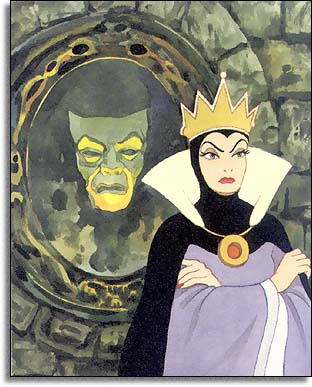
Others also see the Scriptures as a mirror. But, for these folks, this mirror is more like the one used by that witch in the story Snow White, who declared: “Mirror, mirror on the wall, who is the fairest one of all?”  All she wanted was to hear how good she was; how much better she was than others. Sadly some people look to the mirror of Scripture only willing to see whatever appears to validate them.  Failing to see, by the mirror, the ugly-fying effects of sin in their hearts and lives, they see no real need to return to the Cross.  Thus they seem to never be changed.  They never become truly beautiful.

5 Truths About Forgiveness

Mark Twain describes forgiveness this way:

Forgiveness is the fragrance that the violet sheds on the heal that has crushed it.

What beautifully apropos imagery.

In a recent post I listed 5 Myths About Forgiveness, taken from an article by Sam Storms.  What I didn’t do in that post is describe what forgiveness is.  So in this post we give consideration to that question, again borrowing from Storms.

Here are 5 Truths About Forgiveness:

  1. God in Christ forgave us by absorbing in himself the destructive and painful consequences of our sin against him
  2. God forgave us in Christ by canceling the debt we owed him. That is to say, we are no longer held liable for our sins or in any way made to pay for them.
  3. Forgiving others as God has forgiven us means we resolve to revoke revenge.
  4. Forgiving others as God has forgiven us means that we determine to do good to them rather than evil. (Romans 12.17-21)
  5. God forgave us in Christ by reconciling us to himself, by restoring the relationship that our sin had shattered.

While these truths are still not a definition they do work together to give us understanding, perhaps even better than a mere definition might.  Forgiveness is embodied and demonstrated in the person of Jesus Christ.  He is, in Twain’s words, the Violet that was crushed for us.

***

This list is an excerpt from a post by Sam Storms that originally appeared on the Enjoying God Ministries blog.  To whole article is available in .pdf thanks to the folks at Acts 29 Network. Click: Forgiveness

5 Myths About Forgiveness

In the movie Just Friends pop singer Samantha James (Anna Faris) lyrically muses:

“Forgiveness is more than saying ‘Sorry'” 

Earlier this week I had a conversation with a friend who had been accused by a woman from his church of being “unforgiving” because he was hesitant to re-hire a man who had been fired for cause just a couple years previous.  My friend, who is a very gentle and gracious man, was mostly venting frustration from the sting of this accusation. But he was also honestly trying to resolve the conflict within himself; trying to discern if his hesitancy was truly a reflection of a heart lacking in forgiveness. 

I suspect many self-searching people wrestle with question at one time or another.

The character Samantha James may be on to someting. But what? What is forgiveness? Maybe at least as important, what is forgivenss NOT?

Sam Storms helps us out with that latter question by listing 5 Myths about forgiveness:

  1. Contrary to what many have been led to believe, forgiveness is not forgetting.
  2. Forgiving someone does not mean you no longer feel the pain of their offense.
  3. Forgiving someone who has sinned against you doesn’t mean you cease longing for justice.
  4. Forgiveness does not mean you are to make it easy for the offender to hurt you again.
  5. Forgiveness is rarely a one-time, climactic event. It is most often a life-long process.

This list is an excerpt from a post that originally appeared on the Enjoying God Ministries blog.  To whole article is available in .pdf thanks to the folks at Acts 29 Network. Click: Forgiveness 

In a later post we will consider what Storms says forgiveness is.