Missional Shift

In his book The Present Future, Reggie McNeal reveals and contrasts different ways leaders can think about the church and its ministry. McNeal reflects upon the different paradigms that pastors can have as they lead and conduct ministry in the church.

Being missional is a shift in thinking about the nature of the church. Once a missional understanding is adopted, the way we do church begins to change.

A missional church stresses:

  • community transformation over growing the church
  • turning members into missionaries over turning members into ministers
  • and recovering Christian mission over doing church better.

Traditional Conservative & Missional Values

One of the fundamental principles of being missional is contextualization.  In short, contextualization simply means to take into consideration the context where one lives and serves.

With all the noteriety that missional practitioners serving in clearly post-Christian areas have gained, it seems some, desiring to follow the example of these leaders, all too readily foresake the principle of contextualization. 

It is understandable to want to copy the methods and messages of Tim Keller or Mark Driscoll, among others.  No doubt there is much to be learned from these guys.  But the temptation to copy is really a trap that will lead most of us to ineffectiveness.  Those guys serve in New York and Seattle, respectively. What is needed to serve in those contexts is vastly different than what may be needed in Nashville, Birmingham, or small towns like where I live – Bristol, TN/VA.  Principles should be benchmarked and translated, not copied.  All effective ministry is local.

In the above video Tim Keller offers some helpful thoughts about advancing the gospel in different social contexts.

Out-stretching the Outreach Dilemma

I have been spending some time thinking about how to revamp and ignite the outreach ministry of our church.  One of the frequent dilemmas for a church that desires to become more externally focused, more missional, is the balancing of service and PR.  There is nothing inherently wrong with advertising, but sometimes a sincere outreach can be perceived as a mere marketing strategy.  When this happens it sends a distorted message to both those outside the church and those who go out from the church.

John Stott, in his book Christian Mission in the Modern World, offers the following insights about this dilemma:

To sum up, we are sent to the world, like Jesus, to serve. For this is the natural expression of our love for our neighbors. We love. We go. We serve. And in this we have (or we should have) no ulterior motive. True, the gospel lacks visibility if we merely preach it, and lacks credibility if we who preach it are interested only in souls and have no concern about the welfare of people’s bodies, situations and communities.  Yet the reason for our acceptance of social responsibility is not primarily in order to give the gospel either a visibility or a credibility it would otherwise lack, but rather simple uncomplicated compassion. Love has no need to justify itself.  It merely expresses itself in service wherever it sees need.

Get the Gospel Right

If pressed for a quick summary of my philosophy of ministry, I would probably express it something like this:

  • Get the Gospel Right
  • Get the Gospel Out
  • Get the Gospel Out Right

Without a message there is no mission.

Unfortunately, it seems, many are so zealous to get about the mission that they make little time getting the message of the gospel right.  They do not stand amazed at what God has done for us in the person of Christ. Consequently, they are not being formed or transformed by the gospel.  They are more anxious about what they will do for God than excited by what God has done for us, and what he is doing in us, and what God has promised to do through us – if only we would root ourselves in the gospel.  And because some are neither formed or being transformed, they go out uninformed.

If we are not conscious of what God is doing in us, what do we think we have to offer those who are around us?

While no doubt knowledge without zeal is dead.  It is equally true that zeal without knowledge is deadly.

To Be Or Not To Be Missional

Dave Harvey is an expert church planter and an astute observer of trends in church leadership.  At the Spring 2007 Leadership Conference of Sovereign Grace Ministries Harvey assessed the strengths and weakness of the missional movement in an address titled Watch Your Mission: To Be or Not to Be Missional.

One observation Harvey offers is that sometimes missional practitioners muddy the Cross-centered focus of the Church. 

Here is a sketch outline of Harvey’s message:

What are the Strengths of Missional Churches?

  • Missional Churches Have a Commendable Passion for Evangelism.
  • Missional Churches Have a Laudable Commitment to Engaging Culture.
  • Missional Churches Have a Profitable Impulse for Reexamining Church Tradition.
  • Missional Churches Possess an Admirable Devotion to Social Impact.

What are the Weaknesses of  [Some] Missional Churches?

  • Missional Churches Tend to Be Mission-Centered Rather Than Gospel-Centered.
  • Missional Churches Tend to Have a Reductionistic Ecclesiology.
  • Missional Churches Tend to Confuse Culture Engagement with Cultural Immersion.
  • Missional Churches Tend to Downplay the Institutional and Organizational Nature of the Church.
  • Missional Churches Tend to Have an Insufficient Understanding of Apostolic Ministry.

As one who desires to be both Gospel-centered and Misisonal, I take Harvey’s cautions seriously. I think he has a valid point. I would say that while being Missional does not inherently make one guilty of this, I would have to concede that many who are Missional are guilty of this. 

I suspect this results from an imbalance with the Prophet, Priest, and King tri-perspective. Too much emphasis is placed on the role and influence of the King.  This seems only to be natural since, afterall, one of the important principles recovered by the missional movement is that our mission matters; our mission is as much an expression of who we are as is our theology.

So what is the solution?  Uncompromising Tri-Perspectivalism.

Read Harvey’s full outline here; Download the mp3 for FREE and listen to the audio here.

Note: Thanks to Tony Reinke of Miscellanies for the links.

Living Missionally in the Mountain Empire

In this video Tim Keller offers some insights about ministry in areas that still largely hold to traditional conservative values.

This is helpful to me because the place where I live and serve is still largely characterized this way.

While I embrace a missional mindset, how our church lives that out in East Tennessee and Southwest Virginia will look very different from how Keller lives it out in Manhattan and others live it out in places like San Francisco or Seattle.

Being Sent


This past Sunday I offered a brief exposition of John 17.6-21 & John 20.21, explaining what it means to be “sent” into our community and world in the same way God the Father sent Jesus into our world.  These texts demand that we understand, as John Stott says: “Our God is a missionary God.”  They also demand that we continually ask ourselves:

  • In what way was Jesus sent?
  • How am I responding to/reflecting being sent?

 While in no way exhaustive, I offered 5 simple observations for us to put into practice:

  1. More Incarnational than Attractional
  2. Focus More on Building Bridges than Building Walls
  3. Prioritize Service > “Serve Us”
  4. Move Beyond Fellowship to Functional Unity
  5. Measure Our Effectiveness More by Our Impact than Our Attendance.

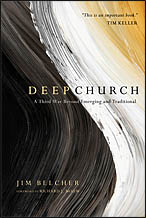
The Deep Church

At the suggestion of a friend, I recently read Jim Belcher’s Deep Church. I was not disappointed. This is thoughtful and thought-provoking book. 

The subtitle really captures the theme of this book: A Third Way. 

With all the discussions about “how” to do church, and the polemic approaches of the Traditionalists and the Emerging/Emergent, some of us find ourselves caught somewhere in the middle.  I see strengths and weakness in both movements. 

Belcher offers understanding of both worlds. With his understanding he offers honest reflections.  Belchers experience and research are helpful for bringing clarity about the issues of the debate and the players doing the debating.  I especially appreciated his dilineation of the “protests” being offered by the Emergning/Emergents against the practices of traditional church:

  1. Captivity to Enlightenment Rationalism
  2. A Narrow View of Salvation
  3. Belief Before Belonging
  4. Uncontextualized Worship
  5. Ineffective Preaching
  6. Weak Ecclesiology
  7. Tribalism

Honestly, I share these collective frustrations – though I cannot endorse the Emergent solutions.

More than just offering perspective, Belcher offers his thought process as he wrestles with the strengths and weaknesses of both the Emerging/Emergent and Traditionalist arguments.  He does not seem to be trying to convince anyone to embrace his positions, only sharing the insights of his personal and spiritual leadership journey.  I found this helpful. It was almost as if I had someone to talk with about these issues as I contemplate my own positions, questions, and inclinations. 

Most important, at no point does Belcher compromise by seeking the “middle way”.  Instead, listening to both sides of the debate, he searches and wrestles with Scripture to find “A Third Way”. 

The Bereans would be proud.

Won’t You Be My Neighbor

A group of pastors invited the mayor of their city to discuss his dream for the city, along with the issues that were hindering that dream from becoming a reality.  The mayor came with a list of pervasive issues that the pastors in this group were eager to address: at-risk kids, elderly shut-ins, dilapidated housing, and hunger.

But before addressing these issues the mayor said to the gathered pastors:

“After thinking about all of these things, it occurred to me that what our city really needs are good neighbors….The majority of the issues our community is facing would be eliminated or drastically reduced if we could just become a community of people who are great neighbors.”

 To this statement one pastor responded:

“Here we are asking the mayor what areas of the city are most in need, and he basically tells us that it would be great if we could just get our people to obey the second half of the Great Commandment.”

Continue reading

Characteristics of a Missional Church

As our church begins to explore what it means to be a missional church, it might be helpful to hear the insights of one of the most effective practitioners and proponents of the missional approach to ministry.  In the above video Tim Keller, of Redeemer Church in Manhattan, explains some of the key characteristics of a missional church.

Some might ask: What’s the difference between a Missional Church and an Evangelistic Church? Is this just a new label? 

The answer to the latter question is “No. It’s not just a label.”  It is a different way of thinking about the church. Rooted in the understanding that God is himself on mission (missio dei) a missional church seeks to become engaged in God’s mission in the very place(s) God has sovereignly placed the church and the church members. 

Reggie McNeal, in his book, The Present Future, provides some insights about the differences between a Missional Church and an Evangelistic Church that will help answer the former question. McNeal says a missional church stresses:  

> community transformation over growing the church

> turning members into missionaries over turning members into ministers

> recovering Christian mission over doing church better