Source: The Resurgence
Source: The Resurgence

Is John MacArthur getting crotchety in his old age? I will leave that for you to decide. My guess is opinions will vary. Some may even muse about the verb “getting”. But after watching a couple of brief videos he has me wondering.
Before commenting on the videos let me say that I think John MacArthur has earned respect. He has labored to faithfully proclaim the Word of God, in depth, for decades. He is a living example of someone who sees the message as sovereign and not the audience. For that he should be applauded. He will never be open to the accusation of “tickling the ears” of a fickle generation. That said, I will confess that while I respect MacArthur I have long found him a bit polemic for my tastes.
In a relatively recent interview with Christianity.com MacArthur demonstrates why I both respect and am perplexed by him. Below are two videos related to the discussion of the near future of the American Church. In particular is his prediction that the current Reformed Resurgence will reverse.
Beneath each video I will comment on what MacArthur says.

John Calvin often gets a bad rap. But David Mathis offers us another perspective. In the Introduction to a book he co-edited with John Piper, With Calvin in the Theater of God, Mathis writes:
“Calvin so believed in the importance of the everyday activities of Christian life and mission that he had a strange but telling practice in Geneva. He was eager to see Jesus’ church gathered on Sundays, but he was not happy for his flock to retreat from everyday life and hide within the walls of the church during the week. So to prod his congregants to be fully engaged in their city of Geneva – in their families, in their jobs, with their neighbors and coworkers – he locked the church doors during the week. It must have been hard not to get the point. He knew the place of God’s people – gathered together to worship on Sunday, but during the week not hidden away behind thick walls of separation, but on mission together in God’s world, laboring to bring the gospel to metro Geneva in their words and actions, in all their roles and relationships.”
Critics who suggest Calvinism discourages evangelism and is inherently anti-mission might want to rethink their attitudes about the reformer. Calvin’s outwardly focused missional mindset ought to be applauded, and in many cases even adopted. While Mark Driscoll has popularized the term Reformissional, John Calvin was the original Reformission Rev.
NOTE: The entire book can be uploaded and read free. Click: With Calvin in the Theater of God
One of the fundamental principles of being missional is contextualization. In short, contextualization simply means to take into consideration the context where one lives and serves.
With all the noteriety that missional practitioners serving in clearly post-Christian areas have gained, it seems some, desiring to follow the example of these leaders, all too readily foresake the principle of contextualization.
It is understandable to want to copy the methods and messages of Tim Keller or Mark Driscoll, among others. No doubt there is much to be learned from these guys. But the temptation to copy is really a trap that will lead most of us to ineffectiveness. Those guys serve in New York and Seattle, respectively. What is needed to serve in those contexts is vastly different than what may be needed in Nashville, Birmingham, or small towns like where I live – Bristol, TN/VA. Principles should be benchmarked and translated, not copied. All effective ministry is local.
In the above video Tim Keller offers some helpful thoughts about advancing the gospel in different social contexts.
OK, the title of this post is purely to solicit interest. It is a play on the Charlie Chan Mystery series of the 1930’s. So far as I know Francis Chan is not hiding any secrets.
That said, many are still mystified why Chan would walk away from a successful ministry, and the newfound celebrity he was enjoying as a result of his books, in order to explore other unknown opportunities. So, at least in that sense, Francis Chan is a man of mystery.
In this video two of Chans peers, Joshua Harris & Mark Driscoll, sit down and try to get Chan to explain his somewhat unusual departure, among other issues. It is a good discussion.
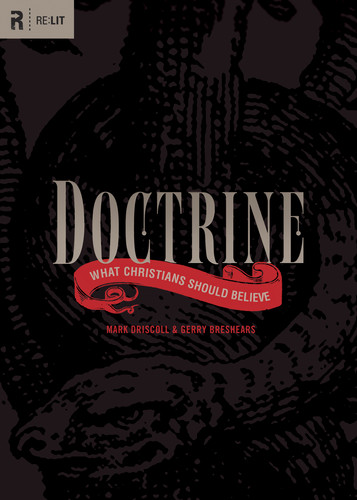
Do you want a good overview of the doctrines of the Christian faith? Would you be open to a introductory course, but are afraid people in your church might think lesser of you because of what you don’t know? (Most of them don’t know either, by the way.) re:Lit publications has developed Doctine by Mark Driscoll & Gerry Breshear to introduce an overview of the themes of the Bible.
On the web site, across the top of the screen are icons that provide a brief synopsis of each doctrine. Additionally at the top right of the synopsis is a link to an audio/video of messages Driscoll delivered at Mars Hill Church that served as a foundation for each chapter.
Crossway Books has an e-book available free online.

John Calvin said:
“The human heart is a factory of idols… Every one of us is, from his mother’s womb, expert in inventing idols.”
This truth is difficult to convey. Few people think of themselves as idolators. And when I as a pastor, or a friend, suggest to people that they – like me – struggle from this affliction, the most common response is a grinning dismissal.
For most people the concept of idolatry conjurs mental images of statues and shrines. And since few people I encounter would knowingly do something as primitive as that, it is easy to understand why that notion is so easily ignored.
Nevertheless it is a condition that needs to be recognized. We need to recognize it as a general condition of humanity. And each of us needs to discover what kinds of idols our own hearts are producing. You see, what my production center cranks out is different than what your production center develops – both in product and in volume.
In a recent post, titled X-Ray Questions, Scott Thomas, President of Acts 29 Network succinctly addresses this subject. And in that post he offers 35 X-Ray Questions for the Heart. Thomas’ challenge:
Examine the following questions and ponder your heart for the existent idols and then crush the idols of our heart before they crush you.
- What do you love? Hate?
- What do you want, desire, crave, lust, and wish for? What desires do you serve and obey?
- What do you seek, aim for, and pursue?
- Where do you bank your hopes?
- What do you fear? What do you not want? What do you tend to worry about?
- What do you feel like doing?
- What do you think you need? What are your ‘felt needs’?
- What are your plans, agendas, strategies, and intentions designed to accomplish?
- What makes you tick? What sun does your planet revolve around? What do you organize your life around?
- Where do you find refuge, safety, comfort, escape, pleasure, and security?
- What or whom do you trust?
- Whose performance matters? On whose shoulders does the well being of your world rest? Who can make it better, make it work, make it safe, make it successful?
- Whom must you please? Whose opinion of you counts? From whom do you desire approval and fear rejection? Whose value system do you measure yourself against? In whose eyes are you living? Whose love and approval do you need?
- Who are your role models? What kind of person do you think you ought to be or want to be?
- On your deathbed, what would sum up your life as worthwhile? What gives your life meaning?
- How do you define and weigh success and failure, right or wrong, desirable or undesirable, in any particular situation?
- What would make you feel rich, secure, prosperous? What must you get to make life sing?
- What would bring you the greatest pleasure, happiness, and delight? The greatest pain or misery?
- Whose coming into political power would make everything better?
- Whose victory or success would make your life happy? How do you define victory and success?
- What do you see as your rights? What do you feel entitled to?
- In what situations do you feel pressured or tense? Confident and relaxed? When you are pressured, where do you turn? What do you think about? What are your escapes? What do you escape from?
- What do you want to get out of life? What payoff do you seek out of the things you do?
- What do you pray for?
- What do you think about most often? What preoccupies or obsesses you? In the morning, to what does your mind drift instinctively?
- What do you talk about? What is important to you? What attitudes do you communicate?
- How do you spend your time? What are your priorities?
- What are your characteristic fantasies, either pleasurable or fearful? Daydreams? What do your night dreams revolve around?
- What are the functional beliefs that control how you interpret your life and determine how you act?
- What are your idols and false gods? In what do you place your trust, or set your hopes? What do you turn to or seek? Where do you take refuge?
- How do you live for yourself?
- How do you live as a slave of the devil?
- How do you implicitly say, “If only…” (to get what you want, avoid what you don’t want, keep what you have)?
- What instinctively seems and feels right to you? What are your opinions, the things you feel true?
- Where do you find your identity? How do you define who you are?
Two other worthwhile resources on this subject:
Humble Calvinism: The Idol Factory
Idol Factory – A Series of messages by C.J. Mahaney & Mark Driscoll

Father’s Day has passed, but I just read a resource I thought I’d pass along to Dads and aspiring dads-to-be. It is another e-book by Mark Driscoll of Resurgence and Mars Hill Church, this one titled Pastor Dad: Scriptural Insights on Fatherhood.
The premise behind this free 48 page book is:
Every dad is a pastor. The important thing is that he is caring for his flock well.
Typical of Driscoll, this book combines sound Biblical insights with some of Driscoll’s brash, over-the-top, in-your-face applications. So it is not a book for the overly sensitive or the timid. But, while after a quick read I can say I don’t agree with all his positions, Driscoll’s thoughts are Biblial, practical, and worth considering for those who appreciate, or are at least willing to engage, his style.

To paraphrase Barbara Mandrell, “I was a Calvinst when Calvinism wasn’t cool.” Historically Calvinism had a long day of being cool. Then it was cool no more. Now from all appearances it is cool once again.
This resurgence of Reformed Spirituality is not new news. Christianity Today, among others, has been talking about it for several years now. But I was not aware that this trend was so apparent that even the non-religious cultural obsevers were aware. But this week Time Magazine publically recognized that Calvinism is COOL. Published under the section: 10 Ideas Changing the World Right Now, The New Calvinism ranks third. (Just behind Jobs the New Asset and Recycling the Suburbs.)
I’m pretty sure that the editor of this piece doesn’t get the message behind Calvinism. And while rightly attributing to Piper, Driscoll, and Mohler some of the influence toward growing popularity, I am disappointed that they neglected to mention the Presbyterian Church in America and Reformed University Fellowship.
Nevertheless, the article is worth reading.

Long ago I shamelessly pilferred the word “Reformissional” from Mark Driscoll of Mars Hill Church and Acts 29 Network. The word seemed to encapsulate what I was about. The word is a hybrid of both Reformed and Missional, two parallel tracks that both decribe and shape my philosophy of ministry – and even, to a large degree, my philopsophy of life.
It was sometime later that it dawned on me that the word Reformation was also part of this equation. That, too, was an important discovery. By Reformation I am not just referring to a point in time and history, but also the goal of my mission and life. I long to see a new reformation take place in my church, my community, and across this nation. I long to see it spread throughout the world. I am in regular need of one in my own life.
Now, when I say such things, I understand that there are many who may become reasonably uncomfortable. It is easy to misunderstand my hope and intent, and perhaps conjure up mental images of a time when people lived under religious oppression. Afterall, many of our history books seem to suggest that this was the inevitable outcome resulting from the Reformation of the 16th Century. But what I have in mind should evoke no such horrid. (Besides, many of our history books are woefully in error about the Reformation, and especially the Puritan outgrowth of it. But that is a topic for some other day.)
What I have in mind, when I say I long for a new reformation, is that I desire to see our churches constantly reshaping themselves to become more in accord with what the Scripture says they ought be. And corresponding to that, that the lives of Believers would be shaped and formed more and more by Christ, and less and less by culture, or tradition, or by anything else. Rather than being oppressive, I belive that would be liberating.
In his book, Radical Reformission, Mark Driscoll shares some keen insights. I don’t embrace all of Driscoll’s views, but I did appreciate the book. In particular, I felt the Introduction offers some important ideas that could stand alone as a challenging essay for todays churches, church leaders, and Christians. For that reason, I am posting the following edited version of that Intro:
Since the mid-1990s, the conversation among young pastors has evolved from reaching Generation X, to ministering in a postmodern culture, to a more mature and profitable investigation of what a movement of missionaries would look like, missionaries sent not from America to another nation but from America to America. This “reformission” is a radical call to reform the church’s traditionally flawed view of missions as something carried out only in foreign lands and to focus instead on the urgent need in our own neighborhoods, which are filled with diverse cultures of Americans who desperately need the gospel of Jesus and life in his church. Most significant, they need a gospel and a church that are faithful both to the scriptural texts and to the cultural contexts of America. The timing of this reformission is critical. George Barna has said, “The first and most important statistic is that there are a lot of Americans who don’t go to church—and their numbers are increasing. The figure has jumped from just 21 percent of the population in 1991 to 33 percent today. In fact, if all the unchurched people in the U.S. were to establish their own country, they would form the eleventh most populated nation on the planet.”
What I am advocating is not an abandonment of missions across the globe but rather an emphasis on missions that begin across the street, like Jesus commanded (Acts 1:8).
Meanwhile, the churches in our neighborhoods may be more akin to museums memorializing a yesterday when God showed up in glory to transform people, than to the pivot points of a movement working to reform the culture of the present day. Reformission requires that we all learn the principles handed down to us from mentors who are seasoned cross-cultural missionary pioneers, such as Lesslie Newbigin, Hudson Taylor, and Roland Allen. These missionaries are most adept at helping us to cross from our church subcultures into the dominant cultures that surround us. Subsequently, at the heart of reformission are clear distinctions between the gospel, the culture, and the church.
First, the gospel of Jesus Christ is the heart of the Scriptures. To put it succinctly, Paul said that the gospel is of primary importance and consists of Jesus’ death, burial, and resurrection to save sinners, in accordance with the Scriptures (1 Cor. 15:1-8).
Second, we have the various cultures in which people live their lives (for example, ancient Jews and Gentiles; modern, urban homosexual artists; modern, rural heterosexual farmers). Our lives shape, and are shaped by, the culture we live in, and the gospel must be fitted to (not altered for) particular people, times, and circumstances so that evangelism will be effective.
Third, we have the church, or the gathering of God’s people— which includes those who are not Christians (Matt. 13:24-30) — where people are built up in their faith and knitted together in loving community. They can then faithfully engage those in the culture with the gospel, while experiencing its transforming power in their own lives.
Reformission is a radical call for Christians and Christian churches to recommit to living and speaking the gospel, and to doing so regardless of the pressures to compromise the truth of the gospel or to conceal its power within the safety of the church. The goal of reformission is to continually unleash the gospel to do its work of reforming dominant cultures and church subcultures.
Reformission therefore begins with a simple return to Jesus, who by grace saves us and sends us into mission. Jesus has called us to (1) the gospel (loving our Lord), (2) the culture (loving our neighbor), and (3) the church (loving our brother). But one of the causes of our failure to fulfill our mission in the American church is that the various Christian traditions are faithful on only one or two of these counts. When we fail to love our Lord, neighbor, and brother simultaneously, we bury our mission in one of three holes: the parachurch, liberalism, or fundamentalism.
Gospel + Culture – Church = Parachurch
First, many Christians become so frustrated with the church that they try to bring the gospel into the culture without it. This is commonly referred to as the parachurch, which includes evangelistic ministries such as Young Life and Campus Crusade for Christ. The success of these ministries is due in large part to their involvement in culture and in loving people, whereas the church often functions as an irrelevant subculture. But the failure of such ministries is that they are often disconnected from the local church, connecting unchurched people to Jesus without connecting them to the rest of Jesus’ people. This can lead to theological immaturity. Once someone is saved, he or she is encouraged to do little more than get other people saved.
Also, since parachurch ministries are often age-specific, they lack the benefits of a church culture in which all generations are integrated to help people navigate the transitions of life. This further separates families from each other if mom, dad, and kids are each involved in disconnected life-stage ministries outside of their church, rather than in integrated ministries within it.
The parachurch tends to love the Lord and love its neighbors, but not to love its brothers.
Culture + Church – Gospel = Liberalism
Second, some churches are so concerned with being culturally relevant that, though they are deeply involved in the culture, they neglect the gospel. They convert people to the church and to good works, but not to Jesus. This is classic liberal Christianity, and it exists largely in the dying mainline churches. The success of these ministries lies in that they are involved in the social and political fabric of their culture, loving people and doing good works. Their failure is that they bring to the culture a false gospel of accommodation, rather than confrontation, by seeking to bless people as they are rather than calling them to a repentant faith that transforms them. Often the motive for this is timidity because, as Paul says, the gospel is foolish and a stumbling block to the unrepentant. Liberal Christians are happy to speak of institutional sin but are reticent to speak of personal sin because they will find themselves at odds with sinners in the culture.
Liberal Christians run the risk of loving their neighbors and their brothers at the expense of loving their Lord.
Church + Gospel – Culture = Fundamentalism
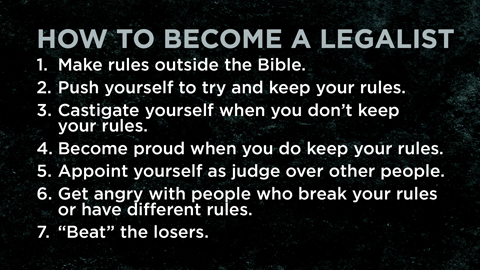
Third, some churches are more into their church and its traditions, buildings, and politics than the gospel. Though they know the gospel theologically, they rarely take it out of their church. This is classic fundamentalist Christianity, which flourishes most widely in more independent-minded, Bible-believing churches. The success of these churches lies in that they love the church and often love the people in the church. Their failure is that it is debatable whether they love Jesus and lost people in the culture as much as they love their own church. Pastors at these churches are prone to speak about the needs of the church, focusing on building up its people and keeping them from sinning. These churches exist to bring other Christians in, more than to send them out into the culture with the gospel. Over time, they can become so inwardly focused that the gospel is replaced with rules, legalism, and morality supported with mere proof texts from the Bible.
Fundamentalist Christians are commonly found to love their Lord and their brothers, but not their neighbors.
Reformission is a gathering of the best aspects of each of these types of Christianity: living in the tension of being Christians and churches who are culturally liberal yet theologically conservative and who are driven by the gospel of grace to love their Lord, brothers, and neighbors.
 GRACE & PEACE