Can We Get Along Together?

One of my ecclesiastical/theological heroes, John Piper, came under a slew of criticism earlier this year for inviting “Purpose Diven” Rick Warren to be one of the speakers for the Desiring God 2010 Conference

I like the way Collin Hansen introduces the controversy, in his article, Piper, Warren, and the Perils of Movement Building:

You only thought junior high was over. But lately the evangelical blog world has been abuzz because John Piper invited Rick Warren to speak for his Desiring God National Conference… You see, a lot of folks who like John don’t like Rick. So now some of John’s friends aren’t sure they want to hang out with him anymore. They may not come to his party in Minneapolis. And they aren’t sure that you should either.

I’ll admit I was a little surprised when I heard about it. But I really gave it no thought, until these past few days.  There was nothing specific that compelled me to reconsider the issue. I stumbled upon a few articles that made reference to the matter. And as I began to think about it I wondered to myself: “What is the real problem here?”

Frankly, I see only possible benefits. I am no Warren proponent. But honestly, I find much admirable about the guy and his ministry. I may have concerns about some aspects of his ministry style, and I do have some theological differences with him. But then again, I have theological differences with many people I admire – Piper included.  Nevertheless I gain insights from many people in areas where I do agree. And I am challenged to think more deeply by thoughtful expressions with which I disagree. 

Some time ago I posted The Jesus Pledge, authored by my friend, Paul Miller. Those embracing that pledge declare a willingness to “learn from all types of Christians”.  That is something that I don’t think we Evangelicals do enough.  And it is something that Piper appears to be attempting to explore. At least that is the sense that I get from him in a video he did explaining and defending his reasons for inviting Warren to his party. (Click: Why Rick Warren?)

Two final thoughts:

First, do we implicitly endorse what someone from another Christian tradtion, or with a different ministry methodology, believes and practices simply by entering into conversation and fellowship?  I don’t think so.  Without such conversations, though, how would we become acquainted with anyone outside our own circles?  We can maintain our own convictions, even distinctions, without isolating ourselves from others.

Second, I wonder if there is a possibility of synthesizing Piper’s Christian Hedonism and Warren’s Purpose-Driven Life/Church.  I don’t know what that would look like, and I am not sure I would embrce it, but I know I would not ignore it.  In fact, I am intrigued by the possibility.

What is God Like?

What is God like?  Describe to me the God you say you believe in. 

In the first chapter of his best selling book, Crazy Love, Francis Chan challenges his readers to ponder who God is. “Who is it that you are praying to?” Chan wants us to ask.  I really appreciate that challenge and that exercise because, quite frankly, I am not sure most people, even in our churches, can offer a substantial answer.

J.I. Packer wrote:

“Those who know God have great thoughts of Him.”

Donald Carson wrote:

“The better we know God, the more we will want all of our existence to revolve around him, and we will see that the only goals and plans that really matter are those that are somehow tied to God himself, and to our eternity with him.”

How well do you know God?

While there is no substitute for Scripture, sometimes the insights of others can help us notice things that we might otherwise not see. Like a tourguide who has navigated a trail many times is able to point out things of importance, of beauty, and of danger, so is one who has walked with God and given himself to careful study of God.

I have found the following books are faithful to Scriptureand helpful in shaping my knowledge of God:

Knowledge of the Holy by A.W. Tozer 

Attributes of God by A.W. Tozer

Holiness of God by R.C. Sproul

The Pleasures of God by John Piper

Knowing God by J.I. Packer

John Piper and the Prosperity Gospel

A couple weeks ago I posted some of my thoughts about the Prosperity Gospel as it compares to Scripture.  In particular I was reflecting on some insight from Revelation 2.8-11 – Jesus’ affirmation of the Church at Smyrna. (See Suffering Saints

I have since run across this video of John Piper expressing how the Prosperity Gospel runs counter to the True Gospel. As usual, Piper’s message is powerful.

7 Reasons We Need Small Groups

Our church has begun a process to initiate Small Group ministry.  Though I am familiar with the “whys” and the methods of small groups, I am by no measure an expert.  Fortunately, we do have in our church others who a far more knowledgeable than I am about the implementation of this aspect of ministry.  Still, the early going has been difficult. 

People in our church are not sure why they need to be part of this type of group.  Our church has been blessed to have strong relational ties and a welcoming mentality that easily embraces those who join us.  At our church “outsiders” are relatively few – and those who are probably are so by choice.  So those who are active in our church seem confused about why they need “one more activity”. 

Again, I do not have all the answers. I can articulate the benefits of a committed small group, but sometimes my explanations are found wanting.  Fortunately there are others who offer better counsel. One person in particular: John Piper.

When John Piper met with the small group leaders of the Downtown Campus of Bethlehem Baptist Church, in Minneapolis, he tried to show them how essential their role is at the church by giving them seven reasons why his preaching is not enough—seven reasons why perseverance in faith and growth in faith call for Christians to meet regularly in a face-to-face way to “serve one another, as good stewards of God’s varied grace” (1 Peter 4:10).

Piper says: “God intends to do things in us which he will only do through the ministry of other believers.”

Here are Pipers’ 7 Reasons We Need Small Groups:

He has given pastors to the church “to equip the saints for the work of ministry, for building up the body of Christ” (Ephesians 4:11-12).

I believe in what I do. And I believe that it is not enough. Here are the seven reasons I gave the small group leaders.

  1. The impulse to avoid painful growth by disappearing safely into the crowd in corporate worship is very strong.
  2. The tendency toward passivity in listening to a sermon is part of our human weakness.
  3. Listeners in a big group can more easily evade redemptive crises. If tears well up in your eyes in a small group, wise friends will gently find out why. But in a large gathering, you can just walk away from it.
  4. Listeners in a large group tend to neglect efforts of personal application. The sermon may touch a nerve of conviction, but without someone to press in, it can easily be avoided.
  5. Opportunity for questions leading to growth is missing. Sermons are not dialogue. Nor should they be. But asking questions is a key to understanding and growth. Small groups are great occasions for this.
  6. Accountability for follow-through on good resolves is missing. But if someone knows what you intended to do, the resolve is stronger.
  7. Prayer support for a specific need or conviction or resolve goes wanting. O how many blessings we do not have because we are not surrounded by a band of friends who pray for us.

Piper goes on to say:

So please know that when this small-group ministry of our church is lifted up, I don’t think it’s an optional add-on to basic Christian living. I think it is normal, healthy, needed, New Testament Christianity. I pray that you will be part of one of these small groups or that you will get the training and start one. This is the main strategy through which our pastors and elders shepherd the flock: Elders > small group leaders > members to one another.

I could not have said all that better myself.

The Gospel Saves From Morality

It sounds like a contradiction, doesn’t it?  The Gospel saves you from morality.  Can this be true?

It is true. And it is an important truth.  And understanding what John Piper is saying in this video can free people from the crushing weight of trying to be good. For others it will free them from self-righteousness, which is a cancer that eats away at the spiritual sensitivity system.

3 Short Books I Wish Everyone in My Church Would Read

I read a fair amount.  I have been accused, and probably rightly so, of unrealistically pushing books and other reading materials on people who don’t read quite as much; who don’t have the time to read as much; who don’t get “paid” to read as much (as I, in part, am).  But there are ideas and expressions I have benefited from, that I am not sure I can adequately convey, and I like to share them with others. I like to hear how others are struck by the same insights, when the authors’ words are not colored by my thoughts.

I know that I will never get everyone in my church to read all the things I’d like them to read.  But there are three very short books that I have begun to encourage people to read:


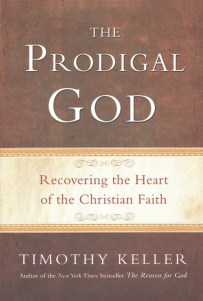
The Prodigal God by Tim Keller

This book is subtitled: “Recovering the Heart of the Christian Faith”.    

Cover Prodigal God

Keller elaborates on the well known story of the Prodigal Son, and offers a not-so-often recognized perspective:  The story is not about a wild son who receives mercy and grace from his benevolent father.  This is a story about two sons. In fact, this is a story about a Father who had two very different sons. It is THE story of God the Father and how people relate to Him in two different ways.

Each son is a reflection of the respective ways people relate to God.   

The younger son is the picture of all who go astray from God and his Law and, having been broken, recognize the emptiness and hopelessness of life apart from the Father.  When awakened to their desperate situation they find a grace and relationship with the Father that is ovewhelming.

The older son is the picture of all who try to relate to God, and please God, by being good; by following all the rules.  This is a picture of religious people, of many Conservative Christians. Yet in their own goodness there is an evident lack of heartfelt fondness for the Father, a lack of joy, obvious to all except for them.

In this book Keller helps us to discern our own tendencies in our relation to God.  Using this story Keller helps us see with keener insight that the ONLY way to have a relationship with God the Father is by recognizing that we are all in need and by being recipients of His compassion, grace, and generosity.  Keller shows us that at the end of the story there is only one son, one type of person, still alienated from the Father. It is not the one who seems to have been the most egregious.  It is the one who seems the most righteous.

Keller has also noted: “Our churches are full of Older Brother types… Is it any wonder, then, that the Younger Brother-types don’t want to come home (come to church)?”

OUCH!! 

The Prodigal God is only 133 pages – and the pages are double-spaced.

 Cover Cross Centered Life

The Cross-Centered Life by C.J. Mahaney

In this 85 page, pocket sized, book Mahaney helps the reader to keep the Gospel at the center of our lives. He helps us to recognize various subtle substitutes that lead us from the Cross, but ultimatley are of little or no help in strengthening the soul. 

Mahaney uses a plethora of annecdotes and illustrations to convey the simple, yet often forgotten and neglected, essential truth: The Gospel is the power to give and to transform life.  Understanding how we can appropriate the present benefits of the Cross is key to vibrant spirituality and joy.


The Dangerous Duty of Delight by John Piper

 I am a long-time fan of Piper’s writing. Nevertheless, I confess, for a long time I refused to read this simple book. I guess I thought this pocket sized 84 page primer of his contemporary classic, Desiring God, was beneath me. After all, I’ve read the BIG book – several times!  But I was wrong.Cover Dangerous Duty

In this little book Piper conveys the essence of the Christian life: To glorify God by enjoying him forever.  It is a great introduction to what Piper calls Christian Hedonism. 

Christian Hedonism may sound like an oxymoron, and even inappropriate, to those who do not undertand what is behind Piper’s message.  But I am convinced that what he espouses is thoroughly Biblical.  It is the recognition that we are created to have a relationship with God; that we are commanded to take delight in God (i.e. Psalm 37.4); and that we are all prone to sell out the ultimate joy we can have in life, in God, for the cheap thrills and pleasures we find elsewhere. 

While I still hope everyone will read Desiring God, this little book, Dangerous Duty, serves as a great introduction that will both lay a groundwork of understanding and whet the appetite for the whole feast found in Desiring God.

You can check out a sample of Dangerous Duty or the entirety of Desiring God online. Just click the highlighted titles.

Calvinist When Calvinism Wasn’t Cool

comet-mcnaught

To paraphrase Barbara Mandrell, “I was a Calvinst when Calvinism wasn’t cool.”   Historically Calvinism had a long day of being cool.  Then it was cool no more.  Now from all appearances it is cool once again.

This resurgence of Reformed Spirituality is not new news.  Christianity Today, among others, has been talking about it for several years now. But I was not aware that this trend was so apparent that even the non-religious cultural obsevers were aware.  But this week Time Magazine publically recognized that Calvinism  is COOL.  Published under the section: 10 Ideas Changing the World Right Now, The New Calvinism ranks third. (Just behind  Jobs the New Asset and Recycling the Suburbs.)

I’m pretty sure that the editor of this piece doesn’t get the message behind Calvinism.  And while rightly attributing to Piper, Driscoll, and Mohler some of the influence toward growing popularity, I am disappointed that they neglected to mention the Presbyterian Church in America and Reformed University Fellowship.

Nevertheless, the article is worth reading.

More Narrow Than Conservative

 swinging-bridge

In the Foreword to CJ Mahaney’s book, Worldliness, John Piper writes:

“The gospel makes all the difference between whether you are merely conservative or whether you are conquering worldliness in the power of the Spirit for the glory of Christ.”

What an awesome and insightful statement.  In my circles I encounter way too many people who assume conservatism is an ends, and not a means to an end; that conservatism in itself is akin to godliness; and that the only real battle for godliness is against liberalism.  Yet Jesus tells us that the road is narrow (Matthew 7.13-14); and Proverbs warns us not to lean to the left or to the right (Proverbs 4.27).

The Supremacy of God in Missions Through Worship

by John Piper

Missions is not the ultimate goal of the church. Worship is. Missions exists because worship doesn’t. Worship is ultimate, not missions, because God is ultimate, not man. When this age is over, and the countless millions of the redeemed fall on their faces before the throne of God, missions will be no more. It is a temporary necessity. But worship abides forever.

Worship, therefore, is the fuel and goal of missions. It’s the goal of missions because in missions we simply aim to bring the nations into the white hot enjoyment of God’s glory. The goal of missions is the gladness of the peoples in the greatness of God. “The Lord reigns; let the earth rejoice; let the many coastlands be glad!” (Psalm 97.1). “Let the peoples praise thee, O God; let all the peoples praise thee! Let the nations be glad and sing for joy!” (Psalm 67.3-4).

But worship is also the fuel of missions. Passion for God in worship precedes the offer of God in preaching. You can’t commend what you don’t cherish. Missionaries will never call out, “Let the nations be glad!”, who cannot say from the heart, “I rejoice in the Lord…I will be glad and exult in thee, I will sing praise to thy name, O Most High” (Psalm 104.349.2). Missions begins and ends in worship.

If the pursuit of God’s glory is not ordered above the pursuit of man’s good in the affections of the heart and the priorities of the church, man will not be well served and God will not be duly honored. I am not pleading for a diminishing of missions but for a magnifying of God. When the flame of worship burns with the heat of God’s true worth, the light of missions will shine to the most remote peoples on earth. And I long for that day to come!

Where passion for God is weak, zeal for missions will be weak. Churches that are not centered on the exaltation of the majesty and beauty of God will scarcely kindle a fervent desire to “declare his glory among the nations” (Psalm 96.3). Even outsiders feel the disparity between the boldness of our claims upon the nations and the blandness of our engagement with God.

Albert Einstein’s Indictment

For example, Charles Misner, a scientific specialist in general relativity theory, expressed Albert Einstein‘s skepticism over the church with words that should waken us to the shallowness of our experience with God in worship.

“The design of the universe…is very magnificent and shouldn’t be taken for granted. In fact, I believe that is why Einstein had so little use for organized religion, although he strikes me as a basically very religious man. He must have looked at what the preacher said about God and felt that they were blaspheming. He had seen much more majesty than they had every imagined, and they were just not talking about the real thing. My guess is that he simply felt that religions he’d run across did not have proper respect…for the author of the universe.”

The charge of blasphemy is loaded. The point is to pack a wallop behind the charge that in our worship services God simply doesn’t come through for who he is. He is unwittingly belittled. For those who are stunned by the indescribable magnitude of what God has made, not to mention the infinite greatness of the One who made it, the steady diet on Sunday morning of practical “how to’s” and psychological soothing and relational therapy and tactical planning seem dramatically out of touch with Reality–the God of overwhelming greatness.

It is possible to be distracted from God in trying to serve God. Martha-like , we neglect the one thing needful, and soon begin to present God as busy and fretful. A.W. Tozer warned us about this:

“We commonly represent God as a busy, eager, somewhat frustrated Father hurrying about seeking help to carry out His benevolent plan to bring peace and salvation to the world. … Too many missionary appeals are based upon this fancied frustration of Almighty God.”

Scientists know that light travels at the speed of 5.87 trillion miles in a year. They also know that the galaxy of which our solar system is a part is about 100,000 light-years in diameter–about five hundred eighty seven thousand trillion miles. It is one of about a million such galaxies in the optical range of our most powerful telescopes. In our galaxy there are about 100 billion stars. The sun is one of them, a modest star burning at about 6,000 degrees Centigrade on the surface, and traveling in an orbit at 155 miles per second, which means it will take about 200 million years to complete a revolution around the galaxy.

Scientists know these things and are awed by them. And they say, “If there is a personal God, as the Christians say, who spoke this universe into being, then there is a certain respect and reverence and wonder and dread that would have to come through when we talk about him and when we worship him.”

We who believe the Bible know this even better than the scientists because we have heard something even more amazing:

“To whom then will you compare me, that I should be like him?” says the Holy One. Lift up your eyes on high and see who created these (stars)? He who brings out their host by number, calling them all by name by the greatness of his might, and because he is strong in power not one is missing. (Isaiah 40.25-26)

Every one of the billions of stars in the universe is there by God’s specific appointment. He knows their number. And, most astonishing of all, he knows them by name. They do his bidding as his personal agents. When we feel the weight of this grandeur in the heavens, we have only touched the hem of his garment. “Lo, these are but the outskirts of his ways! And how small a whisper do we hear of him” (Job 26.14). That is why we cry ‘Be exalted, O God, Above the heavens!’ (Psalm 57.5). God is the absolute reality that everyone in the universe must come to terms with. Everything depends utterly on his will. All other realities compare to him like a raindrop compares to the ocean, or like an anthill compares to Mt. Everest. To ignore him or belittle him is unintelligible and suicidal folly. How shall one ever be the emissary of this great God who has not trembled before him with joyful wonder?

The Second Greatest Activity in the World

The most crucial issue in missions is the centrality of God in the life of the church. Where people are not stunned by the greatness of God, how can they be sent with the ringing message, “Great is the Lord and greatly to be praised; he is to be feared above all gods!” (Psalm 96.4)? Missions is not first and ultimate: God is. And these are not just words. This truth is the lifeblood of missionary inspiration and endurance. William Carey, the father of modern missions, who set sail for India from England in 1793, expressed the connection:

“When I left England, my hope of India’s conversion was very strong; but amongst so many obstacles, it would die, unless upheld by God. Well, I have God, and His Word is true. Though the superstitions of the heathen were a thousand times stronger than they are, and the example of the Europeans a thousand times worse; though I were deserted by all and persecuted by all, yet my faith, fixed on the sure Word, would rise above all obstructions and overcome every trial. God’s cause will triumph.”

Carey and thousands like him have been moved by the vision of a great and triumphant God. That vision must come first. Savoring it in worship precedes spreading it in missions. All of history is moving toward one great goal, the white-hot worship of God and his Son among all the peoples of the earth. Missions is not that goal. It is the means. And for that reason it is the second greatest human activity in the world.

God’s Passion for God Is the Foundation for Ours

One of the things God uses to make this truth take hold of a person and a church is the stunning realization that it is also true for God himself. Missions is not God’s ultimate goal, worship is. And when this sinks into a person’s heart everything changes. The world is often turned on its head. And everything looks different–including the missionary enterprise.

The ultimate foundation for our passion to see God glorified is his own passion to be glorified. God is central and supreme in his own affections. There are no rivals for the supremacy of God’s glory in his own heart. God is not an idolater. He does not disobey the first and great commandment. With all his heart and soul and strength and mind he delights in the glory of his manifold perfections. The most passionate heart for God in all the universe is God’s heart.

This truth, more than any other I know, seals the conviction that worship is the fuel and goal of missions. The deepest reason why our passion for God should fuel missions is that God’s passion for God fuels missions. Missions is the overflow of our delight in God because missions is the overflow of God’s delight in being God. And the deepest reason why worship is the goal in missions is that worship is God’s goal. We are confirmed in this goal by the Biblical record of God’s relentless pursuit of praise among the nations. “Praise the Lord, all nations! Extol him, all peoples!” (Psalm 117.1). If it is God’s goal it must be our goal.

The Chief End of God Is to Glorify God and Enjoy Himself For Ever

All my years of preaching and teaching on the supremacy of God in the heart of God have proved that this truth hits most people like a truck laden with unknown fruit. If they survive the impact, they discover that it is the most luscious fruit on the planet. I have unpacked this truth with lengthy arguments in other places. So here I will just give a brief overview of the Biblical basis. What I am claiming is that the answer to the first question of the Westminster Catechism is the same when asked concerning God as it is when asked concerning man. Question: “What is the chief end of man?” Answer: “The chief end of man is to glorify God and enjoy him for ever.” Question: “What is the chief end of God?” Answer: “The chief end of God is to glorify God and enjoy himself for ever.”

Another way to say it is simply, God is righteous. The opposite of righteousness is to value and enjoy what is not truly valuable or rewarding. This is why people are called unrighteous in Romans 1.18. They suppress the truth of God’s value and exchange God for created things. So they belittle God and discredit his worth. Righteousness is the opposite. It means recognizing true value for what it is and esteeming it and enjoying it in proportion to its true worth. The unrighteous in 2 Thessalonians 2.10 perish because they refuse to love the truth. The righteous, then, are those who welcome a love for the truth. Righteousness is recognizing and welcoming and loving and upholding what is truly valuable. God is righteous. This means that he recognizes, welcomes, loves and upholds with infinite jealousy and energy what is infinitely valuable, namely, the worth of God. God’s righteousness passion and delight is to display and uphold his infinitely valuable glory. This is not a vague theological conjecture. It flows inevitably from dozens of Biblical texts that show God in the relentless pursuit of praise and honor from creation to consummation.

Probably no text in the Bible reveals the passion of God for his own glory more clearly and bluntly than Isaiah 48.9-11 where God says,

“For my name’s sake I defer my anger, for the sake of my praise I restrain it for you, that I may not cut you off. Behold, I have refined you, but not like silver; I have tried you in the furnace of affliction. For my own sake, for my own sake, I do it, for how should my name be profaned? My glory I will not give to another.”

I have found that for many people these words come like six hammer blows to a man-centered way of looking at the world:

For my name’s sake! For the sake of my praise! For my own sake! For my own sake! How should my name be profaned? My glory I will not give to another!

What this text hammers home to us is the centrality of God in his own affections. The most passionate heart for the glorification of God is God’s heart. God’s ultimate goal is to uphold and display the glory of his name.

“For the Sake of His Name among All the Nations

Paul makes crystal clear in Romans 1.5 that his mission and calling are for the name of Christ among all the nations: “We have received grace and apostleship to bring about the obedience of faith for the sake of his name among all nations.”

The apostle John described the motive of early Christian missionaries in the same way. He wrote to tell one of his churches that they should send out Christian brothers in a manner “worthy of God.” And the reason he gives is that “they have gone out for the sake of his name, taking nothing from the Gentiles.” ( 3 John 6-7).

John Stott comments on these two texts (Romans 1:5; 3 John 7):

“They knew that God had superexalted Jesus, enthroning him at his right hand and bestowing upon him the highest rank, in order that every tongue should confess his lordship. They longed that Jesus should receive the honor due his name.”

This longing is not a dream but a certainty. at the bottom of all our hope, when everything else has given way, we stand on this great reality: the everlasting, all- sufficient God is infinitely, unwaveringly, and eternally committed to the glory of his great and holy name. For the sake of his fame among the nations he will act. His name will not be profaned forever. The mission of the church will be victorious. He will vindicate his people and his cause in all the earth.

The absence of [David] Brainerd‘s passion for God is the great cause of missionary weakness in the churches. This was Andrew Murray‘s judgement a hundred years ago:

“As we seek to find out why, with such millions of Christians, the real army of God that is fighting the hosts of darkness is so small, the only answer is–lack of heart. The enthusiasm of the kingdom is missing. And that is because there is so little enthusiasm for the King.”

The zeal of the church for the glory of her King will not rise until pastors and mission leaders and seminary teachers make much more of the King. When the glory of God himself saturates our preaching and teaching and conversation and writings, and when he predominates above our talk of methods and strategies and psychological buzz words and cultural trends, then the people might begin to feel that he is the central reality of their lives and that the spread of his glory is more important than all their possessions and all their plans.

The Call of God

God is calling us above all else to be the kind of people whose theme and passion is the supremacy of God in all of life. No one will be able to rise to the magnificence of the missionary cause who does not feel the magnificence of Christ. There will be no big world vision without a big God. There will be no passion to draw others into our worship where there is no passion for worship.

God is pursuing with omnipotent passion a worldwide purpose of gathering joyful worshipers for himself from every tribe and tongue and people and nation. He has an inexhaustible enthusiasm for the supremacy of his name among the nations. Therefore let us bring our affections into line with his, and, for the sake of his name, let us renounce the quest for worldly comforts, and join his global purpose. If we do this, God’s omnipotent commitment to his name will be over us like a banner, and we will not lose, in spite of many tribulations (Acts 9.16Romans 8.35-39). Missions is not the ultimate goal of the church. Worship is. Missions exists because worship doesn’t. The Great Commission is first to delight yourself in the Lord (Psalm 37.4) . And then to declare, “Let the nations be glad and sing for joy!” (Psalm 67.4). In this way God will be glorified from beginning to end and worship will empower the missionary enterprise till the coming of the Lord.

Great and wonderful are your deeds, O Lord God the Almighty! Just and true are your ways, O King of the ages!  Who shall not fear and glorify your name, O Lord? For you alone are holy.   All nations shall come and worship you, for your judgments have been revealed.  –Revelation 15.3-4

 *******

This article is excerpted from the first chapter of John Piper’s book, Let the Nations Be Glad. This article also appeared in Mission Frontiers magazine from the U.S. Center for World Mission.

The Gospel in 6 Minutes

What is the Gospel? 

While in many ways this should be a simple question to answer, experience has taught me that many people are confused about what the Gsopel is.  Most agree that the Gospel is something good.  But they are confused about what particularly defines the Gospel. 

Some see the Gospel as merely that message necessary to receive salvation, but have no idea it has a huge impact on how we live our lives even after becomming Christians. Some associate it with a style of music often found in a rural church.  Some view at is as a synonym for “Truth”.  Others simply think of the whole Bible, or at least the New Testament, as being the Gospel. 

While the latter statement is true in a sense, there is a particular message that runs throughout the Bible that is most properly seen as the Gospel; and by which the entirely of Scripture can be said to be Gospel. This message is at times more detectable than  at other times.  It may be said to be like a stream that runs both above and under ground. Even when it is not obvious, if you look closely its presence can be seen.

Getting the Gospel right is essential to a healthy and vibrant spiritual life.  Many problems experienced by Christians in their spiritual and emotional lives, and in evangelsim and mission, can be traced to a misunderstanding or masapplication of the Gospel.  That’s why I want to take every opportunity to clearly declare and define the Gospel.

John Piper succinctly explains this vital message in this brief video.  (It is well worth the few minutes.)

Which Way?

Your life hangs on how you relate these two statements: 

  1. “If anyone sins, we have an advocate with the Father, Jesus Christ, the Righteous” (1 John 2:1).
  2. “Sin no more, that nothing worse may happen to you” (John 5:14). 

Do you experience the first one weakening the second? 

Or do you experience the first one joyfully empowering the second? 

Your life hangs on your answer. 

– by John Piper , via Missio Dei Suburbia 

A Mind for Missions: Global Evangelism

With our church having just come through the front end of our first missions conference in at least a generation there are a number of people who are sensitive to what God is doing in the world, and hungry to explore what part he has in mind for us – the average Christian.  Wanting to take advantage of the high interest while it is still at its keenest, I thought I’d suggest a few books – some that are are almost must reads – for anyone wanting to learn about the advancement of the Gospel as a global enterprise.   

And while I have in mind those people from our church, I know that there are many others out there searching the web for recommendations of good mission books.  The following list is for those wanting to dig deeper, not necessarily for those who are experienced in mobilization and sending. 

This is in no way exhaustive, so feel free to add to the list.   

The Gospel in 6-Minutes

Paul, the Apostle, wrote: 

I am not ashamed of the gospel, because it is the power of God for the salvation of everyone who believes…  (Romans 1.16)

The Gospel is a phrase I am fond of, and use frequently.  But from time to time I have to stop and recognize that not everybody immediately understands what I am talking about.   

Some are unclear because, in some church traditions, the word Gospel has been used in so many ways that identifying the core idea is like trying to find your golf ball in murky water (something I’ve had to do too many times!) 

Increasing numbers of people are not only unclear as to the meaning of the word Gospel, they have no idea what it means.  This includes those who grew up outside the church; and it includes many who grew up inside churches that hardly, if ever, used the word at all.  This is increasingly evident, because, whether we like it or not, we live in a post-Christian culture. 

So what exactly is the Gospel? 

John Piper, of Desiring God Ministries, provides a very concise definition, and illustrates the important – though often neglected – principle that we never outgrow the Gospel in our Christian life.  

Watch this powerful (and short) video: 


Desiring God

If you are not already familiar with his work, I want to introduce you to John Piper. In particular I commend his book Desiring GodDesiring God

This book is a modern day classic. And in my mind it an almost indespensible aid to  gaining a Biblical perspective of the Glory of God.  Well, indespensible might be a bit of an overstatement.  But, it is a book I have read and re-read many, many times, always coming away with new insights and delight.

When I first read Desiring God it resonated with me like few other books ever have. I don’t want to say it shaped my thinking at that time. Rather I think it confirmed it.  I always knew there had to be away of enjoying life and honoring God.  Piper opens the door to show us how!

Piper thoroughly saturates his writing with exposition of Scripture, and brings together two aspects of life that are sadly not often enough paired together: Our Joy and God’s Glory.  By reuniting these perspectives Piper expresses far better than I could even dream of doing what what it means to live according to our primary purpose as Christians.  And because he expressed it so well, he has subsequently shaped much of how I express this important aspect of the Gospel. 

The link I provided above is to the e-book – the entire book online.  But there are also a number of other outstanding resources available at Desiring God Ministries.

I suggest reading through and thinking about at least the Introduction: How I Became a Christian Hedonist. (I know that whole concept may be shocking at first, but it will make perfect sense once you read the Intro.)  Then look over the chapter titles.

If you are hungry to grow in both your relationship with God and how a Christian lives, you won’t be disappointed.