Role of the Holy Spirit

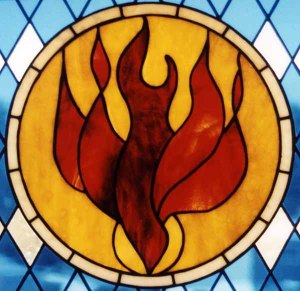
Holy Spirit (Blue, Yellow, Red)

The Holy Spirit is mysterious to many, perhaps especially to those in more intellectually inclined traditions. Most Christians probably understand that historic orthodoxy recognizes the Holy Spirit to be part of the Trinity, and therefore God, but I suspect many are somewhat less certain about what that means.  Often the Holy Spirit is referred to as a depersonalized “it” despite being the third person of the Trinity. Maybe even more questions surround what exactly the Holy Spirit does.

Some time ago I ran across a satirical confession of faith, one that ostensibly reflects the functional beliefs of a typcical American evanglical. Mimicking the pattern of the Apostle’s Creed, the clause regarding the the Holy Spirit declares:

And I believe in the Holy Ghost, who did some weird stuff at Pentecost, but doesn’t do much more anymore except speak to the hearts of individual believers.

How close to the experience or belief of most, I cannot say. But I suspect, and fear, that it is discomfortingly close to the functional belief of too many.

Recently I have enjoyed a four-part series of posts by Jon Payne from Sovereign Grace Ministries blog, titled: The Role of Holy Spirit. I commend them for a thoughtful introduction and overview:

  • Part 1 – Introduction
  • Part 2 – The Trouble With Nicodemus
  • Part 3 – Who is the Holy Spirit? and What Does He Do?
  • Part 4 – Transaction at the Fountain

I believe this series provides a good Introduction and/or refresher about this one who is often referred to as “The Shy Member of the Trinity”.  Hopefully it will whet your appetite to look further, and to study more deeply.

For those who are interested in digging into this subject, into this Person of the Holy Spirit, I would suggest two things:

First, stay away from some of the more bizarre claims by the likes of Benny Hinn, Perry Stone, Lester Summerall, and others from the Name-It-Claim-It camp, who refer to themselves as “Full Gospel” Christians.  More often than not, there is little gospel reflected in the writings of these folks – at least not the gospel of the Bible.  (See Galatians 1.6-9)  These, at best, offer fascinations that lead away from the Cross.

Second, delve into a copy of one or more of the following books.  This list is hardly exhaustive, but I think all of these provide substantive and sound insights about the Holy Spirit:

God’s Gifts to Us

Gifts (B&W)

“When God planned the great work of saving sinners, he provided two gifts. He gave his Son and he gave his Spirit. In fact each person of the Trinity was involved in the great work of salvation. The love, grace and wisdom of the Father planned it; the love, grace and humility of the Son purchased it; and the love, grace and power of the Holy Spirit enabled sinners to believe and receive it.

The first great truth in this work of salvation is that God sent his Son to take our nature on him and to suffer for us in it. The second great truth is that God gave his Spirit to bring sinners to faith in Christ and so be saved.”

~ John Owen

Recommended Reading: Holy Spirit

The Holy Spirit has garnered a few nicknames through the ages. Among the more appropriate and familiar:

  • The Shy member of the Trinity
  • The Forgotten member of the Trinity

When considering the person of the Holy Spirit, there are few things that are vital to remember:

  • The Holy Spirit is a person, a “He” not an “It”.
  • As the Third Person if the Trinity, the Holy Spirit is fully God, and equal with God the Father and God the Son (Jesus) in glory, honor, and power; and equally worthy to receive worship.

The Holy Spirit functions in specific ways:

  • Regeneration – giving life to those who are spiritually dead.
  • Salvation (Justification) – the Holy Spirit grants both faith and repentance as gifts of grace. Through these, and these alone, is man justified.
  • Sanctification – “For those whom God justifies he also sanctifies. ” In other words, there is no one who is “saved” who is not also “sanctified”.  Sanctification is both definite and an ongoing process.  In work of sanctification Believers are expected to “cooperate” with the Holy Spirit, employing the means of grace. These actions we engage in are not magical, nor automatic, as if anyone who does them will automatically grow in grace. But they are effective.  The Holy Spirit works grace in us through these means.  We normally see a corresponding maturity in those who regularly and rightly make use of the means of grace, while we see little to no change in those who are lax.  But the one constant dynamic is that the Holy Spirit grants both faith and repentance to the believer for sanctification just as he does for justification.  In other words, the Christian life consists of continual repentance and renewed belief in the gospel.
  • The Holy Spirit cultivates the Fruit of the Spirit in believers.
  • The Holy Spirit bestows Spiritual Gifts upon all who believe, for the use in participating and the building up of the local body – The Church – which together advances the Kingdom of God.

Here are some suggested readings to grow in our understanding of the Person & Work of the Holy Spirit:

Revival: The Restoration of the Holy Spirit to This Place

To understand aright what this teaching of the Spirit is, there are three things we must specially remember:

 The first, that it is all from within. It is by influencing, by renewing, by purifying the life, that the Spirit gives the experimental knowledge of God’s truth. Out of the light of life, wrought within our feeling and willing and acting, spiritual wisdom and understanding is born.

The second, that this power and energy of the Spirit is given on one condition — that of entire possession. As a teacher can not teach unless he has the undivided attention of his pupil, the Holy Spirit demands the entire control of the life. A great deal of prayer for the teaching or the filling of the Spirit is vain, because the seeker is not faithful in obedience to that measure of the Spirit which he already has. The Spirit claims our whole being.

And the third essential element in the teaching is that it is only communicated and to be received by faith. The movings of the Spirit cannot be known or felt until we begin to act. It is when, while feeling our weakness, we believe in the hidden presence and power within us and begin to act, that his guidance and strength are known. Faith in his indwelling and most certain leading, much faith in the Father who works by the Spirit, unceasing faith in the Lord Jesus, in union with whom we have the Spirit flowing through us — this faith will receive the fullness of the Spirit. This is the revival we must seek for, the restoration of the Holy Spirit to his place as the inward teacher, having complete possession and control of heart and life.

Excerpted from Andrew Murray‘s  Coming Revival