4 Misconceptions About Heaven

What will heaven be like? That is a question pondered by nearly everyone, from the greatest philosophers to the simplest of children, with a wide range of thoughts, hopes, and expectations. Some thoughts are Biblically rooted. Many notions, however, seem more fanciful than factual.
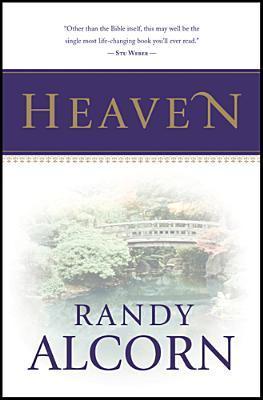
Randy Alcorn, of Eternal Perspective Ministries, wrote a masterful book on the subject, called, simply, Heaven. (It is a book that I highly recommend, and often give away to those facing death themselves or to those who have experienced a recent death of someone near and dear.)

I have to confess that when I first read Alcorn’s Heaven, I learned quite a bit that perhaps I should have already known.  One friend, who read the book at about the same time that I did, said it was “life changing” for him.  At first I thought that was a bit of an overstatement. But the more I thought about it I realized my friend just might be right.  After all, the better we understand what God has revealed about heaven, the more our thoughts and lives are oriented toward eternity. And the more our thoughts and hopes are oriented toward eternity, the less rooted they are in this present, broken and baffling world.

Alcorn, in a brief related article, addressed what he perceives to be the four biggest misconceptions about heaven:

Misconception 1: That the present Heaven, where Christians go when we die, is the same place we will live forever. In fact, when we die we go to be with Christ, which is wonderful, but we are incomplete, in a pre-resurrected state, anticipating Christ’s return to earth, and our resurrections. The place we’ll live forever will be where God comes down to dwell with us, on the New Earth (Revelation 21:1-3).

Misconception 2: The physical realm is evil, and God’s plan is to permanently destroy it and deliver our spirits to live without bodies. In fact, God created the physical realm and called it “very good.” He has never given up on his original plan for physical human beings to rule the earth for his glory. God sent his Son to permanently become a man and redeem and restore the physical universe-including our bodies and the earth-to become all He desires it to be. That’s why Jesus spoke of the “renewal of all things” (Matthew 19:27-28), and Peter preached that Christ will “remain in heaven until the time comes for God to restore everything, as he promised long ago through his holy prophets” (Acts 3:21). Isaiah and other prophets speak in detail about the Earth being returned to the perfection God designed for it. Speaking of an earthly kingdom, an angel reveals, “But the saints of the Most High will receive the kingdom and will possess it forever-yes, for ever and ever” (Daniel 7:18). This is not for a thousand years, but forever.

Misconception 3: There will be nothing to do, and it’ll be boring and predictable, without adventure, discovery, process and progress. This is as wrong as it could be, as I develop in the book.

Misconception 4: We’ll be absorbed with God and lose our identities. That is Hinduism, not Christianity, but surprisingly many Christians seem to believe it. In fact, resurrection means we will retain our identities and be forever reestablished as individuals, liberated to see God and worship him as our primary joy and the source of all derivative joys. Job said, “And after my skin has been destroyed, yet in my flesh I will see God; I myself will see him with my own eyes-I, and not another” (Job 19:26-27).

Solomon tells us, in Ecclesiastes 3.11: “God has made everything beautiful in its time. He has also set eternity in the human heart…” 

Let’s consider the eternity God has set in our hearts through  more biblical and less fantasy-laced lenses.

Heaven Peeper Recants His Story

Stairway to Heaven (B&W)

Not long ago I wrote expressing my skepticism about the claims depicted in the heart tugging film Heaven is For Real.  I have no doubts about the reality of heaven, it is just the claims of the boy who claimed to have visited heaven that I found dubious.  It is nothing personal about him.  I am highly suspicious of all of those charlatans making claims of peeping into heaven.  I think John Piper expressed it most succinctly:

“If books go beyond scripture, I doubt what they say…”

Interestingly, one of those who has been marketed as a heaven peeper, Alex Malarkey, has come out publicly with an open letter to LifeWay, criticizing the Publisher/Bookstore chain for selling his book.  Malarkey, who was the co-author and the central figure of the book The Boy Who Came Back From Heaven, has recanted his story, and ironically is challenging LifeWay to use better theological judgment in the materials they produce and promote.

To read the story click: Boy Who ‘Came Back’ Rebukes Christian Retailer

For those curious about Heaven – what God has revealed to us about Heaven in the Bible, I find Randy Alcorn‘s simple titled book, Heaven, to be the best I have read. I recommend it freely, and give it away often.

Heaven

Heaven is for Real… But What About Near-Death Experience Claims?

Stairway to Heaven

Debuting this weekend in theaters across the USA is a heart tugging film, Heaven is For Real.  Based on the book of the same title, the story is about a young boy who ostensibly died and revived. In between his death and his resuscitation he made a brief stop-over in heaven.  At least that’s the story.  In the story, as I understand (having not read the book), the “risen” boy gains inexplicable knowledge, compelling his skeptical family of the genuineness of his experience, and thus the reality of heaven.

This is just one of scores of such books – people claiming to have “seen the light”, then returning to this present life.  Perhaps most well known, at least before this weekend, is Don Piper’s 90 Minutes in Heaven.  (Though I wonder how many people who bought his book mistakenly thought it had been penned by JOHN Piper.)

I suppose the intrigue with such books is understandable.  People are looking for hope and assurance. And what better way to learn about heaven than to hear testimonials of those who have ostensibly been there?

And I get why the release of a film like Heaven is For Real would be scheduled for Easter weekend.  Easter is a day associated with religious hope, resurrection, etc.  So a film like this, especially in a widely biblically illiterate culture, tugs the heart strings while feeding religious (and superstitious) hunger pangs.  I suspect that the film will widen the belief in – or at least interest in – many such claims to these experiences.

But what should a Christian think about such claims?

While I cannot claim definitive expertise on this subject, I have some significant qualms about claims to near-death experiences.  For one reason, it seems to me that “near-death” is like “near pregnant” – either one is, or is not.  I get that some flat-line and then resuscitate.  But is that actual death?  Second, the claims I have heard regarding this experience are dubious.  For instance, I have read that in the case of the Heaven Is For Real kid, that there is no record of him having coded…  My greatest skepticism is because few (if any) of those who claim to have gone to heaven for a time make any mention of necessity of Jesus for access.  While this may not be troubling for non-Christians, the Believer must reconcile these claims to what Jesus taught us in such passages as John 14.6.

Scripture is largely silent about this subject.  In fact, when I think about it, I find it interesting God did not include a testimony from Lazarus about his experience or the reality of heaven anywhere in the New Testament. Perhaps that is because there are things about heaven that are intended to remain a mystery to us for a time.

In a recent podcast, John Piper does discuss this subject.  In short, Piper says: “If books go beyond scripture, I doubt what they say…”  But take a moment to listen to what Piper has to say:  Heaven Is For Real

Love Wins… Does Anyone Lose – Part 2

Now that the advanced copies of the book have been sent out, people have had opportunity to read it and reflect.

Kevin DeYoung has thoughtfully analyzed Rob Bell’s Love Wins and published his observations and concerns in a compelling review.  DeYoung’s opening paragraph offers a summary of Bell’s premise:

Love Wins, by mega-church pastor Rob Bell, is, as the subtitle suggests, “a book about heaven, hell, and the fate of every person who ever lived.” Here’s the gist: Hell is what we create for ourselves when we reject God’s love. Hell is both a present reality for those who resist God and a future reality for those who die unready for God’s love. Hell is what we make of heaven when we cannot accept the good news of God’s forgiveness and mercy. But hell is not forever. God will have his way. How can his good purposes fail? Every sinner will turn to God and realize he has already been reconciled to God, in this life or in the next. There will be no eternal conscious torment. God says no to injustice in the age to come, but he does not pour out wrath (we bring the temporary suffering upon ourselves), and he certainly does not punish for eternity. In the end, love wins.

I am not sure what the allure of Bell’s thesis is.  Oh, I understand why it appeals to some who are not Christians.  What perplexes me is why some – maybe many – who consider themselves Christ followers are intrigued with this notion of Universalism that has been debunked repeatedly by every expression of Christ’s Church for nearly 1500 years.   Could it be that we, in our feigned wisdom, imagine we might out-do God in compassion?

It is unusual for me to publish critical posts, and very unusual for me to harp on a trendy issue through repeated posts.  But I do so because I see the intrigue this book has stirred, even among some I know.  As a pastor I would urge folks not to even bother reading it.  There are so many great things out there to feed our minds and our souls, why should we choose warmed over heresy?  What spiritual benefit do you imagine you might gain?

But should you be among those who succumb to the temptation… please also read DeYoung’s review.

NOTE: This review is also available in .pdf.

Click: God is Still Holy and What You Learned in Sunday School is Still True

How Can We Look Forward to Heaven?

Some time ago someone I encountered posed an interesting question: “How can we look forward to heaven when none of our favorite things are sure to be there?”

C. S. Lewis’ offers a breathtaking answer:

Let us construct a fable.

Let us picture a woman thrown into a dungeon. There she bears and rears a son. He grows up seeing nothing but the dungeon walls, the straw on the floor, and a little patch of the sky seen through the grating, which is too high up to show anything except sky.

This unfortunate woman was an artist, and when they imprisoned her she managed to bring with her a drawing pad and a box of pencils. As she never loses the hope of deliverance, she is constantly teaching her son about that outer world which he has never seen. She does it very largely by drawing him pictures. With her pencil she attempts to show him what fields, rivers, mountains, cities, and waves on a beach are like.

He is a dutiful boy and he does his best to believe her when she tells him that that outer world is far more interesting and glorious than anything in the dungeon. At times he succeeds. On the whole he gets on tolerably well until, one day, he says something that gives his mother pause. For a minute or two they are at cross-purposes. Finally it dawns on her that he has, all these years, lived under a misconception.

‘But’, she gasps, ‘you didn’t think that the real world was full of lines drawn in lead pencil?’

‘What?’ says the boy. ‘No pencil marks there?’

And instantly his whole notion of the outer world becomes a blank. For the lines, by which alone he was imagining it, have now been denied of it. He has no idea of that which will exclude and dispense with the lines, that of which the lines were merely a transposition–the waving treetops, the light dancing on the weir, the coloured three-dimensional realities which are not enclosed in lines but define their own shapes at every moment with a delicacy and multiplicity which no drawing could ever achieve. The child will get the idea that the real world is somehow less visible than his mother’s pictures. In reality it lacks lines because it is incomparably more visible.

So with us. ‘We know not what we shall be’; but we may be sure we shall be more, not less, than we were on earth. Our natural experiences (sensory, emotional, imaginative) are only like the drawing, like pencilled lines on flat paper. If they vanish in the risen life, they will vanish only as pencil lines from the real landscape, not as a candle flame that is put out but as a candle flame which becomes invisible because someone has pulled up the blind, thrown open the shutters, and let in the blaze of the risen sun.

– C. S. Lewis, ‘Transposition,’ in The Weight of Glory, 85-86

Pure As the Driven Snow

I don’t think I’ve ever met anyone who enjoys “old” snow – you know, the snow that has been around a few day, has blackened from plowing, is choppy from people playing in the yard.  I know that’s not the type of snow my duaghter enjoys looking at.

After the snowstorm this past Friday night, that dumped 3/4 of a foot all around us, my daughter was concerned that her brothers “messed up” the yard. She likes looking at the pure smoothe snow, untouched by human hand – or boot. 

That started me thinking. There is a methaphor there somewhere.

I think we all have have an innate appreciation for the beauty of purity. Unfortunately, because of our sin, purity does not seem to last long in this life. Sometimes it is corrupted and turns black and ugly. Sometimes it is just messed up by us as we go about our work and play.  But fleeting as it is, while it is here it is something to behold.

This all reminds me that God is on a mission, not simply to “save” a bunch of individuals but, to restore and recreate that which has been corrupted and messed-up.  As beautiful and peaceful as it is to look at the pure snow on the pastures outside my living room window, a beauty is coming that is both incomparable and incorruptable. And that will really be something to see.

But You Are Not Invited

 In the Corn

There is a scene in the film Field of Dreams where Kevin Costner’s Ray Kinsella gently argues with Ray Liotta’s Shoeless Joe Jackson.  Shoeless Joe had just invited the writer, Terrance Mann (played by James Earl Jones), to follow him into the corn, which in the film is the symbol of heaven.  Ray (Kinsella, not Liotta) grew excited with anticipation of what would be experienced on the other side of the corn. He expected to go. But Shoeless Joe informs him: “You’re not invited.”  That’s when Ray grew irritated and began to argue his case. “What do you mean I am not invited?!  After all I’ve done! What’s in it for me?” Shoeless Joe rhetorically asks: “Is that why you did it, Ray? For you?”

That scene intrigues me, because it reflects a conversation that many people will have one day with Jesus.  And it is not only people in general that come to mind, but many who are wonderful, committed, churched people, who will be told,  “You’re not invited,” while many less “worthy” are receiving gold-clustered engraved invites. 

Why won’t these who gave themsleves to much for the sake of the church be invited?  Because they don’t understand the basis of the invitation; they don’t understand the heart of the Host. 

Brennan Manning, in The Ragamuffin Gospel, writes:

“Jesus says the kingdom of His Father is not a subdivision for the self-righteous nor for those who feel they possess the state secret of salvation. The kingdom is not an exclusive, well-trimmed suburb with snobbish rules about who can live there. No, it is for a larger, homelier, less self-conscious caste of people who understand they are sinners because they have experienced the yaw and pitch of moral struggle.”

In Isaiah 55 the Lord extends an invitation:

“Come, all you who are thirsty, come to the waters; and you who have no money, come, buy and eat! Come, buy wine and milk without money and without cost.

Why spend money on what is not bread, and your labor on what does not satisfy? Listen, listen to me, and eat what is good, and your soul will delight in the richest of fare.

Notice that this invitation is eerily akin to the one depicted in Field of Dreams. The invitation is made by the Lord of Hosts to those he wants to invite. Those he invites here are those who are not able to pay their own way; spiritually those who don’t have enough righteousness to warrant an invite.  Conversely, there are some, like Ray in the movie, who feel desering; who have stored up some moral savings, i.e. good deeds or righteousness. To them the Lord says, “What that’ll get you isn’t as good as if you come to my party purely as another  invited ‘unworthy’ guest”.

Among the most difficult things I have to deal with as a pastor are people who are much like Ray Kinsella – maybe even better.  These are good people, kind people, people who have sacrificed much, qualities Ray has in the movie.  In addition to Ray’s qualities, many of these people are also responsible and exercise wisdom in their daily lives. In other words, they have their act together – far more than I do.  Ray did not exercise those traits in the film. In fact, he was raging against the fact that his who life up to that point had been lived out in practicality.  But he was good; he was deserving.  He just wasn’t invited.

It seems that to be around such people would be a pleasure.   And it is.  And that’s part of what makes it so difficult.  They are wonderful people to be around, but it is very difficult for many of them to accept that those God invites to the party – those Jesus died for – are not the prim and proper but people who are a mess, people more like me. Only those who are willing to come as unworthy guests are invited.

But Isaiah 55 does give me comfort about this matter. It shows that God says that polished people can come to the party too, if only they will put away the wallets in which they store their own goodness and righteousness.