To Be Or Not To Be Missional

Dave Harvey is an expert church planter and an astute observer of trends in church leadership.  At the Spring 2007 Leadership Conference of Sovereign Grace Ministries Harvey assessed the strengths and weakness of the missional movement in an address titled Watch Your Mission: To Be or Not to Be Missional.

One observation Harvey offers is that sometimes missional practitioners muddy the Cross-centered focus of the Church. 

Here is a sketch outline of Harvey’s message:

What are the Strengths of Missional Churches?

  • Missional Churches Have a Commendable Passion for Evangelism.
  • Missional Churches Have a Laudable Commitment to Engaging Culture.
  • Missional Churches Have a Profitable Impulse for Reexamining Church Tradition.
  • Missional Churches Possess an Admirable Devotion to Social Impact.

What are the Weaknesses of  [Some] Missional Churches?

  • Missional Churches Tend to Be Mission-Centered Rather Than Gospel-Centered.
  • Missional Churches Tend to Have a Reductionistic Ecclesiology.
  • Missional Churches Tend to Confuse Culture Engagement with Cultural Immersion.
  • Missional Churches Tend to Downplay the Institutional and Organizational Nature of the Church.
  • Missional Churches Tend to Have an Insufficient Understanding of Apostolic Ministry.

As one who desires to be both Gospel-centered and Misisonal, I take Harvey’s cautions seriously. I think he has a valid point. I would say that while being Missional does not inherently make one guilty of this, I would have to concede that many who are Missional are guilty of this. 

I suspect this results from an imbalance with the Prophet, Priest, and King tri-perspective. Too much emphasis is placed on the role and influence of the King.  This seems only to be natural since, afterall, one of the important principles recovered by the missional movement is that our mission matters; our mission is as much an expression of who we are as is our theology.

So what is the solution?  Uncompromising Tri-Perspectivalism.

Read Harvey’s full outline here; Download the mp3 for FREE and listen to the audio here.

Note: Thanks to Tony Reinke of Miscellanies for the links.

Gospel Discipling: Gospel & Adoption

World Harvest Mission was founded in 1983 under the leadership of Dr. C. John (Jack) Miller. Dr. Miller’s ministry had been revolutionized by his own rediscovery of the Gospel through studies in Galatians and the work of Martin Luther, and the results of that revolution became evident in multiple conversions in his church and subsequent interest in missions and evangelism. Dr. Miller asked, “How can we take the Gospel to others if we have not been mastered by it ourselves?” And so as part of its ministry preparation, the church began discipling people in the Gospel in a program now known as “Sonship”.

Key to the concept of Sonship is the recovery of the doctrine of Adoption.  The central ideas taught in Adoption include:

  1. The glorious truth of our sonship, even though we often act like orphans;
  2. The basis of our sonship in the finished work of Christ–this includes not only receiving the passive, or alien, righteousness of Christ for our forgiveness, but also understanding that because of the active righteousness of Christ we are actually welcomed by the Father as well-pleasing in his sight;
  3. A careful look into the true demands of the Law as a prerequisite for a full appreciation of our constant need for the Gospel;
  4. Repentance as a lifestyle for the Christian;
  5. Sanctification as well as justification by faith. This leads to a new paradigm for Christian living rooted in believing the gospel rather that the futile attempt to destroy the “flesh”;
  6. Faith expressing itself through love;
  7. The absolute centrality of prayer.

Just as critical as the truths taught in Adoption is the commitment to see that the gospel truths actually penetrate the heart and are beginning to affect the life, relationships and ministry of participants Believers. When people are actually discipled in the Gospel, not merely taught it, REAL change takes place. Continuously believing the gospel allows one to be frank about the reality of our own sin because any hope of righteousness is found in Christ and not in our outward performance.

The Gospel is for sinners. We must recognize that living in the reality of the Gospel is a constant battle. In fact, it could be argued that the essential issue of spiritual warfare is unbelief. Therefore we are in constant need of repentance and being renewed in the Gospel ourselves. Much of our joy in Gospel discipling is the way it encourages our faith as we witness the power of the Gospel transforming others.

Another challenge to the ministry has been to discover how easily Adoption can be divorced from its missionary setting. The mission of World Harvest Mission is still to take the Gospel to a lost world through our own evangelism as well as encouraging the witness of others. Sonship has been a means to that end, as was certainly the case with the Apostle Paul’s preaching the Gospel to the church of Rome. To lose the missionary character of the Gospel in the process of Gospel discipling is to attack the essence of the Gospel itself.

***

This is Part 3 of a 5-part series titled Gospel Discipling by Stephen Smallman. Steve Smallman is a past Executive Director of World Harvest Mission and author of the book Spiritual Birthline.

Thanks also to New City Fellowship of St. Louis, who posted Smallman’s essay on their web page.

To read Parts 1-2 click: Introduction; Romans as Model

Gospel Discipling: Romans as a Model

It would be presumptuous to claim that we can discern precisely the approach Paul and the first missionaries would have used under direct leadership of the Spirit. But I would encourage a view of his letter to the church(es) of Rome as essentially intending to take those who already believed the Gospel, and who were therefore “saved”, back to that very Gospel, but at a more complete level of understanding.

It is clear from the explanation of his purpose in writing the letter (Romans 15:14-33) that Paul was intending to shift his center of ministry from the Eastern to the Western Mediterranean, since he had completed his work in the East. His particular vision and calling was to “preach the Gospel where Christ was not known,” and therefore following his visit to Jerusalem and a stop in Rome, he was heading for Spain (Romans 15:24-28). The clear implication of the letter is that just as other churches had an opportunity to contribute to the offering for the saints of Jerusalem, he was sure that when he visited them they would want to “assist” him on his journey to the new mission field.

Given Paul”s stated ambition to take Christ to those who had never heard, it is curious that he was “eager to preach the Gospel also to you who are at Rome” (Romans 1:15) when he came for the long overdue visit. I would argue that this did not mean that he wanted to do evangelism with them among the people of Rome (no doubt he would do that, too), but that he wanted to preach the Gospel to the church of Rome. In other words, he wanted to give the Gospel to those who had already believed the Gospel, who were “called to belong to Jesus Christ…called to be saints” (Romans 1:6-7). As he moves into the body of the letter, it becomes clear that there is far more to the gospel than is immediately apparent to a newly awakened believer. It reveals a righteousness of God that leads from faith to deeper faith (Romans 1:17).

In the chapters that follow, the Apostle unfolds with great precision the righteousness revealed in the Gospel. The exposition of this deeper understanding of the Gospel begins first with justification, then an explanation of our union with the risen Christ (often labeled sanctification), then the extraordinary privilege of adoption or sonship, and climaxing in the celebration of the predestinating purposes of God. Chapters 9-11 continue to wrestle with the Gospel and its relationship to the Jewish people. Throughout his explanation of the Gospel, Paul makes application, but it is not until ch. 12 that he begins specific teaching about the “doing” of the Christian life.

Here then is a demonstration of just how Paul worked out his constant prayer that believers would grow in the “knowledge of God”– he was eager to preach the Gospel to them. In this light, his reference to the gospel as the “power of God unto salvation for everyone who believes” (Romans 1:16) should be understood as empowering believers through every aspect of that salvation. Our more limited idea of gospel has resulted, it seems to me, in a similarly limited view of the power of God for salvation–we only think of this verse in terms of conversion, when we first believe. So understanding and continuing to believe the gospel is not only the essential task of discipleship, it provides the basis or power for attending to the doing of the Christian life–a life appropriately identified by Paul as the “obedience that comes from faith” (Romans 1:5).

***

This is Part 2 of a 5-part series titled Gospel Discipling by Stephen Smallman. Steve Smallman is a past Executive Director of World Harvest Mission and author of the book Spiritual Birthline.

To read Part 1 click: Introduction

Gospel Discipling: The Crying Need of the Church

by Stephen Smallman

Thirty years of discipleship programs, and we are not discipled.”

This is the startling assessment of Jim Petersen, the visionary leader of the esteemed discipleship ministry, the Navigators. Petersen goes on in the first chapter of his important book, Lifestyle Discipleship, to ask some very hard questions about the real effectiveness of our various attempts at discipling believers.  But if the situation in most of our American evangelical churches is lacking with respect to discipleship, the condition of many churches in developing nations is nothing short of tragic. Instance after instance can be cited of young and vital churches sliding quickly into debilitating legalism, with Christianity being defined by believer and unbeliever alike as essentially little more than the keeping of certain rules.

There is little need to draw out this lament about the current condition of “discipleship”. Almost anyone in ministry recognizes the need to rethink assumptions and approaches to this critical aspect of the work of the Church. In this article I would like to make the case for a fundamental shift in the paradigm we use with respect to the content of our discipling ministries. It seems to me that most of the work being done to improve the discipleship component of our churches or missions focuses on the matter of methodology – how to secure greater commitment from participants, whether we should work in small groups or one-on-one, how pastors should redefine their roles, etc..But the actual content of what is imparted can be largely described as the “doing” of the Christian life. It is my contention that before methodological issues are discussed, we need to recognize that the essential content of our discipleship is to be the Gospel – taking people who have believed the gospel back into the Gospel again and again.  This is what I will call “Gospel discipling”, which could just as easily be termed “discipleship in the Gospel.”

I believe it can be demonstrated that this was the approach of the Apostles, as evidenced by their letters to new churches.  In particular I want to use the book of Romans as a model of Gospel discipling. I believe it can also be demonstrated that it is the Gospel itself that supplies the power to enable believers to become meaningfully engaged in the “doing” of the Christian life. Once I lay out these foundational issues, I will then explain briefly how World Harvest Mission, building on the seminal thinking of Dr. Jack Miller, has attempted to address the issue of Gospel discipling in a practical way.

Definition of the Gospel

At the outset, it is essential to contend for a much broader understanding of the word “Gospel” than is commonly held by evangelicals. In its essence the Gospel is the glorious announcement that God has kept his promise to bring salvation to the earth (Isaiah 52:7).  The fulfillment of his promise is a person, his own Son, named Jesus, who is Messiah and who died for our sin and was raised to life. Remarkably, by believing this Gospel we are granted eternal life, and the break caused by the original fall and our personal sin is restored.

But the Gospel is more than the announcement about the person and work of Christ, it is used by Paul and others to include all that comes to us when we believe the Gospel. In the words of Galatians, it includes not only God sending his Son to redeem those under the law, but also his sending the Spirit of his Son into our hearts that we might experience the privileges of sonship. (Galatians 4.4-7)  In Colossians 1 Paul talks about the “word of truth, the Gospel” and seems to equate it with “God’s grace in all its truth”. (Colossians 1.5-6) It is also worth taking time to reflect on Paul’s use of Gospel in 2Timothy 1.8-2.10. I believe in the light of that context, Paul’s exhortation to “be strong in the grace that is in Christ Jesus” (2 Timothy 2.1) can be understood as challenging Timothy to find his strength to endure by returning again to the Gospel.

All of this points to a need to understand the Gospel as much more than rehearsing the facts of Christ’s death and resurrection – as wonderful as they are. Furthermore, teaching or preaching the Gospel is more than inviting unbelievers to put their trust in Christ for salvation. The Gospel is the word we should use for all that has been given us in Jesus Christ, which is why it is frequently called “the Gospel of grace”. This broader use is much closer to the historic distinction of Law and Gospel, which was commonly understood in earlier generations, but seems to have been largely ignored by ours.  To be sure, the benefits of the Gospel are being taught today, but I believe our discipling of believers will be helped by recognizing that biblically, these are still to be thought of as Gospel. The posture of simply believing in Jesus as we learn of Him in the Gospel is as fundamental to our progress in the faith as it was to our initial receiving of it.

***

This is Part 1 of a 5-part series titled Gospel Discipling. This series is taken from an essay by Stephen Smallman, author of Spiritual Birthline and past Executive Director of World Harvest Mission. Some of the content has been edited. 

My thanks to New City Fellowship of St. Louis, who posted Smallman’s essay on their web page.

To read Parts 2-5 of this essay click:

Romans as a Model

Gospel & Adoption

Gospel & Renewal

Gospel & Evangelism

Gospel at the Center

At my core I am committed to gospel-centeredness and being gospel-driven. But I confess I don’t really know what that means.  The rich complexity of the gospel and the scope of the implications from the gospel are far beyond my ability to grasp, plumb, or fathom.  So I am drawn towards faithful expressions of the gospel that expand my understanding and depth of insight.

I am indebted to the Elders and leaders of Redeemer Presbyterian Church in Newport Beach, California for their thoughtful and compelling explanation of what it means to be gospel-centered: 

The gospel is at the center of all we do.  The “gospel” is the good news that through Jesus, the Messiah, the power of God’s kingdom has entered history to renew the whole world.  Through the Savior God has established his reign. When we believe and rely on Jesus’ work and record (rather than ours) for our relationship to God, that kingdom power comes upon us and begins to work through us. We witness this radical new way of living by our renewed lives, beautiful community, social justice, and cultural transformation. This good news brings new life. The gospel motivates, guides and empowers every aspect of our living and worship.

Let me encourage you to read this again and again.  Spend some time thinking through what was said and what is demanded.  (You may even ask yourself if you agree with what they said.)  And join me in praying that God would not only grant us greater understanding, but that He would bring about personal and cultural transformation.

Centered on the Gospel

What does it mean for a church to be gospel-centered?  That’s a popular concept these days.  What if we were scrambling to be law-centered?  The difference may not be so easy to see.

Ray Ortland adresses this question with keen insight and simplicity in his brief post: Centered On One or the Other

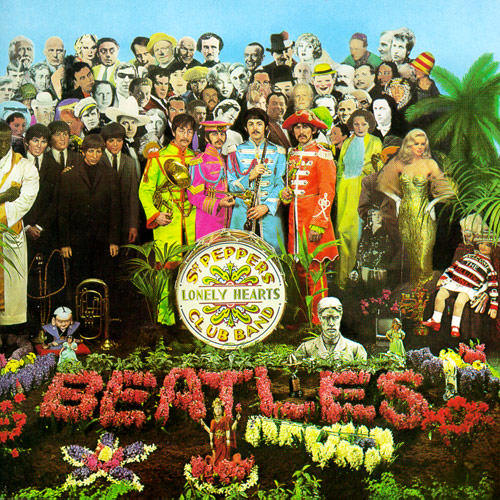
And what does the cover from the Beatles’ Sgt Pepper album have to do with anything?

Well, you’ll have to read the post. Ray explains that too.

The Least We Can Do

If Jesus could rise from the dead, we can at least rise from our bed, get off our couches and pews, and respond to the Lord’s resurrection life within us, joining Jesus in what he’s up to in the world. We call on others to join us—not in removing ourselves from planet Earth, but to plant our feet more firmly on the Earth while our spirits soar in the heavens of God’s pleasure and purpose. We are not of this world, but we live in this world for the Lord’s rights and interests. We, collectively, as the ekklesia of God, are Christ in and to this world.

 -Leonard Sweet & Frank Viola, from A Jesus Manifesto

The Gospel Saves From Morality

It sounds like a contradiction, doesn’t it?  The Gospel saves you from morality.  Can this be true?

It is true. And it is an important truth.  And understanding what John Piper is saying in this video can free people from the crushing weight of trying to be good. For others it will free them from self-righteousness, which is a cancer that eats away at the spiritual sensitivity system.

Ambition

I’ve been listening to the audio of sessions from Acts 29 Network’s 2009 Bootcamp: Ambition. While not everyone will find these talks of interest, I think they are challenging and stimulating for those of us in ministry and church leadership.

Ministry for the Long Haul & Ambition (Matt Chandler)

Decoding Your City & Ambition (Kevin Cawley)

Discipleship & Ambition (Bob Thune)

Preaching as Expository Exorcism (Russell Moore)

Leadership & Ambition (Darrin Patrick)

The Church & Ambition (Steve Timmis)

Church Planting & Ambition (Ed Stetzer)

The Gospel & Ambition (Dave Harvey)

My thanks to the folks at Sojourn Community Church, who have made all the above sessions available to be listened to online and/or downloaded. Click: Ambition Conference.

Acts 29 is a missional church planting network of Reformed Evangelicals.  Each year they hold Boot Camps to train and re-energize like minded church planters and church leaders.  Many of these, and other, talks are available on the Resource section of thier web page.

Crazy Love

I don’t know Francis Chan, but I think I like him.  I know I like what I see so far.

A friend, who is also an Elder in our church, introduced me to Chan a few months ago. He had just finished reading Chan’s book, Crazy Love, and said that Chan was teaching the same things I had been introducing to Walnut Hill Church – namely a Gospel-driven, missional approach to living.  He wanted to know if I was familiar with Chan, and what my thoughts were.  At the time I had none.  But obviously I was curious. I was curious to see what this guy was saying, if indeed we were teaching similarly.  I was curious to see what my friend and colleague percieved I was teaching, since he thought we were teaching the same things.

I did some investigation on the Internet.  The only negatives I found, or rather the only criticisms of Chan I found, were a couple of Asian-American bloggers who thought Chan acted too “White” or Anglo; and someone who seemed put off by Chan’s frequent application of the Gospel to the use of money.  I didn’t find either of these charges to be anything to discredit Chan, so I conintued with my investigation.

Now, a few months after first hearing Chan’s name, I find myself impressed.  I don’t know all he has said or written, so the day may come when I find myself disagreeing with Chan about something. But that day is not today.  And even if, or when, it does come I suspect it won’t be too big a deal.  It’ll only be a matter of degree.  Francis Chan is a man who loves God, who loves people, and who knows how God has loved His people.  He is passionate about telling people about God’s Crazy Love. He is faithful to call people to love God and each other in tangible ways, in seemingly crazy ways.

So not only has my friend stumbled upon a faithful teacher, I have become a student as well.    

To get acqauinted with Francis Chan, check out the above video, and the related website, Just Stop and Think.

3 Short Books I Wish Everyone in My Church Would Read

I read a fair amount.  I have been accused, and probably rightly so, of unrealistically pushing books and other reading materials on people who don’t read quite as much; who don’t have the time to read as much; who don’t get “paid” to read as much (as I, in part, am).  But there are ideas and expressions I have benefited from, that I am not sure I can adequately convey, and I like to share them with others. I like to hear how others are struck by the same insights, when the authors’ words are not colored by my thoughts.

I know that I will never get everyone in my church to read all the things I’d like them to read.  But there are three very short books that I have begun to encourage people to read:


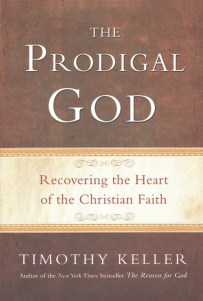
The Prodigal God by Tim Keller

This book is subtitled: “Recovering the Heart of the Christian Faith”.    

Cover Prodigal God

Keller elaborates on the well known story of the Prodigal Son, and offers a not-so-often recognized perspective:  The story is not about a wild son who receives mercy and grace from his benevolent father.  This is a story about two sons. In fact, this is a story about a Father who had two very different sons. It is THE story of God the Father and how people relate to Him in two different ways.

Each son is a reflection of the respective ways people relate to God.   

The younger son is the picture of all who go astray from God and his Law and, having been broken, recognize the emptiness and hopelessness of life apart from the Father.  When awakened to their desperate situation they find a grace and relationship with the Father that is ovewhelming.

The older son is the picture of all who try to relate to God, and please God, by being good; by following all the rules.  This is a picture of religious people, of many Conservative Christians. Yet in their own goodness there is an evident lack of heartfelt fondness for the Father, a lack of joy, obvious to all except for them.

In this book Keller helps us to discern our own tendencies in our relation to God.  Using this story Keller helps us see with keener insight that the ONLY way to have a relationship with God the Father is by recognizing that we are all in need and by being recipients of His compassion, grace, and generosity.  Keller shows us that at the end of the story there is only one son, one type of person, still alienated from the Father. It is not the one who seems to have been the most egregious.  It is the one who seems the most righteous.

Keller has also noted: “Our churches are full of Older Brother types… Is it any wonder, then, that the Younger Brother-types don’t want to come home (come to church)?”

OUCH!! 

The Prodigal God is only 133 pages – and the pages are double-spaced.

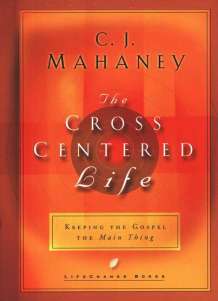
 Cover Cross Centered Life

The Cross-Centered Life by C.J. Mahaney

In this 85 page, pocket sized, book Mahaney helps the reader to keep the Gospel at the center of our lives. He helps us to recognize various subtle substitutes that lead us from the Cross, but ultimatley are of little or no help in strengthening the soul. 

Mahaney uses a plethora of annecdotes and illustrations to convey the simple, yet often forgotten and neglected, essential truth: The Gospel is the power to give and to transform life.  Understanding how we can appropriate the present benefits of the Cross is key to vibrant spirituality and joy.


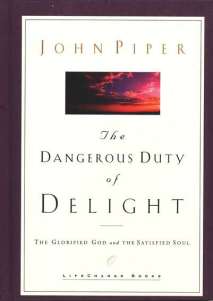
The Dangerous Duty of Delight by John Piper

 I am a long-time fan of Piper’s writing. Nevertheless, I confess, for a long time I refused to read this simple book. I guess I thought this pocket sized 84 page primer of his contemporary classic, Desiring God, was beneath me. After all, I’ve read the BIG book – several times!  But I was wrong.Cover Dangerous Duty

In this little book Piper conveys the essence of the Christian life: To glorify God by enjoying him forever.  It is a great introduction to what Piper calls Christian Hedonism. 

Christian Hedonism may sound like an oxymoron, and even inappropriate, to those who do not undertand what is behind Piper’s message.  But I am convinced that what he espouses is thoroughly Biblical.  It is the recognition that we are created to have a relationship with God; that we are commanded to take delight in God (i.e. Psalm 37.4); and that we are all prone to sell out the ultimate joy we can have in life, in God, for the cheap thrills and pleasures we find elsewhere. 

While I still hope everyone will read Desiring God, this little book, Dangerous Duty, serves as a great introduction that will both lay a groundwork of understanding and whet the appetite for the whole feast found in Desiring God.

You can check out a sample of Dangerous Duty or the entirety of Desiring God online. Just click the highlighted titles.

What is the Gospel?

Wild is the Wind

To say that we, as a church, are centered on the gospel, or Gospel-Driven, is realtively easy. It is quite another thing for the typical church member to know what such phrases actually mean.

The following post, by C.J. Mahaney, was originally published on the Together for the Gospel blog.  I include it here in it’s entirety because it addresses and brings clarity to an issue of the utmost importance…

***

Recently, someone asked two excellent questions on my blog: 

What is the gospel?

What is the most serious threat to the gospel?

The following is my attempt to answer these important questions with the help of those much smarter than myself:

1) What is the gospel?

No question is more important, and biblical clarity in response to this question is critical. Sadly, confusion about the gospel is quite common among professing evangelicals today. I find Graeme Goldsworthy’s comment all too relevant: 

“The main message of the Bible about Jesus Christ can easily become mixed with all sorts of things that are related to it. We see this in the way people define or preach the gospel. But it is important to keep the gospel itself clearly distinct from our response to it or from the results of it in our lives and in the world.” 

So here is my attempt to heed the counsel of Dr. Goldsworthy and keep the gospel “clearly distinct.”

The following definition of the gospel, provided by Jeff Purswell, the Dean of [Sovereign Grace] Pastors College, seeks to capture the substance of the gospel:

“The gospel is the good news of God’s saving activity in the person and work of Christ. This includes his incarnation in which he took to himself full (yet sinless) human nature; his sinless life which fulfilled the perfect law of God; his substitutionary death which paid the penalty for man’s sin and satisfied the righteous wrath of God; his resurrection demonstrating God’s satisfaction with his sacrifice; and his glorification and ascension to the right hand of the Father where he now reigns and intercedes for the church.”

“Such news is specific: there is a defined ‘thatness’ to the gospel which sets forth the content of both our saving faith and our proclamation. It is objective, and not to be confused with our response. It is sufficient: we can add nothing to what Christ has accomplished for us–it falls to us simply to believe this news, turning from our sins and receiving by faith all that God has done for us in Christ.” 

I find this definition of the gospel faithful to the presentation of the four Gospels—they present the person and work of Christ as the good news. In the Apostle Paul’s concise summation of the gospel, he focuses more particularly on Christ’s death and resurrection as the core of his proclamation:

 “For I delivered to you as of first importance what I also received: that Christ died for our sins, in accordance with the Scriptures, that he was buried, that he was raised on the third day in accordance with the Scriptures….” 1 Cor 15:3-4

Focusing more specifically still, the apostle encapsulates the work of Christ by focusing on the cross:

“For I decided to know nothing among you except Jesus Christ and him crucified.” – 1 Corinthians 2:2

So that is the gospel: God’s saving work in and through Christ. And the cross is the pinnacle of that work. Knox Chamblin helpfully notes this emphasis in Paul’s writing and ministry:

“His gospel is ‘the word of the cross’ (1 Cor. 1:17-18); nowhere is there a comparable reference to ‘the word of the resurrection.’ In I Corinthians 1:23-24 it is ‘Christ crucified’ who is identified as ‘the power of God and the wisdom of God,’ not as we might have expected (especially in the case of ‘power’), Christ resurrected…. Both the cross and the resurrection are ‘of first importance’ in Paul’s gospel (I Cor. 15:3-4). Unless Christ has risen from the dead, the preaching of the cross (and of the resurrection) is a waste of time (15:14); but once the resurrection has occurred, the cross remains central.”

And the centrality of the cross isn’t temporary. The cross remains on center stage even when we receive a glimpse of eternity in the New Testament’s final book:

“One is taken aback by the emphasis upon the Cross in Revelation. Heaven does not ‘get over’ the cross, as if there are better things to think about; heaven is not only Christ-centered, but cross-centered, and quite blaring about it.”       – Jim Elliff

There is nothing more important than getting the gospel right. Years ago, John Stott made the following frightening observation of the evangelical church when he wrote, 

“All around us we see Christians relaxing their grasp on the gospel, fumbling it, and in danger of letting it drop from their hands altogether.” 

It is my prayer that God would use the Together for the Gospel conference to strengthen our grip upon the glorious gospel.

2) What is the most serious threat to the gospel?

For this question I think J.C. Ryle provides us with enduring discernment:

“You may spoil the gospel by substitution. You have only to withdraw from the eyes of the sinner the grand object which the Bible proposes to faith–Jesus Christ–and to substitute another object in His place… and the mischief is done.”

“You may spoil the gospel by addition. You have only to add to Christ, the grand object of faith, some other objects as equally worthy of honor, and the mischief is done.”

“You may spoil the gospel by disproportion. You have only to attach an exaggerated importance to the secondary things of Christianity, and a diminished importance to the first things, and the mischief is done.”

“Lastly, but not least, you may completely spoil the gospel by confused and contradictory directions… Confused and disorderly statements about Christianity are almost as bad as no statement at all. Religion of this sort is not evangelical.”

3) Personal Application

It’s not difficult to identify distortions of the gospel. But as a pastor, one of my main concerns for genuine Christians is a more subtle one: either assuming the gospel or neglecting the gospel. I have found this to be the greatest threat to the gospel in my own life. 

Jerry Bridges echoes this concern when he writes, 

“The gospel is not only the most important message in all of history; it is the only essential message in all of history. Yet we allow thousands of professing Christians to live their entire lives without clearly understanding it and experiencing the joy of living by it.”

So let us not only apply discernment to the church at large, but to our own hearts as well. Let us, in the words of Jerry Bridges, “Preach the gospel to ourselves daily.” Let us heed Charles Spurgeon’s exhortation: “Abide hard by the cross and search the mystery of his wounds.” Let us respond to John Stott’s invitation: “The Cross is a blazing fire at which the flame of our love is kindled, but we have to get near enough for its sparks to fall on us.”

So how can we get near enough?

The following are books that will position you to experience the transforming sparks of the gospel:

The Cross of Christ by John Stott. A personal favorite. Stott says of the Savior, “It was by his death that he wished above all else to be remembered.” This book won’t let you forget.

The Gospel for Real Life by Jerry Bridges. The man who taught me how to preach the gospel to myself will teach you to do the same.

The Message of Salvation by Philip Ryken. This excellent book deserves a broad readership. My oldest daughter recently thanked me for recommending this book to her and told me how much she was benefiting from this book. You will benefit as well.

The Message of the New Testament by Mark Dever. My good friend reveals the storyline of the Bible in each and every book of the New Testament. A must read for pastors but highly recommended for all. My wife has really enjoyed reading Mark’s book.

The Cross and Christian Ministry by D.A. Carson. For pastors this is another must-read. I’m indebted to Dr. Carson for this book. It has defined effective pastoral ministry for me, and I pray it will do the same for you.

That ought to get you started. Each of these books will draw you near enough to the “blazing fire of the cross so that its sparks” will fall on you and kindle fresh love for the Savior in your soul.

Diamond in the Rough

The NFL Draft commences in a little more than an hour from the time I write this post.  Not surprising, the pre-draft headlines are focused on Matt Stafford, out of the University of Georgia, and Marc Sanchez, out of Southern Cal, two high profile quarterbacks.  But the real story of this draft, no matter where he ends up, is Ole Miss Offensive Lineman Michael Oher.

The video above gives an overview.  The best video I’ve seen, giving much more of the whole story, was on ESPN earlier this afternoon, which you can watch by clicking: Adopted Family Helps Oher

Oher grew up on the streets of Memphis. His mother was a crack addict. His father had been murdered.  Oher was homeless and left fending for himself by age 6.  He didn’t know his correct birthday or his own real name.  Because of his size and athleticism someone sent him to Briarcrest Christian School to see if he might help out the athletic program.  Briarcrest officials recognized that Oher was completely unprepared for the academic rigors of the school, but also knew that he had no place to turn. So they allowed him in school, on academic probation and inelligible for any athletic competition until he was caught up in school. 

As amazing as that part of the story is, there is more.  While enrolled at Briarcrest Oher was still largely on his own. That is until one cold Thanksgiving night, a school classmate driving with her family spotted Michael on the street wearing shorts and a thin T-shirt.  The Tuohy family turned their car around picked Oher up and took him to their home.  Over time the Tuohy family bought Michael clothes and food, and allowed him to stay with them – until they finally adopted him into their family. Loved for the first time in his life Oher progressed in the classroom and on the football field. He enrolled at Ole Miss and became an All American. Today he will become a first round draft choice – and a millionaire.  But I suspect Michael Oher will be the one man drafted who understands that love far outvalues cash.

The story has already been made a book, The Blind Side, which has been on the New York Times Bestseller list.  It has been featured on NPR’s All Things Considered. And a motion picture is in the works.  But it is the story that may not be told that also fascinates me. It is the story of those whose faith was expressed through tangible love. It is the story of the Tuohy family and the folks at Briarcrest Christian School.the-blind-side

Think about it. The Tuohy’s were a well-to-do Memphis family.  They had children, including an attractive teenage daughter, who I’m sure they were concerned to protect.  And here is this big, huge, black guy, from the streets, that they invited into their home.  I know race should not matter, but it is Memphis. But even apart from race, this is a huge, undisciplined, teenager off the streets.  Most people would have just kept driving. Some kind folks may have bought food and clothes. Others may have gone so far as to make sure he found a home.  But risk the unknown, and with children in the home? I imagine few would have done that.  But the Tuohy’s did. They were compelled by love. And their love transformed a life.

I also have to commend the headmaster at Briarcrest.  Not many administrators would have done the same thing. Some may have admitted Oher because of his athletic prowess. But how many would admit him simply to help him?  Briarcrest had no reasonable reason to expect that Oher would ever succeed in the classroom. When he got to the school he carried a 0.4 gpa.  But these people cared. They lived out their faith, and helped this helpless young giant, even when they had little hope to benefit from it. They reflect what Christian Education ought to be about.

This story makes you feel-good, no matter how it is told. But I stand in awe as I see the Apostle Paul’s words come to life on ESPN:  “The only thing that matters is faith expressing itself through love.” (Galatians 5.6)

The Jesus Pledge


cross-in-the-sky1


What does it mean to be a disciple of Christ? What does it mean to be Gospel-driven?  I think my friend, Paul Miller, expresses it beautifully in The Jesus Pledge:

I pledge my life to Jesus and the Gospel.  I want Jesus not to be just part of my life or something that makes me feel good, but to be the very center – controlling everything.  I want only the knowledge of the love of God.  I want to know Christ. 

I want no desire, idol, or sinful way of dealing with hurt to control any part of my life no matter how small.  I put away from myself the love of money, power, comfort, and success.  I count everything rubbish. 

I bind myself to Christ as bond-servant for life.  I want no master other than Christ.  I purpose to own nothing.  I surrender to Jesus my family, my friends, my ministry, my ideas, my possessions, and my future. 

I commit myself to submission to others and a willingness to learn from all kinds of Christians.  I commit myself to speak only your words, not my own.  I commit myself to speak the truth in love to others.

I want to love people.  I want to lay down my life for others, especially those closest to me, as God gives us grace.  I want to love people by telling them about Jesus.

I understand that this will mean suffering in my life, that I will join in the sufferings of Christ.  But that I always want to be dying, so that I can always be living in Christ. 

Enduring Aroma of the Gospel

painters-cup

People don’t earn God’s approval or receive life and salvation because of anything they’ve done. Rather, the only reason they receive life and salvation is because of God’s kindness through Christ. There is no other way.

Many Christians are tired of hearing this teaching over and over. They think that they learned it all long ago. However, they barely understand how important it really is. If it continues to be taught as truth, the Christian church will remain united and pure — free from decay. This truth alone makes and sustains Christianity. You might hear an immature Christian brag about how well he knows that we receive God’s approval through God’s kindness and not because of anything we do to earn it. But if he goes on to say that this is easy to put into practice, then have no doubt he doesn’t know what he’s talking about, and he probably never will. We can never learn this truth completely or brag that we understand it fully. Learning this truth is an art. We will always remain students of it, and it will always be our teacher.

The people who truly understand that they receive God’s approval by faith and put this into practice don’t brag that they have fully mastered it. Rather, they think of it as a pleasant taste or aroma that they are always pursuing. These people are astonished that they can’t comprehend it as fully as they would like. They hunger and thirst for it. They yearn for it more and more. They never get tired of hearing about this truth.

– Martin Luther