Gospel-Centered Church

Gospel-centeredness is a vital strategic principle for ministry in the 21st (and the 1st!) century. I do not simply mean by ‘gospel-centered’ that ministry is to be doctrinally orthodox. Of course it must certainly be that. I am speaking more specifically.

(1.) The gospel is “I am accepted through Christ, therefore I obey” while every other religion operates on the principle of “I obey, therefore I am accepted.”

(2.) Martin Luther’s fundamental insight was that this latter principle, the principle of ‘religion’ is the deep default mode of the human heart. The heart continues to work in that way even after conversion to Christ. Though we recognize and embrace the principle of the gospel, our hearts will always be trying to return to the mode of self-salvation, which leads to much spiritual deadness, pride and strife, and ministry ineffectiveness.

(3.) We must communicate the gospel clearly – not a click toward legalism and not a click toward license. Legalism/moralism is truth without grace (which is not real truth); relativism is grace without truth (which is not real grace). To the degree a ministry fails to do justice to both, it simply loses life-changing power.

Text: Acts 15:1-25

Here we see Paul, in the middle of a church-planting career, going to Jerusalem for a big theological debate. Now, why do that? Surely we ministers need to be about the work of evangelism, not going in for theological discussions! But Paul makes no bifurcation here. Chapter 15 is down the middle of Paul’s mission! It’s clarifying the gospel itself.

(1) The cause of the debate is that the earliest Gentile converts to Christianity had already become Jewish culturally. That is, many of them were “God-fearers” who had been circumcised and/or abided by the clean laws and the Mosaic legislation.

(2) Then Paul began bringing in real pagans or God-fearers who had not become culturally Jewish. And he was not demanding that, when they became Christians, that they had to adopt Jewish cultural patterns.

(3) Then a group arose (15:1) saying, “unless you are circumcised according to the custom taught by Moses, you cannot be saved”. They had taken cultural norms and promoted them to be matters of virtue and spiritual merit. When they did that, they lost grasp on the gospel of grace and slid into ‘religion’.

(4) The Council on the one hand in Peter, got hold of one end of the stick: v.6-11 No! We believe it is through the grace of our Lord Jesus that we [Jews] are saved, just as they are.”

(5) But, wouldn’t you know it – James gets a hold of the other end of the stick. He agrees with Peter, but rightly asserts that Gentile Christians, though free from any requirements as to salvation, are not free to live as they like as members of a Christian community. They are obliged to live in love and to respect the scruples of culturally different Jewish brethren. So they are ordered (we tend to miss this) to live in such a way that does not offend or distress their brethren who are culturally different. (They are not to eat raw meat, they are to abide by Levitical marriage laws, and so on.) There could hardly be a better case study of the old Luther – proverb that expresses the balance of the gospel. We are “saved by faith alone, but not by faith that is alone.” We are not saved by how we behave, but once we are saved we behave in love.

So “religion” just drains the spiritual life out of a church. But you can “fall off the horse” on the other side too. You can miss the gospel not only through legalism but through relativism. When God is whoever you want to make him, and right and wrong are whatever you want to make them – you have also drained the spiritual life out of a church. If God is preached as simply a demanding, angry God or if he is preached as simply an all-loving God who never demands anything – in either case the listeners will not be transformed. They may be frightened or inspired or soothed, but they will not have their lives changed at the root, because they are not hearing the gospel. The gospel shows us that God is far more holy and absolute than the moralists’ god, because he could not be satisfied by our moral efforts, even the best! On the other hand the gospel shows us that God is far more loving and gracious than the relativists’ god. They say that God (if he exists) just loves everyone no matter what they do. The true God of the gospel had to suffer and die to save us, while the god of the relativist pays no price to love us.

The gospel produces a unique blend of humility and boldness/joy in the convert. If you preach just a demanding God, the listener will have “low self-esteem”; if you preach just an all-loving God, the listener will have higher self-esteem. But the gospel produces something beyond both of those. The gospel says: I am so lost Jesus had to die to save me. But I am so loved that Jesus was glad to die to save me. That changes the very basis of my identity – it transforms me from the root.

I can’t tell you how important this is in all mission and ministry. Unless you distinguish the gospel from both religion and irreligion – from both traditional moralism and liberal relativism – then newcomers in your services will automatically think you are simply calling them to be good and nice people. They will be bored. But when, as here in Acts 15, the gospel is communicated in its unique, counter-intuitive balance of truth and love, then listeners will be surprised. Most people today try to place the church somewhere along a spectrum from “liberal” to “conservative” – from the relativistic to the moralistic. But when they see a church filled with people who insist on the truth, but without a shred of superiority or self-righteousness – this simply explodes their categories. To them, people who have the truth are not gracious, people who are gracious and accepting say “who knows what is the truth?” Christians are enormously bold to tell the truth, but without a shred of superiority, because you are sinner saved by grace. This balance of boldness and utter humility, truth and love – is not somewhere in the middle between legalistic fundamentalism and relativistic liberalism. It is actually off the charts.

Paul knew that ‘getting the gospel straight’ – not falling off into either legalism on the one hand or license on the other – is absolutely critical to the mission of the church. The secret of ministry power is getting the gospel clear. To be even slightly off to one side or another, loses tons of spiritual power. And people don’t get really converted. Legalistic churches reform people’s behavior through social coercion, but the people stay radically insecure and hyper-critical. They don’t achieve the new inner peace that the grace of God brings. The more relativistic churches give members some self-esteem and the veneer of peace but in the end that is superficial too. The result, Archibald Alexander said, is like trying to put a signet ring on the wax to seal a letter, but without any heat! Either the ring will affect the surface of the wax only or break it into pieces. You need heat to permanently change the wax into the likeness of the ring. So without the Holy Spirit working through the gospel, radically humbling and radically exalting us and changing them from the inside out, the religion either of the hard or soft variety will not avail.

Conclusion: Who is sufficient for these things? Not me! But fortunately, Jesus is the great church planter! He said, “I will plant my church, and the gates of hell will not prevail against it!” (Matthew 16) and “Therefore, go to every ethnic group and bring them to be my followers.” (Matthew 28). It’s a good thing he is really the church planter–or we’d have no hope. But since he is the church planter, we have all the hope in the world!

Continue reading

Benefitting in the Benefactor

Sinclair Ferguson offers this wise insight about the gospel-centered life:

“…we must never separate the benefits (regeneration, justification, sanctification) from the Benefactor (Jesus Christ). The Christians who are most focused on their own spirituality may give the impression of being the most spiritual … but from the New Testament’s point of view, those who have almost forgotten about their own spirtuality because their focus is so exclusively on their union with Jesus Christ and what He has accomplished are those who are growing and exhibiting fruitfulness. Historically speaking, whenever the piety of a particular group is focused on OUR spirituality that piety will eventually exhaust itself on its own resources. Only where our piety forgets about ourself and focuses on Jesus Christ will our piety nourished by the ongoing resources the Spirit brings to us from the source of all true piety, our Lord Jesus Christ.”

10 Gospel-centered Questions


Here are 10 questions to ask yourself – and maybe those few closest to you – that help uncover rivals of Christ as the functional savior of your heart:

  1. What are you desiring more than anything else?
  2. What do you find yourself day dreaming or fantasizing about?
  3. What lies are you subtly believing that undermine the truth of the gospel?
  4. Are you astonished with the gospel?
  5. In what ways have you recently made much of yourself and little of God?
  6. Is technology stealing attention from your family?
  7. Is work replacing your spouse’s place in your heart?
  8. Where do your thoughts drift to when you enter a social setting?
  9. What fears are paralyzing your heart from enjoying God?
  10. What consumes your thoughts when you have alone time?

Notice that many of these questions assumes some level of guilt. Others are simply good guages of our priorities.  That’s what makes them good gospel-centered questions – questions that continually keep our hearts centered on the gospel.  

Remember the gospel has two aspects – one positive, one negative.  Paraprasing Jack Miller, the gospel reminds us:

  • You are much greater sinner than you would ever dare admit, even to yourself.
  • You are loved far more by God than you would ever dare dream.

Believing the gospel frees us to admit our flaws, and drives us to explore the love of God demonstrated in the Cross of Christ. So go ahead, ask yourself the above questions.

To Be Or Not To Be Missional

Dave Harvey is an expert church planter and an astute observer of trends in church leadership.  At the Spring 2007 Leadership Conference of Sovereign Grace Ministries Harvey assessed the strengths and weakness of the missional movement in an address titled Watch Your Mission: To Be or Not to Be Missional.

One observation Harvey offers is that sometimes missional practitioners muddy the Cross-centered focus of the Church. 

Here is a sketch outline of Harvey’s message:

What are the Strengths of Missional Churches?

  • Missional Churches Have a Commendable Passion for Evangelism.
  • Missional Churches Have a Laudable Commitment to Engaging Culture.
  • Missional Churches Have a Profitable Impulse for Reexamining Church Tradition.
  • Missional Churches Possess an Admirable Devotion to Social Impact.

What are the Weaknesses of  [Some] Missional Churches?

  • Missional Churches Tend to Be Mission-Centered Rather Than Gospel-Centered.
  • Missional Churches Tend to Have a Reductionistic Ecclesiology.
  • Missional Churches Tend to Confuse Culture Engagement with Cultural Immersion.
  • Missional Churches Tend to Downplay the Institutional and Organizational Nature of the Church.
  • Missional Churches Tend to Have an Insufficient Understanding of Apostolic Ministry.

As one who desires to be both Gospel-centered and Misisonal, I take Harvey’s cautions seriously. I think he has a valid point. I would say that while being Missional does not inherently make one guilty of this, I would have to concede that many who are Missional are guilty of this. 

I suspect this results from an imbalance with the Prophet, Priest, and King tri-perspective. Too much emphasis is placed on the role and influence of the King.  This seems only to be natural since, afterall, one of the important principles recovered by the missional movement is that our mission matters; our mission is as much an expression of who we are as is our theology.

So what is the solution?  Uncompromising Tri-Perspectivalism.

Read Harvey’s full outline here; Download the mp3 for FREE and listen to the audio here.

Note: Thanks to Tony Reinke of Miscellanies for the links.

Gospel Discipling: The Crying Need of the Church

by Stephen Smallman

Thirty years of discipleship programs, and we are not discipled.”

This is the startling assessment of Jim Petersen, the visionary leader of the esteemed discipleship ministry, the Navigators. Petersen goes on in the first chapter of his important book, Lifestyle Discipleship, to ask some very hard questions about the real effectiveness of our various attempts at discipling believers.  But if the situation in most of our American evangelical churches is lacking with respect to discipleship, the condition of many churches in developing nations is nothing short of tragic. Instance after instance can be cited of young and vital churches sliding quickly into debilitating legalism, with Christianity being defined by believer and unbeliever alike as essentially little more than the keeping of certain rules.

There is little need to draw out this lament about the current condition of “discipleship”. Almost anyone in ministry recognizes the need to rethink assumptions and approaches to this critical aspect of the work of the Church. In this article I would like to make the case for a fundamental shift in the paradigm we use with respect to the content of our discipling ministries. It seems to me that most of the work being done to improve the discipleship component of our churches or missions focuses on the matter of methodology – how to secure greater commitment from participants, whether we should work in small groups or one-on-one, how pastors should redefine their roles, etc..But the actual content of what is imparted can be largely described as the “doing” of the Christian life. It is my contention that before methodological issues are discussed, we need to recognize that the essential content of our discipleship is to be the Gospel – taking people who have believed the gospel back into the Gospel again and again.  This is what I will call “Gospel discipling”, which could just as easily be termed “discipleship in the Gospel.”

I believe it can be demonstrated that this was the approach of the Apostles, as evidenced by their letters to new churches.  In particular I want to use the book of Romans as a model of Gospel discipling. I believe it can also be demonstrated that it is the Gospel itself that supplies the power to enable believers to become meaningfully engaged in the “doing” of the Christian life. Once I lay out these foundational issues, I will then explain briefly how World Harvest Mission, building on the seminal thinking of Dr. Jack Miller, has attempted to address the issue of Gospel discipling in a practical way.

Definition of the Gospel

At the outset, it is essential to contend for a much broader understanding of the word “Gospel” than is commonly held by evangelicals. In its essence the Gospel is the glorious announcement that God has kept his promise to bring salvation to the earth (Isaiah 52:7).  The fulfillment of his promise is a person, his own Son, named Jesus, who is Messiah and who died for our sin and was raised to life. Remarkably, by believing this Gospel we are granted eternal life, and the break caused by the original fall and our personal sin is restored.

But the Gospel is more than the announcement about the person and work of Christ, it is used by Paul and others to include all that comes to us when we believe the Gospel. In the words of Galatians, it includes not only God sending his Son to redeem those under the law, but also his sending the Spirit of his Son into our hearts that we might experience the privileges of sonship. (Galatians 4.4-7)  In Colossians 1 Paul talks about the “word of truth, the Gospel” and seems to equate it with “God’s grace in all its truth”. (Colossians 1.5-6) It is also worth taking time to reflect on Paul’s use of Gospel in 2Timothy 1.8-2.10. I believe in the light of that context, Paul’s exhortation to “be strong in the grace that is in Christ Jesus” (2 Timothy 2.1) can be understood as challenging Timothy to find his strength to endure by returning again to the Gospel.

All of this points to a need to understand the Gospel as much more than rehearsing the facts of Christ’s death and resurrection – as wonderful as they are. Furthermore, teaching or preaching the Gospel is more than inviting unbelievers to put their trust in Christ for salvation. The Gospel is the word we should use for all that has been given us in Jesus Christ, which is why it is frequently called “the Gospel of grace”. This broader use is much closer to the historic distinction of Law and Gospel, which was commonly understood in earlier generations, but seems to have been largely ignored by ours.  To be sure, the benefits of the Gospel are being taught today, but I believe our discipling of believers will be helped by recognizing that biblically, these are still to be thought of as Gospel. The posture of simply believing in Jesus as we learn of Him in the Gospel is as fundamental to our progress in the faith as it was to our initial receiving of it.

***

This is Part 1 of a 5-part series titled Gospel Discipling. This series is taken from an essay by Stephen Smallman, author of Spiritual Birthline and past Executive Director of World Harvest Mission. Some of the content has been edited. 

My thanks to New City Fellowship of St. Louis, who posted Smallman’s essay on their web page.

To read Parts 2-5 of this essay click:

Romans as a Model

Gospel & Adoption

Gospel & Renewal

Gospel & Evangelism

Gospel at the Center

At my core I am committed to gospel-centeredness and being gospel-driven. But I confess I don’t really know what that means.  The rich complexity of the gospel and the scope of the implications from the gospel are far beyond my ability to grasp, plumb, or fathom.  So I am drawn towards faithful expressions of the gospel that expand my understanding and depth of insight.

I am indebted to the Elders and leaders of Redeemer Presbyterian Church in Newport Beach, California for their thoughtful and compelling explanation of what it means to be gospel-centered: 

The gospel is at the center of all we do.  The “gospel” is the good news that through Jesus, the Messiah, the power of God’s kingdom has entered history to renew the whole world.  Through the Savior God has established his reign. When we believe and rely on Jesus’ work and record (rather than ours) for our relationship to God, that kingdom power comes upon us and begins to work through us. We witness this radical new way of living by our renewed lives, beautiful community, social justice, and cultural transformation. This good news brings new life. The gospel motivates, guides and empowers every aspect of our living and worship.

Let me encourage you to read this again and again.  Spend some time thinking through what was said and what is demanded.  (You may even ask yourself if you agree with what they said.)  And join me in praying that God would not only grant us greater understanding, but that He would bring about personal and cultural transformation.

Centered on the Gospel

What does it mean for a church to be gospel-centered?  That’s a popular concept these days.  What if we were scrambling to be law-centered?  The difference may not be so easy to see.

Ray Ortland adresses this question with keen insight and simplicity in his brief post: Centered On One or the Other

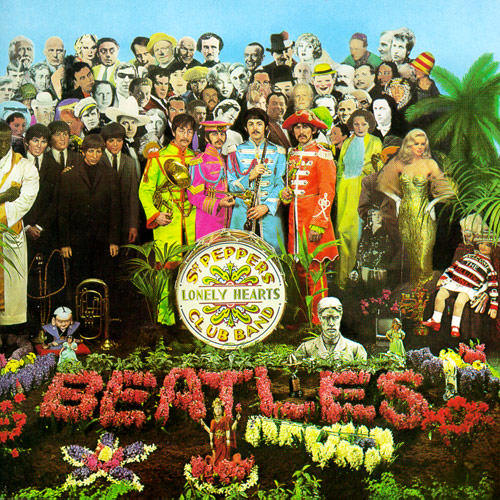
And what does the cover from the Beatles’ Sgt Pepper album have to do with anything?

Well, you’ll have to read the post. Ray explains that too.

Grace Will…

Paradox Hand

I was blown away as I thought about the paradoxes of the Gospel as it was described by Paul Tripp in his book, Broken-Down House.  Don’t just read through quickly. Stop and consider the contrasts:

Grace is a story and grace is a gift. It is God’s character and it is your hope. Grace is a transforming tool and a state of relationship.  Grace is a theology and an invitation. Grace is an experience and a calling. Grace will turn your life upside down while giving you a rest you have never known.  Grace will convince you of you unworthiness without ever making you feel unloved.

Grace will make you acknowledge that you cannot earn God’s favor, and it will remove your fear of not measuring up to his standards. Grace will confront you with the fact that you are much less than you thought you were, even as it assures you that you can be far more than you had ever imagined. Grace will put you in your place without ever putting you down.

Grace will enable you to face truths about yourself that you have hesitated to consider, while freeing you from being self-consciously introspective. Grace will confront you with profound weaknesses, and at the same time introduce you to new-found strength. Grace will tell you what you aren’t, while welcoming you to what you can now be. Grace will make you as uncomfortable as you have ever been, while offering you more comfort than you have ever known. Grace will drive you to the end of yourself, while it invites you to fresh starts and new beginnings.  Grace will dash your hopes, but never leave you hopeless. Grace will decimate your kingdom as it introduces you to a better King. Grace will expose your blindness as it gives you eyes to see. Grace will make you sadder than you have ever been, while it gives you greater cause for celebration than you have ever known.

Grace enters your life in a moment and will occupy you for eternity. You simply cannot live a productive life in this broken-down world unless you have a practical grasp of the grace you have been given.

3 Short Books I Wish Everyone in My Church Would Read

I read a fair amount.  I have been accused, and probably rightly so, of unrealistically pushing books and other reading materials on people who don’t read quite as much; who don’t have the time to read as much; who don’t get “paid” to read as much (as I, in part, am).  But there are ideas and expressions I have benefited from, that I am not sure I can adequately convey, and I like to share them with others. I like to hear how others are struck by the same insights, when the authors’ words are not colored by my thoughts.

I know that I will never get everyone in my church to read all the things I’d like them to read.  But there are three very short books that I have begun to encourage people to read:


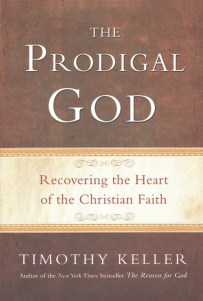
The Prodigal God by Tim Keller

This book is subtitled: “Recovering the Heart of the Christian Faith”.    

Cover Prodigal God

Keller elaborates on the well known story of the Prodigal Son, and offers a not-so-often recognized perspective:  The story is not about a wild son who receives mercy and grace from his benevolent father.  This is a story about two sons. In fact, this is a story about a Father who had two very different sons. It is THE story of God the Father and how people relate to Him in two different ways.

Each son is a reflection of the respective ways people relate to God.   

The younger son is the picture of all who go astray from God and his Law and, having been broken, recognize the emptiness and hopelessness of life apart from the Father.  When awakened to their desperate situation they find a grace and relationship with the Father that is ovewhelming.

The older son is the picture of all who try to relate to God, and please God, by being good; by following all the rules.  This is a picture of religious people, of many Conservative Christians. Yet in their own goodness there is an evident lack of heartfelt fondness for the Father, a lack of joy, obvious to all except for them.

In this book Keller helps us to discern our own tendencies in our relation to God.  Using this story Keller helps us see with keener insight that the ONLY way to have a relationship with God the Father is by recognizing that we are all in need and by being recipients of His compassion, grace, and generosity.  Keller shows us that at the end of the story there is only one son, one type of person, still alienated from the Father. It is not the one who seems to have been the most egregious.  It is the one who seems the most righteous.

Keller has also noted: “Our churches are full of Older Brother types… Is it any wonder, then, that the Younger Brother-types don’t want to come home (come to church)?”

OUCH!! 

The Prodigal God is only 133 pages – and the pages are double-spaced.

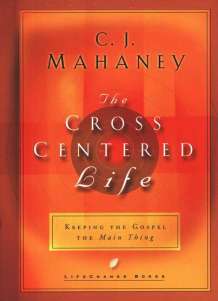
 Cover Cross Centered Life

The Cross-Centered Life by C.J. Mahaney

In this 85 page, pocket sized, book Mahaney helps the reader to keep the Gospel at the center of our lives. He helps us to recognize various subtle substitutes that lead us from the Cross, but ultimatley are of little or no help in strengthening the soul. 

Mahaney uses a plethora of annecdotes and illustrations to convey the simple, yet often forgotten and neglected, essential truth: The Gospel is the power to give and to transform life.  Understanding how we can appropriate the present benefits of the Cross is key to vibrant spirituality and joy.


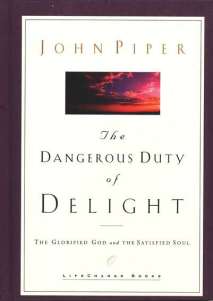
The Dangerous Duty of Delight by John Piper

 I am a long-time fan of Piper’s writing. Nevertheless, I confess, for a long time I refused to read this simple book. I guess I thought this pocket sized 84 page primer of his contemporary classic, Desiring God, was beneath me. After all, I’ve read the BIG book – several times!  But I was wrong.Cover Dangerous Duty

In this little book Piper conveys the essence of the Christian life: To glorify God by enjoying him forever.  It is a great introduction to what Piper calls Christian Hedonism. 

Christian Hedonism may sound like an oxymoron, and even inappropriate, to those who do not undertand what is behind Piper’s message.  But I am convinced that what he espouses is thoroughly Biblical.  It is the recognition that we are created to have a relationship with God; that we are commanded to take delight in God (i.e. Psalm 37.4); and that we are all prone to sell out the ultimate joy we can have in life, in God, for the cheap thrills and pleasures we find elsewhere. 

While I still hope everyone will read Desiring God, this little book, Dangerous Duty, serves as a great introduction that will both lay a groundwork of understanding and whet the appetite for the whole feast found in Desiring God.

You can check out a sample of Dangerous Duty or the entirety of Desiring God online. Just click the highlighted titles.

What is the Gospel?

Wild is the Wind

To say that we, as a church, are centered on the gospel, or Gospel-Driven, is realtively easy. It is quite another thing for the typical church member to know what such phrases actually mean.

The following post, by C.J. Mahaney, was originally published on the Together for the Gospel blog.  I include it here in it’s entirety because it addresses and brings clarity to an issue of the utmost importance…

***

Recently, someone asked two excellent questions on my blog: 

What is the gospel?

What is the most serious threat to the gospel?

The following is my attempt to answer these important questions with the help of those much smarter than myself:

1) What is the gospel?

No question is more important, and biblical clarity in response to this question is critical. Sadly, confusion about the gospel is quite common among professing evangelicals today. I find Graeme Goldsworthy’s comment all too relevant: 

“The main message of the Bible about Jesus Christ can easily become mixed with all sorts of things that are related to it. We see this in the way people define or preach the gospel. But it is important to keep the gospel itself clearly distinct from our response to it or from the results of it in our lives and in the world.” 

So here is my attempt to heed the counsel of Dr. Goldsworthy and keep the gospel “clearly distinct.”

The following definition of the gospel, provided by Jeff Purswell, the Dean of [Sovereign Grace] Pastors College, seeks to capture the substance of the gospel:

“The gospel is the good news of God’s saving activity in the person and work of Christ. This includes his incarnation in which he took to himself full (yet sinless) human nature; his sinless life which fulfilled the perfect law of God; his substitutionary death which paid the penalty for man’s sin and satisfied the righteous wrath of God; his resurrection demonstrating God’s satisfaction with his sacrifice; and his glorification and ascension to the right hand of the Father where he now reigns and intercedes for the church.”

“Such news is specific: there is a defined ‘thatness’ to the gospel which sets forth the content of both our saving faith and our proclamation. It is objective, and not to be confused with our response. It is sufficient: we can add nothing to what Christ has accomplished for us–it falls to us simply to believe this news, turning from our sins and receiving by faith all that God has done for us in Christ.” 

I find this definition of the gospel faithful to the presentation of the four Gospels—they present the person and work of Christ as the good news. In the Apostle Paul’s concise summation of the gospel, he focuses more particularly on Christ’s death and resurrection as the core of his proclamation:

 “For I delivered to you as of first importance what I also received: that Christ died for our sins, in accordance with the Scriptures, that he was buried, that he was raised on the third day in accordance with the Scriptures….” 1 Cor 15:3-4

Focusing more specifically still, the apostle encapsulates the work of Christ by focusing on the cross:

“For I decided to know nothing among you except Jesus Christ and him crucified.” – 1 Corinthians 2:2

So that is the gospel: God’s saving work in and through Christ. And the cross is the pinnacle of that work. Knox Chamblin helpfully notes this emphasis in Paul’s writing and ministry:

“His gospel is ‘the word of the cross’ (1 Cor. 1:17-18); nowhere is there a comparable reference to ‘the word of the resurrection.’ In I Corinthians 1:23-24 it is ‘Christ crucified’ who is identified as ‘the power of God and the wisdom of God,’ not as we might have expected (especially in the case of ‘power’), Christ resurrected…. Both the cross and the resurrection are ‘of first importance’ in Paul’s gospel (I Cor. 15:3-4). Unless Christ has risen from the dead, the preaching of the cross (and of the resurrection) is a waste of time (15:14); but once the resurrection has occurred, the cross remains central.”

And the centrality of the cross isn’t temporary. The cross remains on center stage even when we receive a glimpse of eternity in the New Testament’s final book:

“One is taken aback by the emphasis upon the Cross in Revelation. Heaven does not ‘get over’ the cross, as if there are better things to think about; heaven is not only Christ-centered, but cross-centered, and quite blaring about it.”       – Jim Elliff

There is nothing more important than getting the gospel right. Years ago, John Stott made the following frightening observation of the evangelical church when he wrote, 

“All around us we see Christians relaxing their grasp on the gospel, fumbling it, and in danger of letting it drop from their hands altogether.” 

It is my prayer that God would use the Together for the Gospel conference to strengthen our grip upon the glorious gospel.

2) What is the most serious threat to the gospel?

For this question I think J.C. Ryle provides us with enduring discernment:

“You may spoil the gospel by substitution. You have only to withdraw from the eyes of the sinner the grand object which the Bible proposes to faith–Jesus Christ–and to substitute another object in His place… and the mischief is done.”

“You may spoil the gospel by addition. You have only to add to Christ, the grand object of faith, some other objects as equally worthy of honor, and the mischief is done.”

“You may spoil the gospel by disproportion. You have only to attach an exaggerated importance to the secondary things of Christianity, and a diminished importance to the first things, and the mischief is done.”

“Lastly, but not least, you may completely spoil the gospel by confused and contradictory directions… Confused and disorderly statements about Christianity are almost as bad as no statement at all. Religion of this sort is not evangelical.”

3) Personal Application

It’s not difficult to identify distortions of the gospel. But as a pastor, one of my main concerns for genuine Christians is a more subtle one: either assuming the gospel or neglecting the gospel. I have found this to be the greatest threat to the gospel in my own life. 

Jerry Bridges echoes this concern when he writes, 

“The gospel is not only the most important message in all of history; it is the only essential message in all of history. Yet we allow thousands of professing Christians to live their entire lives without clearly understanding it and experiencing the joy of living by it.”

So let us not only apply discernment to the church at large, but to our own hearts as well. Let us, in the words of Jerry Bridges, “Preach the gospel to ourselves daily.” Let us heed Charles Spurgeon’s exhortation: “Abide hard by the cross and search the mystery of his wounds.” Let us respond to John Stott’s invitation: “The Cross is a blazing fire at which the flame of our love is kindled, but we have to get near enough for its sparks to fall on us.”

So how can we get near enough?

The following are books that will position you to experience the transforming sparks of the gospel:

The Cross of Christ by John Stott. A personal favorite. Stott says of the Savior, “It was by his death that he wished above all else to be remembered.” This book won’t let you forget.

The Gospel for Real Life by Jerry Bridges. The man who taught me how to preach the gospel to myself will teach you to do the same.

The Message of Salvation by Philip Ryken. This excellent book deserves a broad readership. My oldest daughter recently thanked me for recommending this book to her and told me how much she was benefiting from this book. You will benefit as well.

The Message of the New Testament by Mark Dever. My good friend reveals the storyline of the Bible in each and every book of the New Testament. A must read for pastors but highly recommended for all. My wife has really enjoyed reading Mark’s book.

The Cross and Christian Ministry by D.A. Carson. For pastors this is another must-read. I’m indebted to Dr. Carson for this book. It has defined effective pastoral ministry for me, and I pray it will do the same for you.

That ought to get you started. Each of these books will draw you near enough to the “blazing fire of the cross so that its sparks” will fall on you and kindle fresh love for the Savior in your soul.