
Change is inevitable, but it is not always pleasant. But perhaps even less pleasant than unexpected change is the lack of change when it is desired and needed – particularly change in ourselves and in our spiritual development. The questions are common: How Can I Change? When Will I Change?
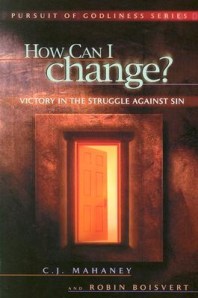
C.J. Mahaney & Robin Boisvert have written a helpful little book that addresses these very questions. Here is an excperpt from the Foreword:
“In a day when quick solutions to longstanding problems are too easily offered, we wish to recommend the old paths, having found them tried and true. There is no short course to Christian maturity. There is no cross-less way to follow Christ, no instant secret to the Christian life. But like distance running, if the way of the cross is not easy, neither is it complicated. God presents us with a pathway that is narrow yet straight. He makes his ways plain to those who are sincerely interested in following him, and he will show himself strong on behalf of all whose hearts are fully his.
Although our vigorous effort is required, all growth is by his grace. With that wonderful truth as our starting block, let us press on toward the mark, each confident that ‘he who began a good work in you will carry it on to completion until the day of Christ Jesus.’ (Philippians 1:6).”
Thanks to Sovereign Grace Ministrires, this little book is available in .pdf for FREE. Click on the Chapter Titles to read or download:
- Caught in the Gap Trap
- Where It All Begins
- United With Christ
- The Battle Against Sin
- Tools of the Trade – Part 1
- Tools of the Trade – Part 2
- Living for That Final Day
- Appendix A – Different Roads to Holiness
- Appendix B – The Old Man and the Flesh
 Unbeknownst to me when I posted earlier today, two of my long-time friends interviewed Jim Belcher, author of
 GRACE & PEACE