Bible
How to – or NOT to – Read Your Bible
How should we read our Bibles? There are a number of good ways. But Dane Ortland offers some suggestions about how not to approach it:
- The Gold Mine Approach – reading the Bible as a vast, cavernous, dark mine, in which one occasionally stumbles upon a nugget of inspiration. Result: confused reading.
- The Hero Approach – reading the Bible as a moral hall of fame that gives us one example after another of heroic spiritual giants to emulate. Result: despairing reading.
- The Rules Approach – reading the Bible on the lookout for commands to obey to subtly reinforce a sense of personal superiority. Result: Pharisaical reading.
- The Artifact Approach – reading the Bible as an ancient document about events in the Middle East a few thousand years ago that are irrelevant to my life today. Result: bored reading.
- The Guidebook Approach – reading the Bible as a roadmap to tell me where to work, whom to marry, and what shampoo to use. Result: anxious reading.
- The Doctrine Approach – reading the Bible as a theological repository to plunder for ammunition for my next theology debate at Starbucks. Result: cold reading.
This post is excerpted from Ortland’s post on The Resurgence blog: Transform Your Bible Reading. The expanded article offers some valuable insights.
Misusing the Proverbs

Great post by John Armstrong on Proverbs. Armstrong asserts:
Perhaps no part of Holy Scripture has been more frequently abused… than the book of Proverbs.
Armstrong goes on to explain what the proverbs are and are not, and their God-intended purpose.
Not long ago a friend and I were discussing this very same problem, after some pastors he knew had thrown around a proverb or two, wielding them as if they were laws. But proverbs are not laws. They are expressions of wisdom. Sometimes they are even contradictory wisdom.
Now I do not believe, as many assert, that the Bible “contradicts” itself. The laws and promises are consistent in all ways. One has to remove them from their intended context to make a case that they are contradictory. But when it comes to the book of Proverbs it is reasonable to see that some sayings offer different outcomes for similar actions. That is easy enough to explain. Again, proverbs are not laws or promises, they are expressions of wisdom to help us navigate life. I’ve heard R.C. Sproul says about Proverbs, essentially, in life “sometimes this will happen, and sometimes that will happen.” Proverbs prepares us for “this” and “that”.
Check Out: Misusing the Proverbs
Bible in 6 Minutes
Is there a particular theme that runs through the whole Bible? No doubt there are many stories and lessons, but is there a central message by which we can connect all else?
Dane Ortland asked several pastors and scholars if they could summarize the Bible in one sentence. Here are some notable responses:
God glorifies himself in the redemption of sinners.
God is redeeming his creation by bringing it under the lordship of Jesus Christ.
God reigns over all things for his glory, but we will only enjoy his saving reign in the new heavens and the new earth if we repent and believe in the gospel of Jesus Christ, who is the crucified and risen Lord and who gave himself on the cross for our salvation.
God has made promises to bring His people to Himself and He is fulfilling them all through Christ.
A holy God sends his righteous Son to die for unrighteous sinners so we can be holy and live happily with God forever.
And, finally, my favorite…
The Lover of our souls won’t let the romance die, but is rekindling it forever.
In the above video Bible scholar D.A. Carson provides a concise, comprehensive, and comprehensible, summary of the theme that permeates the entire Bible.
Of Paramount Importance
Take a moment to ponder these observations about the paramount importance of God’s Word:
Since there is a more excellent appearance of the Spirit of God in the holy scripture than in any other book, it has more power and ability to convey the Spirit and make us spiritual, by imprinting itself upon our hearts.
Since there is more of God in it, it will acquaint us more with God, and bring us nearer to Him, and make the reader more reverent and godly.
Let scripture be first and most in your hearts and hands, and other books used as subservient to it.
The endeavor of the devil… is to keep it from you, which is evidence that reading it is most necessary and desirable, and beneficial to you.
Adapted from the Works of Richard Baxter.
Bible Reading Plans for 2011

New Years Day has come and gone, and 2011 is trudging along. You want to do some things different this year. You’ve always wanted to read through the Bible, but you’ve never been quite sure how to do it. Or, you have read through the Bible before but you are looking for a different approach.
If one of your Resolutions for 2011 is to make Bible reading a regular part of your daily disciplines, you are in luck (err, you are in Providence)! It is not too late to get started. (It’s never too late.) There are several plans available from the publishers of the ESV.
Click: Bible Reading Plans
The Gospel of Mark by Max McLean

If you have not seen the Bible brought to life through one of Max McLean‘s performances you have missed out. I first saw him when he came to chapel while I was a student at Reformed Theological Seminary. McLean is an acclaimed thespian who lends his substantial talents to verbatim oral interpretation of Books of the Bible, among other roles.
I learned from Justin Taylor that McLean’s live portrayal of John Mark, author of the Gospel of Mark, from the show run last year in the Chicago Theatre District, is now available on DVD. I also leaned that it is available free online.
Click the chapters and watch McLean bring the Gospel of Mark to life, word-for-word:
- Chapter 1
- Chapter 2
- Chapter 3
- Chapter 4
- Chapter 5
- Chapter 6
- Chapter 7
- Chapter 8
- Chapter 9
- Chapter 10
- Chapter 11
- Chapter 12
- Chapter 13
- Chapter 14
- Chapter 15
- Chapter 16
Try reading along to dramatize your Devotional time for several days.
13 Letters
There is no stretch of an imagination that would cause anyone to classify where I live as Urban. BUT I still appreciate what the folk at Reach Life have developed.
13 Letters is a curriculum designed with Urban Youth in mind. Taking the substance of the Paul’s letters, this curriculum applies Sound Doctrine to the lives of Urban Youth. There is also an accompanying HipHop album that serves as a survey of the Pauline Epistles. Listen to the songs:
Each of these songs is a remarkably faithful and in-depth exposition of the respective letter. In addition to those songs written to reflect each of the Pauline Epistles, there are a handful of additional songs:
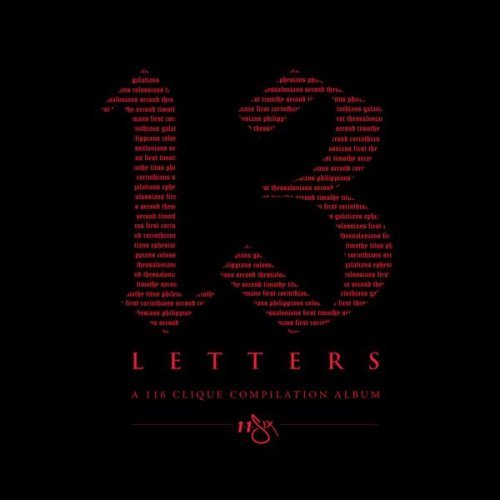
These songs can be purchased or downloaded from Amazon: 13 Letters
The Ephesians Challenge
I’m in. I am taking the plunge. I am accepting the challenge.
The Lausanne Movement, which will conduct the Third Congress on World Evangelism in September 2010 at Cape Town, South Africa, is encouraging leaders and participants to “linger” in the book of Ephesians during 2010. It is part of the preparation for this world impacting event. Each month participants are asked to read and reread this short letter and then reflect on specific themes designated for each month.
While this collaborative Bible Study actually began in November, there is something stimulating about studying and refelcting along with some of the godliest men and women still on earth – even if I am joining in late.
To join me in this endeavor click: Ephesians Study Plan.
Graceful Break-in

“The Bible’s purpose is not so much to show you how to live a good life. The Bible’s purpose is to show you how God’s grace breaks into your life against your will and saves you from the sin and brokenness otherwise you would never be able to overcome…”
-Tim Keller
Jeremiah: The Blogging Prophet

I’ve been reading through the book of Jeremiah this past week.
One of the “tricks” I have found helpful in maintaining a sense of orientation as I navigate the sea of prophecies of judgement the Lord gives to Jeremiah in chapters 2-26, is to view each of the prophecies as separate blog posts. Without this mental practice separating the various prophecies, I have a tendency to read them as if they were one big narrative.
When I read theprophecies as one narrative I get confused, and lose the meaning behind both the Lord’s declarations and Jeremiah’s attitude and response. But seeing each in their own context I get a sense of the character of God, the position of Jeremiah, and the transcendant pertinence from Pre-Exilic Judah to the 21st Century American Church.
 GRACE & PEACE