In this video Paul Tripp offers a true-to-life yet hopeful reflection of Psalm 27.
6 Words Toward Open Hearts

From Donald Whitney:
Over and over I’ve seen one simple question open people’s hearts to hear the gospel. Until I asked this question, they showed no interest in spiritual matters. But then after six words—only seventeen letters in English—I’ve seen people suddenly begin to weep and their resistance fall. The question is, “How can I pray for you?” …
This question is similar to one that Jesus Himself sometimes asked: “What do you want me to do for you?” (Matthew 20:32). For what we are really asking is, “What do you want me to ask Jesus to do for you?” And by means of this question, we can show the love of Christ to people and open hearts previously closed to the gospel.
I had tried to talk about the things of God many times to a business-hardened, retired executive who lived next door. He was a pro at hiding his feelings and keeping conversations at a superficial level. But the day we stood between our homes and I asked, “How can I pray for you?” his eyes filled with tears as his façade of self-sufficiency melted. For the first time in seven years he let me speak with him about Jesus.
It’s a short, easily remembered question. You can use it with longtime friends or with people you’ve just met. It doesn’t seem too personal or pushy for those who’d rather give you a shallow answer just now, and yet it often leads to a full hearing of the gospel. You can ask it of people nearly every time you speak with them and it doesn’t get old. Just simply and sincerely ask, “How can I pray for you?” You’ll be surprised at the results.
Living Missionally in the Mountain Empire
In this video Tim Keller offers some insights about ministry in areas that still largely hold to traditional conservative values.
This is helpful to me because the place where I live and serve is still largely characterized this way.
While I embrace a missional mindset, how our church lives that out in East Tennessee and Southwest Virginia will look very different from how Keller lives it out in Manhattan and others live it out in places like San Francisco or Seattle.
Externally Focused Quest
Most churches have a subtle, perhaps even unspoken, objective. It is driven by the question:
“How can we be the best church in our community?”
How a church answers that question determines the approach to membership, staffing, budget, etc.
In a book I am now reading, Externally Focused Quest, authors Eric Swanson & Rick Rusaw ask an entirely different, more poignant, question:
“How can we be the best church for our community?’
The difference between the two questions dramatically influences the way we approach ministry, approach our community, and relate to other churches. Those driven by this question are inclined to be highly attractional, may tend to view neighbors as being placed by God so that they can be harvested for the growth and benefit of the church. And while many people would be gracious enough to realize that there are enough people to go around, and that no one church can monopolize all the people in an area, this question inherently promotes a sense of competion between churches.
Perhaps even more significant, the differences between these two questions radically reveals our view of God and what we believe to be God’s purpose for the church. The church that wants to know how they can be the best for the community understands that God is on a mission and invites us – even demnds for us – to engage in it. It is a church that recognizes God has placed His church in the community primarily to benefit the city and it’s people (see Jeremiah 29.7 & Proverbs 11.10), and consequently to draw people to himself. While some may ask this question and still posess an unhealthy competitiveness, the question itself does not inherently demand competiton. To be the best for the community means to play the roles needed in the community. There is room for more than one church to play various roles.
Being Sent

This past Sunday I offered a brief exposition of John 17.6-21 & John 20.21, explaining what it means to be “sent” into our community and world in the same way God the Father sent Jesus into our world. These texts demand that we understand, as John Stott says: “Our God is a missionary God.” They also demand that we continually ask ourselves:
- In what way was Jesus sent?
- How am I responding to/reflecting being sent?
While in no way exhaustive, I offered 5 simple observations for us to put into practice:
- More Incarnational than Attractional
- Focus More on Building Bridges than Building Walls
- Prioritize Service > “Serve Us”
- Move Beyond Fellowship to Functional Unity
- Measure Our Effectiveness More by Our Impact than Our Attendance.
Power of the Cross
Oh, to see the dawn of the darkest day:
Christ on the road to Calvary.
Tried by sinful men,
Torn and beaten, then
Nailed to a cross of wood.CHORUS:
This, the pow’r of the cross:
Christ became sin for us;
Took the blame, bore the wrath—
We stand forgiven at the cross.Oh, to see the pain written on your face,
Bearing the awesome weight of sin.
Ev’ry bitter thought, Ev’ry evil deed
Crowning Your bloodstained brow.Now the daylight flees; Now the ground beneath
Quakes as its Maker bows His head.
Curtain torn in two, Dead are raised to life;
“Finished!” the vict’ry cry.Oh, to see my name written in the wounds,
For through Your suffering I am free.
Death is crushed to death;
Life is mine to live,
Won through your selfless love.FINAL CHORUS:
This, the pow’r of the cross:
Son of God—slain for us.
What a love! What a cost!
We stand forgiven at the cross.
On Mission to Cherokee
We just got back from the 38th General Assembly of Presbyterian Church in America last night. This morning we head out again, on a mission trip. We’ll be serving the Eastern Band of the Cherokee Nation at the Cherokee Reservation in North Carolina for the next week.
I won’t have access to a computer while in Cherokee, so I won’t be posting anything this week. Check out some old posts or check back July 12. And prayers for our mission team will be greatly appreciated.
How Can We Look Forward to Heaven?

Some time ago someone I encountered posed an interesting question: “How can we look forward to heaven when none of our favorite things are sure to be there?”
C. S. Lewis’ offers a breathtaking answer:
Let us construct a fable.
Let us picture a woman thrown into a dungeon. There she bears and rears a son. He grows up seeing nothing but the dungeon walls, the straw on the floor, and a little patch of the sky seen through the grating, which is too high up to show anything except sky.
This unfortunate woman was an artist, and when they imprisoned her she managed to bring with her a drawing pad and a box of pencils. As she never loses the hope of deliverance, she is constantly teaching her son about that outer world which he has never seen. She does it very largely by drawing him pictures. With her pencil she attempts to show him what fields, rivers, mountains, cities, and waves on a beach are like.
He is a dutiful boy and he does his best to believe her when she tells him that that outer world is far more interesting and glorious than anything in the dungeon. At times he succeeds. On the whole he gets on tolerably well until, one day, he says something that gives his mother pause. For a minute or two they are at cross-purposes. Finally it dawns on her that he has, all these years, lived under a misconception.
‘But’, she gasps, ‘you didn’t think that the real world was full of lines drawn in lead pencil?’
‘What?’ says the boy. ‘No pencil marks there?’
And instantly his whole notion of the outer world becomes a blank. For the lines, by which alone he was imagining it, have now been denied of it. He has no idea of that which will exclude and dispense with the lines, that of which the lines were merely a transposition–the waving treetops, the light dancing on the weir, the coloured three-dimensional realities which are not enclosed in lines but define their own shapes at every moment with a delicacy and multiplicity which no drawing could ever achieve. The child will get the idea that the real world is somehow less visible than his mother’s pictures. In reality it lacks lines because it is incomparably more visible.
So with us. ‘We know not what we shall be’; but we may be sure we shall be more, not less, than we were on earth. Our natural experiences (sensory, emotional, imaginative) are only like the drawing, like pencilled lines on flat paper. If they vanish in the risen life, they will vanish only as pencil lines from the real landscape, not as a candle flame that is put out but as a candle flame which becomes invisible because someone has pulled up the blind, thrown open the shutters, and let in the blaze of the risen sun.
– C. S. Lewis, ‘Transposition,’ in The Weight of Glory, 85-86
What is God Like?

What is God like? Describe to me the God you say you believe in.
In the first chapter of his best selling book, Crazy Love, Francis Chan challenges his readers to ponder who God is. “Who is it that you are praying to?” Chan wants us to ask. I really appreciate that challenge and that exercise because, quite frankly, I am not sure most people, even in our churches, can offer a substantial answer.
J.I. Packer wrote:
“Those who know God have great thoughts of Him.”
Donald Carson wrote:
“The better we know God, the more we will want all of our existence to revolve around him, and we will see that the only goals and plans that really matter are those that are somehow tied to God himself, and to our eternity with him.”
How well do you know God?
While there is no substitute for Scripture, sometimes the insights of others can help us notice things that we might otherwise not see. Like a tourguide who has navigated a trail many times is able to point out things of importance, of beauty, and of danger, so is one who has walked with God and given himself to careful study of God.
I have found the following books are faithful to Scriptureand helpful in shaping my knowledge of God:
Knowledge of the Holy by A.W. Tozer
Attributes of God by A.W. Tozer
Holiness of God by R.C. Sproul
The Pleasures of God by John Piper
Knowing God by J.I. Packer
Christianity vs The Good Life

My friend Gerald Robison writes:
The goal of popular Christianity today is to live “the good life” – not “a good life”. Much of 21st century preaching focuses on the blessings of God. Only in the lives of “others” is hardship, trials, persecution, suffering and martyrdom mentioned.
The focus of that popular teching is on the listeners, not the kingdom of Christ or the vast warfare taking place in the spiritual realms around us. According to Scripture, what occurs in those realms can impact, influence and alter lives in this one. Too often we act as if it doesn’t.
To many Christians today “Onward Christian Soldiers” is only a song, not a mind-set. Rarely do modern Christians think or act as if they truly are involved in a spiritual battle.
These words introduce the theme of his new book: The Beginners Guide to Spiritual Warfare.
The Glory of the Cross
Embrace Honesty

How do you embrace honesty?
- Give up what is already painfully obvious
- Tell the Truth without telling all the truth
- Embrace the Gospel in your failure to live the gospel
Doctrine
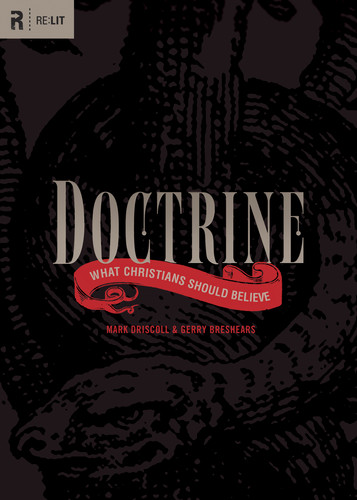
Do you want a good overview of the doctrines of the Christian faith? Would you be open to a introductory course, but are afraid people in your church might think lesser of you because of what you don’t know? (Most of them don’t know either, by the way.) re:Lit publications has developed Doctine by Mark Driscoll & Gerry Breshear to introduce an overview of the themes of the Bible.
On the web site, across the top of the screen are icons that provide a brief synopsis of each doctrine. Additionally at the top right of the synopsis is a link to an audio/video of messages Driscoll delivered at Mars Hill Church that served as a foundation for each chapter.
Crossway Books has an e-book available free online.
- Click: Doctrine
- Scroll down to Contents
- Click the Chapter Ttile
Seeds of Mission in Isaiah

The following is an edited excerpt of an article written by Daniel Bianchi, from Lausanne Global Conversation. I’ve edited it because the English in the original was pretty rough. But Bianchi’s observations about the themes running throughout the Book of Isaiah, and how they reflect issues related to the mandate for Global Mission, are worth noting.
***
1. A Vision of God’s Supremacy
A vision of God and his uniqueness is the basis of a committed mission to his people and to the nations.
Ponder about the existing link between the vision of who God is:
- in creation
- in history
- in redemption
- in eternity
…and how that should fuel, sustain, strength and direct my mission commitment.
Throughout Isaiah the prophet declares and gives evidence that YHWH is:
- Unique
- Glorious
- Just and holy
- Merciful
- Redeemer
- Powerful
2. The Challenge of Idolatry
In the backdrop of Isaiah lays the pervasive influence of idolatry. Isaiah confronts God’s people with their sin and, bluntly, vividly, and sometimes sarcastically, points out their gross idolatry.
Idolatry is:
- Foolish when compared to the revelation of who God is.
- Helplessness when compare with the acts of God in history and in the story of His people.
- Oppressive when compare to the grace and freedom of their relationship with the true God.
- Inconsistent when compared with the nature of God and their identity.
The influence of idolatry is present today.
This is not only a question of bowing down to images of stones or wood. Is much wider in scope, deeper in influence. The gods and goddesses of today:
- power
- wealth
- knowledge
- sensuality
- etc.
…are as real, evasive and demanding that those of Isaiah’s time.
Furthermore, this brings the question on how we, as people of God, in our time and place, are to realate to peoples of other faiths in a pluralistic and relativistic society.
Yes, the people of God sinned. In due time God sent judgment. Now the time for restoration, comfort and re-commissioning had come. He would stand for his own again, and would do new things: a new exodus was coming, a renewed relationship, and a new Servant was to be introduced. The “Servant” would accomplish God’s will – although -in unexpected ways.
3. A Perspective of World Events
The prophet shed some light upon the unexpected ways that God has accomplished his purposes in the history of men. God called a pagan king: his anointed, pastor of his people, and a servant. Maybe that king remained totally blind to the fact that God was using him. Nevertheless, God did use him.
Going further, Scriptures, shows that sometimes God, in turn, sends judgment upon those nations and governments that He initially used to accomplish his purposes. This raises questions about how we might interpret todays events of history…
4. A Wider Scope for the Mission
Isaiah cares for his people and stresses God’s faithfulness and patience with Israel. However, he goes much further. He points to the Nations and the Peoples of the world.
Isaiah is a precious gold mine where we discover God’s universal and overarching purposes.
The stage is the Nations. The word “nation” has a rich theological meaning in the Scriptures. Some of Isaiah’s teaching on God and the nations:
- Nations are insignificant when compare with God.
- Nations will know the justice of God.
- Nations will receive the light of God.
- Nations will partake in the salvation of God.
- Nations will have the witness of the people and the Servant of God.
- Nations are the scenarios of God’s redeeming actions.
Conclusion
Isaiah shows that to join in God’s mission, we need a vision of God’s uniqueness and majesty.
This awe of God confronts all forms of idolatry and sin. First among his people. And then among the Nations. God is just, and will bring restoration and to execute judgment. He will accomplish His promise of redemption, hope and salvation to Israel and to the Nations through the calling, suffering and triumph of his beloved Servant and the resulting obedience of His people.
To read the original article click: Seeds
Human Flourishing

As my son goes off to college in a matter of weeks I am seeing my influence, in the form of authority and control, dissipate with each passing day. I hope I will always have some influence in his life. To have no influence is to have no relationship. Further, I hope that over the years he has developed a level of respect rooted in my love for him and demonstrated by the life I live. But the nature that influence expresses itself is changing as he assumes more responsibilty for himself, moves to a new city, where he will begin a life that I am a visitor to but not a resident in.
I find I ask myself what advice I want to offer that he might take with him.
One important area, as he engages in study to prepare for the life God has in store for him, concerns a perspective on work itself. Danielle Sallade has written a wonderfully insightful treatise titled Human Flourishing.
Here is how Sallade introduces her work:
This essay proposes that living as a Christian, an alternative to the prevailing culture, leads to flourishing. First, I briefly sketch what the worldly culture of busyness looks like. I then discuss how our modern notions about the nature of work and success create the culture of busyness and keep it going. Finally, I attempt to show how the Christian faith offers an alternative way to understand work and success that, when believed and lived out, results in joy, peace, and genuine flourishing instead of stress, anxiety, and exhaustion
I think this article will find fertile ground in the minds of a wider audience than merely college students. We all have to deal with this issue.
 GRACE & PEACE