Another 10+ Questions for the New Year

Proverbs 20.5 says:

The purpose in a man’s heart is like deep water,
but a man of understanding will draw it out.

In short what Solomon explains is that everyone has desires and designs, but often we may not be conscious  even of our own.  Our purposes are deep down.  But the wise person, the “Man of Understanding” will take the time and make the effort to discern his/her own heart.

Here in the first week of the New Year I have posted a series of questions that can help us be men and women of understanding.  These questions can help us realize our own deep desires. My hope is that in discovering what may be hidden in the depths we can consequently make wise steps.

Take some time to contemplate these questions:

  1. What one thing do you most regret about last year, and what will you do about it this year?
  2. What single blessing from God do you want to seek most earnestly this year?
  3. In what area of your life do you most need growth, and what will you do about it this year?
  4. What’s the most important trip you want to take this year?
  5. What skill do you most want to learn or improve this year?
  6. To what need or ministry will you try to give an unprecedented amount this year?
  7. What’s the single most important thing you could do to improve the quality of your commute this year?
  8. What one biblical doctrine do you most want to understand better this year, and what will you do about it?
  9. If those who know you best gave you one piece of advice, what would they say? Would they be right? What will you do about it?
  10. What’s the most important new item you want to buy this year?
  11. In what area of your life do you most need change, and what will you do about it this year?

Building a Bridge to Puritan Days

In Building a Bridge to the 18th Century, author Neil Postman suggests that in many ways we have not so much advanced, as a culture, as we have drifted over the years. Postman seems to believe we would do well to return to and reconnect with our philosophical roots and rebuild upon them.

I might say the same thing Spiritually and Theologically.

Like Postman I look to the early-to-mid 18th Century.  But I also go back a little further than he does.  I suggest we return some of our attention to the 16th & 17th Centuries too.

In particular I  believe we benefit by building a bridge back to the Puritans.

Now I realize, for many people the idea of learning from the Puritans is as appealing as black snow.  For some, the very notion seems ugly and distasteful. (The Puritans were… well, puritanical, weren’t they?) But I wish this was not such a prevalent view.  I am not ashamed to admit that the Puritans are part of my spiritual heritage.  In some company I might even refer to myself as a Neo-Puritan.  From my perspective, contemporary disregard for the Puritan is our loss.

I understand some of the stains on the Puritan reputation is deserved. It was earned by a representative few who were… idiots. (i.e. Salem Witch Trials)  But those folks were not a sufficient sample group by which to judge the entire lot.  Sure they held some of the same principles as their Puritan predecessors, but they were a warped expression, at the tail end of a movement, influenced at least as much by superstition and fear as by their Faith traditions.  But because of the antics of these relative few fanatics the whole Puritan tradition has been getting a perpetual bad rap. And I suspect that mistaken notions about the Puritans will endure, at least for as long as our perceptions continue to be influenced by erroneous and distorted PR offered by such sources as Arthur Miller’s The Crucible and Nathaniel Hawthorne’s Scarlet Letter.

J.I. Packer, in an essay titled Why We Need the Puritans, which is also the Introduction to his book A Quest for Godliness, outlines a handful of lessons contemporary Christians would do well to learn from these besmirched people of the past:

  • Integration of Daily Life
  • Quality of Spiritual Experience
  • Passion for Effective Action
  • Program for Family Stability
  • Sense of Human Worth
  • Ideal of Church Renewal

A great introduction to the Puritans has been provided by the folks at The Resurgence. They have compiled a series of short articles, by Winfield Bevins, under the title Lessons from the Puritans:

Even if your impression of the Puritans has been shaped by Miller or Hawthorne, I hope you will give some consideration to these short introductory essays.  I am confidnet you will be pleasantly surprised by the positive legacy these folks have left us.

10 More Questions for the New Year

Sir Francis Bacon once mused:

Who questions much shall learn much, and retain much.

On New Years Day I posted a set of questions to ponder at the start of the New Year.  The following are 10 more questions, from Donald Whitney, to ask ourselves here at the beginning of the New Year:

  1. What’s the most important decision you need to make this year?
  2. What area of your life most needs simplifying, and what’s one way you could simplify in that area?
  3. What’s the most important need you feel burdened to meet this year?
  4. What habit would you most like to establish this year?
  5. Who is the person you most want to encourage this year?
  6. What is your most important financial goal this year, and what is the most important step you can take toward achieving it?
  7. What’s the single most important thing you could do to improve the quality of your work life this year?
  8. What’s one new way you could be a blessing to your pastor (or to another who ministers to you) this year?
  9. What’s one thing you could do this year to enrich the spiritual legacy you will leave to your children and grandchildren?
  10. What book, in addition to the Bible, do you most want to read this year?

10 Questions for the New Year

Donald Whitney has a knack for asking pertinent probing questions.  His questions could be used for getting to know one another in a new small group.  But I think they might best be used for personal reflection.  Whitney’s questions penetrate into the recesses of our hearts. And if we take the time to reflect upon them and answer honestly, they reveal to us our own motives and deep desires – sometimes, perhaps, even in ways we may not have previously been conscious.

As we embark in the New Year take some time to contemplate these 10 questions:

  1. What’s one thing you could do this year to increase your enjoyment of God?
  2. What’s the most humanly impossible thing you will ask God to do this year?
  3. What’s the single most important thing you could do to improve the quality of your family life this year?
  4. In which spiritual discipline do you most want to make progress this year, and what will you do about it?
  5. What is the single biggest time-waster in your life, and what will you do about it this year?
  6. What is the most helpful new way you could strengthen your church?
  7. For whose salvation will you pray most fervently this year?
  8. What’s the most important way you will, by God’s grace, try to make this year different from last year?
  9. What one thing could you do to improve your prayer life this year?
  10. What single thing that you plan to do this year will matter most in ten years? In eternity?

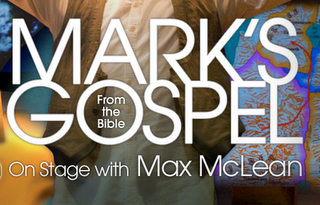
The Gospel of Mark by Max McLean

If you have not seen the Bible brought to life through one of Max McLean‘s performances you have missed out. I first saw him when he came to chapel while I was a student at Reformed Theological Seminary. McLean is an acclaimed thespian who lends his substantial talents to verbatim oral interpretation of Books of the Bible, among other roles.

I learned from Justin Taylor that McLean’s live portrayal of John Mark, author of the Gospel of Mark, from the show run last year in the Chicago Theatre District, is now available on DVD.  I also leaned that it is available free online.

Click the chapters and watch McLean bring the Gospel of Mark to life, word-for-word:

Try reading along to dramatize your Devotional time for several days.

Things We Leave Behind

There sits Simon foolish and wise
Proudly he’s tending his nets
Jesus calls and the boat drifts away
All that he owns he forgets

More than the nets he abandoned that day
He found that his pride was soon fading away

It’s hard to imagine the freedom we find
From the things we leave behind

Matthew was mindful of taking the tax
Pressing the people to pay
Hearing the call he responded in faith
And followed the light and the way

Leaving the people so puzzled he found
The greed in his heart was no longer around

Every heart needs to be set free
From possessions that press in so tight
Freedom is not found in the things that we own
It’s the power to do what is right

With Jesus our only possession
Giving becomes our delight
We can’t imagine the freedom we find
From the things we leave behind

We show a love for the world in our lives
Worshipping goods we possess
Jesus said lay all your treasures aside
And love God above all the rest

When we say no to the things of the world
We open our hearts to the love of the Lord

Song by:

A Right Definition of Faith

How shall we distinguish a healthy faith from one that is built on more shaky ground?  Consider this insight from John Calvin:

“Now we shall possess a right definition of faith if we call it a firm and certain knowledge of God’s benevolence toward us, founded upon the truth of the freely given promise in Christ, both revealed to our minds and sealed upon our hearts through the Holy Spirit…..

If then, we would be assured that God is pleased with and [is] kindly disposed toward us, we must fix our eyes …on Christ…  We see that our whole salvation, and all its parts, are comprehended in Christ.   We should, therefore, take care not to derive the least portion of it from anywhere else.”

Difference Between Faith and Hope

The question may occur to us: What difference is there between faith and hope? We find it difficult to see any difference. Faith and hope are so closely linked that they cannot be separated. Still there is a difference between them.

Consider the following distinctions offered by Martin Luther, from his commentary on Galatians:

First, hope and faith differ in regard to their sources. Faith originates in the understanding, while hope rises in the will.

Secondly, they differ in regard to their functions. Faith says what is to be done. Faith teaches, describes, directs. Hope exhorts the mind to be strong and courageous.

Thirdly, they differ in regard to their objectives. Faith concentrates on the truth. Hope looks to the goodness of God.

Fourthly, they differ in sequence. Faith is the beginning of life before tribulation (Hebrews 11). Hope comes later and is born of tribulation (Romans 5).

Fifthly, they differ in regard to their effects. Faith is a judge. It judges errors. Hope is a soldier. It fights against tribulations, the Cross, despondency, despair, and waits for better things to come in the midst of evil.

Without hope faith cannot endure. On the other hand, hope without faith is blind rashness and arrogance because it lacks knowledge. Before anything else a Christian must have the insight of faith, so that the intellect may know its directions in the day of trouble and the heart may hope for better things. By faith we begin, by hope we continue.

Worship is the Proper Response

Worship is the proper response of all moral, sentient beings to God, ascribing all honor and worth to their Creator-God precisely because he is worthy, delightfully so. This side of the Fall, human worship of God properly responds to the redemptive provisions that God has graciously made. While all true worship is God-centered, Christian worship is no less Christ-centered. Empowered by the Spirit and in line with the stipulations of the new covenant, it manifests itself in all our living, finding its impulse in the gospel, which restores our relationship with our Redeemer-God and therefore also with our fellow image-bearers, our co-worshippers. Such worship therefore manifests itself both in adoration and action, both in the individual believer and in corporate worship, which is worship offered up in the context of the body of believers, who strive to align all the forms of the devout ascription of all worth to God with the panoply of new covenant mandates and examples that bring to fulfillment the glories of antecedent revelation and anticipate the consummation.

~ D.A. Carson, in Worship By the Book

5 Views on Sanctification

Several years ago a book was released attempting to outline and compare the major divergent views about the doctrine of sanctification, Five Views on Sanctification.  In this book five respected theologians, each a proponent of one of the respective positions gave an outline explanation of the positions: Wesleyan/Holiness, Reformed/Puritan, Keswick, Dispensational, and Pentecostal.  Following the introduction by the adherent theologian, each of the other theologians then interact with the presented view in a rebuttal/defense discussion that reflects the strengths and weaknesses of the various positions.

This is an important discussion because it reflects one of the major areas where Christians view things from vastly different perspectives.  But unlike other areas where sincere Believers differ (i.e. Eschatology, Baptism, Church Government, Complementarian vs. Egalitarian) this subject is not often as clearly articulated as those other subjects.  Rather, sanctification seems to be assumed.  I am not making the case that we add this discussion to our all too common arguments, as we might add another log on a fire.  But I do see a value in awareness of these differences so that we can talk to one another. Failure to understand that many hold different views on this subject lead to speaking in different languages and/or talking at one another instead of talking to one another.

For this reason I appreciate an essay by Mike Sullivan of Xenos Christian Fellowship.  Mike has summarized the fore mentioned book in an essay, 5 Views of Sanctification.  Mike summarizes the positions and interacts with the book, then adds his own comments to the subject.

While the book is not long, it is not something I expect a lot of people will take time to read.  Mike’s essay makes this subject much more accessible to us.

Dealing With Our Differences

Psalm 133 says:

How good and pleasant it is when brothers dwell together in unity!

But what about when we differ? Can we still dwell together in unity when we do not have uniformity?

Roger Nicole offers insights: How to Deal With Those Who Differ From Us.

Or, you can read this essay in sections:

  • Part 1 – The Necessity of Godly Disputation
  • Part 2 – What Can I Learn From Those Who Differ From Me?
  • Part 3 – How Can I Cope With Those Who Differ From Me?
  • Part 4 – The Christian’s Goal

Heisman 2010

Tonight’s the night the night when, once again, the Downtown Athletic Club in Manhattan bestows the Heisman Trophy on the top collegiate football player in the nation. While each year there is a qualifying refrain, it warrants repeating: This trophy is given to the top offensive skill player. Linemen and most defensive players get no serious consideration.

That qualifier out of the way, I will say in my opinion that makes no difference this year in who should be the winner. Perhaps there are linemen and defensive players who deserved an invite to the banquet in New York, but there is one player who clearly dominated on the field this season.

My votes – if I had any – would fall in the following order for 2o10:

  1. Cam Newton – QB – Auburn
  2. Colin Kaepernick – QB- Nevada
  3. LaMichael James – RB – Oregon

Why Newton?  No one controlled a game like him this season.  He was an unstoppable force.

Continue reading

Celebrating Gospel-Centeredness

A good article by Trevin Wax illustrating the importance of, not only Gospel-centeredness but, Gospel Celebration.  Wax asserts:

“What you celebrate as a Church is just as important as what you believe.”

I am not sure I fully agree with that statement, but I do see how what is celebrated practically shapes the church, and therefore its people and mission.  And, I suspect it is also true that if we truly understand the Gospel we will celebrate it – and especially the God who authored the Gospel and the Messiah who embodies the Gospel.  To celebrate anything else merely exposes our true values – in other words, our idols.  To not celebrate Christ above all else reveals that we do not actually understand the Gospel.

So, practically speaking, I guess I do agree with that statement more than I first thought.

Wax goes on to suggest:

Celebrate the gospel, and cross-cultural ministry will bubble up in surprising ways. Celebrate your church’s preferential distinctions, and your congregation will become an insular group of like-minded individuals.

Wax drives his point home with two true-to-life illustrations.

To read the article click: Celebration