He-Man Woman Haters Club

There was a time when I wondered if at least some in my denomination ought to start wearing t-shirs with a picture bearing the image of Alfafa from the old Our Gang/Little Rascals’ shorts from the ’30’s & ’40’s.  Alfalfa was a founder and president of the He-Man Woman Haters Club. Now, I know that this was an unfair characterization of most – the clear majority – of my fellow churchmen.  But when discussing the role of women in the church, in the home, and in the world at large, sometimes statements were offered up that made me pause – and cringe.

I believe in the inherent equality of men and women.   But I am no feminist.  In fact, I would not even qualify as an Egalitarian.  Instead, I am more aligned among the Complimentarians.  But much to my chagrin, sometimes those of us in the Complimentarian camp are mistaken for being among the initiates of the He-Man Woman Haters Club.

Some time ago Rachel Miller, on her blog A Daughter of the Reformation,  wrote a very insightful piece, titled What’s Wrong With Biblical Patriarchy?.  In her post she distinguishes us Complimentarians from the more chauvinistic Modern Patriarchy movement, with whom we Complimentarians are often lumped.  (Rachel notes that proponents of this patriarchal position like to refer to themselves as “Biblical Patriarchy”, but I don’t want to equate them as being biblical.  As the article astutely observes and notes, those folks base their positions on some biblical principles but then mix them up with some very Victorian notions.)

While I know throwing around such terms as Complimentarian, Egalitarian, etc., is not likely to excite many readers, nevertheless, I think what Rachel Miller has to say is worth considering as you think biblically about this polarizing issue; and maybe just a little less important, to distinguish guys like me from the ecclesiastical Alfalfas.

***

Reblogged from A Daughter of the Reformation:

As a homeschooling family, we come in contact with people from a wide variety of backgrounds and beliefs. One of the groups that is fairly common within the homeschooling community is the modern patriarchy movement, or as they refer to it “Biblical Patriarchy.” Some of the big names in this group include, R.C. Sproul, Jr., Doug Phillips of Vision Forum, and Doug Wilson of Credenda Agenda magazine.


Read more… 2,203 more words

7 Principles for Conduct

Reaching

The chief end of man is to glorify God and enjoy him forever.”

C.J. Mahaney has compiled the following questions and relevant scripture passages to help in determining whether or not a particular activity is glorifying to God.  I find these to be very helpful questions.

1. Does it present a temptation to sin?

Romans 13.14 -“Rather, clothe yourselves with the Lord Jesus Christ, and do not think about how to gratify the desires of the sinful nature.”

2 Timothy 2.22 -“Flee the evil desires of youth, and pursue righteousness, faith, love and peace, along with those who call on the Lord out of a pure heart.”

2. Is it beneficial?

1 Corinthians 6.12a -“‘Everything is permissible for me’—but not everything is beneficial.”

1 Corinthians 10.23 -“‘Everything is permissible’—but not everything is beneficial. ‘Everything is permissible’- but not everything is constructive.”

3. Is it enslaving?

1 Corinthians 6.12b – “‘Everything is permissible for me’—but I will not be mastered by anything.”

4. Does it honor and glorify God?

1 Corinthians 10.31 – “So whether you eat or drink or whatever you do, do it all for the glory of God.”

5. Does it promote the good of others?

1 Corinthians 10.33 – “even as I try to please everybody in every way. For I am not seeking my own good but the good of many, so that they may be saved.”

6. Does it cause anyone to stumble?

1 Corinthians 10.32 – “Do not cause anyone to stumble, whether Jews, Greeks or the church of God”

7. Does it arise from a pure motive?

Jeremiah 17.9 – “The heart is deceitful above all things and beyond cure. Who can understand it?”

A Season of Miracles

Check out the trailer for a soon-to-be-released movie, taken from a novel written by my good friend, Rusty Whitener.

The book and movie are titled A Season of Miracles.  Set in the early 1970’s Deep South, A Season of Miracles in an engaging, feel good story, about baseball, autism, coming of age, faith, and baseball. 

I read the book when it first came out a couple years ago, and recommended it to a number of others.  Now I am looking forward to seeing the story come to life in movie form.

Here AND There

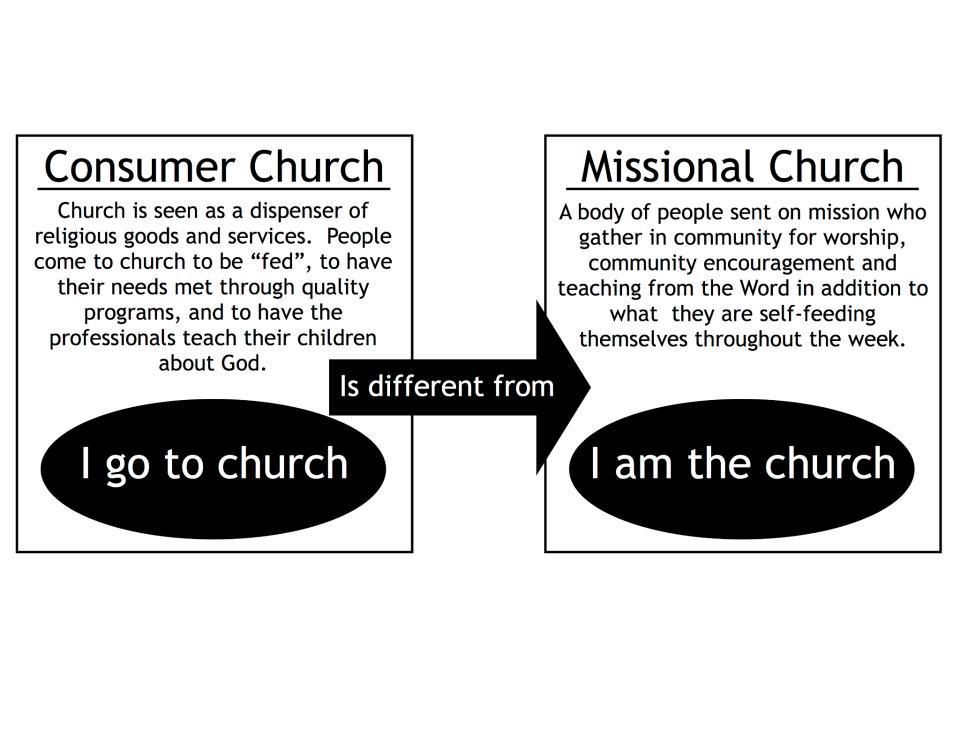
Church Scattered

We don’t just go to church, we ARE the church …sent out by the power of the Spirit to BE the church.

This illustration above represents two aspects of being a faithful church:

Attractional – those elements of a particular congregation that draw people into the church community. Among these would be the quality of music, the substance and winsomeness  of the teaching, the variety and sufficiency of programs offered, and the friendliness of the members.

Missional – this is the sending of the church members into the community, and to the Nations, in order to make a positive and kingdom impact.  While this is often neglected, missional is not optional.

  • The mission of the church, and her members, is rooted in the nature of God who seeks and sends. (Isaiah 55.5; Isaiah 60.3; John 4.23; John 20.21)
  • Intentionally serving the community is faithfulness to the Covenant God cut with Abraham.  (i.e. Genesis 12.2)  If you look carefully at the Covenants of Scripture you will notice that there are always two dimensions, what I call a Top Line and Bottom Line.  the top line is God’s promise to bless those with whom he has entered into Covenant, evidenced by such promises as “I will be your God and you will be my people”.   The Bottom Line is is consistent with such expectant promises as “You will be a blessing”.   Both dimensions are reflected in every covenant.  Therefore, intentional mission to our community and world is not optional, or part of some deluxe package of being a Christian. If one follows Jesus, he or she does not have the option to choose the arrangement that does not require mission.
  • Mission is a is a clear mandate.  (Matthew 28.18-20; Luke 24.46-49; John 20.21; Acts 1.8; Jeremiah 29.7)

BOTH Attractional and Missional are necessary to be a healthy church. If we are not going, we are not faithful. And if no one is coming, well… the implications are pretty obvious.

You Might Be Reformed If…

Reformation Wall @ Geneva

As one who dwells firmly within the Reformed wing of Evangelical Christianity, I found the following to be astute, accurate, and a little bit amusing:

You might be Reformed …

  • If you think prayer is more than just trying to manipulate God into giving you what you want …
  • If you think that there are things more important to God than your comfort …
  • If you think the Bible has more to say about the Church than just what is found in the second chapter of Acts …
  • If you suspect that how you “think” about God might be at least as important as how you “feel” about God …
  • If you believe that the fact that a doctrine is described in the Bible supersedes your personal feelings about that doctrine…
  • If you feel that nagging suspicion that something isn’t right when the pastor can preach an entire sermon series without ever opening a Bible…
  • If you think that all of those letters that Paul, Peter, James and John wrote to the churches have something to do with how the Church should look today…
  • If you think that there has to be more to the Christian life than just being nice…
  • If you have always suspected that the pick­-and­-choose belief buffet can’t really reflect Christianity as it is expressed in Scripture…
  • If the theology of, “God has a plan, and it’s all about you!” makes you suspicious…
  • If you like the hymns unrelated to “tradition,” but because they are meaningful and true; in contrast with the mindless drivel of many “modern worship” songs…
  • If you accept God’s election because you find the doctrine clearly stated in Romans, even if you don’t necessarily  “like it” …
  • If you get a little creeped-out when someone stands up in church and declares: “I’ve had a revelation from God” …
  • If a “worship service” comprised of 45 minutes of near ­meaningless, highly repetitive songs leaves you hungering and thirsting for something real and meaningful…
  • If you’ve secretly abandoned Dispensationalism for not making sense, and gone searching for an eschatology that actually reflects what is taught in Scripture.

***

Thanks to Timothy J. Hammon.  This post originally appeared on his blog: The Things That Matter

5 Gospel Perspectives That Shape Lives

Tim Lane & Paul Tripp, in their helpful book How People Change, suggest that there are 5 Gospel Perspectives that shape lives.  In other words when we understand these principles, and regularly consider our own lives in relation to them, we see change.  These principles, considered collectively,  cultivate the best conditions to see fruitful sanctification.

  1. The need to recognize that God calls for ongoing and continual growth and change in all of us.
  2. The need to understand the extent and gravity of our sin.
  3. The need to understand that the heart is central; that behavior and attitude is a reflection of the heart.
  4. The need to understand the present benefits of Christ.
  5. The need to live a Lifestyle of Repentance & Faith

If you are curious, you might want to check out an interview with Lane & Tripp, where they describe their motivation for writing the book, and explain how to apply the gospel to real life to bring about real change: Interview

Appropriating Grace

Circle of Life (Celtic)

Here is an important reminder and challenge from Richard Lovelace, from his monumental Dynamics of Spiritual Life:

Only a fraction of the present body of professing Christians are solidly appropriating the justifying work of Christ in their lives… Many… have a theoretical commitment to this doctrine, but in their day-to-day existence they rely on their sanctification for their justification… drawing their assurance of acceptance with God from their sincerity, their past experience of conversion, their recent religious performance or the relative infrequency of their conscious, willful disobedience. Few know enough to start each day with a thoroughgoing stand upon Luther’s platform: you are accepted, looking outward in faith and claiming the wholly alien righteousness of Christ as the only ground for acceptance… Christians who are no longer sure that God loves and accepts them in Jesus, apart from their present spiritual achievements, are subconsciously radically insecure persons… Their insecurity shows itself in pride, a fierce, defensive assertion of their own righteousness, and defensive criticism of others. They come naturally to hate other cultural styles and other races in order to bolster their own security and discharge their suppressed anger.

This paragraph, surprisingly, caused somewhat of a stir when I posted it on my Facebook page yesterday.  Most appreciated it. Some who expressed appreciation, I wondered if they really understood what Lovelacve was saying.  I hope so.

So, how do we respond if we find ourselves among the majority who are not functionally appropriating the justifying work of Christ?

Continue reading

Sad State of Evangelicalism

Broken Cross

An excellent, “must read”, article by Mark Galli for Christianity Today:  The Troubled State of Christian Preaching.  This is a great example of a “I Wish I’d Said That”.  All of Galli’s insight resonate …

Here is the gist of Galli’s tought, set within the context of the Presidential Inauguration and Louie Giglio being put on the un-invite list:

Even when we try to make Jesus first, we end up inadvertently making ourselves first.   …Unfortunately, in a desire to reach the world for Christ, some inadvertently …make much about our ultimate significance. Jesus becomes merely the means by which we feel better about our place in the universe. Need purpose and meaning? Follow Jesus, that will do the trick. In this subtle shift, we become the first and the last, the Alpha and the Omega.

Why I Won’t Forgive Lance Armstrong

Armstrong

I have no inclination to forgive Lance Armstrong.  I feel no need to.  Armstrong, the infamous cyclist who has now been stripped of several Tour de France victories, an Olympic medal, and has had a host of other indignities hoisted upon his head, has finally confessed to doping in order to enhance his performance.  And his confession has seemed to turn multitudes to dismay.

Many had considered him a hero.  His story was compelling. A cancer survivor, he came back stronger than ever after his treatment to dominate the world cycling circuit, most notably in his unprecedented – and unlikely to ever be repeated – 7 consecutive victories in the Tour de France.  He then translated his fame and his story into the tremendously successful cancer research foundation, LiveStrong, which has raised and given millions-upon-millions of dollars toward the treatment and eradication of cancer.   To find out that Armstrong’s success was synthetic has led many to feel betrayed.

But not me.

It is not that I have any admiration for Armstrong.  I have had little interest in him for some time.  Armstrong is a seriously flawed guy, whose most serious character flaws had little to do with his doping.  Behind the scenes he was a despicable person who destroyed dozens of lives through threats and lawsuits in order to preserve his persona – his lie.   This is far worse than cheating in a sporting event – especially in a sport where nearly all the other participants were cheating just as much.

Why do I feel no need to forgive Lance Armstrong?  Simple. Because I never expected anything from him in the first place.  His failures and his fall have cost me nothing.

In the Bible the concept of forgiveness is often likened to that of swallowing a debt.  Whenever someone wrongs us – or we wrong another – whether by actual stealing, or tarnishing a reputation, or some other offense, something is taken from the victim by the perpetrator.  And a debt incurs.  (See Parable of Unmerciful Servant, for instance.)  What is taken may be wealth, or it may simply be peace of mind.  But with any actual offense something, tangible or not, is actually taken.

Jesus’ instruction to his followers who have been wronged is to extend forgiveness to the offender, just as forgiveness has been extended to us for our offenses.  Our offenses may be against other people, but they are also always against the Lord.  If nothing else, by our offense we belittle the Lord.  Or put another way, consistent with the above premise, we rob Jesus of the glory he is due.  We essentially say he is not enough; that we need something in addition to or instead of God and what he promises and provides.   Yet, in the face of such insult Jesus reminds us that we have been forgiven.  He has swallowed the debt we owe, paying for it with his own blood on the cross.  Further, by telling us that we ought to forgive as we have been forgiven, Jesus is not merely telling us to follow his model, he reminds us that we have been forgiven and we can rest in his promise to supply whatever we need.  In other words, whatever has been taken from us he has, and will, more than make up for.  Our loss now restored, we have no need to extract a penalty on those who have wronged us.

So with this understanding, one may wonder why I say I have no inclination, no intention, to forgive Lance Armstrong.  The answer is simple. In this instance, Lance Armstrong took nothing from me.  I have had no vested interest in him. While I found his successes impressive, and his cancer research foundation commendable, not one aspect of my life has depended upon him. So now to find out that he is a deeply flawed man, just as I am, does me no damage whatsoever. So what is there for me to forgive?

I wonder how many people, who are rightly appalled by Armstrong’s heinous behavior, have actually been effected by his fall-from-grace.  It seems to me that those who are seemingly chagrined should ask themselves what Armstrong has taken from them.  For some, the answer is a lot. But for most, if the answer is as simple as they lost their hero, then perhaps they ought to consider why they attached so much of  themselves in a mere man in the first place.

The only man worthy of hero status is Jesus.  To offer such adulation to anyone else is to rob Jesus of  the glory he alone deserves.  Yet this offense of our toward him is an offense he willingly swallows, if we will only confess and repent.

Uneasy ‘Calvinist’

Branded

I feel no little uneasiness when labeled a Calvinist.  It is not that the description is unfitting.  Nor is it because I have any disaffection for Calvin. Quite the contrary.  My reservation is that there is much baggage that accompanies that label – baggage assigned by those who reject the tenants of the Faith associated with this particular theological system; and baggage freely toted by some who proudly – and sometimes obnoxiously – wear the label.  So, while happy to be identified as belonging in the Calvinist camp, I tend to agree with theologian Douglas Wilson who says that whoever coined the phrase “Calvinist” is a “marketing chucklehead”.  Wilson says he prefers to simply be called “Christian”.  Me too.

I am gladdened, though, that I do not need to carry my ill-ease alone; nor do I need to craft a defense or explanation of my (clearly Calvinistic) convictions.  It has already been marvelously expressed, by no less a stalwart of the Faith than Charles Haddon Spurgeon.  In his autobiography, The Early Years, Spurgeon wrote:

I have my own private opinion that there is no such thing as preaching Christ and Him crucified, unless we preach what is nowadays called Calvinism. It is a nickname to call it Calvinism; Calvinism is the gospel, and nothing else. I do not believe we can preach the gospel . . . unless we preach the sovereignty of God in His dispensation of grace; nor unless we exalt the electing, unchangeable, eternal, immutable, conquering love of Jehovah; nor do I think we can preach the gospel unless we base it upon the special and particular redemption of His elect and chosen people which Christ wrought out upon the Cross; nor can I comprehend a gospel which lets saints fall away after they are called.’

Well said.

Losing Our Gospel Grip

Losing Grip

Evidence abounds all around that the current Spiritual climate of the typical Evangelical church is rightly described by sociologist Christian Smith as “more akin to Moralistic-Therapeutic-Deism than anything resembling historic Christianity.”   I paraphrased Smith there, but it reflects the essence of Smith’s assessment.  (If you want a refresher on what Moralistic-Therapeutic-Deism is click here & here.)

J.I. Packer, in his sagacious Introduction to John Owen‘s Death of Death in the Death of Christ, offers one of the best and most comprehensive explanations I have recently read about how we got this way.  In short, Packer suggests, we have embraced a counterfeit gospel.

Read what Packer wrote, and think about how his critique compares with what you hear from the pulpit in your church:

There is no doubt that evangelicalism today is in a state of perplexity and unsettlement. In such matters as the practice of evangelism, the teaching of holiness, the building up of local church life, the pastor’s dealing with souls and the exercise of discipline, there is evidence of widespread dissatisfaction with things as they are and or equally widespread uncertainty as to the road ahead. This is a complex phenomenon, to which many factors have contributed; but, if we go to the root of the matter, we shall find that these perplexities are all ultimately due to our having lost our grip on the biblical gospel. Without realizing it, we have during the past century bartered that gospel for a substitute product which, though it looks similar enough in points of detail, is as a whole a decidedly different thing. Hence our troubles; for the substitute product does not answer the ends for which the authentic gospel has in past days proved itself so mighty. Why?

We would suggest that the reason lies in its own character and content. It fails to make men God-centered in their thoughts and God-fearing in their hearts because this is not primarily what it is trying to do. One way of stating the difference between it and the old gospel is to say that it is too exclusively concerned to be ‘helpful’ to man – to bring peace, comfort, happiness, satisfaction – and too little concerned to glorify God. The old gospel was ‘helpful’, too – more so, indeed, than is the new – but (so to speak) incidentally, for its first concern was always to give glory to God. It was always and essentially a proclamation of divine sovereignty in mercy and judgment, a summons to bow down and worship the mighty Lord on whom man depends for all good, both in nature and in grace. Its center of reference was unambiguously God. But in the new gospel the center of reference is man. This is just to say that the old gospel was religious in a way that the new gospel is not. Whereas the chief aim of the old was to teach people to worship God, the concern of the new seems limited to making them feel better. The subject of the old gospel was God and his ways with men; the subject of the new is man and the help God gives him. There is a world of difference. The whole perspective and emphasis of gospel preaching has changed.

From this change of interest has sprung a change of content, for the new gospel has in effect reformulated the biblical message in the supposed interests of ‘helpfulness’. Accordingly, the themes of man’s natural inability to believe, of God’s free election being the ultimate cause of salvation, and of Christ dying specifically for his sheep are not preached. These doctrines, it would be said, are not ‘helpful’; they would drive sinners to despair, by suggesting to them that it is not in their own power to be saved through Christ. (The possibility that such despair might be salutary is not considered: it is taken for granted that it cannot be, because it is so shattering to our self-esteem.) However this may be, the result of these omissions is that part of the biblical gospel is now preached as if it were the whole of that gospel; and a half-truth masquerading as the whole truth becomes a complete untruth.

NOTE: One thing amazing to me is that Packer wrote this in 1958!  …Two years before Christian Smith was even born.  Our plight has been long time coming.  Recovering a thoroughly Biblical gospel is the only recipe for our recovery.

Bible Reading Plan for Slackers

Hebrew Scroll

I am long overdue to draft a post. But new year equals new beginnings, right?  While I will again eschew making any New Years Resolutions, except to resolve not to make any resolutions – (hey, it worked last year!)  … I do plan to get back into the swing of writing and posting.

Let me begin 2013 by suggesting a different kind of Bible reading plan, one that writer Margie Haack, of Ransom Fellowship, calls “The Bible Reading Plan for Slackers & Shirkers“.  She explains:

The big difference between this plan and any other I had tried was that it was not tied to any particular date. On any day of the week, say it was Friday, I read the assigned portion and happily checked it off. Fridays were good days and it is true I finished all of them before I finished the Saturdays, but then I simply read wherever I was behind.

I was not tempted to cheat, because there were no unsightly gaps. I knew it was going to take me longer than a year. And, after all, what is so inspired about doing it in a year? Nothing. I also liked not having to look up five different references in one day. You could just settle in and read an entire assignment which came from one book.

In short, here is a synopsis of some of the advantages of this plan:

  1. It removes the pressure to ‘keep up’ with getting through the entire Bible in a year.
  2. It provides variety throughout the week by alternating genres.
  3. It provides continuity by reading the same genre on the same day of each week.

Here’s how it works:

  • Sundays: Poetry
  • Mondays: Penteteuch (Genesis through Deuteronomy)
  • Tuesdays: Old Testament History
  • Wednesdays: Old Testament History
  • Thursdays: Old Testament Prophets
  • Fridays: New Testament History (Gospels & Acts)
  • Saturdays: New Testament Epistles (letters)

The benefit of a plan like this is that it provides guidance but it does not put promote guilt if we miss a day.  Just pick up with the next reading for whatever day it happens to be.

To download .pdf click: Bible Reading Plan for Slackers & Shirkers