What happens when the glory of God’s grace collides with the tragedy of man’s sin and consequential brokenness? Paul Tripp’s answer: “Christmas!” God’s glory triumphs over the tragedy of our brokenness.
Star of Bethlehem
As a follow up to my post Saturday concerning the debate about the date of Jesus’ birth, (which was an excerpt from the message I delivered Sunday,) a friend from church sent me this video to check out. It is filled with fascinating, coroborating information.
Date of the Nativity of the Christ
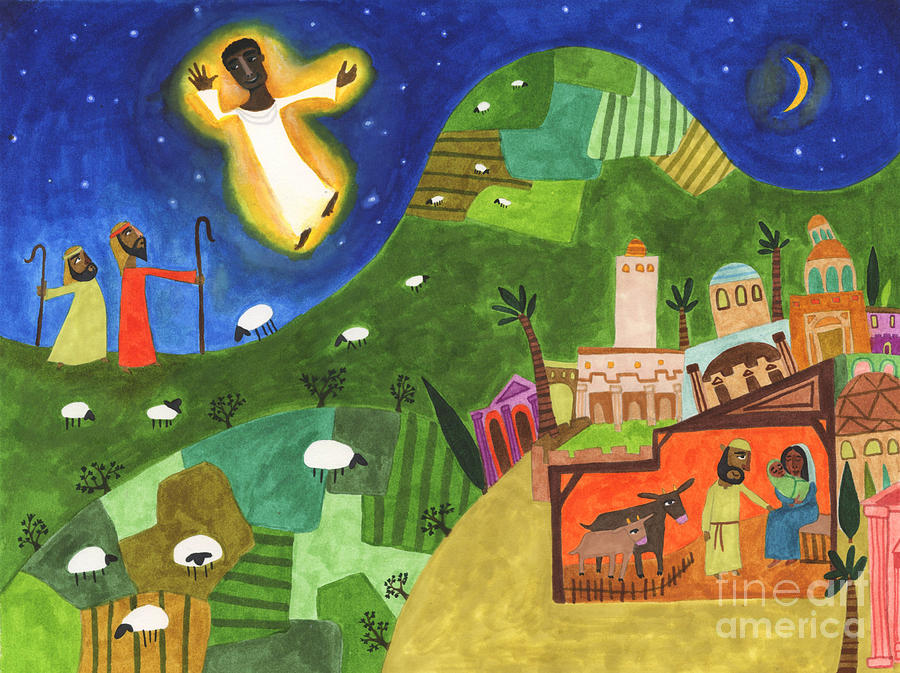
Much debate arises, in some circles, during this time of the year concerning the actual birth date of Christ. While the traditional date for most of the world is observed on December 25, many are adament that this is erroenous, perhaps even heretical. Many of the most passionate insist that Jesus’ birth must have been sometime in the Spring, and that the December date is little more than a co-opting of a pagan holiday, Saturnalia.
I am not sure the actual date matters. It seems to me that if the Lord wanted us to know, he would have made it abundantly clear in his Word – just as he did for various other occasions that were to be observed. That said, I appreciate the musings of 19th century historian Alfred Edersheim on this subject. In his monumental work, Life & Times of Jesus the Messiah (which has pretty much been the standard on the life of Christ since its publication in 1883) Edersheim makes a pretty good case for the traditional December date.
Here is the pertinent excerpt from Life & Times, Appendix VII: On the Date of the Nativity of Our Lord, slightly edited to contemporaize some of the language:
So much has been written on this subject, and such accord exists regarding the general question, that only the briefest statement seems required in this place. More space should be reserved for subjects which have either not been treated by previous writers, or that offer some manner or form that makes a fresh investigation desirable.
At the outset it must be admitted, that absolute certainty is impossible to determine as to the exact date of Christ’s Nativity – the precise year, and even more so the month and the day.
But in regard to the year, we do possess such data as to invest it with such probability, it almost amounts to certainty.
1. The first and most certain date is that of the death of Herod the Great.
Our Lord was born before the death of Herod, and, as we judge from the Gospel-history, very shortly before that event.
Now the year of Herod’s death has been ascertained with, we may say, absolute certainty, to have been shortly before the Passover of the year 750 A.U.C., – which corresponds to about the 12th of April of the year 4 before Christ, according to our common reckoning. More particularly, shortly before the death of Herod there was a lunar eclipse, which, it is astronomically ascertained, occurred on the night from the 12th to the 13th of March in the year 4 b.c. Thus the death of Herod must have taken place between the 12th of March and the 12th of April – or, say, about the end of March.
Again, the Gospel-history necessitates an interval of, at the least, seven or eight weeks before that date for the birth of Christ. (We have to insert the purification of the Virgin, at the earliest, six weeks after the Birth; The Visit of the Magi; and the murder of the children at Bethlehem; and, at any rate, some days more before the death of Herod.) Thus the Birth of Christ could not have possibly occurred after the beginning of February 4 b.c., and most likely several weeks earlier.
This brings us close to the ecclesiastical date, the 25th of December, in confirmation of which we refer to what has already been stated in Book II, Chapter 6 (of Life & Times; see especially note 955).
At any rate, the often repeated, but very superficial objection, as to the impossibility of shepherds tending flocks out in the open during that season of the year, must now be dismissed as utterly untenable, not only for the reasons stated in Book II, Chapter 6, but even for this: that if the question is to be decided on the ground of rain-fall, the probabilities are in favor of a December date as compared with a February date – later than which it is impossible to place the birth of Christ.
2. No certain inference can, of course, be drawn from the appearance of ‘the star’ that guided the Magi.
This, and the grounds of our investigations, have pointed to a confirmation of the date of the Nativity, as given above, to have likely been in December. This has been fully explained in Book II, Chapter 8, paragraph 11
3. On the taxing of Cyrinius, see Book II, Chapter 6, paragraphs 4 & 5
4. The next historical datum furnished by the Gospels is that of the beginning of St. John the Baptist’s ministry, which, according to St. Luke, was in the fifteenth year of Tiberius, and when Jesus was ‘about thirty years old’. (Luke 3.23) The account of this with our reckoning with the date of the Nativity has been shown in Book II, Chapter 11, paragraphs 14-15.
5. A similar conclusion would be reached by following the somewhat vague and general indication furnished in John 2.20.
6. Lastly, we reach the same goal if we follow the historically somewhat uncertain guidance of the date of the Birth of John the Baptist.
Luke 1.5 tells us that that the annunication of John’s coming birth occured while his father, Zacharias, officiated in the Temple during ‘the Course (or Division) of Abijah’. (see Book II, Chapter 3, paragraph 4)
Josephus tells us that at the time of the destruction of the Temple, ‘the Course (or Division) of Jehoiarib,’ which was the first of the priestly courses/divisions, was on duty. That was on the 9-10 a.b of the year 823 A.U.C., or the 5th August of the year 70 a.d. of our era. If this calculation is correct (of which, however, we cannot feel quite sure), then by counting ‘the courses’/divisions of priests backwards, the Course of Abijah would, in the year 748 A.U.C. (the year before the birth of Christ) have been on duty from the 2nd to the 9th of October. This also would place the birth of Christ in the end of December of the following year (749 a.u.c), taking the expression ‘sixth month’ in Luke 1.26, 36, in the sense of the running month (i.e. from the 5th to the 6th month, Luke 1.24).
But we repeat that absolute reliance cannot be placed on such calculations, at least so far as regards month and day.
Again, while perhaps the actual date of Jesus’ birth is not essential to our faith, Edersheim gives us something to think about.
Famous and Forgotten

On the Plains of Shinar, according to Genesis 11, the people verbalized both their plan and the motivation driving it:
“Come, let us build ourselves a city and a tower with its top in the heavens, and let us make a name for ourselves..” (v. 4)
It was a quest for fame that compelled them to action. Unfortunately for them, they soon reaped the consequences of their vanity, and in a sad ironic way they reached their goal of lasting notoriety. They aspired to fame; they achieved infamy.
I am breaking no new ground when I suggest that our present culture – perhaps especially our youth culture – may benefit from some reflection about aspiring to fame. While there is nothing inherently wrong with fame, it has been said that fame used to be a by-product of success or achievement, or of some tremendous virtue; but in our media crazy world fame has seemingly become a virtue of it’s own. There is perhaps no better illustration than the proliferation of Reality TV, and the – which has fastly made famous many with no apparent talents, and many with no apparent virtues.
The Wall Street Journal recently offered an interesting reflection on the fleetingness of fame: Famous Today, Forgotten Tomorrow. In this cultural commentary the author recounts the astronomical statures of Bing Crosby, Bob Hope, among others, and how each is all but forgotten – virtually unknown to this present generation.
It got me thinking.
While Proverbs 22.1 tells us: “A good name is to be chosen rather than great riches…”, a good name does not necessarily mean a known name. A good name is one that is respected by all who know it – or rather, appreciated by all who know the person who wears the name. Just as fame used to be, a good name is inseparably linked to one’s virtues. And gaining a good name, not a known name, is a noble ambition.
Good News From the Front in the War on Christmas
With all the War on Christmas rhetoric that has seemingly spewed these past few years, LifeWay Research has some good news from the front lines. While I am not certain any full fledged war has actually existed, it seems there have certainly been a variety of insurgences erupting. Such things have probably almost always existed but, as the culture wars rage, reporting of instances opposing Christmas – some quite ludicrous – seemed more numerous than ever. But now a recent study offers some calm.
LifeWay Research data now shows that most Americans favor more traditional expressions of Christmas, and want more emphasis on Jesus during this season of the year. In fact, even most of those with no faith affiliations, dubbed by some as the “Nones”, say they have no problems with expressions celebrating Christ.
Over on his blog at Christianity Today, The Exchange, Ed Stetzer analyzes the research data, and provides a link to the downloadable research report. Click: Americans Want to Keep Christ in Christmas.
Advent Conspiracy
Advent Conspiracy is designed to remind us of what really matters during this Christmas season. While there is nothing inherently wrong with our traditions of gift giving and celebration, consumeristic forces are constantly at work, eroding our connection with the reason we celebrate. What is helpful to remember is that Christ Jesus came into the world to redeem sinners, to set free those captive to their sin and their situations. And he has commissioned his followers to be his agents to continue what he began – in the power of his Spirit. Consider how you can make a difference in some small way.
A Christmas Reflection: Allowing God to Work in Us
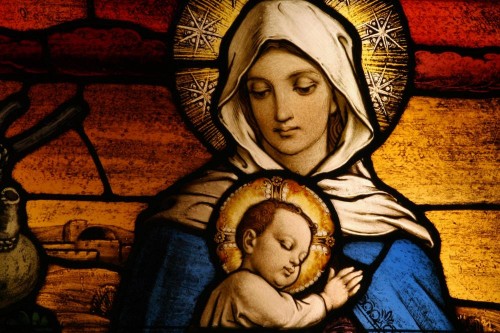
Consider Mary’s response to the angel. The angel has come to Mary and says: “Mary, you are going to give birth to the long-promised Messiah.”
This was a unique promise, and unrepeatable. There is something totally unique here: the birth of the eternal second Person of the Trinity into this world.
What was her response?
- She could have rejected the idea and said: “I do not want it: I want to withdraw; I want to run…”
- She could have said: “I now have the promises, so I will exert my force, my character, and my energy, to bring forth the promised thing.”
But what she did say is beautiful, it is wonderful. She says:
“Behold, the bondmaid of the Lord; be it unto me according to thy Word.” – Luke 1.38
There is an active passivity here. She took her own body, by choice, and put it into the hands of God to do the thing that he said he would do, and Jesus was born. She gave herself to God…
This is a beautiful, exciting, personal expression of a relationship between a finite person and the God she loves.
~ Francis Schaeffer, from True Spirituality
For All Life’s Moment
This touching video evokes bitter-sweet thoughts for me. As a cancer survivor, it gives me reason for great thankfulness. Yet it is a reminder of my personal frailty, and that I am not promised tomorrow. (Proverbs 27.1)
I am reminded of how young my own sons were when I was diagnosed – my daughter even younger. I remember the thoughts during the first moments I was alone, all the ways I had failed them; all that I wanted to share with them – if only given the opportunity of time. I am thankful my sons and daughters have grown, that all of them have given me cause for joy and pride, and that I have been here to see it.
I am reminded of the importance of priorities – putting first things first. I continue to fail with this, as all too often I put my own comfort and preferences first. Yet given each new day, I am also given an opportunity to live out my priorities.
I cannot help but to think of Solomon’s plea:
“My son, do not forget my teaching, but let your heart keep my commandments, for length of days and years of life and peace they will add to you.” (Proverbs 3.1-2)
I cannot help but hope in Solomon’s promise:
“And now, O sons, listen to me: blessed are those who keep my ways. Hear instruction and be wise, and do not neglect it. Blessed is the one who listens to me, watching daily at my gates, waiting beside my doors. For whoever finds me finds life and obtains favor from the Lord, but he who fails to find me injures himself; all who hate me love death.” (Proverbs 8.32-36)
For these are not only the words of wisdom I have wanted to impart to my sons (and daughter), they are the words of my heavenly Father to me.
Birdwatching: Medicine for My Soul

I love this perspective from Paul Tripp:
“When you are struglling with anxiety, look at creation. Embedded in the physical world are constant reminders that God does not abandon the work of his hands.”
Tripp appropriately spiritualizes something that I have experienced but had never really contemplated sufficiently. My tendency has long been to retreat into creation – whether it be the mountains of Tennessee, or the forests and river beaches here in Hampton Roads, or wherever – just to regain a sense of peace. I am reminded of God’s greatness and presence in such places. And while I have long understood, advocated, and preached that standing on a mountain top or on the ocean shores can offer a sense of God’s awesomeness and beauty, I don’t know that I have really given adequate thought to the the practical theological principle behind the practice that relieves angst.
I am reminded of Jesus’ counsel in Matthew 6:
“Therefore I tell you, do not be anxious about your life, what you will eat or what you will drink, nor about your body, what you will put on. Is not life more than food, and the body more than clothing? Look at the birds of the air: they neither sow nor reap nor gather into barns, and yet your heavenly Father feeds them. Are you not of more value than they? And which of you by being anxious can add a single hour to his span of life? And why are you anxious about clothing? Consider the lilies of the field, how they grow: they neither toil nor spin, yet I tell you, even Solomon in all his glory was not arrayed like one of these. But if God so clothes the grass of the field, which today is alive and tomorrow is thrown into the oven, will he not much more clothe you,O you of little faith? Therefore do not be anxious, saying, ‘What shall we eat?’ or ‘What shall we drink?’ or ‘What shall we wear?’ For the Gentiles seek after all these things, and your heavenly Father knows that you need them all.
As Tripp suggested: “Bird watching is good for the soul.”
Despite what relatively little knowledge I have about ornithology, I now see how beneficial it can be to periodically spend some time quietly watching the birds go about their business and their play. Not only does it provide for tranquill moments, bird watching offers a much needed and refreshing reminder: If birds live stress free lives, how much more should I. For while the birds were created to bring pleasure to the Creator, I am one made after the image of God; and as a consequence of the union I have with Jesus, through faith in his redeemeing work, I am one who is (admittedly undeservedly) among those who are the objects of the Father’s affection. If God loves the birds, how much more those who are in Christ – even me!
Seed of the Word in the Soil of the Heart

“Truly, the Bible as the Word of God has an inherent power, but it is not a coercive power. That is, the Bible does not work it’s effects mechanically. We don’t change just because we read it. Out minds may be engaged in the text, but something must happen in our hearts as well. In the parable of the Sower (Matthew 13.18-23), the seed does not miraculously and independently transform itself into a flowering plant. The condition of the soil effects how well the seed takes root. Our hearts must be receptive to God’s Word in the same way the soil must be rich and conducive to the development of deep roots and luxurient growth. As Oliver Wendell Holmes once said: ‘What you bring away from the Bible depends to some extent on what you carry to it.'”
Honest Answer to Honest Questions, and Open Dialogue Wherever Possible

Boyce College professor, Denny Burk, has posted an interesting warning about a common tactic employed by some with theological agendas – especially those with liberalizing theological agendas. His post is titled: Should Churches “Dialogue” About Sexuality?
Having read through it a couple of times I find myself appreciating Burk’s concern. Burk notes that many a subtle debate may begin with a seemingly reasonable appeal:
“…with the liberals calling for more dialogue about the issue.”
Then, citing conservative writer Rod Dreher:
Ah, the old “conversation starter” or “dialogue” trick. Any time you see a progressive member of your church try this, you must understand that this is the wedge that they will use to pry the orthodox out. The “conversation” will be one-sided, and will not end until the orthodox have surrendered or left, because the progressives will never, ever take “no” for an answer.
While I am not one who is overly concerned about debate, or about being drawn into compromised theology, I have seen this tactic employed. (For the sake of fairness, I must admit that I have seen the technique attempted by both those on the theological left, and by some on the far right. It just seems that those on the far right are more likely to quckly show their hand, their agenda.) So I agree with Burk, we need to be mindful of this, and encourage the people in our churches– or at least our church leaders – to be mindful of this ploy.
However, what Burk is addressing is not the biggest challenge to the church I serve. Our congregation is pretty well rooted in sound theology and conservatism. (NOTE: These are not always the same thing, especially when the conservatism is more political than theological.) For most of our members it is not difficult to get them to accept the authority of God’s Word on any particular subject. Our commitment to deep, rich, historic, orthodoxy is one of the primary reasons they are part of the church. And while we have many who are doing inspiring works throughout our community, it is far more a concern whether we can get some of the others to love and engage their neighbors – most of whom are likely to differ with us on any number of social issues – than it is whether they will be susceptible to trendy Spirits of the Age.
So while I appreciate Burk’s wisdom, I believe we also need to prepare people to “dialogue”.
Dialogue is how we engage people, without requiring that they agree with us as a precondition of being welcome in our church or wanted as a friend. Dialogue is one way we are able to express and cultivate love for our neighbors. Dialogue may be the only way for some to hear what God has to say about a particular subject, as we appropriately bring our understanding of the Word into the conversations. Dialogue about issues in which we (at least) initially differ may be the means by which some hear the gospel for the first time – as the gospel does apply in some manner to all matters.
No doubt some readers will be uncomfortable with my call to dialogue with unbelievers and with theological compromisers (- which usually qualifies them as unbelievers). But I am convinced that somewhere, somehow, we need to cultivate environments that encourage dialogue – and we must do this for the sake of the gospel.
I don’t feel alone in this thought. It is what Francis Schaeffer called for a couple generations ago. In his Two Contents, Two Realities, the second content was: Honest Answers to Honest Questions.
I agree that we must be wise, and that there are times when conversation should be cut off – such as when it is apparent that the “dialogue” is not honest but rather a cloak over a subversive agenda. This is what Burk has in view, and so it is why I appreciate his thoughts. But, just so there is no mistaking Burk’s counsel as an invitation for Evangelicals to hide out in the fortress of the church, I also feel compelled to contend for genuine dialogue, since it is the only way we will have opportunity to hear Honest Questions from our culture to which we may offer Honest Answers from God’s Word.
Grace & Peace: The Song
This song from Sovereign Grace Music, that shares the same title as this blog, is a three verse meditation on Romans 1.7:
Verse 1
Grace and peace, oh how can this be / For lawbreakers and thieves / For the worthless, the least / You have said, that our judgment is death / For all eternity / Without hope, without rest / Oh, what an amazing mystery / What an amazing mystery/ That Your grace has come to me
Verse 2
Grace and peace, oh how can this be / The matchless King of all / Paid the blood price for me / Slaughtered lamb, what atonement You bring! / The vilest sinner’s heart / Can be cleansed, can be free / Oh, what an amazing mystery / What an amazing mystery / That Your grace has come to me
Verse 3
Grace and peace, oh how can this be / Let songs of gratefulness / Ever rise, never cease / Loved by God and called as a saint / My heart is satisfied / In the riches of Christ / Oh, what an amazing mystery / What an amazing mystery / That Your grace has come to me
TAG
Oh, what an amazing love I see / What an amazing love I see / That Your grace has come to me / Oh, what an amazing love I see / What an amazing love I see / That Your grace has come to me
© 2013 Sovereign Grace Worship
More Than Numbers

Here is a needed reminder:
I’m not so sure God cares how big your church is. Seriously. If your numbers aren’t “growing,” so what? I’m also not sure that the sign of a vibrant healthy church is ever-increasing growth, significant growth. It seems to me that the sign of a vibrant, healthy fully alive church is one where God’s people are growing in love, knowledge, and insight, not numbers. I’d rather be in a church like this than a church that is “growing” with greater numbers of people with shallow faiths who do not love well.
Where did Paul ever rebuke a church because their numbers were not growing by some set of hoped for percentage points?
Great point. I would add: Or Jesus, in his Letters to the 7 Churches in Revelation 2-3…
I get the church growth rationale. And I agree with some of the foundations of it, at least as it was originally developed as a mission strategy. But the American obsession with Bigger is Better has distorted much – maybe most – of the good that the original proponents of church growth may have intended. Many of us have misapplied the whole concept of growth and mistaken it as the measuring stick for God’s blessing. Size of a congregation is about as good of an indicator of being blessed by God, as is wealth an indicator of worth; or better still, as height an indicator of greatness. (In other words, not a valid standard at all.) Consequently, faithfulness and substance is often subverted by gimmicks and pragmatism. Whatever works to get them in… right?
Years ago, while I was servivng a fast growing congregation (that a year later showed the evidence of serious fractures), a good and gifted friend was “languishing” in a church that could not quite break the 100 barrier – even on Easter. He was discouraged – to put it mildly. To encourage him, I offered a parallel thought. Knowing of a huge community college in his city, I asked about the number of students who attended the school. He said he estimated 50,000 – 60,000 students. So I observed that the school must be some impressive, prestigious place. After all Harvard has only 6000 or so students. The guy who is president of that community college must be thought of as having had 10 times the success as the guy who can’t lead a school any larger than Harvard!
He got the my point of my sarcasm. It is a ridiculous analogy to compare a community college with a school with the history, the resources, and he selectivity of a Harvard. Size is no indication of anything. And neither is size any measure of a church.
To read the whole short post I quoted at the top, click: A Healthy Vibrant Church May Never Be Big
Marriage According to the Bible

by Ray Ortland
Therefore a man shall leave his father and his mother and hold fast to his wife, and they shall become one flesh. Genesis 2:24
It is not true that the Bible teaches multiple views of marriage, and therefore the Bible’s clarity is diminished on this question. The Bible does record, for example, that “Lamech took two wives” (Genesis 4:19). But the Bible is not thereby endorsing polygamy, but indeed is casting doubt on polygamy. The role of Lamech in the text is to show “a progressive hardening in sin” (Waltke, Genesis, page 100). We invented polygamy, along with other social evils. But God gave us marriage.
The Bible defines marriage in Genesis 2:24, quoted above. Here is what this very significant verse is saying:
Therefore. This word signals that Moses is adding an aside to his narrative. It’s as if we are sitting in Moses’ living room, watching his DVD of the creation of the universe (Genesis 1) and of man and woman (Genesis 2). At this point he hits the pause button on the remote, the screen freezes, he turns to us post-fall people watching these amazing events and he says, “Now let me explain how what God did so long ago is normative for us today. Amazingly, we still retain something beautiful from the Garden of Eden.”
A man shall leave his father and his mother. In a culture of strong bonds between the generations, this is striking. A man’s primary human relationship is no longer with his parents or ancestors. He breaks away from them for the sake of a more profound loyalty.
And hold fast to his wife. A man, in marrying, enfolds his wife into his heart. He rejoices to identify with her: “This at last is bone of my bones and flesh of my flesh” (verse 23). At every level of his being, he becomes wholeheartedly devoted to her, as to no other.
And they shall become one flesh. “One flesh” is essential to the biblical view of marriage. It means, one mortal life fully shared. Two selfish me’s start learning to think like one unified us, sharing one everything: one life, one reputation, one bed, one suffering, one budget, one family, one mission, and so forth. No barriers. No hiding. No aloofness. Now total openness with total sharing and total solidarity, until death parts them. Moreover, Jesus explained that, behind the word “become,” God is there: “What therefore God has joined together . . .” (Matthew 19:6). Marriage is not a product of human social evolution. Marriage came down from God. And he defined it for us. He has the right to. It belongs to him.
One mortal life fully shared between a man and a woman — this is marriage, according to the Bible, because Genesis 2:24 is not a throw-away line. Its very purpose is to define.
What’s more, the apostle Paul quotes Genesis 2:24 to take our understanding a step further — an amazing step: “We are members of [Christ’s] body. ‘Therefore a man shall leave his father and mother and hold fast to his wife, and the two shall become one flesh’” (Ephesians 5:30-31). Did you notice his logic? “We are members of Christ’s body. He loved us. He chose us. He gave himself up for us. He embraced us. He is with us. He will present us someday in splendor. All of this glory is ours, because we are united with him now and forever. Therefore, this is why, our union with Christ is the reason why, a man and women get married and live united as ‘one flesh.’ Human marriages are miniature social platforms on which the gospel is to be displayed.”
Marriage is a gospel issue. That is the ultimate reason why clarity about its definition matters. People who depart from, or fail to stand up for, the biblical view of marriage are taking a step away from the gospel itself. The whole Bible is the story of the marital love of God, as I demonstrate in this book. Our whole lives are that story, if we have eyes to see.
Marriage is more than human romance, wonderful as that is. Marriage is the display of Christ and his Bride in love together. A beautiful, tender, thriving, Ephesians 5-kind of marriage makes the gospel visible on earth, bringing hope to people who have given up believing there could be any love anywhere for them. That is why biblical marriage deserves our courageous loyalty today. And that is why, in our increasingly secular times, biblical marriage is under pressure. Its true meaning is understood and embodied and sustained only by the power of the gospel.
We can’t turn the clock back to the days of the Christian social consensus the West has foolishly thrown away. But we who say we believe the gospel can and must stand up for the biblical definition of marriage. We must cultivate beautiful marriages ourselves. We must suffer social rejection bravely. We must pray for revival. We must wait for the inevitable collapse of every false view of marriage. We must lovingly serve all who suffer for their foolish attempts at false “marriages.” And we must go to church this Sunday and worship the living God with all our hearts, so that we ourselves are sustained for faithfulness over the long haul, because this isn’t going to be easy.
***
Read more from Ray Ortland’s excellent blog: Christ is Deeper Still
Heaven is for Real… But What About Near-Death Experience Claims?

Debuting this weekend in theaters across the USA is a heart tugging film, Heaven is For Real. Based on the book of the same title, the story is about a young boy who ostensibly died and revived. In between his death and his resuscitation he made a brief stop-over in heaven. At least that’s the story. In the story, as I understand (having not read the book), the “risen” boy gains inexplicable knowledge, compelling his skeptical family of the genuineness of his experience, and thus the reality of heaven.
This is just one of scores of such books – people claiming to have “seen the light”, then returning to this present life. Perhaps most well known, at least before this weekend, is Don Piper’s 90 Minutes in Heaven. (Though I wonder how many people who bought his book mistakenly thought it had been penned by JOHN Piper.)
I suppose the intrigue with such books is understandable. People are looking for hope and assurance. And what better way to learn about heaven than to hear testimonials of those who have ostensibly been there?
And I get why the release of a film like Heaven is For Real would be scheduled for Easter weekend. Easter is a day associated with religious hope, resurrection, etc. So a film like this, especially in a widely biblically illiterate culture, tugs the heart strings while feeding religious (and superstitious) hunger pangs. I suspect that the film will widen the belief in – or at least interest in – many such claims to these experiences.
But what should a Christian think about such claims?
While I cannot claim definitive expertise on this subject, I have some significant qualms about claims to near-death experiences. For one reason, it seems to me that “near-death” is like “near pregnant” – either one is, or is not. I get that some flat-line and then resuscitate. But is that actual death? Second, the claims I have heard regarding this experience are dubious. For instance, I have read that in the case of the Heaven Is For Real kid, that there is no record of him having coded… My greatest skepticism is because few (if any) of those who claim to have gone to heaven for a time make any mention of necessity of Jesus for access. While this may not be troubling for non-Christians, the Believer must reconcile these claims to what Jesus taught us in such passages as John 14.6.
Scripture is largely silent about this subject. In fact, when I think about it, I find it interesting God did not include a testimony from Lazarus about his experience or the reality of heaven anywhere in the New Testament. Perhaps that is because there are things about heaven that are intended to remain a mystery to us for a time.
In a recent podcast, John Piper does discuss this subject. In short, Piper says: “If books go beyond scripture, I doubt what they say…” But take a moment to listen to what Piper has to say: Heaven Is For Real
 GRACE & PEACE