Maundy Thursday Matters

help-me

Today is Maundy Thursday.  It is a special day on the Christian calendar. But many Christians don’t know what maundy means. I imagine for some this day could easily fall just after Manic Monday, Ruby Tuesday… You get the idea. So if the term Maundy Thursday sounds foreign to you, relax, you are far from alone. 

The term Maundy is generally held to be derived through Middle English and old French, mande’; which comes from the Latin mandatum, meaning mandate or command.  This is the first word of the Latin phrase:

Mandatum novum do vobis ut diligatis invicem sicut dilexi vos.”

Or more familiar:

“A new command I give to you: Love one another.  As I have loved you so you must love one another.” (John 13.34)

This is a special day in the life of Christ’s People. It is a day when we remember that Jesus has commissioned us, not only to believe the Gospel of his life which was to be – and has been – given for the redemption of all who believe, but to live out the Gospel in relation to one another.  We are to love one another in the same tangible way, and to the same extent, as Jesus has loved us. 

This is what Jesus commanded of his believers only hours before he willingly gave his life for ours. (John 15.12-14)

Worldliness in Prespective

worldliness1

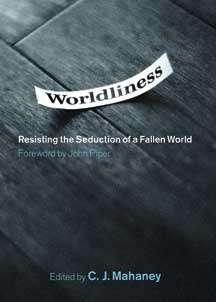
I recently finished reading the short book Worldliness, edited by C.J. Mahaney.  Each chapter is written by different men from the Sovereign Grace family.  I found it very insightful and practical. 

I appreciate that the writers did not merely resort to the worn out separatist “Us vs. The World” rhetoric.  Instead they wrestled intelligently, theologically, and bibilcally about the pertinent questions: What does worldliness actually mean?  What actual problems does worldliness pose?  Only once those questions are amply answered do the writers delve into practical applications in the various spheres of our culture.

I had given some thought to blogging about the book.  Already in previous posts I have elaborated on some of the insights I have gained.  But then on Crossway.blog I have found that Jonathan Leeman of 9 Marks has shared some highlights from each chapter.  Leeman has done such a good job that it made my intentions unnecessary.  I will still likely interact and expound upon some other insights in future posts, but for a good introduction to and overview of the book I encourage you to check out what Leeman has written.  Click: Worldliness

But don’t neglect the book. It is short, but beneficial. I’ve added it to my ‘must read’ list.

Cats & Dogs and God’s Global Glory

First among the Core Values at Walnut Hill Church is God’s Global Glory.  This is the recognition that we do not exist, as a church or as individuals, primarily for ourselves, but for God and for his glory. 

Expressing this as a platitude is one thing.  Getting newcomers to agree with this premise is something else. And getting people to embrace it as an actual value that is lived out in their lives, and in the life of our church, is something else altogether. 

How do we get people to reorient their thinking and make corresponding changes in their lives?  That’s the question the leaders of the church have to wrestle with. Making it all the more difficult is our own inconsistency.  We are the living embodiment of the words from the old hymn: “Prone to wander, Lord, I feel it… Prone to leave the God I love…”  And so are the people we are called to lead. (And, most likely, so are you.)

One of the most effetive tools I am aware of regarding the teaching of this value is Cat & Dog Theology developed by UnveilinGlory.  (See video above.)

I introduced Cat & Dog Theology to our church about a year ago, at our first missions conference at Walnut Hill.  We had Gerald Robison, vice president of UnveilinGlory as the keynote speaker.  From time to time church members still talk about both the conference and, more importantly, what they learned through the messages. 

But how do we build on that?

UnvelinGlory has now developed a series of web-based instructional videos that makes Cat & Dog Theology, along with other resources, available online.  So far I’ve only had opportunity glance through a few of the videos, but it looks promising.  Each of the videos is relatively short – 20 minutes, more or less.  But the videos I’ve seen contain both the substance and style that makes the seminar interesting and instructive. 

I encourage you to check out: Our Journey With Him

While there is an opportunity to sign up for a Premium membership, all the videos are available for free if you sign in as a guest.

Natural Evangelism

7608292-lg2

My old friend, and one-time-mentor, Doug Pollock is releasing a new book, expected to be on the bookstore shelves in June.

Doug has travelled the world sharing his faith, and has studied evangelism for the better part of two decades now. He’s also penned a number of articles and co-authored other helpful books about evangelism. But as I read the first chapter of the pre-published manuscript I find myself eagerly awaiting this latest work.

As an old friend it has been interesting, and encouraging, to see how Doug’s understanding and perspective have changed and grown through the years.  Doug’s outward focus has always been keen, but I have appreciated how his upward focus has continually grown.  Doug’s love for our Lord is glaringly obvious.  And because of his love for God, Doug’s love for people is equally obvious.  And that is the key.

It has been said that there are two motives for evangelism: One is “I’m right, you’re wrong.”  The second is “I love you.”  Doug’s latest work exudes the latter motive.  And he does so because it is also Jesus’ motive.

The following is an excerpt of the first chapter of Doug’s upcoming book: God Space: Where Spiritual Conversations Happen Naturally.  This excerpt appeared in his most recent newsletter, which I received this afternoon.  His 10 Questions are worth pondering.  And you can score yourself at the end.

***

Jesus was called many things during his short time here on earth.  My favorite title for him is found in Matthew 11.19 and Luke 7.34 where Jesus acknowledges his awareness of the fact that many were calling him “a friend of sinners”.  In my mind, no title gets at the heart of why Jesus came to earth more than this one.  It so closely coincides with his mission stated in Luke 19.10: “For the Son of Man came to seek and to save what was lost.”

If we are going to make God’s “invisible” kingdom become visible, then Christ’s heart needs to be formed in us.  Prayerfully ponder the following questions. Grade yourself by using the following scale for each question. Jot down a number at the end of each question. When you have finished, add your numbers together to assess where you are in your spiritual journey.

1     2     3     4     5     6     7     8     9     10

 Never              Sometimes              Always

1. Can you overlook ungodly attitudes and lifestyles in your efforts to connect with others?

2. Are you able to suspend your judgment for long periods of time around not-yet Christians?

3. Do you consistently seek to understand the not-yet Christians you know before seeking to be understood by them?

4. Are you patient enough to wait for the not-yet Christians in your life to ask for your opinions?

5. Be honest: Do you like people who are far from God?

6. Do people who are far from God like you?  For example: Are you invited to ‘party parties’?  (Jesus was!)

7. Does your body language communicate an open-hearted acceptance toward the not-yet Christians in your life?

8. Are you able to communicate acceptance to not-yet Christians without endorsing their lifestyle?

9. In your relationships with not-yet Christians, do you typcially offer kindness rather than ‘rightness’?

10. Is your heart consistently broken and filled with compassion for the not-yet Christians in your life?

90-100 – Congratulations! You might be frequently misunderstood by Christians, but the not-yet Christians in your life are undoubtedly drawn toward the heart of Jesus formed in you. Keep walking in this light.

50-90 – You must decrease and Jesus must increase, one heart attitude at a time. Embrace the people and the situations in your life as God attempts to prune those heart attitudes that are not bearng fruit for the Kingdom.

Under 50 – Perhaps Jesus needs to do something in you before He can do something through you.  You may want to consider asking God to do the soul surgery needed to form the heart of Jesus in you.

To read the entire first chapter click: God Space, then click the picture.

Looking at Lent With a New Lense

calendar

My friend Nathan Lewis has published a post that I think would be beneficial for some who do not come from a church background that observes the litugical calendar.  

One of the primary emphases of the Season of Lent is repentace.  On the ecclesiastical calendar it is a time when Christians are encouraged to fast, sacrifice, and to recognize how easily we are prone to become dependent upon things rather than on God.  It is intended to be a time of reflection and renewed commitment to dependence upon the Lord.  But in non-litugical circles Lent is ignored, if not even scoffed about.  Contemporary Evangelicals often point to the deadness of ritualistic practice, and  eschew it altogether.

I am not part of a litugical tradition. Nor am I necessarily encouraging anyone to embrace litugical practices. (Though I recognize the substance and number of posts this week might give some a reason to question that assertion.)  But I do wonder if there might be some benefits “normal” Believers might be able to glean from our litugical side of the Family of God.  Maybe there are some things that we can consider that would break us out of our own dull routines.  It seems possible that we may be able to engage in some practices without them inherently leading to ritualistic deadness.

That’s the idea Nathan takes on in his post. He poses the question: “I can repent 365 days a year, so who needs Lent?” Then he wrestles with some of the common objections to Lent, and offers some insights about how we might benefit from a different kind of reflection during these next several weeks.

To read Nathan’s post click: Lent 2009.

Grace of Repentance


Today is Ash Wednesday. That does not mean much to many in my theological circles.  But for many other Christians it is a day that launches the Season leading to Easter – the Season of Lent.  This day is designated Ash Wednesday because of an ancient practice of marking believers with ashes as a symbol of repentance. 

Hopefully it is more than symblolic, but is also a reminder that, as Martin Luther said, “When Christ said ‘Repent’ he called for the entire lives of Believers to be lived out in repentance.” 

Repentance is a lost art.  Repentance is also a neglected practice.  I suspect that many assume repentance is someting to be avoided; that repentance is what we must do if we have sinned; but if we can avoid sin we have no need of repentance. 

Seems logical. Except it mischaracterizes the nature of sin.  Sin is not what we do, sin is the condition we have, whether we are aware of it or not.  I find helpful the old saying: “We are not sinners because we sin. We sin because we are sinners.”  Thus, as Luther suggested, the necessity of life lived out in repentance. 

Perhaps a better way of putting it might be that our lives should include repentance.  I say that because repentance never stands alone. Repentance should always accompany Faith; and Faith should always accompany Repentance.  They are two sides of the same coin of Gospel Christianity.

I like the way the old Puritan Thomas Watson says it:

“Faith and Repentance are the two wings by which we fly toward heaven.” 

I love the imagery. It shows us that our salvation involves not only our conversions (which, by the way, requires both Faith & Repentance), but is a sanctifying journey which requires us to grow in our awarenss of both our ungodliness and the greatness of the Gospel.  To have one wing longer than the other; or worse, to have only one wing, would be disastrous.  Try it for yourself.  Try flying one of those balsa wood planes, with one wing longer than the other and see how it flies.  But this is life without both Faith & Repentance.

Three books I have found helpful in shaping my understanding and appreciation of the need of ongoing repentance:

Repentance & 21st Century Man by C. John Miller

The Doctrine of Repentance by Thomas Watson

Repentance: The First Word of the Gospel by Richard Owen Roberts

Sticks, Stones & Words

Paul Tripp, in this video, offers an interesting, and important, perspective about a problem that has recently effected our youth group and our home: the use of words, or the appropriate use of words.

What makes some words acceptable and others “bad”?

Tripp offers three distinctions:

1. Some words are condemning and judgmental.  The use of these words, intentionally or unthinkingly, is always wrong.

2.  Some words are sexually graphic or explicit. These words can bring to mind things that should not be brought into a given situation. Further, the use of these words tend toward the devaluation and distortion of God’s gift of sex.

3. Some words are simply culturally impolite.

Most helpful, I think, is Tripp’s positive assertion about the use of language.  Tripp states that the purpose of words are…

To give grace to the hearer.”

Two final notes:

1. This clip is an exerpt of the topic Tripp deals with at great length in his book War of Words.

2. My thanks to my friend Seaton Garrett for introducing this video to me.  Check out Seaton’s comments about it on his blog: Are We There Yet?

Faithfulness vs. Floating Along

Here is a helpful insight from D.A. Carson, in his book For the Love of God, that reminds us that while, as  Christians, we are Justified and freely forgiven by God through Faith alone in Christ alone, we grow in Spiritual maturity by God’s grace AND our diligent faithfulness:

People do not drift toward holiness. Apart from grace-driven effort, people do not gravitate toward godliness, prayer, obedience to Scripture, faith, and delight in the Lord.  We drift toward compromise and call it tolerance; we drift toward disobedience and call it freedom; we drift toward superstition and call it faith. We cherish the indiscipline of lost self-control and call it relaxation; we slouch toward prayerlessness and delude ourselves into thinking we have escaped legalism; we slide toward godlessness and convince ourselves we have been liberated.

A sobering reminder to avail ourselves in the means of grace.

The Jesus Pledge


cross-in-the-sky1


What does it mean to be a disciple of Christ? What does it mean to be Gospel-driven?  I think my friend, Paul Miller, expresses it beautifully in The Jesus Pledge:

I pledge my life to Jesus and the Gospel.  I want Jesus not to be just part of my life or something that makes me feel good, but to be the very center – controlling everything.  I want only the knowledge of the love of God.  I want to know Christ. 

I want no desire, idol, or sinful way of dealing with hurt to control any part of my life no matter how small.  I put away from myself the love of money, power, comfort, and success.  I count everything rubbish. 

I bind myself to Christ as bond-servant for life.  I want no master other than Christ.  I purpose to own nothing.  I surrender to Jesus my family, my friends, my ministry, my ideas, my possessions, and my future. 

I commit myself to submission to others and a willingness to learn from all kinds of Christians.  I commit myself to speak only your words, not my own.  I commit myself to speak the truth in love to others.

I want to love people.  I want to lay down my life for others, especially those closest to me, as God gives us grace.  I want to love people by telling them about Jesus.

I understand that this will mean suffering in my life, that I will join in the sufferings of Christ.  But that I always want to be dying, so that I can always be living in Christ. 

Hope for Humility

dwarfed-by-mount-robson

I’ve heard Steve Brown offer this amusing anecdote:

“I was given a pin by my club for being the most humble member.  They took it away because I wore it.”

I have much to be humble about.  But, if I was in Steve Brown’s club, no one would have ever given me a pin in the first place.  No one who knows me would consider me a model of humility.  Despite all the reasons I should be, being humble is just not something that comes easily for me. 

I live an irony. I have studied the subject of humility at some depth, especially over the past couple years. Yet I find it all too easy to become proud about what I’ve learned – even as my study reveals what I lack!  Nevertheless, as a work in progress I continue the pursuit that, for me, seems almost an inigma.

Tim Keller tackles the topic of humility in a brief, but insightful, article: Advent of Humility.  In the opening paragraph Keller notes:

When Jesus himself tried to summarize why people should take up the yoke of following him, he said it was because he was meek and humble (Matt. 11:29). Seldom, however, do we explore the full implications of how Jesus’ radical humility shapes the way we live our lives every day.

As Keller explores the importance, the grounds and the necessity of humility, he also observes some of the hindrances.   Interestingly, in the end, Keller points us to the only hope we have of becomming humble, even as he acknowledges that he has no practical solutions for those who, like me, are in desperate need of growing and living in humility.

To read, click: Advent of Humility

Dynamics of the Spiritual Life

Christians who are no longer sure that God loves and accepts them in Jesus, apart from their present spiritual achievements, are subconsciously radically insecure persons – much less secure than non-Christians, because they have too much light to rest easily under the constant bulletins they receive from their Christian environment about the holiness of God and the righteousness they are supposed to have.  Their insecurity shows itself in pride, a fierce defensive assertion of their own righteousness and defensive criticism of others… They cling desperately to legal, pharisaical righteousness, but envy, jealousy and other branches on the tree of sin grow out of their fundamental insecurity…

[I]t is often necessary to convince sinners (even sinful Christians) of the grace and love of God toward them, before we can get them to look at their problems.  Then the vision of grace and the sense of God’s forgiving acceptance may actually cure most of the problems.

This may account for Paul’s frequent fusing of justification and sanctification.  

~ Richard Lovelace, Dynamics of Spiritual Life

Enduring Aroma of the Gospel

painters-cup

People don’t earn God’s approval or receive life and salvation because of anything they’ve done. Rather, the only reason they receive life and salvation is because of God’s kindness through Christ. There is no other way.

Many Christians are tired of hearing this teaching over and over. They think that they learned it all long ago. However, they barely understand how important it really is. If it continues to be taught as truth, the Christian church will remain united and pure — free from decay. This truth alone makes and sustains Christianity. You might hear an immature Christian brag about how well he knows that we receive God’s approval through God’s kindness and not because of anything we do to earn it. But if he goes on to say that this is easy to put into practice, then have no doubt he doesn’t know what he’s talking about, and he probably never will. We can never learn this truth completely or brag that we understand it fully. Learning this truth is an art. We will always remain students of it, and it will always be our teacher.

The people who truly understand that they receive God’s approval by faith and put this into practice don’t brag that they have fully mastered it. Rather, they think of it as a pleasant taste or aroma that they are always pursuing. These people are astonished that they can’t comprehend it as fully as they would like. They hunger and thirst for it. They yearn for it more and more. They never get tired of hearing about this truth.

– Martin Luther

Prerequisites for Effective Prayer

7635039-lg

In order to have an effective prayer life Scripture teaches that there are certain prerequisites.  Among them:

1. Relationship

We must have a relationship with God the Father, which comes only through a relationship with Jesus. (John 14.6)  The preface to the Lord’s Prayer makes a distinction between those who have a right to call God Father and Hypocrites (those who claim the name but have no real interest in or connection with God), and Pagans (those who worship the things of the earth: Nature, self, etc.).  Only those who are Children of God are promised that their prayers will be heard. (See Matthew 6.5-9)

2. Reflection

It is required that we come with some understanding of who God is, and who we are; that God is Holy and Almighty, and we sinners and needy.

3. Righteousness

James 5.16 tells us that the prayers of the righteous are powerful and effective.  There must be some elelment of righteounsess in our lives.

Righteousness defined is: right actions motivated by genuine faith.  Both components are necessary.  Faith comes first, as a gracious gift from God.  It is not something we muster, but receive.  But our faith, if it is genuine, will express itself through outward behaviors.  These behaviors themselves merit us nothing, but are evidences of Faith; they are evidences of a relationship with the Father.

Conclusion

There are requirements in prayer, such as asking, and asking for right things in accordance with God’s Will, and asking with right motives.  But those are not what this post is about.  This post addresses some prerequisites, conditions of our lives enabling us to pray effectively.

The first of these three prerequisites is enduring, it does not change back and forth.  (However, if one does not have a relaionship with God through Jesus, that status can be changed.  But once changed, God does not forget those whom he knows.  John 10.28-29

The last two can change somewhat.  While we are not likely to “un-know” what we know; and once declared righteous by God through faith in Christ (see Galatians 3.6) we do not loose that status, there are actual or functional aspects to both Faith and Righteousness.  Reflection is the exercise of Faith, which like a muscle needs to be used to be strengthened, otherwise it may experience something like atrophy.  Righteousness is the active living out our faith. 

If our prayer lives are dull or ineffective, we would do well to examine if we are negligent in either of these areas.

What About Gay Marriage?

 comet-mcnaught

Anger at the disproportionate number of African Americans who voted for California’s same-sex marriage ban “has been widely noted”, says Jeff Jacoby in the Boston Globe. But “for sheer hatefuless” the “hatemongering” directed against Mormons for pushing the ballot measure can’t be beat.  (See The Week for full article.)

I’ve watched the news with some amazement at the craze taking place in the streets of California.  I have little sympathy for the protesters, at least for the position that is mobilizing them.  But I find myself reacting the the charges they levy: bigotry and fear. 

While concerned about the cultural repercussions if “gay marriage” receives constitutional support, I don’t believe I live in “fear”. In one sense, if this measure passes, some things will become more vividly clear, such as those who are committed to Biblical standards concerning marriage and those who are not.  The words of the Apostle Paul come to mind:

Do everything without complaining or arguing, so that you may become blameless and pure, children of God without fault in a crooked and depraved generation, in which you shine like stars in the universe as you hold out the Word of Life. ” (Philippians 2.14-16

In other words, those who maintain the characteristics of godliness shine like stars against the dark backdrop of the culture.  Therefore, if this measure passes in California, and elsewhere, it is not a cause for fear, necessarily, but an opportunity to shine in contrast. 

However, Paul’s words also cause me a little discomfort. 

First, while faithful believers may stand firm and shine in contrast to darkness in the culture, there are others who share our opposition to same-sex marriages who do not shine in the same way. In fact, some don’t shine at all. They are just what they are accused of being: bigoted and fearful.  I’m not sure that the differences of standards behind the sharing of  moral/political positions are always so obvious to those who hold the opposing view.  How, then, can we stand out like stars shining in the darkness, when some who stand with us are only a different shade of darkness from the culture they oppose? 

I’m sure that this difference is all the more distorted because many of us who are driven by Biblical standards are also tainted, to some degree or another, with the sins of bigotry and fear.  Our righteous motives are blended with unrighteous, sometimes even without our being conscious of the mixture.  To whatever extent this is true, the shine on our star is dimmed, at least somewhat.

Second, Paul’s words encourage us to do everything without complaining or arguing.  I’m not sure that from the perspective of the gay community, and their allies, that we Evangelicals have lived up to that counsel.  I’m not sure even from my own perspective that we’ve met that standard. 

Certainly the most militant proponents of “gay rights” don’t want to hear any Evangelical voice (nor do they support our right to a voice), but I am not confident we have exhausted all the means to express our voice.  We have used politics and the media to protect our position.  But have we expressed the full grace of the gospel with equal effort?  I’m not talking about a cheap grace that simply overlooks sin and calls it acceptable. I’m talking about the demanding gospel that demonstrates brokenness over our own sin – past and present – the experience of forgiveness in Chirst that reconciles us to God AND moves us out to love a broken and decaying world.  While this verse in no way mitigates our responsibility – and right – to stand up for righteous things, I have to wonder, if we lived out the gospel, if this was our primary voice, if there would be as many of our opponents who would hope we would just “shut up”.   Our civil rights are not abrogated, but we must not mistake exercsing our common civil rights as that which makes us stars.  It is the gospel embraced, lived out, and faithfully expressed, that makes us shine.  I suspect that is a voice that would be more readily heard.

Let me conclude with this: Many people are quite clear as to what their position is, but not as well thought out about the “why’s” behind the positions. 

Honestly, that is probably true of me.  I’ve given some thought, perhaps more thought than some others have, to this issue, but I’ve been pretty set in my position without wondering if there were some aspects I have been neglecting.  To the extent I have failed to clearly think through this polarizing issue, remaining ignorantly contented in my position, I suspect I am exercsing a form of bigotry.   And to the extent that I am willing to maintian my position without discerning how the gospel can be brought to bear to bring about reconciliation and greater resolution,  I am failing to shine.  I am not suggesting compromise and retreat, but reflection and humility. 

Dr. Geri Huminski has written a thought provoking article for Harvest USA titled: What About Gay Marriage?   Harvest USA is an uncompromising Evangelical ministry that reaches out to those who are effected by sexual addictions.  They offer a perspective, both experientially and biblically, that I don’t find elsewhere.  This article has helped me think more clearly about this culture defining issue.  I am still not sure I am ready to embrace all that is suggested (particularly in regard to taxes and shared benefits), but it is helping me think through both my “what” and my “why’s”.  

My hope is that I will be more shaped by the gospel and the advancement of the Kingdom of God than by the mere maintaining of the political status quo.  I suspect my “position” won’t change much, but maybe my shine can get a polish.

Mundane is Glorious

Mark Altrogge is a name some may recognize as the author of such worship songs as I Stand in Awe and I’m Forever Grateful.  Most probably won’t recognize the name or the songs.  Mark is also a pastor in Western Pennsylvania, affiliated with the Sovereign Grace Ministries network.

Mark has written a recent post, Mundane is Glorious, that touches on something the Lord is – and has been – teaching me.  I’m a slow learner. But Mark’s post is encouraging.  It helps me deal with my glaring lack of greatness.  He reminds me that it is not greatness that necessarily honors God, but faithfulness:

[God is] no more glorified by the pastor preaching to thousands than he is by the Mom trying to get her one-year-old to eat his Gerber peas for the hundredth time.

[God is] no more blessed by the man who leads thousands in worship than by the dad who runs a high lift all day, plays catch with his kids after dinner, and falls asleep reading a Bible story to his kids before bed.

If you ever wrestle with wonder about how God can, and does, view a life that is common, ordinary, and seemingly unremarkable, check out Mark’s post.  It is is a refreshing, and godly, perspective.