
We may judge the state of our hearts by the earnestness of our prayers. You cannot make a rich man beg like a poor man; you cannot make a man that is full cry for food like one that is hungry. No more will a man who has a good opinion of himself cry for mercy like one who feels that he is poor and needy.
The symptoms of spiritual decline are like those which attend the decay of bodily health. It genreally commences with a loss of appetite and a disrelish for spiritual food: prayer, reading the Scriptures and devotional books. Whenever you perceive these symptoms, be alarmed, for your spiritual health is in danger. Apply immediately to the Great Physician for a cure.
The best means of keeping near to God is the [prayer] closet. Here the battle is won or lost.
If a man begins to be impatient because his prayers for any blessings are not answered, it is a certain proof that a self-righteous dependence on his own merits prevails in his heart to a great extent; for the language of impatience is: “I deserve the blessing; I had a right to expect that it would be bestowed, and it ought to have been bestowed ‘ere this.”
It is evident that a man who feels that he deserves nothing will never be impatient because he receives nothing; but will say: “I have nothing to complain of, I receive as much as I deserve.”
Again, when a man wonders, or thinks it strange, that he does not receive a blessing for which he has prayed, it shows he relies on his own merits. The language of such feeling is: “It is very strange that I, who have prayed so well and so long, and had so much reason to expect a blessing, do not receive it.”
Persons who feel truly humble, on the contrary, are surprised, not when blessings are withheld, but when they are bestowed. It appears very strange and wonderful to them that God should bestow any favors on creatures so unworthy as themselves, or pay any regard to prayers so polluted as their own.
This is the temper to which every person must be brought before God will answer his prayers.
***
This is a reflection from Dr. Edward Payson, 19th Century Evangelical from Portland Maine.
While Payson is largely unknown today, during the first half of the 19th Century he was among the most well known in America, and was referred to as ‘Praying Payson from Portland Maine’. Payson’s writings, though a couple hundred years old, are refreshing, and contemporary in both thought and style. There is none of the stilted language often associated with writers from previous centuries.
I plan to add more of Payson’s reflections in the weeks and months ahead.
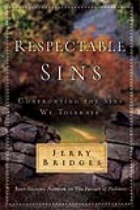 One of the books on my bedside table is Respectable Sins, by Jerry Bridges. The subtitle of the book is: Confronting the Sins We Tolerate. The theme becomes self explanatory.
  “Even though we are now in faith, the heart is always ready to boast itself before God and say: ‘After all, I have preached the law, and lived so well and done so much that surely He will take this into account ‘.

 Last week I became rightfully angry at one of my children. (I won’t say which one.) But in my anger I sinned against him. (Okay, the ‘him’ narrows it down some.) I had neglected the counsel of King David, who wrote: “In your anger do not sin.” (
 “What will it take to change the world – to really change it for the better?”



 GRACE & PEACE