Reformed Theology
Heidelberg Rap

Some truths really are stranger than fiction.
The Heidelberg Catechsim is one of the oldest confessional expressions of Faith in use. Developed in the 16th Century, it is one of the Standards of the Dutch Reformed Tradition. The Dutch Reformed, with their “Mecca” in Grand Rapids, are often caricatured (perhaps unfairly) for their stoicism, stuffiness, and for being sticklers for the old traditions.
But now there is a Rap song celebrating the Heidelberg Catechism. It’s by a guy named Curtis Allen, aka Voice. Who would have ever thought?
To listen, and to get the background, watch this video:
Gently Down Which Stream?
Collin Hansen, Justin Taylor, and Owen Strachen discuss the re-emergence of Calvinism, the streams of the Reformed tradition, and the different faces of Evangelicalism.
Related post at Gospel Coalition: One Movement, Many Streams
The Connection of the Law With the Gospel

There is a common question about how the Law of God and the Grace of God relate to one another. Some seem to wonder how they even co-exist.
Spurgeon, though, when once asked how he reconciled the Law and the Gospel, replied:
“There is no need to reconcile friends.”
Granted, there is some tension between these two great Biblical themes. But there is an answer – a wonderful, glorious answer.
Charles Bridges, a 19th Century Anglican pastor-theologian, takes up this issue and offers some profound and practical answers in an essay titled: The Connection of the Law With the Gospel.
Bridges’ language is a bit archaic, but with some effort most people should be able to grasp the richness of his insights. Having found it nowhere else on the web, I post his essay below for the benefit those willing to work through it.
But I have been thinking: Perhaps one day I will edit and translate this essay to language for our day… and post it again.
Easy Chairs & Hard Words

Some time ago I posted a series of fictional discussions between a young man from a Broadly Evangelical background and a seasoned minister in a more historical theological tradition. The series is titled Easy Chairs & Hard Words. It was penned by Douglas Wilson of Christ Church of Moscow, Idaho, and first appeared in Credenda Agenda.
These engaging instructive narratives have come to mind in a few discussions over the past couple weeks, so I decided it might be good to republish them. At least I will post links to each of the six chapters:
Easy Chairs & Hard Words – Part 1
Easy Chairs & Hard Words – Part 2
Easy Chairs & Hard Words – Part 3
Easy Chairs & Hard Words – Part 4
Doctrine
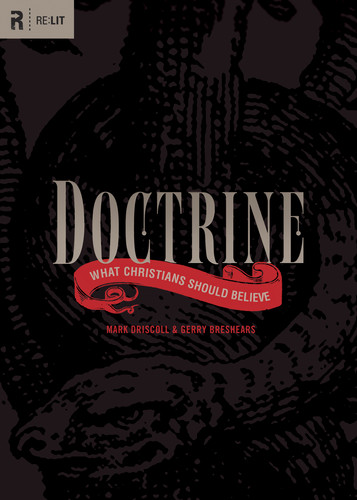
Do you want a good overview of the doctrines of the Christian faith? Would you be open to a introductory course, but are afraid people in your church might think lesser of you because of what you don’t know? (Most of them don’t know either, by the way.) re:Lit publications has developed Doctine by Mark Driscoll & Gerry Breshear to introduce an overview of the themes of the Bible.
On the web site, across the top of the screen are icons that provide a brief synopsis of each doctrine. Additionally at the top right of the synopsis is a link to an audio/video of messages Driscoll delivered at Mars Hill Church that served as a foundation for each chapter.
Crossway Books has an e-book available free online.
- Click: Doctrine
- Scroll down to Contents
- Click the Chapter Ttile
Do You Know…?

Do you know the Christ of the Gospels? Or have you fallen into the trap to which Christians (especially, perhaps, Reformed Christians) who love doctrine and systematic theology are sometimes susceptible (unlike John Calvin, it should be said): fascination with dogmatic formula at the expense of love for the Savior’s person?
– Sinclair Ferguson, from Yesterday, Today, and Forever
What is the Gospel?

To say that we, as a church, are centered on the gospel, or Gospel-Driven, is realtively easy. It is quite another thing for the typical church member to know what such phrases actually mean.
The following post, by C.J. Mahaney, was originally published on the Together for the Gospel blog. I include it here in it’s entirety because it addresses and brings clarity to an issue of the utmost importance…
***
Recently, someone asked two excellent questions on my blog:
What is the gospel?
What is the most serious threat to the gospel?
The following is my attempt to answer these important questions with the help of those much smarter than myself:
1) What is the gospel?
No question is more important, and biblical clarity in response to this question is critical. Sadly, confusion about the gospel is quite common among professing evangelicals today. I find Graeme Goldsworthy’s comment all too relevant:
“The main message of the Bible about Jesus Christ can easily become mixed with all sorts of things that are related to it. We see this in the way people define or preach the gospel. But it is important to keep the gospel itself clearly distinct from our response to it or from the results of it in our lives and in the world.”
So here is my attempt to heed the counsel of Dr. Goldsworthy and keep the gospel “clearly distinct.”
The following definition of the gospel, provided by Jeff Purswell, the Dean of [Sovereign Grace] Pastors College, seeks to capture the substance of the gospel:
“The gospel is the good news of God’s saving activity in the person and work of Christ. This includes his incarnation in which he took to himself full (yet sinless) human nature; his sinless life which fulfilled the perfect law of God; his substitutionary death which paid the penalty for man’s sin and satisfied the righteous wrath of God; his resurrection demonstrating God’s satisfaction with his sacrifice; and his glorification and ascension to the right hand of the Father where he now reigns and intercedes for the church.”
“Such news is specific: there is a defined ‘thatness’ to the gospel which sets forth the content of both our saving faith and our proclamation. It is objective, and not to be confused with our response. It is sufficient: we can add nothing to what Christ has accomplished for us–it falls to us simply to believe this news, turning from our sins and receiving by faith all that God has done for us in Christ.”
I find this definition of the gospel faithful to the presentation of the four Gospels—they present the person and work of Christ as the good news. In the Apostle Paul’s concise summation of the gospel, he focuses more particularly on Christ’s death and resurrection as the core of his proclamation:
“For I delivered to you as of first importance what I also received: that Christ died for our sins, in accordance with the Scriptures, that he was buried, that he was raised on the third day in accordance with the Scriptures….” 1 Cor 15:3-4
Focusing more specifically still, the apostle encapsulates the work of Christ by focusing on the cross:
“For I decided to know nothing among you except Jesus Christ and him crucified.” – 1 Corinthians 2:2
So that is the gospel: God’s saving work in and through Christ. And the cross is the pinnacle of that work. Knox Chamblin helpfully notes this emphasis in Paul’s writing and ministry:
“His gospel is ‘the word of the cross’ (1 Cor. 1:17-18); nowhere is there a comparable reference to ‘the word of the resurrection.’ In I Corinthians 1:23-24 it is ‘Christ crucified’ who is identified as ‘the power of God and the wisdom of God,’ not as we might have expected (especially in the case of ‘power’), Christ resurrected…. Both the cross and the resurrection are ‘of first importance’ in Paul’s gospel (I Cor. 15:3-4). Unless Christ has risen from the dead, the preaching of the cross (and of the resurrection) is a waste of time (15:14); but once the resurrection has occurred, the cross remains central.”
And the centrality of the cross isn’t temporary. The cross remains on center stage even when we receive a glimpse of eternity in the New Testament’s final book:
“One is taken aback by the emphasis upon the Cross in Revelation. Heaven does not ‘get over’ the cross, as if there are better things to think about; heaven is not only Christ-centered, but cross-centered, and quite blaring about it.” – Jim Elliff
There is nothing more important than getting the gospel right. Years ago, John Stott made the following frightening observation of the evangelical church when he wrote,
“All around us we see Christians relaxing their grasp on the gospel, fumbling it, and in danger of letting it drop from their hands altogether.”
It is my prayer that God would use the Together for the Gospel conference to strengthen our grip upon the glorious gospel.
2) What is the most serious threat to the gospel?
For this question I think J.C. Ryle provides us with enduring discernment:
“You may spoil the gospel by substitution. You have only to withdraw from the eyes of the sinner the grand object which the Bible proposes to faith–Jesus Christ–and to substitute another object in His place… and the mischief is done.”
“You may spoil the gospel by addition. You have only to add to Christ, the grand object of faith, some other objects as equally worthy of honor, and the mischief is done.”
“You may spoil the gospel by disproportion. You have only to attach an exaggerated importance to the secondary things of Christianity, and a diminished importance to the first things, and the mischief is done.”
“Lastly, but not least, you may completely spoil the gospel by confused and contradictory directions… Confused and disorderly statements about Christianity are almost as bad as no statement at all. Religion of this sort is not evangelical.”
3) Personal Application
It’s not difficult to identify distortions of the gospel. But as a pastor, one of my main concerns for genuine Christians is a more subtle one: either assuming the gospel or neglecting the gospel. I have found this to be the greatest threat to the gospel in my own life.
Jerry Bridges echoes this concern when he writes,
“The gospel is not only the most important message in all of history; it is the only essential message in all of history. Yet we allow thousands of professing Christians to live their entire lives without clearly understanding it and experiencing the joy of living by it.”
So let us not only apply discernment to the church at large, but to our own hearts as well. Let us, in the words of Jerry Bridges, “Preach the gospel to ourselves daily.” Let us heed Charles Spurgeon’s exhortation: “Abide hard by the cross and search the mystery of his wounds.” Let us respond to John Stott’s invitation: “The Cross is a blazing fire at which the flame of our love is kindled, but we have to get near enough for its sparks to fall on us.”
So how can we get near enough?
The following are books that will position you to experience the transforming sparks of the gospel:
The Cross of Christ by John Stott. A personal favorite. Stott says of the Savior, “It was by his death that he wished above all else to be remembered.” This book won’t let you forget.
The Gospel for Real Life by Jerry Bridges. The man who taught me how to preach the gospel to myself will teach you to do the same.
The Message of Salvation by Philip Ryken. This excellent book deserves a broad readership. My oldest daughter recently thanked me for recommending this book to her and told me how much she was benefiting from this book. You will benefit as well.
The Message of the New Testament by Mark Dever. My good friend reveals the storyline of the Bible in each and every book of the New Testament. A must read for pastors but highly recommended for all. My wife has really enjoyed reading Mark’s book.
The Cross and Christian Ministry by D.A. Carson. For pastors this is another must-read. I’m indebted to Dr. Carson for this book. It has defined effective pastoral ministry for me, and I pray it will do the same for you.
That ought to get you started. Each of these books will draw you near enough to the “blazing fire of the cross so that its sparks” will fall on you and kindle fresh love for the Savior in your soul.
Infection of Complacency
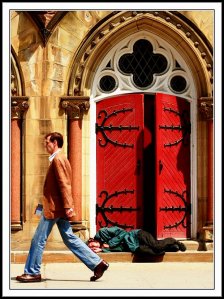
Here is a thought from J.C. Ryle that transcends the gulf between 19th Century Britain to speak to 21st Century American Evangelicals:
The times require distinct and decided views of Christian doctrine. I cannot withhold my conviction that the professing Church is as much damaged by laxity and indistinctness about matters of doctrine within, as it is by skeptics and unbelievers without. Myriads of professing Christians nowadays seem utterly unable to distinguish things that differ. Like people afflicted with color–blindness, they are incapable of discerning what is true and what is false, what is sound and what is unsound. If a preacher of religion is only clever and eloquent and earnest, they appear to think he is all right, however strange and heterogeneous his sermons may be. They are destitute of spiritual sense, apparently, and cannot detect error. The only positive thing about them is that they dislike distinctiveness and think all extreme and decided and positive views are very naughty and very wrong!
These people live in a kind of mist or fog. They see things unclearly, and do not know what they believe. They have not made up their minds about any great point in the Gospel, and seem content to be honorary members of all schools of thought. For their lives they could not tell you what they think is truth about justification, or regeneration, or sanctification, or the Lord’s Supper, or baptism, or faith or conversion, or inspiration, or the future state. They are eaten up with a morbid dread of controversy and an ignorant dislike of party spirit; and yet they really cannot define what they mean by these phrases. And so they live on undecided; and too often undecided; they drift down to the grave, without comfort in their religion, and, I am afraid, often without hope.
The explanation of this boneless, nerveless, jelly–fish condition of soul is not difficult to find. To begin with, the heart of man is naturally in the dark about religion – has no intuitive sense of truth – and really needs instruction and illumination. Besides this, the natural heart in most men hates exertion in religion, and cordially dislikes patient, painstaking inquiry. Above all, the natural heart generally likes the praise of others, shrinks from collision, and loves to be thought charitable and liberal. The whole result is that a kind of broad religious “agnosticism” just suits an immense number of people, and specially suits young persons. They are content to shovel aside all disputed points as rubbish, and if you charge them with indecision, they will tell you: “I do not pretend to understand controversy; I decline to examine controverted points. I dare say it is all the same in the long run” – Who does not know that such people swarm and abound everywhere?
Now I do beseech all to beware of this undecided state of mind in religion. It is a pestilence which walks in darkness, and a destruction that wastes at noonday. It is a lazy, idle frame of soul which, doubtless, saves man the trouble of thought and investigation but it is a frame of soul for which there is no warrant in the Bible. For your own soul’s sake, dare to make up your mind what you believe, and dare to have positive, distinct views of truth and error. Never, never be afraid to hold decided doctrinal opinions; and let no fear of man and no morbid dread of being thought party–spirited, narrow, or controversial, make you rest contented with a bloodless, boneless, tasteless, colorless, lukewarm, undogmatic Christianity.
Mark what I say. If you want to do good in these times, you must throw aside indecision, and take up a distinct, sharply–cut, doctrinal religion. If you believe little, those to whom you try to do good will believe nothing. The victories of Christianity, wherever they have been won, have been won by distinct doctrinal theology; by telling men roundly of Christ’s vicarious death and sacrifice; by showing them Christ’s substitution on the cross, and His precious blood; by teaching them justification by faith, and bidding them believe on a crucified Savior; by preaching ruin by sin, redemption by Christ, regeneration by the Spirit; by lifting up the brazen serpent; by telling them to look and live – to believe, repent, and be converted. This – this is the only teaching which for centuries God had honored with success, and is honoring at the present day both at home and abroad.
It is doctrine – doctrine, clear, ringing doctrine which, like the ram’s horn at Jericho casts down the opposition of the devil and sin. Let us cling to decided doctrinal views, whatever some may please to say in these times, and we shall do well for ourselves, well for others, and well for Christ’s cause in the world.
Cats & Dogs and God’s Global Glory
First among the Core Values at Walnut Hill Church is God’s Global Glory. This is the recognition that we do not exist, as a church or as individuals, primarily for ourselves, but for God and for his glory.
Expressing this as a platitude is one thing. Getting newcomers to agree with this premise is something else. And getting people to embrace it as an actual value that is lived out in their lives, and in the life of our church, is something else altogether.
How do we get people to reorient their thinking and make corresponding changes in their lives? That’s the question the leaders of the church have to wrestle with. Making it all the more difficult is our own inconsistency. We are the living embodiment of the words from the old hymn: “Prone to wander, Lord, I feel it… Prone to leave the God I love…” And so are the people we are called to lead. (And, most likely, so are you.)
One of the most effetive tools I am aware of regarding the teaching of this value is Cat & Dog Theology developed by UnveilinGlory. (See video above.)
I introduced Cat & Dog Theology to our church about a year ago, at our first missions conference at Walnut Hill. We had Gerald Robison, vice president of UnveilinGlory as the keynote speaker. From time to time church members still talk about both the conference and, more importantly, what they learned through the messages.
But how do we build on that?
UnvelinGlory has now developed a series of web-based instructional videos that makes Cat & Dog Theology, along with other resources, available online. So far I’ve only had opportunity glance through a few of the videos, but it looks promising. Each of the videos is relatively short – 20 minutes, more or less. But the videos I’ve seen contain both the substance and style that makes the seminar interesting and instructive.
I encourage you to check out: Our Journey With Him.
While there is an opportunity to sign up for a Premium membership, all the videos are available for free if you sign in as a guest.
Thoughts About the Resurrection
That the resurrection is an essential aspect of Christianity seems to me to be a ‘no brainer’. But recently I had a dialogue with an individual who does not share this view. As I have thought about that dialogue I have come to realize that this person is not entirely wrong, though still, I think, confused.
Let me explain.
The resurrection is necessary to Christianity. Without the resurrection we would have no assurance that the death of Christ satisfied the justice of God. We would have no way of knowing if Christ’s death paid the price of the debt of our sin or not. We would not know if he was a mere man or not. Therefore, we would live, at best, with a presumptive hope, but no faith, no actual trust, that we had been reconciled to God.
Actually, had Jesus not been raised from the tomb we would have serious reason to doubt anything positive had happend at all, since Jesus predicted his own resurrection. (See Matthew 12.40-41 & Luke 11.29-32). Had he not raisen, he would have been shown to have been wrong. And as good as he may have been otherwise, had he been wrong about this he would not have been perfect. In fact, he would have himself been guilty of sin by making claims about himself – and about God – that just were not true. (That’s called blasphemy.) And if he had sinned, even in this one instance, he could not have been God. And if Jesus is not God, and was in fact himself a sinner, he could not reconcile us to God. He would not even have been able to reconcile himself to God!
So, without ther Resurrection there is no Gospel.
The resurrection is so essential to the Christian Faith that the Apostle Paul wrote:
If only for this life we have hope in Christ, we are to be pitied more than all men.
Clearly the Resurrection is an aspect of the Gospel essential to Christianity.
Why, then, you may ask, did I say that the person who does not consider the Resurrection to be an essential part of Christianity is “not entirely wrong”?
What that person sees, I suspect, is the beauty of the life and teaching of Christ. Even if the resurrection had not occured, the life Jesus lived, and the life that lives in conformity to his teaching, is beautiful. That is somethng I have to concede. And in that sense what some might call Christianity, even without the resurrection, has value.
The Christian Gospel is not only the promise of forgiven sin, but also the promise of the power to grow to become more Christ-like. In other words the Gospel includes the power, subsequent to being forgiven, to live a more and more beautiul life. These truths are like two lanes of the same highway.
Sadly, it seems too many who call themselves Christians are willing to embrace the saving grace of the Gospel, but fail to take seriously – who don’t even really desire to adorn themselves with – the beauty of a life lived in accordance with the model & teaching of Jesus. And I suspect that glaring absence is what leads some to embrace, what I will call, a Gospel-less Christianity.
If some are willing to accept that Christianity can be salvation apart from a correspondng holiness, I suppose it is not diificult to understand why others would assume it OK to accept morality without a corresponding redemption to also be Christianity. Both have simply divided the highway.
But that is as far as I am capable of going with this thought. Because beautiful or not, Paul is right, Christianity without the resurrection is futile. It is a mere fragment, and not Christianity. Christianity is the whole revelation of Christ. It is the whole Gospel, or it becomes something entirely different. To pick out bits and pieces is inauthentic, even if well-intentioned.
Let me illustrate it this way: If my house is disassembled for some reason, and someone attempts to rebuild it using materials from the orignal, yet does not use all the material, and build it according to the same design, it is not my house any longer. It may have many of the same pieces, but it is not the same thing.
Likewise, a Christianity rooted in the moral principals and example of Christ, but that does not include the redemption accomplished by Christ through his death and resurrection, may look nice, but it is not Christianity.
The resurrectionis essential.
But while I was thinking about this, something struck me. What Paul is emphasizing in 1 Corinthians 15 is not only the resurrection of Christ, but the promise of the resurrection to come. It is the promise of our resurrection! In fact, it could be, should be, said, that our future resurrection is an essential element to Christianity.
That’s just awesome! It is the promise of Heaven!
Easy Chairs & Hard Words – Part 6

by Douglas Wilson
We join a conservation in progress; it is between a young theological questioner who grew up in a typical Evangelical church, and an older pastor from a more historical theological tradition.
“Look,” I said, “I have heard you mention that many Christians don’t study their Bibles. Were you saying that anyone who disagrees with you on this question of God’s sovereignty hasn’t done his homework?”
Pastor Spenser shook his head. “No, I’m not saying that at all. I’m saying that, in my experience, most of them have not.”
“But you would agree that there are fine Bible scholars who differ with you on this?”
“That depends on what you mean.”
“What do you mean?”
“There are men who are fine Christians who do not understand this truth. There are men who are fine scholars who differ with it. But when they dispute this truth, in certain key passages, there is an unfortunate lapse of their scholarship.”
“May I play the devil’s advocate?”
“Certainly.”
“Who are you to say what the correct interpretation is? Isn’t it arrogant of you to say that you are right and all the others are wrong?”
“It is not a question of whether I am right. It is a question of whether God revealed this truth in his Word, or not.”
“I don’t get your point.”
“We must not, as Christians, determine whether or not God has revealed something by how many men acknowledge the revelation. The content of the revelation is determined by the careful and laborious study of the text. It is not determined by counting noses. Not even scholarly noses.”
“Are you saying that you cannot make a mistake when you go to the text?”
“No, certainly not. I have made many mistakes. But I may only acknowledge my error when someone shows me the mistake from the text.”
“Now how does this relate to the question of God’s exhaustive sovereignty?”
“I have had many Christians tell me I am wrong about all this predestination business. But only a handful of them have ever endeavored to demonstrate the error I am supposed to be making from the text.”
“What do the rest of them do?”
“They break down into two basic categories. The first group talks just long enough to establish where the disagreement lies; after that, they avoid any discussion of the issue. Thinking about it discomfits them. The second group will talk about it; indeed, many times they enjoy talking about it. But the authority to which they appeal makes any resolution of the question impossible. Their authority, their court of appeals, is reason, common sense, and armchair philosophy. They will say that reason requires us to acknowledge that we have ‘free will’. Otherwise, how could God blame us? For who resists His will? This group acknowledges the authority of the Bible – on paper – but does not submit to the arbitration of Scripture.”
“Why do you think this is?”
“I cannot say; I merely see the results of it. Only God sees the heart. I am not competent to say what obstacles may exist in their hearts, although I do not doubt they are there. It is my business to see to it that there is no obstacle to their understanding in my heart.”
“What do you mean?”
“I mean any kind of pride, haughtiness, impatience…whatever. If there is any of this on my part, it may well be used by God to keep fellow Christians from these wonderful truths. In the providence of God, matters are arranged in the church in such a way that it is possible to stumble your brother.”
“Can you give me an example of this from Scripture?”
“Sure. In 2 Timothy 2:25, it assumes that God is the Giver of repentance. When a man repents, he is the recipient of a gift.”
I had looked the passage up. “Well, it sure looks that way.”
“Now many Christians deny that repentance is a gift of God. In a discussion with such a person, what do you think the temptation is?”
I grinned. “To beat them over the head with this verse?”
“Exactly. Now back up and read the previous verse, this verse, and the verse after.”
I glanced up again. “But isn’t this talking about a debate with a non-Christian?”
“Yes, it is. And if we ought to correct unbelievers with such humility, what should our demeanor be toward brothers?”
“Got it.” I said.
“Now notice that the behavior of the one who knows the truth is connected with the possible change of heart of the one listening, if God is gracious and so wills it.”
“So how do you tie this in with our discussion? If all this is so clear in the Scriptures, why do Christians deny what you say the Bible teaches?”
“I would suggest that the problem is not with those who don’t believe it, but with those who do.”
“How so?”
“Some Christians deny God’s exhaustive sovereignty, and they live in a manner consistent with that denial. Other Christians affirm it, but then go on to deny it with their lives. The second group has more to answer for.”
“You can’t be saying that the church is in this sad condition because this is the way God has willed it?”
“Well, yes, I am. If God controls everything, then He certainly controls this.”
“But why? That seems so contrary to everything I have ever learned about God and His relationship to the church.”
“I don’t know why either. I am not sure a creature could understand why. But I do know that I am not going to water down clear statements of Scripture just because I want to worship a God who meets with my approval!”
“Is there any passage of Scripture that teaches that God controls backslidings?”
“Yes. Isaiah 63:17. `O Lord, why have You made us stray from Your ways, and hardened our heart from Your fear? Return for Your servants’ sake, the tribes of Your inheritance.’”
“So you are also saying that the reason so many Christians deny this truth is…”
“…is that God has willed it. Yes. He has hardened our hearts. And, anticipating the question, it does not lessen our responsibility in the slightest.”
“Is it wrong to ask why God does this?”
“No. Isaiah asks why. I believe that when Christians acknowledge that God has done this, and begin tearfully asking why He has done it, we will be on the edge of true revival. True revival is something He gives.”
I was shaking my head. “I don’t know…”
Pastor Spenser went on. “The modern evangelical church is drowning in an ocean of theological stupidity. Here and there are handfuls of the `orthodox’ clinging to the wreckage of what was once a great ship. In such a condition, it is impertinent to even be tempted to pride.”
“But why would God do that to His own ship?”
“He has done it, and He is God. That is enough. By all that Scripture teaches, His reasons were good, just, and holy. And when we consider the glorious future that is promised for the gospel in the world, we should take courage as we pray for revival. It will be clear to us later.”
“And in the meantime…?”
“In the meantime, those Christians who have been given an understanding of this should not puff themselves up. We know that what Job says in Job 42:2 is true. `I know that You can do everything, and that no purpose of Yours can be withheld from you.’ But they must also respond to this truth the way Job did in vv. 5-6. `I have heard of You by the hearing of the ear, but now my eye sees You. Therefore I abhor myself, and repent in dust and ashes.’”
“How are you applying this?”
“It is one thing to hear truth, and agree with it. Many have come to believe these things simply because they are attracted to a system which is logically consistent. Or perhaps they are repelled by the shallowness of so much of our preaching and teaching today. Or they are the studious type, and like to read books by the Puritans.”
Pastor Spenser went on. “But it is quite another thing to be given a vision of the glory of God and to be, like Job, undone by it.”
“Are you saying it is bad to be studious, or systematic?”
“No, not at all. Hard study is required by God, as well as to compare carefully one portion of Scripture with another. Over many years, many people have told me that I study too much, but the Holy Spirit convicts me regularly that I study too little.”
“What are you saying then?”
“Hard study can be compared to chopping wood, assembling the kindling, and putting all the wood together for the fire. There are churches that have a good idea of where the wood should go, but they have forgotten there is supposed to be a fire.”
“And others…?”
“Others, theologically shallow, know there is supposed to be a fire. But they use grass, thorns, paper, and a lot of lighter fluid.”
“How do you see your work?”
“I have chopped a lot of good wood – although less than I should have – and I have assembled it. Now I am waiting, and praying to God.”
“Praying for what?” Pastor Spenser thought for a moment.
“Praying for the fire to fall.”
****
This is Part 6 in a series of 6.
Easy Chairs & Hard Words – Part 5

by Douglas Wilson
We join a conservation in progress; it is between a young theological questioner who grew up in a typical Evangelical church, and an older pastor from a historical theological tradition.
*****
“But… What difference does it all make?” I asked.
Pastor Spenser took a sip of his coffee, and answered the question with a question. “What kind of difference do you mean? For the individual Christian, or for the Church, or both?”
“Well, I first came to visit you because the difference it makes to me was obvious. The doctrine I held before did little more than torment me. I was constantly in fear over the possibility of losing my salvation.”
“But I have friends who hold to those same doctrines with enthusiastic cheerfulness. Are these teachings something which I needed to hear for my Christian life, but which are not necessary for the Church at large?”
Pastor Spenser nodded. “I see what you are asking. Even if all this is true, is it something the Church needs to believe? Is the Church hindered in her work if these doctrines are neglected or rejected?”
“Right. If some Christians seem to get along just fine without it, why can’t the Church as a whole?”
“Because ideas have consequences, and because the Church is made up of individuals.”
“OK. Explain.”
“Ideas have consequences, not because each individual is consistent, but because groups of people are consistent over time.”
“What do you mean by that?”
“Let’s take a clear example from outside the faith. Have you ever known an atheist who was a decent, law-abiding citizen?”
I nodded. “Yes.”
“Now was he being consistent with the basic premises of his worldview?”
I laughed, “No. And we had many discussions about it. He treated me with respect, but given his worldview, I was nothing more than a mass of protoplasm.”
Pastor Spenser continued. “Now my point is this. Individual atheists can frequently be inconsistent like this. Atheistic societies never are.”
“Never are inconsistent, you mean?”
“Right. Over time, the beliefs of individuals will be consistently applied by the group, even if many of the individuals who brought this about did not apply them.”
“Apply this to the Church, then.”
“The basic issue we have been discussing all these weeks has been the difference between man-centered religion, and God-centered religion.”
“I follow that.”
“Now, have you ever known any Christian whose beliefs, or doctrines, were what we have been calling ‘man-centered’, but whose life was clearly God-centered?” I nodded again. “Yes.” “And we would call that inconsistent?”
“Yes.”
“And if you wind up changing churches, you will very quickly encounter Christians whose doctrines are ‘God-centered’, but whose life is man-centered. This is also inconsistent.”
“Well, this brings us back to my first question. If this is the case, what difference does it all make?”
“It is quite simple. The Church, being an assembly of people, will eventually live in a manner consistent with her doctrine. If the doctrine is man-centered, then there will come a time when the lifestyle, morals, ceremonies, teaching, etc. are also man-centered.”
“So even though an individual is inconsistent with his false doctrine, the Church at large will eventually be consistent with it.”
“Correct. This explains why certain beliefs can be held by pious Christians, while those same beliefs go on to corrupt and defile the piety of the Church.”
“Can you give me an example from church history?”
“Certainly. Consider revival. What does that term mean?”
I grinned. “A week of nightly meetings?”
“That is what it has come to mean. Arrange for a speaker, print the flyers, gather the troops, and work up a revival. From start to finish, it is the work of man.”
“What did revival mean before?”
“It referred to a time when the sovereign Holy Spirit moved in a congregation in such a way as to reveal the glory of Jesus Christ. From start to finish, it was the work of God.”
“What is a true revival like?”
I was surprised to see Pastor Spenser’s eyes well up. “I don’t know,” he said. “All the knowledge of true revival today is second-hand – through books. The last healthy revival was in the mid-nineteenth century.”
“What happened?”
“Revival, which is a gift of God, was, through theological confusion, turned into a work of man. The result is revivalism, not revival.”
“What is the difference?”
“Well, there are two kinds of revivalism. One is where a denomination has a long tradition of having these meetings, everyone is used to it, they go and listen, and then go home. It is little more than a religious seminar. And, as seminars go, some of them might be worthwhile.”
“And the other?”
“The other is the result of taking the whole idea of revival more seriously. The people expect fireworks, so they see to it there are fireworks. It is nothing more than religious enthusiasm and fanaticism.”
“But weren’t some of the great revival preachers of the past – men you respect – accused of religious fanaticism too?”
“They certainly were. And if God is merciful to us and sends true revival again, the charges of fanaticism will be heard again.”
“But…”
“I know. Couldn’t a Christian make the point that the whole distinction between revival and revivalism is a false one, and that all such events are fanatical to some degree or another?”
“Right.”
Pastor Spenser nodded. “It is a legitimate concern. First, can we agree that there is such a thing as true fanaticism?”
“Sure. I don’t believe anyone would disagree there. Religious fanatics have always been around.”
“Now, the next question is this: Does the Bible teach anything which, if applied, would result in the one applying it to be accused of fanaticism?”
I smiled. “You tell me.”
“How about 1 Peter 1:8? ‘Though now you do not see Him, yet believing, you rejoice with joy inexpressible and full of glory.’ Or Ephesians 3:17-19? ‘…that you…may be able to comprehend with all the saints what is the width and length and depth and height – to know the love of Christ which passes knowledge.’ I don’t know. A little extreme, don’t you think?”
I sat for a moment, thinking. Pastor Spenser spoke again.
“Christians get used to such passages. There it is, safe on the page. But there is no way for a Christian to be filled with inexpressible joy without it affecting his demeanor and behavior. And when it does, he will be accused of fanaticism. Many Christians, in their concern over religious fanaticism, have gotten rid of not only the fanaticism, but also the religion.”
“So what are the characteristics of true revival, over against revivalism?”
“We have been talking about God-centeredness versus man-centeredness. The distinction follows us into our discussion of the criteria by which everything is to be evaluated; teaching and lifestyle, or, put another way, doctrine and morals.”
“OK. Let’s start with doctrine.”
“In a true revival, doctrine is the emphasis, and the doctrine is God-centered. In revivalism, because man is the center, feelings are emphasized. In revival, truth overwhelms the mind, resulting in an emotional response – inexpressible joy. In revivalism, the emotions are excited directly, and any number of teachings, true or false, can do that.”
“What about morality?”
“In a true revival, the change in the moral behavior of those blessed is significant and lasting. With revivalism, very little is done to teach the people to restrain their passions. In fact, because the ‘revival’ encourages a lack of restraint in the church, it is not long before a lack of restraint is evident elsewhere, usually in the area of sexual morality.”
“Are you saying that in order to have a true revival, a belief in God’s exhaustive sovereignty is necessary?”
“Yes.”
“But didn’t men like Charles Finney deny this particular truth? And wasn’t he part of the revivals of the nineteenth century?”
“Yes, he did deny it, and he was certainly a participant in ‘revivals.’ But he was one of those who effectively introduced the man-centered doctrines and practices which were the death of true revivals in this country.”
“You know,” I said, “I thought I had gotten used to the strange things you say from time to time. But this takes the cake! I have some friends who are really into revival, and they read books by Finney all the time.”
Pastor Spenser was shaking his head. “I know, I know. It is ironic. When Christians periodically despair of the current state of the church, and come to think, correctly, that the only thing which will help us is revival, they then turn to one of the men who was a major part of the problem.”
“So how would you summarize all this?”
“I would say that God is over all, and through all, and in all. Anyone who denies this, in any measure, is a hindrance to true heaven-sent revival.”
****
This is Part 5 in a series of 6 titled Easy Chairs & Hard Words.
Easy Chairs & Hard Words – Part 4

by Douglas Wilson
We join a conservation in progress; it is between a young theological questioner who grew up in a typical Evangelical church, and an older pastor from a historical theological tradition.
*****
Pastor Spenser shifted easily in his seat while I carefully thought over my next question. “Some of my friends at my church have figured out that I have been coming to see you,” I said.
Pastor Spenser nodded, and waited.
“Naturally,” I said, “they are somewhat concerned.”
“Naturally. About what?”
“Well, they say that Christians who believe in the exhaustive sovereignty of God are setting themselves up.”
“For…?”
“For the temptation which says that because God controls everything, then the way I live doesn’t really matter.”
“I see. In other words, if I am elect, then my sins won’t damn me, and if I am not, then all the good works in the world won’t save me. Is that it?”
“Yes. That is exactly it. If the whole thing was settled before the world began, then why bother? My friends know that there are true Christians who believe this, but they think that, because of this theology, these Christians will tend to become careless about how they live.”
“Why should we take responsibility for our actions after we have embraced a theology which cuts the nerve of personal responsibility?”
“Right. If God controls everything, then what room is there for personal holiness?”
Pastor Spenser thought for a moment. “The problem is not with your friends’ concern for personal holiness. That is admirable. All Christians should set their faces against carnal living on the part of professing Christians. But it does no good to oppose carnal living with carnal reasoning.”
“What do you mean?”
“When someone is whooping it up down at the bars, or sleeping with their girlfriend, why do we say it is sin?”
“Is this a trick question?”
Pastor Spenser grinned. “You might say that. Why do we call such things sin?”
“Because the Bible does.”
“Exactly. So this carnal living we have been talking about is a lifestyle that is not in submission to the clear teaching of the Word of God.”
“Well, sure. But I still don’t see where you are going with this.”
“Now if carnal living is a lifestyle that does not submit to God’s Word, then how should we define carnal reasoning?”
“The same way, I suppose?”
“Right. It is not enough to submit what we do externally to God; we must also submit the way we think. Your friends are trying to defend God’s standards for living by abandoning His standards for thinking. It cannot be successful.”
“Is there a passage where this point is clear?”
“Yes, in Philippians. Chapter 2, verses 12 and 13.”
I turned to Philippians and read. “Therefore, my beloved, as you have always obeyed, not as in my presence only, but now much more in my absence, work out your own salvation with fear and trembling; for it is God who works in you both to will and to do for His good pleasure.” I looked up.
“What does the passage say God is doing?” Pastor Spenser asked.
I looked down again. “It says that He is working in the Philippians, both in willing and doing, and that the result is His good pleasure.”
“And what would carnal reasoning do with that?”
“Well, the response would be that if God is doing the willing, and if God is doing the doing, and the result is whatever He wants, then there is no reason for me to put myself out. It is going to happen anyway.”
“Right. The reasoning says that if God is going to do the work, then why should I have to?”
I nodded, and Pastor Spenser went on.
“But what application of this truth does Paul command the Philippians to obey?”
I looked at the passage again. “He tells them to work out their own salvation, with fear and trembling.” I glanced down further. “And in the next verse he goes on to specific ethical instruction – to avoid murmuring and disputing.”
I sat and thought for a moment. “But my friends would say that the application they are making is obvious – common sense.”
“Well, it certainly is common. But is it biblical?”
“Why do so many Christians fall for this line of reasoning then? It seems like a trap that is extremely easy to fall into.”
“Well, yes, it easy to fall into. But it is also easy to drink too much, not watch your tongue, lust after women, and so forth. And these are things which the church recognizes as sin, and warns the people against. But carnal reasoning is also easy, and almost no one warns the people.”
“Why not?”
“Sheep are hungry because shepherds don’t feed them. Shepherds don’t feed them because shepherds don’t have food.” Pastor Spenser leaned forward in his seat. “The shepherds don’t have food because they don’t study their Bibles.”
“You think it is obvious in the Word?”
“Certainly. When the apostle Paul magnified the prerogatives of the sovereign God, he fully anticipated the response of carnal reasoning.” Pastor Spenser leaned back, closed his eyes, and quoted, “You will say to me then, ‘Why does He still find fault? For who has resisted His will?’” A modern pastor, in the unlikely event that someone asked him this, would say that it was a good question, and that he wrestles with it often himself. Paul tells the questioner to shut up and sit down. ‘But indeed, O man, who are you to reply against God?’”
“Paul doesn’t answer the question then?”
Pastor Spenser opened his eyes. “Oh, he does. It just isn’t the answer carnal reason wants.”
“So what is the answer?”
“The answer is God – the same answer that is given at the end of the book of Job. Carnal reason doesn’t see a real answer there either. But believe me, it is a real answer. The answer is the ground of reality; the answer is God.”
“What happens at the end of the book of Job?”
“The questions raised in the book are conducive to carnal reason; indeed, even non-Christians are attracted to the first part of the book of Job. As they would put it, ‘It addresses the human condition.’ But then, at the end of the book, God comes in, with glory and thunder. And do you know what? He doesn’t answer any of the impertinent questions; rather, He poses some sobering questions of His own. ‘Who is this who darkens counsel by words without knowledge? Now prepare yourself like a man; I will question you, and you shall answer Me.’”
I nodded. “And He asks where Job was when the universe was created.”
“The question is not irrelevant. It is the heart of the matter. Discussions of God’s sovereignty and human responsibility very rarely display any understanding at all of Who the Creator is.”
“But my friends would say that you are making God responsible for evil, and that they are concerned to protect God’s honor and glory.”
Pastor Spenser looked at me intently. “It is true that the affirmation of God’s total control over all things causes some to blaspheme. But your friends need not be concerned for God’s glory; man’s slanders and blasphemies do not touch Him. Such slanderers are pelting the sun with wadded-up balls of tissue paper.”
“They are stumbling over something though.”
“They stumble, being disobedient to the word, to which they also were appointed.”
“Now, see? Why do you have to put these things so strongly? Doesn’t that cause people to react to what you are teaching? They were appointed to stumble?”
“That wasn’t my choice of words. I was quoting 1 Peter 2:8.”
“Oh. Oops.”
“Your friends are concerned that God be seen as good. But seen as good by whom? Those who believe the Word of God will know that God is light and in Him is no darkness at all. Of course He is good – by definition. And those who do not believe the Word of God will persist in thinking that there is a tribunal or court somewhere in which God will one day be arraigned. On the day of judgment, their folly will be apparent to all – even to them.”
“So how do we bring this back to the original point?”
“The original point was the concern that the doctrine of God’s sovereignty would be made into a cushion for sin. My answer to this is that we must, in all things, recognize God as God. We must do so in how we live holy lives, but we must also do so in why we live holy lives. We are to live in a holy way because God has commanded it.”
“But you would also say that what God has commanded the believer He has also given the believer.”
“Well, certainly.”
“I honestly see why carnal reason has a problem with this.”
“And I honestly see why carnal men want to lust after beautiful women. But what does the Bible say?”
“What do you mean?”
“What is the greatest commandment?”
“That we love God.”
“And what is the first fruit of the Spirit?”
“Love.” I said. “I see.”
“What do you see?” Pastor Spenser asked.
“This takes us back to Philippians. We are commanded to work out what God works in.”
“Right.” he said. “Nothing less.”
***
This is Part 4 in a series of 6 posts titled Easy Chairs & Hard Words.
Easy Chairs & Hard Words – Part 3

by Douglas Wilson
“At last,” I thought. “Now we should be able to talk about what brought me here in the first place.” Pastor Spenser and I were both settling in chairs with the conversation already well under way.
“I know what your position is,” I said. “But I am afraid that I still don’t know why.”
“And what is my position?” he said, smiling.
“Well, I assume that you believe that it is not possible for a Christian to lose his salvation…that’s correct, isn’t it.”
“Sort of.”
I grinned. “Way to come down clearly on the issue.”
Pastor Spenser laughed. “There would be a lot more peace in the church if Christians learned to frame their questions more biblically.”
“How do you mean?”
“The question is posed as to whether a Christian can lose his salvation, the pros and cons line up, and debate the question as it was posed. But salvation is not a personal possession of ours, like car keys, which can be misplaced by us.”
“So what is the real question?”
“The way the question is usually asked, we wonder if a Christian can lose his salvation, which is the same as asking whether a Christian can lose Christ. Some say yes, and others no.”
“And you would say…?”
“I would ask whether Christ can lose a Christian.”
“I don’t get you.”
“Christians are those who are redeemed or purchased for God through the blood of Christ. We have been bought with a price. Now if someone, so purchased, winds up in Hell, then who has lost that person’s salvation?”
“I’m sorry, I must be thick. I still don’t get what you are driving at.”
“Christians cannot lose their salvation, for the simple reason that their salvation does not belong to them. It belongs to Christ. If anyone is to lose it, it must be He. And He has promised not to.”
“Where does the Bible teach that we are His possession?”
“There are many passages which cover this…too many to cover tonight. Why don’t we just look at several? I’ll give you a list of others.”
“Fair enough.”
“In Revelation 5:9-10, the new song in honor of the Lamb states that He has redeemed us to God by His blood – from every tribe, tongue, people, and nation.”
“And…”
“In 1 Corinthians 6:20, it says, `For you were bought at a price; therefore glorify God in your body and in your spirit, which are God’s.”
“It seems pretty clear.”
“Right. In salvation, Christ does not become our property; we become His. So in discussing this, we must remember that all the saving is done by Him. Those who want to maintain that salvation can be lost are really saying that He is one who loses it.”
“This throws the whole debate into a completely different light.”
“It does. And frankly, it is the difference between grace and works.”
“How so?”
“To assert that a man can lose his salvation through what he does or does not do is to assert, in the final analysis, salvation by works.”
“But the church in which I grew up taught that you can lose your salvation, but they also preached salvation by grace.”
“Not quite. They preached a conversion experience by grace. But how is that experience to be maintained and protected? And by whom? They begin with the Spirit, but seek to finish through human effort.” I must have looked confused, so he continued.
“Were you ever taught that you could, by committing certain sins, place yourself outside of Christ?”
“Yes, and it terrified me.”
“Now, let’s say that you committed such a sin, and then were killed in a car wreck? Where would you go?”
“To Hell.”
“And why?”
“Because I had sinned, and a holy God cannot look on sin.”
“And your salvation, or lack of it, was up to whom?”
“You are arguing that it was up to me. I can tell you that it certainly felt that way. The more I wanted to serve God, the more condemned I felt.”
“Don’t you see that your insecurity was the result of your salvation riding on a roulette wheel…every day?”
“How so?”
“If you died on Monday, you go to be with the Lord. If you died on Thursday, off to Hell. On Sunday night, you are heaven-bound again.”
“You are saying that this is salvation by works?”
“What else can we call it? And it produces two kinds of people. One group is confident in their own righteousness, but they have watered down the righteous standards of God in order to delude themselves this way. The other group is comprised of sincere people, who, because they are honest, realize that they are under condemnation.”
“It seems a little strong to say that they are professing salvation by works, though.”
“Paul rebuked Peter to his face at Antioch, and why? Because Peter did something as “trivial” as withdrawing table fellowship from Gentiles temporarily. But Paul knew that the gospel was threatened by this. How much more is it threatened through teaching that a Christian can do a “work” which will blow his salvation away? This teaching makes salvation depend upon the works of men.”
“You contrasted this with grace.”
“Correct. Salvation by grace is a gift from God. “Salvation” by works is man’s attempt to earn his way into the presence of God, or in this case, his attempt to earn his right to stay there.”
“But what is to prevent someone from saying they are “saved by grace,” and then going to sin up a storm?”
Pastor Spenser laughed. “Nothing at all. Sinners can say and do what they please. Until the judgment.”
“But how would you answer the objection?”
“There are two things worth noting about it. One is that having to answer it places me in good company. The apostle Paul had to answer the same objection in Romans 6, against those who objected to his message of grace. Secondly, the answer is the one Paul gives. Recipients of grace do not get to decide to receive forgiveness grace, while passing on death to sin grace. How can we who died to sin, still live in it?”
“But aren’t there some who teach that salvation can be lost simply to keep this type of person from presumption?”
“There are some who insist on teaching that Christians can lose their salvation out of a concern they have for ‘holiness’. They say that if this is not done, then people will abuse grace. But if you hold the biblical perspective, you do not consider grace a possession of ours, to be abused or not. Rather, grace belongs to God, and He never abuses it.”
“This means what?”
“In Ephesians 2:8-9, we learn that we are saved by grace through faith. In the next verse, we learn that we are God’s workmanship, created in Christ Jesus for good works prepared beforehand by God. God’s grace is never truly abused because it belongs to God. Those outside abuse the name grace, but they cannot touch the thing itself.”
“You sound like you have very little respect for those on the other side of this issue.”
“That is not quite true. Some of them are teaching another gospel, and the condemnation of the apostle is sufficient for them. But there are others who are true Christians, and who hold this position because of their reading of certain texts…Hebrews 10:26, for example.”
“You respect them?”
“Yes. I believe them to be wrong, but their error proceeds from a desire to be honest with the text. With the purveyors of a false gospel, the error comes from an almost complete confusion of grace and works.”
“What about Hebrews 10:26?”
“We are almost out of time. Why don’t I read that passage, adding some comments of my own based on the context of Hebrews. Then you can go back through the book with that context in mind. It should be helpful in chapter 6 as well.”
“Fine.”
“For if we sin willfully by going back to the sacrifices of bulls and goats after we have received the knowledge of the truth that Christ was the once for all sacrifice for sin, there no longer remains a sacrifice for sins because temple sacrifice of bulls and goats is a system that is fading away, but a certain fearful expectation of judgment, and fiery indignation which will devour the adversaries because they are sacrificing their bulls and goats in a temple that will be destroyed in just a few years.”
I laughed. “Is all that in the Greek?”
Pastor Spenser grinned. “No, but it is in the context. Read through the book of Hebrews with the impending destruction of Jerusalem in mind, and consider the problem caused by professing Christians who were being tempted to return to Jerusalem in order to sacrifice there. The fire that was going to consume the enemies of God in this passage is not hellfire.”
“So what is the basic issue here?”
“It is grace; grace and works. Works is a barren mother; she will never have any children, much less gracious children. Grace is fruitful; her children are many, and they all work hard.”
****
This is Part 3 in a series of 6.
 GRACE & PEACE