Gospel Discipling: Romans as a Model

It would be presumptuous to claim that we can discern precisely the approach Paul and the first missionaries would have used under direct leadership of the Spirit. But I would encourage a view of his letter to the church(es) of Rome as essentially intending to take those who already believed the Gospel, and who were therefore “saved”, back to that very Gospel, but at a more complete level of understanding.

It is clear from the explanation of his purpose in writing the letter (Romans 15:14-33) that Paul was intending to shift his center of ministry from the Eastern to the Western Mediterranean, since he had completed his work in the East. His particular vision and calling was to “preach the Gospel where Christ was not known,” and therefore following his visit to Jerusalem and a stop in Rome, he was heading for Spain (Romans 15:24-28). The clear implication of the letter is that just as other churches had an opportunity to contribute to the offering for the saints of Jerusalem, he was sure that when he visited them they would want to “assist” him on his journey to the new mission field.

Given Paul”s stated ambition to take Christ to those who had never heard, it is curious that he was “eager to preach the Gospel also to you who are at Rome” (Romans 1:15) when he came for the long overdue visit. I would argue that this did not mean that he wanted to do evangelism with them among the people of Rome (no doubt he would do that, too), but that he wanted to preach the Gospel to the church of Rome. In other words, he wanted to give the Gospel to those who had already believed the Gospel, who were “called to belong to Jesus Christ…called to be saints” (Romans 1:6-7). As he moves into the body of the letter, it becomes clear that there is far more to the gospel than is immediately apparent to a newly awakened believer. It reveals a righteousness of God that leads from faith to deeper faith (Romans 1:17).

In the chapters that follow, the Apostle unfolds with great precision the righteousness revealed in the Gospel. The exposition of this deeper understanding of the Gospel begins first with justification, then an explanation of our union with the risen Christ (often labeled sanctification), then the extraordinary privilege of adoption or sonship, and climaxing in the celebration of the predestinating purposes of God. Chapters 9-11 continue to wrestle with the Gospel and its relationship to the Jewish people. Throughout his explanation of the Gospel, Paul makes application, but it is not until ch. 12 that he begins specific teaching about the “doing” of the Christian life.

Here then is a demonstration of just how Paul worked out his constant prayer that believers would grow in the “knowledge of God”– he was eager to preach the Gospel to them. In this light, his reference to the gospel as the “power of God unto salvation for everyone who believes” (Romans 1:16) should be understood as empowering believers through every aspect of that salvation. Our more limited idea of gospel has resulted, it seems to me, in a similarly limited view of the power of God for salvation–we only think of this verse in terms of conversion, when we first believe. So understanding and continuing to believe the gospel is not only the essential task of discipleship, it provides the basis or power for attending to the doing of the Christian life–a life appropriately identified by Paul as the “obedience that comes from faith” (Romans 1:5).

***

This is Part 2 of a 5-part series titled Gospel Discipling by Stephen Smallman. Steve Smallman is a past Executive Director of World Harvest Mission and author of the book Spiritual Birthline.

To read Part 1 click: Introduction

Gospel Discipling: The Crying Need of the Church

by Stephen Smallman

Thirty years of discipleship programs, and we are not discipled.”

This is the startling assessment of Jim Petersen, the visionary leader of the esteemed discipleship ministry, the Navigators. Petersen goes on in the first chapter of his important book, Lifestyle Discipleship, to ask some very hard questions about the real effectiveness of our various attempts at discipling believers.  But if the situation in most of our American evangelical churches is lacking with respect to discipleship, the condition of many churches in developing nations is nothing short of tragic. Instance after instance can be cited of young and vital churches sliding quickly into debilitating legalism, with Christianity being defined by believer and unbeliever alike as essentially little more than the keeping of certain rules.

There is little need to draw out this lament about the current condition of “discipleship”. Almost anyone in ministry recognizes the need to rethink assumptions and approaches to this critical aspect of the work of the Church. In this article I would like to make the case for a fundamental shift in the paradigm we use with respect to the content of our discipling ministries. It seems to me that most of the work being done to improve the discipleship component of our churches or missions focuses on the matter of methodology – how to secure greater commitment from participants, whether we should work in small groups or one-on-one, how pastors should redefine their roles, etc..But the actual content of what is imparted can be largely described as the “doing” of the Christian life. It is my contention that before methodological issues are discussed, we need to recognize that the essential content of our discipleship is to be the Gospel – taking people who have believed the gospel back into the Gospel again and again.  This is what I will call “Gospel discipling”, which could just as easily be termed “discipleship in the Gospel.”

I believe it can be demonstrated that this was the approach of the Apostles, as evidenced by their letters to new churches.  In particular I want to use the book of Romans as a model of Gospel discipling. I believe it can also be demonstrated that it is the Gospel itself that supplies the power to enable believers to become meaningfully engaged in the “doing” of the Christian life. Once I lay out these foundational issues, I will then explain briefly how World Harvest Mission, building on the seminal thinking of Dr. Jack Miller, has attempted to address the issue of Gospel discipling in a practical way.

Definition of the Gospel

At the outset, it is essential to contend for a much broader understanding of the word “Gospel” than is commonly held by evangelicals. In its essence the Gospel is the glorious announcement that God has kept his promise to bring salvation to the earth (Isaiah 52:7).  The fulfillment of his promise is a person, his own Son, named Jesus, who is Messiah and who died for our sin and was raised to life. Remarkably, by believing this Gospel we are granted eternal life, and the break caused by the original fall and our personal sin is restored.

But the Gospel is more than the announcement about the person and work of Christ, it is used by Paul and others to include all that comes to us when we believe the Gospel. In the words of Galatians, it includes not only God sending his Son to redeem those under the law, but also his sending the Spirit of his Son into our hearts that we might experience the privileges of sonship. (Galatians 4.4-7)  In Colossians 1 Paul talks about the “word of truth, the Gospel” and seems to equate it with “God’s grace in all its truth”. (Colossians 1.5-6) It is also worth taking time to reflect on Paul’s use of Gospel in 2Timothy 1.8-2.10. I believe in the light of that context, Paul’s exhortation to “be strong in the grace that is in Christ Jesus” (2 Timothy 2.1) can be understood as challenging Timothy to find his strength to endure by returning again to the Gospel.

All of this points to a need to understand the Gospel as much more than rehearsing the facts of Christ’s death and resurrection – as wonderful as they are. Furthermore, teaching or preaching the Gospel is more than inviting unbelievers to put their trust in Christ for salvation. The Gospel is the word we should use for all that has been given us in Jesus Christ, which is why it is frequently called “the Gospel of grace”. This broader use is much closer to the historic distinction of Law and Gospel, which was commonly understood in earlier generations, but seems to have been largely ignored by ours.  To be sure, the benefits of the Gospel are being taught today, but I believe our discipling of believers will be helped by recognizing that biblically, these are still to be thought of as Gospel. The posture of simply believing in Jesus as we learn of Him in the Gospel is as fundamental to our progress in the faith as it was to our initial receiving of it.

***

This is Part 1 of a 5-part series titled Gospel Discipling. This series is taken from an essay by Stephen Smallman, author of Spiritual Birthline and past Executive Director of World Harvest Mission. Some of the content has been edited. 

My thanks to New City Fellowship of St. Louis, who posted Smallman’s essay on their web page.

To read Parts 2-5 of this essay click:

Romans as a Model

Gospel & Adoption

Gospel & Renewal

Gospel & Evangelism

Community is Identity

From Tim Chester:

The church is not a building you enter. Nor is it a meeting your attend. It is not what you do on a Sunday. To be a Christian is to be part of God’s people and to express that in your life through belonging to a local Christian community.

Our Belonging

We belong to one another (Romans 12:5). If a car belongs to me then I am responsible for it and I decide how it should be used. If a person belongs to me them I am responsible for them and I am involved in their decisions.

Our Home

Peter says Christians are ‘foreigners’ = ‘without home’ in the world (1 Peter 2:11). But we are being built into an alternative ‘home’ (1 Peter 2:5).

Our Family

Families eat together, play together, cry together, laugh together, raise child together provide for one another. Families argue and fight, but they do not stop being families and they don’t join other families because they have different tastes in music or reading. With family you can take off your shoes and put your feet on the sofa. They provide identity and a place of belonging.

Family is one of the most common New Testament images for the church. So try re-reading the paragraph above, substituting the word ‘church’ for ‘family’…

Our Community

The New Testament word for community is used to describe sharing lives (1 Thessalonians 2:8), sharing property (Acts 4:32), sharing in the gospel (Philippians 1:5; Philemon 6) and sharing in Christ’s suffering and glory (2 Corinthians 1:6-7; 1 Peter 4:13). Helping poor Christians is an act of ‘community’ (Romans 15:26; 2 Corinthians 9:13). Christians are people who share their lives with one another.

Our Joy

How would you answer this question: ‘For what is our hope, our joy, or the crown in which we will glory in the presence of our Lord Jesus Christ when he comes?’ Paul says to the church in Thessalonica, ‘Is it not you?’ (1 Thessalonians 2:19)

Implication: ‘We’ not ‘I’

We need to say not ‘I am planning to …’ or ‘this is my ministry’, but ‘we are planning to …’ and ‘this is our ministry’. We need to say not ‘you need to … or ‘the church doesn’t meet my needs’, but ‘we need to …’ and ‘why don’t we do this’.

Measuring Up?

Do you ever feel that you have to measure up? 

Do you wonder sometimes how  you are grading out in God’s eyes?  I suspect the answer for most people is “Yes”.    Our theology may tell us otherwise, but I think most people struggle with this from time to time – especially when we feel emotionally tired and as if we are coasting in neutral gear spiritually.   

I’m not sure many people are even aware they feel this way. We know our theology well enough, and so we remind ourselves of the truth of the Gospel: That we are declared righteous in Christ.  This is a wonderful truth.  But sometimes we don’t really live in the light of this truth.  This is the difference between our confessional theology and our functional theology.   

In other words there is sometimes (often?) a gap between what we know to be the facts and the way we allow those facts to impact our heart and emotions.  Put mathmatically, the difference between our confessional theology and our functional theology equals frustration.  (F – C = Frus)

A few months ago I posted an excellent article by Paula Rinehart, that had originally been written for The Navigators’ Discipleship Journal.  Because I know the tendency we have toward wandering onto what Jerry Bridges calls a Performance Treadmill, I wanted to post it again.   

If you ever find yourself tired of trying to measure up, or if know others around you who seem to fall into that trap, you will appreciate: 

Good Enough!

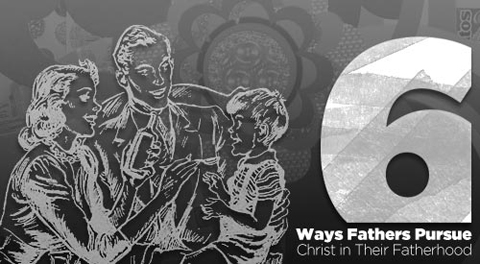
6 Ways to Pursue Christ Thru Fatherhood

Scott Thomas, President of Acts 29 Network, has recently posted a brief article outlining Six Ways Fathers Pursue Christ in Their Fatherhood.  In other words, these six principles applied together help fathers to grow in grace even as we seek to lead our families in grace.

The 6 ways are:  

  1. See their children as a blessing from God
  2. Understand that their children are born with a bent toward evil
  3. Believe the gospel is the good news for children
  4. Train their children to honor and obey
  5. Practice and demonstrate submission
  6. Love their wives

To read the whole article click: 6 Ways.

Gospel at the Center

At my core I am committed to gospel-centeredness and being gospel-driven. But I confess I don’t really know what that means.  The rich complexity of the gospel and the scope of the implications from the gospel are far beyond my ability to grasp, plumb, or fathom.  So I am drawn towards faithful expressions of the gospel that expand my understanding and depth of insight.

I am indebted to the Elders and leaders of Redeemer Presbyterian Church in Newport Beach, California for their thoughtful and compelling explanation of what it means to be gospel-centered: 

The gospel is at the center of all we do.  The “gospel” is the good news that through Jesus, the Messiah, the power of God’s kingdom has entered history to renew the whole world.  Through the Savior God has established his reign. When we believe and rely on Jesus’ work and record (rather than ours) for our relationship to God, that kingdom power comes upon us and begins to work through us. We witness this radical new way of living by our renewed lives, beautiful community, social justice, and cultural transformation. This good news brings new life. The gospel motivates, guides and empowers every aspect of our living and worship.

Let me encourage you to read this again and again.  Spend some time thinking through what was said and what is demanded.  (You may even ask yourself if you agree with what they said.)  And join me in praying that God would not only grant us greater understanding, but that He would bring about personal and cultural transformation.

Centered on the Gospel

What does it mean for a church to be gospel-centered?  That’s a popular concept these days.  What if we were scrambling to be law-centered?  The difference may not be so easy to see.

Ray Ortland adresses this question with keen insight and simplicity in his brief post: Centered On One or the Other

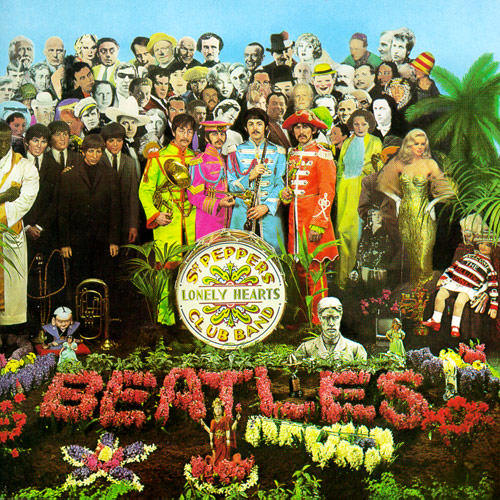
And what does the cover from the Beatles’ Sgt Pepper album have to do with anything?

Well, you’ll have to read the post. Ray explains that too.

The Least We Can Do

If Jesus could rise from the dead, we can at least rise from our bed, get off our couches and pews, and respond to the Lord’s resurrection life within us, joining Jesus in what he’s up to in the world. We call on others to join us—not in removing ourselves from planet Earth, but to plant our feet more firmly on the Earth while our spirits soar in the heavens of God’s pleasure and purpose. We are not of this world, but we live in this world for the Lord’s rights and interests. We, collectively, as the ekklesia of God, are Christ in and to this world.

 -Leonard Sweet & Frank Viola, from A Jesus Manifesto

Grace Will…

Paradox Hand

I was blown away as I thought about the paradoxes of the Gospel as it was described by Paul Tripp in his book, Broken-Down House.  Don’t just read through quickly. Stop and consider the contrasts:

Grace is a story and grace is a gift. It is God’s character and it is your hope. Grace is a transforming tool and a state of relationship.  Grace is a theology and an invitation. Grace is an experience and a calling. Grace will turn your life upside down while giving you a rest you have never known.  Grace will convince you of you unworthiness without ever making you feel unloved.

Grace will make you acknowledge that you cannot earn God’s favor, and it will remove your fear of not measuring up to his standards. Grace will confront you with the fact that you are much less than you thought you were, even as it assures you that you can be far more than you had ever imagined. Grace will put you in your place without ever putting you down.

Grace will enable you to face truths about yourself that you have hesitated to consider, while freeing you from being self-consciously introspective. Grace will confront you with profound weaknesses, and at the same time introduce you to new-found strength. Grace will tell you what you aren’t, while welcoming you to what you can now be. Grace will make you as uncomfortable as you have ever been, while offering you more comfort than you have ever known. Grace will drive you to the end of yourself, while it invites you to fresh starts and new beginnings.  Grace will dash your hopes, but never leave you hopeless. Grace will decimate your kingdom as it introduces you to a better King. Grace will expose your blindness as it gives you eyes to see. Grace will make you sadder than you have ever been, while it gives you greater cause for celebration than you have ever known.

Grace enters your life in a moment and will occupy you for eternity. You simply cannot live a productive life in this broken-down world unless you have a practical grasp of the grace you have been given.

Crazy Love

I don’t know Francis Chan, but I think I like him.  I know I like what I see so far.

A friend, who is also an Elder in our church, introduced me to Chan a few months ago. He had just finished reading Chan’s book, Crazy Love, and said that Chan was teaching the same things I had been introducing to Walnut Hill Church – namely a Gospel-driven, missional approach to living.  He wanted to know if I was familiar with Chan, and what my thoughts were.  At the time I had none.  But obviously I was curious. I was curious to see what this guy was saying, if indeed we were teaching similarly.  I was curious to see what my friend and colleague percieved I was teaching, since he thought we were teaching the same things.

I did some investigation on the Internet.  The only negatives I found, or rather the only criticisms of Chan I found, were a couple of Asian-American bloggers who thought Chan acted too “White” or Anglo; and someone who seemed put off by Chan’s frequent application of the Gospel to the use of money.  I didn’t find either of these charges to be anything to discredit Chan, so I conintued with my investigation.

Now, a few months after first hearing Chan’s name, I find myself impressed.  I don’t know all he has said or written, so the day may come when I find myself disagreeing with Chan about something. But that day is not today.  And even if, or when, it does come I suspect it won’t be too big a deal.  It’ll only be a matter of degree.  Francis Chan is a man who loves God, who loves people, and who knows how God has loved His people.  He is passionate about telling people about God’s Crazy Love. He is faithful to call people to love God and each other in tangible ways, in seemingly crazy ways.

So not only has my friend stumbled upon a faithful teacher, I have become a student as well.    

To get acqauinted with Francis Chan, check out the above video, and the related website, Just Stop and Think.

Diamond in the Rough

The NFL Draft commences in a little more than an hour from the time I write this post.  Not surprising, the pre-draft headlines are focused on Matt Stafford, out of the University of Georgia, and Marc Sanchez, out of Southern Cal, two high profile quarterbacks.  But the real story of this draft, no matter where he ends up, is Ole Miss Offensive Lineman Michael Oher.

The video above gives an overview.  The best video I’ve seen, giving much more of the whole story, was on ESPN earlier this afternoon, which you can watch by clicking: Adopted Family Helps Oher

Oher grew up on the streets of Memphis. His mother was a crack addict. His father had been murdered.  Oher was homeless and left fending for himself by age 6.  He didn’t know his correct birthday or his own real name.  Because of his size and athleticism someone sent him to Briarcrest Christian School to see if he might help out the athletic program.  Briarcrest officials recognized that Oher was completely unprepared for the academic rigors of the school, but also knew that he had no place to turn. So they allowed him in school, on academic probation and inelligible for any athletic competition until he was caught up in school. 

As amazing as that part of the story is, there is more.  While enrolled at Briarcrest Oher was still largely on his own. That is until one cold Thanksgiving night, a school classmate driving with her family spotted Michael on the street wearing shorts and a thin T-shirt.  The Tuohy family turned their car around picked Oher up and took him to their home.  Over time the Tuohy family bought Michael clothes and food, and allowed him to stay with them – until they finally adopted him into their family. Loved for the first time in his life Oher progressed in the classroom and on the football field. He enrolled at Ole Miss and became an All American. Today he will become a first round draft choice – and a millionaire.  But I suspect Michael Oher will be the one man drafted who understands that love far outvalues cash.

The story has already been made a book, The Blind Side, which has been on the New York Times Bestseller list.  It has been featured on NPR’s All Things Considered. And a motion picture is in the works.  But it is the story that may not be told that also fascinates me. It is the story of those whose faith was expressed through tangible love. It is the story of the Tuohy family and the folks at Briarcrest Christian School.the-blind-side

Think about it. The Tuohy’s were a well-to-do Memphis family.  They had children, including an attractive teenage daughter, who I’m sure they were concerned to protect.  And here is this big, huge, black guy, from the streets, that they invited into their home.  I know race should not matter, but it is Memphis. But even apart from race, this is a huge, undisciplined, teenager off the streets.  Most people would have just kept driving. Some kind folks may have bought food and clothes. Others may have gone so far as to make sure he found a home.  But risk the unknown, and with children in the home? I imagine few would have done that.  But the Tuohy’s did. They were compelled by love. And their love transformed a life.

I also have to commend the headmaster at Briarcrest.  Not many administrators would have done the same thing. Some may have admitted Oher because of his athletic prowess. But how many would admit him simply to help him?  Briarcrest had no reasonable reason to expect that Oher would ever succeed in the classroom. When he got to the school he carried a 0.4 gpa.  But these people cared. They lived out their faith, and helped this helpless young giant, even when they had little hope to benefit from it. They reflect what Christian Education ought to be about.

This story makes you feel-good, no matter how it is told. But I stand in awe as I see the Apostle Paul’s words come to life on ESPN:  “The only thing that matters is faith expressing itself through love.” (Galatians 5.6)

More Narrow Than Conservative

 swinging-bridge

In the Foreword to CJ Mahaney’s book, Worldliness, John Piper writes:

“The gospel makes all the difference between whether you are merely conservative or whether you are conquering worldliness in the power of the Spirit for the glory of Christ.”

What an awesome and insightful statement.  In my circles I encounter way too many people who assume conservatism is an ends, and not a means to an end; that conservatism in itself is akin to godliness; and that the only real battle for godliness is against liberalism.  Yet Jesus tells us that the road is narrow (Matthew 7.13-14); and Proverbs warns us not to lean to the left or to the right (Proverbs 4.27).

The Jesus Pledge


cross-in-the-sky1


What does it mean to be a disciple of Christ? What does it mean to be Gospel-driven?  I think my friend, Paul Miller, expresses it beautifully in The Jesus Pledge:

I pledge my life to Jesus and the Gospel.  I want Jesus not to be just part of my life or something that makes me feel good, but to be the very center – controlling everything.  I want only the knowledge of the love of God.  I want to know Christ. 

I want no desire, idol, or sinful way of dealing with hurt to control any part of my life no matter how small.  I put away from myself the love of money, power, comfort, and success.  I count everything rubbish. 

I bind myself to Christ as bond-servant for life.  I want no master other than Christ.  I purpose to own nothing.  I surrender to Jesus my family, my friends, my ministry, my ideas, my possessions, and my future. 

I commit myself to submission to others and a willingness to learn from all kinds of Christians.  I commit myself to speak only your words, not my own.  I commit myself to speak the truth in love to others.

I want to love people.  I want to lay down my life for others, especially those closest to me, as God gives us grace.  I want to love people by telling them about Jesus.

I understand that this will mean suffering in my life, that I will join in the sufferings of Christ.  But that I always want to be dying, so that I can always be living in Christ. 

Hope for Humility

dwarfed-by-mount-robson

I’ve heard Steve Brown offer this amusing anecdote:

“I was given a pin by my club for being the most humble member.  They took it away because I wore it.”

I have much to be humble about.  But, if I was in Steve Brown’s club, no one would have ever given me a pin in the first place.  No one who knows me would consider me a model of humility.  Despite all the reasons I should be, being humble is just not something that comes easily for me. 

I live an irony. I have studied the subject of humility at some depth, especially over the past couple years. Yet I find it all too easy to become proud about what I’ve learned – even as my study reveals what I lack!  Nevertheless, as a work in progress I continue the pursuit that, for me, seems almost an inigma.

Tim Keller tackles the topic of humility in a brief, but insightful, article: Advent of Humility.  In the opening paragraph Keller notes:

When Jesus himself tried to summarize why people should take up the yoke of following him, he said it was because he was meek and humble (Matt. 11:29). Seldom, however, do we explore the full implications of how Jesus’ radical humility shapes the way we live our lives every day.

As Keller explores the importance, the grounds and the necessity of humility, he also observes some of the hindrances.   Interestingly, in the end, Keller points us to the only hope we have of becomming humble, even as he acknowledges that he has no practical solutions for those who, like me, are in desperate need of growing and living in humility.

To read, click: Advent of Humility