“We are not citizens of this world trying to make our way to heaven; we are citizens of heaven trying to make our way through this world.”
That radical Christian insight can be life-changing. We are not to live so as to earn God’s love, inherit heaven, and purchase our salvation. All those are given to us as gifts; gifts bought by Jesus on the cross and handed over to us.
That means in all adversity:
There is nothing we can lose on earth that can rob you of the treasures God has given and will give us.
~ Adapted from The Landisfarne
Christian Life

Poem of Your Life
The Bible tells us that each of our lives tell a story. We are like masterpieces of God’s artistry. The greek word is poiema, from which we get our English word “poem”.
- We are God’s poems. (Ephesians 2.10)
- We are living epistles (2 Corinthians 3.3).
In this video Phil Keaggy joins Michael Card to play Poem of Your Life, a Celtic-ish piece from Card’ album Poiema.
Life is a song we must sing with our days/A poem with meaning more than words can say/A painting with colors no rainbow can tell/A lyric that rhymes either heaven or hell
We are living letters that doubt desecrates/We’re the notes of the song of the chorus of faith/God shapes every second of our little lives/And minds every minute as the universe waits by
CHORUS: The pain and the longing/The joy and the moments of light/Are the rhythm and rhyme/The free verse of the poem of life
So look in the mirror and pray for the grace/To tear off the mask, see the art of your face/Open your ear lids to hear the sweet song/Of each moment that passes and pray to prolong
Your time in the ball of the dance of your days/Your canvas of colors of moments ablaze/With all that is holy/With the joy and the strife/With the rhythm and rhyme of the poem of your life/With the rhythm and rhyme of the poem of your life
Mirror, Mirror on the Wall

In the Preface to Joe Thorn‘s book, Note to Self, Sam Storms penned a paragraph that strikes at the heart of the difference between those with a vital Chrisian faith, and those who show little if any hint of actually being a follower of Jesus Christ. Here is what Storms says about the functional place of Scripture in the life of a Believer:
Merely affirming the Bible is inspired accomplishes very little. Asserting it’s authority isn’t much better. The inspiration and authority of the Scriptures are of value to us only so far as we change our beliefs to conform to its principles and alter our behavior to coincide with its imperatives. The Bible is meant to govern our lives, to fashion our choices, to challenge our cherished traditions, and ultimately make us more like Jesus.
The question for each of us, then, is whether the Bible actually functions in this way.
- Do we submit to its dictates?
- Do we put our confidence in its promises?
- Do we stop living in a certain way in response to its counsel?
- Do we embrace particular truths on its authority?
- Do we set aside traditional practices that conflict with its instruction?
In other words, for the Bible to be of value to us it must actually function to shape how we think, feel, and act, as well as what we believe, value, and teach.
I think Storms nails it here; hits it square on its head.
A number of dialogues I have recently had broached the subject of the differences of maturity levels between professing Christians. What Storms addresses is one of the most vital dynamics that explain the differences. In fact, since we who believe have all been given the same Spirit, perhaps the differences in the way we approach and apprehend the Scripture may be THE most important explanation for such differences.
Some see the Scriptures as they are to be seen, as a revelation of what is good and a mirror to show us what needs addressing in our lives, which in turn drives us to the Cross, where the power of transformation rests. Here they find the promises of God to be true: He is making us beautiful, to become a Bride for the King.
Others also see the Scriptures as a mirror. But, for these folks, this mirror is more like the one used by that witch in the story Snow White, who declared: “Mirror, mirror on the wall, who is the fairest one of all?” All she wanted was to hear how good she was; how much better she was than others. Sadly some people look to the mirror of Scripture only willing to see whatever appears to validate them. Failing to see, by the mirror, the ugly-fying effects of sin in their hearts and lives, they see no real need to return to the Cross. Thus they seem to never be changed. They never become truly beautiful.
Your Will Be Done in My Life

This prayer from Thomas a Kempis has really touched me where I am today:
O Lord, blessed be your name forever, for it is your will that this temptation and trouble come to me. I cannot escape it, but must run to you so that you can help me and turn it to my good. Lord, I am now being afflicted, and my heart is troubled by my present suffering and not at peace.
And now, Dear Father, what shall I say? I am caught in the middle of trouble, “Save me from this hour”. Yet I come to this hour so you may might be glorified when I am deeply humbled and delivered by you. Therefore, may it please you, Lord, to deliver me, for what can a poor wretch like I am do, or where can I go, without you?
Give me patience, O Lord, even now in this emergency. Help me, my God, and I will not be afraid of how much I may be afflicted.
~ From Imitation of Christ III.29
Tongue-in-Check

Let me share a story about an old mountain minister and a young boy in the congregation.
During the children’s message this old pastor was trying to convey the sovereignty of God to his young parishioners – and to the listening ears of the rest of the congregation. As he began his summation one precocious lad tried to chime in: “Preacher…” The sage old minister looked at the boy, but continued with his conclusion.
Again the boy, begging for acknowledgement, said: “Preacher…”
After a third interruption the preacher finally responded: “Yes, Lad?”
The boy offered: “Preacher, I know one thang God cain’t do.”
The minister gently corrected: “No. There is nothing God cannot do.” But the boy insisted: “But, Preacher, I know one thang God cain’t do.”
Finally relenting, the preacher inquired: “OK. Why don’t you tell us what you think God can’t do.” The boy confidently expressed his observation: “God cain’t make your mouth no bigger without moving your ears back!”
Ah! A big mouth – the bane of many a preacher. But my ministerial colleagues and I are not the sole sufferers of this malady. Many who sit in the pews each week also exhibit a tendency to run at the mouth. And so do many who never darken a church doorway. It is a common affliction.
The great 14th Century theologian-Reformer, John Wycliffe – most renowned for being the first to translate the Bible into English – recognized the power of the tongue:
“The tongue breaks bone, although the tongue itself has none.”
Similarly, James, the brother of the Lord Jesus wrote:
“Likewise the tongue is a small part of the body, but it makes great boasts. Consider what a great forest is set on fire by a small spark. The tongue also is a fire, a world of evil among the parts of the body. It corrupts the whole person, sets the whole course of his life on fire, and is itself set on fire by hell. All kinds of animals, birds, reptiles and creatures of the sea are being tamed and have been tamed by man, but no man can tame the tongue. It is a restless evil, full of deadly poison.” (James 3.5-8)
I suspect more carnage has been caused by the destructive power of loose and lying tongues than by any war. The spark of a little gossip fans into flame, the fire spreads, resulting in inestimable damage.
But it doesn’t have to be that way. Proverbs 12.8 tells us:
“Reckless words pierce like a sword, but the tongue of the wise brings healing.”
Do you see that? With a simple conscious adjustment of the employment of our tongues we can be transformed from destroyers to restorers.
What great news! At least it would be, except, according to James, “no man can tame the tongue”. What could he possibly mean?
James is revealing that mere will-power cannot lead to the radical change we need. No doubt a conscious effort will generate some behavioral improvement. But our condition is more chronic than most imagine. Jesus tells us the root of our problem is spiritual not muscular. (Mark 7.21-23) It’s like trying to domesticate a wolf – eventually the true nature will re-emerge. In fact, James says though man may tame wild animals, the tongue will still not be tamed. Not by our own effort, anyway. The true nature eventually resurfaces.
No need to despair. The power for transformation is found in Jesus. When we embrace Jesus, as he is offered in the gospel, everything changes. Our minds and hearts are renewed, so we begin to think and desire differently. And out of renewed hearts come redeeming words. As the psalmist discovered:
“The mouth of the righteous man utters wisdom, and his tongue speaks what is just.” (Psalm 37.30)
***
NOTE: This post first appeared as an article for a column in the Bristol Herald Courier.
Who Does What?

Reading Jerry Bridges’ book Discipline of Grace, especially chapter 6, prompted me to think about the importance of understanding “Who does What?” in our salvation.
Here are a few observations that I hope will provide some clarification:
- Many are frustrated to unfortunate degree because they do not understand that sanctification is a process.
- Many are spiritually stunted because they do not realize spiritual growth and maturity is a process in which we must actively and intentionally participate.
- Many people just assume that, now that they are “New Creations”, Christ-likeness will inevitably emerge from within them whether they do anything or not.
- But spiritual growthis not automatic. God calls us to cooperate with his grace, by actively engaging in the Means of Grace (Word, Sacraments, Prayer), responding to the Spirit by his grace.
- The confusion seems to be rooted in misunderstanding the differences and the relationship between justification (conversion) and sanctification (growth).
- While it is true that we can do nothing to bring about our justification, our new birth, any more than we can do anything to bring about our physical birth; it is not true that we can do nothing, or should do nothing to cultivate healthy spiritual growth. Just as in our physical growth, where we develop in accord with our God-given DNA in no small part through healthy eating and activity, we grow spiritually by God-given grace AND healthy activity (i.e. Means of Grace, Obedience, Active Mission and Spiritual Disciplines).
Gospel-Driven Sanctification
The first thing to remember is that we must never separate the benefits (regeneration, justification, sanctification) from the Benefactor (Jesus Christ). The Christians who are most focused on their own spirituality may give the impression of being the most spiritual but from the New Testament’s point of view, those who have almost forgotten about their own spirituality because their focus is so exclusively on their union with Jesus Christ and what He has accomplished are those who are growing and exhibiting fruitfulness. Historically speaking, whenever the piety of a particular group is focused on OUR spirituality, that piety will eventually exhaust itself on its own resources. Only where our piety forgets about us and focuses on Jesus Christ will our piety be nourished by the ongoing resources the Spirit brings to us from the source of all true piety, our Lord Jesus Christ.

My Lukewarm Heart

Here are a couple of question to ponder from Ole Hallesby:
Do I really desire to be set free from the lukewarmness of my heart and worldly life?
Is not my Christian life always lukewarm and half-hearted for the simple reason that deep down in my heart I desire it to be that way?
If you find this to be true of your heart, as I sometimes do, you may find John Piper’s book, When I Don’t Desire God, to be beneficial. It is available free from Desiring God Ministries: here
The Call to Discipleship Is…

Colin Marshall & Tony Payne give us a good concise definition of what it means to be a follower of Jesus:
The call to discipleship is thus a call to confess our allegiance to Jesus in the face of a hostel world; to serve him and his mission, whatever the cost.
~ from The Trellis and the Vine
Jerry Bridges on Gospel-Centeredness
A Paradox of God’s Intentions

A paradox of the Christian faith worth pondering, from John Flavel:
When God intends to fill a soul, he first makes it empty. When God intends to enrich a soul, he first makes it poor. When he intends to exalt a soul, he first makes it sensible to it’s own miseries, wants, and nothingness.
Call to Discipleship: Same for All
At the most basic level, the Bible says that Jesus does not have two classes of disciples:
- Those who abandon their lives to his service.
- Those who do not.
The call to discipleship is the same for all.
~ Colin Marshall & Tony Payne, from The Trellis and the Vine

5 Truths About Forgiveness
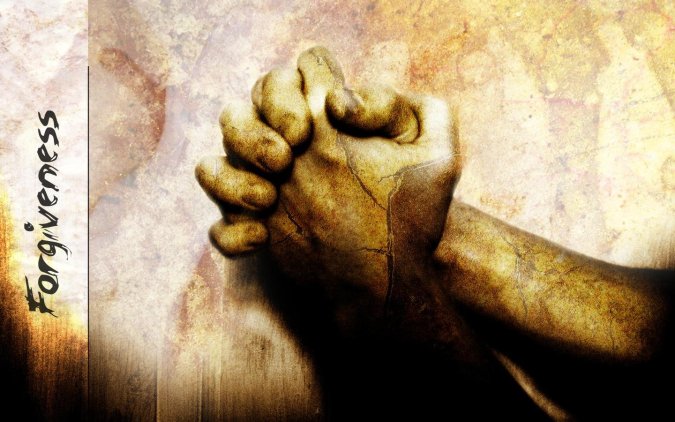
Mark Twain describes forgiveness this way:
Forgiveness is the fragrance that the violet sheds on the heal that has crushed it.
What beautifully apropos imagery.
In a recent post I listed 5 Myths About Forgiveness, taken from an article by Sam Storms. What I didn’t do in that post is describe what forgiveness is. So in this post we give consideration to that question, again borrowing from Storms.
Here are 5 Truths About Forgiveness:
-
God in Christ forgave us by absorbing in himself the destructive and painful consequences of our sin against him
- God forgave us in Christ by canceling the debt we owed him. That is to say, we are no longer held liable for our sins or in any way made to pay for them.
- Forgiving others as God has forgiven us means we resolve to revoke revenge.
- Forgiving others as God has forgiven us means that we determine to do good to them rather than evil. (Romans 12.17-21)
- God forgave us in Christ by reconciling us to himself, by restoring the relationship that our sin had shattered.
While these truths are still not a definition they do work together to give us understanding, perhaps even better than a mere definition might. Forgiveness is embodied and demonstrated in the person of Jesus Christ. He is, in Twain’s words, the Violet that was crushed for us.
***
This list is an excerpt from a post by Sam Storms that originally appeared on the Enjoying God Ministries blog. To whole article is available in .pdf thanks to the folks at Acts 29 Network. Click: Forgiveness
5 Myths About Forgiveness

In the movie Just Friends pop singer Samantha James (Anna Faris) lyrically muses:
“Forgiveness is more than saying ‘Sorry'”
Earlier this week I had a conversation with a friend who had been accused by a woman from his church of being “unforgiving” because he was hesitant to re-hire a man who had been fired for cause just a couple years previous. My friend, who is a very gentle and gracious man, was mostly venting frustration from the sting of this accusation. But he was also honestly trying to resolve the conflict within himself; trying to discern if his hesitancy was truly a reflection of a heart lacking in forgiveness.
I suspect many self-searching people wrestle with question at one time or another.
The character Samantha James may be on to someting. But what? What is forgiveness? Maybe at least as important, what is forgivenss NOT?
Sam Storms helps us out with that latter question by listing 5 Myths about forgiveness:
- Contrary to what many have been led to believe, forgiveness is not forgetting.
- Forgiving someone does not mean you no longer feel the pain of their offense.
- Forgiving someone who has sinned against you doesn’t mean you cease longing for justice.
- Forgiveness does not mean you are to make it easy for the offender to hurt you again.
- Forgiveness is rarely a one-time, climactic event. It is most often a life-long process.
This list is an excerpt from a post that originally appeared on the Enjoying God Ministries blog. To whole article is available in .pdf thanks to the folks at Acts 29 Network. Click: Forgiveness
In a later post we will consider what Storms says forgiveness is.
3 Lane Escape from Moralism

I am thankful to Joe Thorn for concisely clarifying an issue that I believe confounds many well intentioned Christians. The problem addressed is the confusion of moralism with the gospel. In many case moralism is an attempt to take seriously both God and the Christian faith. Nevertheless, moralism is off track.
In a post titled Killing Moralism, Thorn observes:
Many Christians have grown up in the church on moralistic preaching; that is, preaching that calls for obedience without connecting the commands of God to the cross of Christ.
Thorn goes on to suggest:
This disconnect is dangerous, potentially leading hearers into either self-loathing or self-righteousness. Moralistic preaching is often the ground in which the devil sows the seeds of legalism.
The more I study the more I am amazed by how cohesive the Scriptures are – both Old Testament and New Testament. Christ is central to both, as together they unfold God’s awesome plan and work of redemption.
But Thorn is right, too much of what we hear from our pulpits fails to make the connection. And sadly that has all too often been true of the pulpits I have stood in through the years. Oh, the Word was proclaimed. The teaching was faithful. Often rich truth was expressed: doctrinal, devotional, and dutiful. But too often the cross – which is the crux of the whole Bible – was not clearly tied in.
In recent years I have labored to remedy that. But it is still a work in progress.
In his post Thorn suggests three observations we should look for to draw more deeply from the Scriptures for our preaching, teaching, and personal formation:
- See the God of the Command
- See the Grace Behind the Command
- See the Gospel Above the Command.
To practice this observation Thorn wisely instructs us to remind ourselves of three truths:
- Jesus atoned for our failure in this command. (Colossians 1.3; Colossians 2.13, 14; Ephesians 2.16; Romans 5.9)
- Jesus fulfilled this command for us. (1 Corinthians 1.30-31; Romans 5.19; Philippians 3.9)
- Jesus empowers us to live out this command. (Philippians 2.12-13; Ephesians 6.10-20; 1 Peter 4.11)
The more we embrace these principles the better we will become in “preaching the gospel to ourselves”. And living in light of the gospel is the key to escaping well intentioned but ultimately vapid moralism.
 GRACE & PEACE