PCA Consensus Revisited

Preface

The denomination in which I serve, the Presbyterian Church in America (PCA), is approaching the 50th anniversary of its founding. Through these years God has blessed this expression of His Church, and it has been a privilege for me to have been part of it. The sailing has not always been smooth. There have been some storms that have their genesis from both inside and outside of the church. We are not without our faults, our failures, or our sins. But through it all, I believe, the PCA has been well-tethered to the motto:

Faithful to the Scriptures, True to the Reformed Faith, and Obedient to the Great Commission

From its inception, the PCA has been somewhat of a “Big Tent” denomination, at least relatively speaking. Though not an especially large denomination, the tent is big enough in that it encompasses an array of churches holding to both the authority of Scripture and to the Reformed understanding of the Christian Faith. (The Great Commission part sometimes seems like it is generally and widely true, but the actuality, or the level of engagement, may be measured more on a church to church basis. That said, some may also reasonably suggest the same about the fidelity to the Reformed Tradition.) As with any Big Tent denomination – and perhaps especially so with any theologically “conservative” Big Tent – the PCA has had – and still has – its share of “camps” and conflicts. Through the years some from fringes of the church have departed for other denominations, or into independency; and they have done so because they respectively believe: 1) The PCA is too “liberal” and permissive, or 2) The PCA is too “conservative” and uptight. But the vast majority, like me, have found a home and felt at home, and the PCA continues to grow even as most other denominations are experiencing decline.

For a variety of reasons, the PCA has been engaged in some prolonged intense debates for the past few years – some sounding like new verses of old songs; others sounding like entirely new tunes. Some, with differing visions, are even aiming to chart a new course for the PCA. And while I listen to the discussions and the proposed directions, trying to both figure out where I fit in and where I believe our denomination should go, in my mind I am wondering if maybe our best future may be found by resurrecting discussions from our past.

In 1994 a group of church leaders, collectively known as the PCA Consensus Group, hosted an informal gathering at Cedar Springs Presbyterian Church in Knoxville, Tennessee. (PERSONAL NOTE: At the time I was in the first year of my pastoral ministry, serving a church outside of Chattanooga. Cedar Springs had been my home church, beginning my Sophomore year of college; it is the church where my wife had grown up; and it was the church that sent us out into pastoral ministry.) This informal gathering was widely attended by church leaders from throughout the PCA, with several hundred, if not even a thousand, in attendance. The purpose of this gathering would be for the PCA Consensus group to present and discuss, what I consider, a well-thought out statement of affirmations and denials, published in a document titled A Statement of Identity for the Presbyterian Church in America.

What I have posted below is the substance of that Statement, or rather the revised version, subsequently re-published in 1998. I post this because I believe many of these propositions are worthy of reconsideration at this time, in the PCA’s present discussions and debates.

~ W. Dennis Griffith

Continue reading

Prayer of Re-Orientation

Dallas Willard on the importance and centrality of the first petition of the Lord’s Prayer, “Hallowed be Your Name”:

“This request is based upon the deepest need of the human world. Human life is not about human life. Nothing will go right in it until the goodness and greatness of its Creator and Sustainer is adequately grasped. His very name is then to be held in the highest regard. Until that is so, the human compass will always be pointing in the wrong direction … and individual lives, as well as history as a whole, will suffer from constant and fluctuating disorientation.”

The Divine Conspiracy

How to “Hallow” God’s Name

The first petition of the model prayer Jesus taught his disciples to pray was “hallowed be your Name”. We are instructed to pray that God would act in such a way that his name would be recognized, revered, valued, and celebrated by Peoples throughout the whole world.

As the Westminster Shorter Catechism in Modern English expresses it:

In the first request (“hallowed be your name”) we pray that God will enable us and others to glorify Him in everything He uses to make Himself known and that He will work out everything to His own glory.

The Heidelberg Catechism, from the Dutch tradition, is a bit more elaborative:

“Hallowed be your name” means: Help us to truly know you, to honor, glorify, and praise you for all your works and for all that shines forth from them: your almighty power, wisdom, kindness, justice, mercy, and truth. And it means, Help us to direct all our living – what we think, say, and do – so that your name will never be blasphemed because of us but always honored and praised.

Only recently, as I was preparing for a series of messages from the Lord’s Prayer, did I notice that in Psalm 8 King David provides a wonderful example of what it looks like to have the hallowing of God’s name as a heartfelt passion and priority. Notably we see through Psalm 8 several aspects of David that are essential characteristics of anyone who hallows God’s name:

  1. An awareness of how unfathomably awesome Our Father in Heaven truly is;
  2. An appreciation for the transcendent beauty of all of God’s Creation;
  3. A personal humility rooted in an awareness of his own nature, especially in comparison with the incomparable holiness of God;
  4. An awareness that his hope and significance come only from God;
  5. A thankfulness for God’s gracious promises and provision;
  6. A consequential desire that God’s name be glorified throughout the earth.

O Lord, Our Lord, How majestic is you name in all the earth!

4 Admonitions For (Christian) Justice Seekers

In his preface to Thaddeus Williams‘ excellent Confronting Injustice Without Compromising Truth, the widely esteemed John Perkins writes a two-page Foreword that itself is worthy of the price of the book.

In his Foreword Perkins writes:

“Through my sixty years of working for justice, I offer four admonishments to the next generation of justice seekers.”

First, Start With God!

God is bigger than we can imagine. We have to align ourselves with his purpose, his will, his mission to let justice roll down, and bring forgiveness and love to everyone on earth. The problem of injustice is a God-sized problem. If we don’t start with him first, whatever we are seeking, it ain’t justice.

Second, Be One In Christ!

Christian brothers and sisters – black, white, brown, rich, and poor – we are family. We are one blood. We are adopted by the same Father, served by the same Son, filled with the same Spirit. In John 17 Jesus prays for everyone who would believe in him, that people from every tongue, tribe, and nation would be one. That oneness is how the world will know who Jesus is. If we give a foothold to any kind of tribalism that could tear down that unity, then we aren’t bringing God’s justice.

Third, Preach the Gospel!

The gospel of Jesus’ incarnation, his perfect life, his death as our substitute, and his triumph over sin and death is good news for everyone. It is multi-cultural good news. in the blood of Jesus, we are to truly see ourselves as one race, one blood. We’ve got to stop playing the race game. Christ alone can break down the barriers of prejudice and hate we all struggle with. There is no power greater than God’s love expressed in Jesus. That’s where we all find human dignity. If we replace the gospel with this or that man-made political agenda, then we ain’t doing biblical justice.

Fourth, Teach Truth!

Without truth, there can be no justice. And what is the ultimate standard of truth? It is not our feelings. It is not popular opinion. It is not what presidents or politicians say. God’s Word is the standard of truth. If we’re trying harder to align with the rising opinions of our day than with the Bible, then we ain’t doing real justice.

Finally, Perkins wraps us his admonitions with this unfortunate assessment:

“Sadly, many Christian brothers and sisters are trying to fight this fight with man-made solutions. These solutions promise justice but deliver division and idolatry.”

The Secret to Restoring the Glories of Our Past

J. Gresham Machen, in the Introductory chapter of his 1923 classic Christianity and Liberalism, wrote:

“The condition of mankind is such that one may well ask what it is that made the men of past generations so great and the men of the present generation so small. In the midst of all the material achievements of modern life, one may well ask the question whether in gaining the whole world we have not lost our own soul.”

Certainly a question worth at least some consideration.

Machen goes on to ask:

“Is there some lost secret, which if rediscovered will restore to mankind something of the glories of the past?”

To which, Machen then answers his own question:

“Such a secret the writer of this little book would discover in the Christian religion.”

And I’d have to concur, if by “the Christian religion” Machen means a holistic biblical Christianity of both Word and Deed, properly (although not equally) balanced upon fulfilling both of the greatest commandments: “Love the Lord” AND “Love your neighbors”.

Resource: Christianity and Liberalism

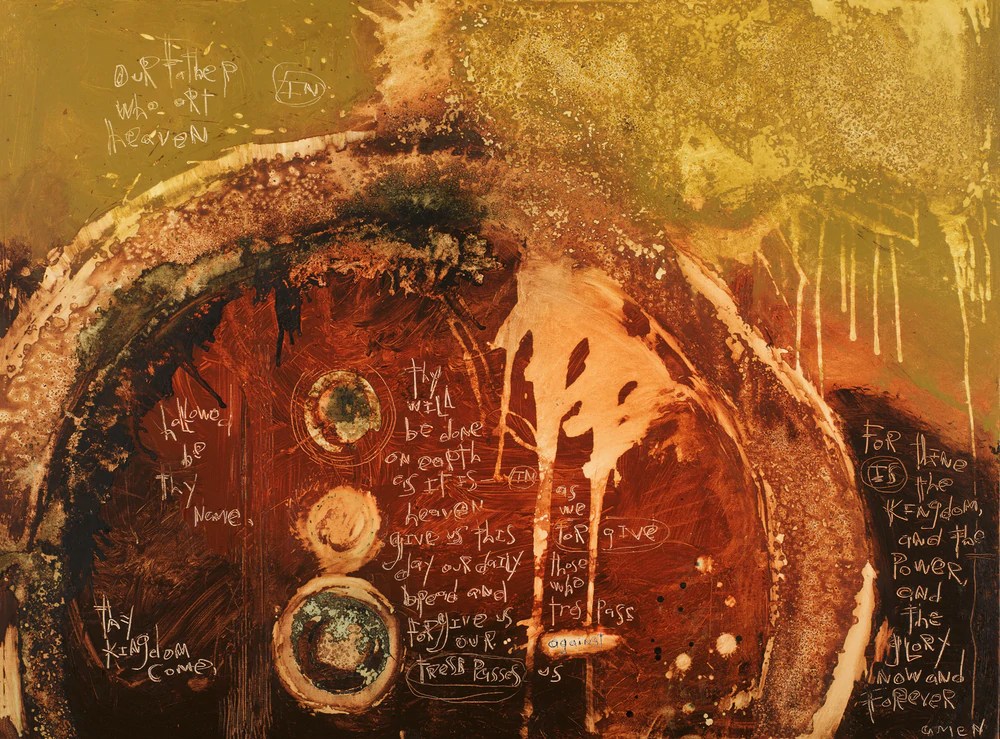
Dear Father in Heaven…

While preparing for my Summer series of sermons, which I will begin this coming Sunday, I stumbled upon – or re-discovered – Dallas Willard‘s paraphrase of the Lord’s Prayer. While it is a paraphrase, and therefore may be slightly skewed here and there toward the author’s personal perspective, nevertheless Willard’s was an informed perspective and his expression has both a ring of faithfulness and a refreshing simplicity.

Dear Father always near us,
may your name be treasured and loved,
may your rule be completed in us –
may your will be done here on earth in
just the way it is done in heaven.
Give us today the things we need today,
and forgive us our sins and impositions on you
as we are forgiving all who in any way offend us.
Please don’t put us through trials,
but deliver us from everything bad.
Because you are the one is charge,
and you have all the power, and the glory too is all yours-forever-
which is just the way we want it!

Source: The Divine Conspiracy

What’s Wrong With Our World?

According to legend, The London Times once sent out an inquiry to famous authors, asking the question: “What’s wrong with the world today?” Among those asked to write up short essays in reply was the noted G.K. Chesterton. Chesterton’s reported reply:

Dear Sir,

I am.

Yours, G.K. Chesterton

[Whether or not this story is factual or fable may be subject to some debate. However, for the curious, The Society of G.K. Chesterton has weighed in for the discussion: What’s Wrong With the World? And Chesterton did write a book titled What’s Wrong With The World?]

Though Chesterton may have never actually penned that pithy reply, (although, maybe he did,) what the story reflects is nevertheless valid. There is much wrong in this world. We all know it. Not the least of what is wrong in this world, according to Romans 1, is me – and you.

Over at The Gospel Coalition, writer/blogger Justin Taylor has penned a semi-fictional interview with the Apostle Paul, asking the question: What is Wrong With Us? I call it semi-fictional because, though no interview has actually taken place, Taylor interacts with Paul’s actual words from Romans 1, which describe the individual contributions we each contribute to what is wrong in this world. It is a penetrating perspective from which to read Romans 1. It is well worth the read: An Interview With Paul on What’s Wrong With Us.

How to Make Disciples

Dallas Willard, in The Great Omission: Reclaiming Jesus’ Essential Teachings on Discipleship, wrote:

“The greatest issue facing the world today, with all its heartbreaking needs, is whether those who, by profession or culture, are identified as ‘Christians’ will become disciples – students, apprentices, practitioners – of Jesus Christ, steadily learning from him how to live the life of the Kingdom of the Heavens into every corner of human existence.”

Collin Marshall & Tony Payne touch on the essence of discipleship in their book, The Vine Project, (a helpful sequel to their excellent first book, The Trellis & The Vine). Here’s what Marshall & Payne have to say:

Disciple-making is really about calling people to faith and hope in Jesus Christ in the midst of this present evil age, with all its pressures.

For those who want to explore more of the meaning and the mechanics of making disciples, Steve Childers, of Pathway Learning, has published a helpful series of short audios he has titled “How to Make Disciples”. (NOTE: A transcript of each audio is available at the bottom of the posts, for those who prefer reading.)

Foundations of Discipleship (7:32)

The Master’s Method of Discipleship (7:02)

Principles of Discipleship (6:53)

Goals in Discipleship (8:32)

Imitating Christ in Discipleship (8:16)