Brokeness, Contrition, and Repentance = Marks of a Growing Christian

“So Repentance begins with an attitude of brokenness over our sin. But true repentance will be followed by an earnest desire and a sincere effort to put away  the sin we are repenting of – to put on the Christlike virtues that we see missing in our lives. These efforts often seem to be characterized by failure as much as by success. But the frequent failures should bring us back to a broken and contrite heart that mourns over our sin. Brokenness, contrition, and repentance are all marks of a growing Christian, a person who is experiencing the work of the Spirit in being transformed gradually more into the image of God’s Son.”

~ Jerry Bridges, The Transforming Power of the Gospel

Fighting the Sin in Our Hearts

In Colossians 3, the Apostle Paul commands us:

Put to death therefore what is earthly in you:sexual immorality, impurity, passion, evil desire, and covetousness, which is idolatry. (v. 5)

His list should not be seen as exhaustive, but rather suggestive.  There are many other things that could be included in this list – things which are mentioned in many other passages throughout the Old and New Testaments.

But while Paul’s list here may not be complete, his message is clear:  “Put your sin to death!”

For those who cling to the notion that once we are secured in the grace of Jesus that we have little or no need to give serious and ongoing thought to our sin and the lingering effects it has upon us – that all we need to do is look at the positives of the promises of the gospel – Paul’s words provide a much needed corrective.

Certainly, the promises of the gospel give us a tremendous status. But there is still much to be done; much we need to be doing.  The gospel gives us the confidence that no matter what we may find when we look deep into the recesses of our own hearts, we will never be forsaken.  Whatever we may find in the dark and dank depths of our souls, it is no surprise to God.  He already knows. And he is the one who is encouraging us to take a look for ourselves. God, our Father, does this with the reassuring promise that no matter what we find he will not love us any less.

Still, easier said than done.

I appreciate the work Jonathan Dodson has done to  develop the concept of Fight Clubs to help us put our sin to death.   Dodson bases Fight Clubs on three essential principles:

1. Know Your Sin

Look for the sinful patterns in your life and trace them to the “identity of the moment” that you are looking to for worth and/or meaning (good person, faithful parent, creative artist, successful entrepreneur, etc.).   For instance, your sin could be sulking and your false identity could be victim

2. Fight Your Sin

Once you know your sin/identity issue, you can begin to fight it.

There are two primary ways God calls us to fight our sin.

First, confess your sin to God and ask for his forgiveness for your God-belittling desires and decisions. (1 John 1.9)  Follow your confession to God with confession to community so you can experience healing and encouragement of the church.  (James 5.16)

Second, encourage one another to take sin seriously, to “put sin to death”. (Romans 8.13 & Colossians 3.5) Don’t let identity-twisting sin just roll off your back. Get tenacious about glorifying and enjoying God!

In short, you could summarize it this way:

  • Confess your sin (to God and one another)
  • Get serious about fighting for true joy

3. Trust Your Savior

Trusting our Savior for gospel identity instead of an identity-of-the-moment is the most difficult and important part of being a disciple.

Robert Murray McCheyene said:

“For every look at sin, look ten times at Christ.”

How does Christ offer you a better identity than the false identity?

Dodson writes:

If my sin was sulking and my identity was victim, 2 Peter 1.3 reminds me that my identity is godly, a partaker of the divine nature. I was sulking in ungodliness because I thought I deserved better circumstances. I felt weak. Peter reminds us that we have “divine power granted to us for life and godliness.”

This scripture reminded me of my identity — godly — but it does not stop there.

It also offers us a Savior to trust, a counter-promise of divine power necessary to live a godly life, not a sulking life. What a relief! Our identity is godly, and our promise is divine power!

So, again, in short:

  • Find your Gospel counter-Identity
  • Trust your Biblical Promise

Looking Heaven-ward

“There are two methods which the Lord graciously adopts, in order to draw our heart away from this present world:

  • The first is by setting before it the attractiveness and stability of “things above:”
  • The second is, by faithfully declaring the evanescent [temporary] and shakable nature of ‘things of earth.’

… Now it is much better to be drawn by the joys of heaven than driven by the sorrows of earth.

The believer should not wait to be shaken out of the present things…There is no difficulty in giving up the world when we have, by faith, laid hold of Christ: the difficulty then would be to hold it.”

~adapted from C.H. Macintosh, Notes on Genesis (1879)

Gospel by Dylan

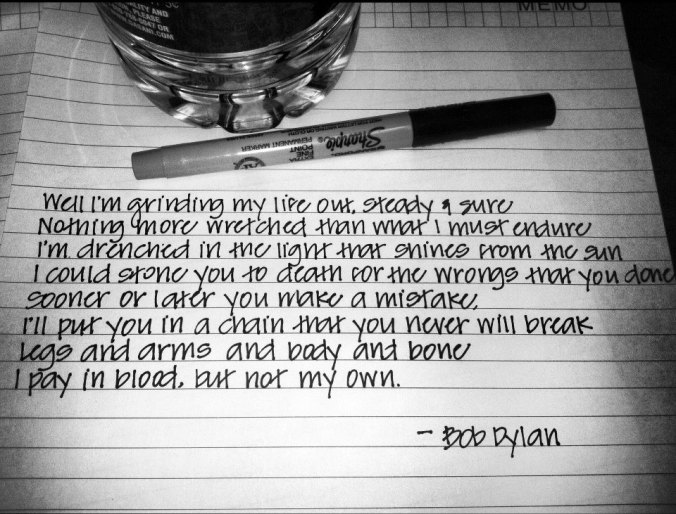
While Dylan’s lyric may at first seem bleak, in the end he captures the essence of the Gospel.  We do deserve to be put in “a chain that you can never break; legs and arms and body and bone”.  And without the shedding of blood there is no forgiveness of sin.  (Hebrews 9.22) But if we are in Christ, the blood that is paid is not our own.

The True & Better

In this brief video, Tim Keller shows us how Jesus can be seen throughout the familiar narratives of the Old Testament.  This is not an exercise like Where’s Waldo? , where you scour a picture to see if you can find the hidden face.  Nor is this mere metaphor.  This is God’s intended revelation of his grace that was to come.  Each instance is a typology in which, through real life historical figures and events, there is a foreshadowing of the life, work, and/or character of the promised Messiah.  This is why Jesus said to his disciples along the Emmaus Road: “All the Scriptures speak of me.”  (See Luke 24.25-27)

4 Tips That Change the Taste of the Sermon

As a pastor I have come to understand that some people have difficulty concentrating throughout the Sunday message.  Sometimes it’s just me people have trouble following. But sometimes it is something within them.  It may be a short attention span. It may be external distractions.  Or maybe it is the overwhelming wealth of insight being offered throughout the message that leaves some still pondering the previous point when the next gem is thrown at them.  (That last one is my favorite.)

If you’ve ever found yourself to be one who even occasionally experiences a problem concentrating throughout the sermon, let me offer a few practical tips. These are far from perfect, and certainly not exhaustive. But still, I think you will find they are helpful:

1. Write It Down

Many educators will tell you to write things down because it helps you focus and remember.  Often, after writing something down, you’ll find you don’t even need to go back to your notes to recall what you wrote.

I find it interesting that in Deuteronomy 17.18 we learn that every time a new king was installed in Israel he was to write the entire Law of God out by hand. He had to write it himself. He could not delegate it to anyone else.  He could not dictate to his secretary.  But taking pen in hand, the new king had to transcribe the whole thing himself.  The expected result, we learn in v. 19, was that the new king would revere the Lord and follow the law carefully.  I suspect that what is also true, but has no need to be stated, is that the king would remember the Law.

2. Pray It In

When you hear something that strikes you, if the Lord impresses something on you, during the course of the message, stop and pray right then.  Whether it is something that challenges you, encourages you, or even convicts you, ask the Lord right then to apply it to your life.  (This is also true during other parts of the service.  You may be struck by something in a hymn, or during a prayer.  Pray it in.)

A church service is supposed to be more relational than academic.  The Lord promises his presence among his people.  It should be a time of interaction between you and God.  As he speaks to you, deal with it at that moment.

3. Give It Out

After you write it down and pray it in, don’t neglect to give it out. Tell someone about it. If you are married, share your insight with you spouse on the way home: “Honey, do you know what struck me today?”

When you give it out it becomes part of your life.  Your insight may also prove beneficial to the one you share it with.  And giving it out also promotes unity, a oneness, because you are opening up and sharing what God is doing in your heart and life.

4. Move Around

No, I don’t mean you should get up in the middle of the message.  I mean, don’t always sit in the same place.

While the first three are pretty simple, and probably will not receive much of a negative response, this  suggestion poses some risks. It may not only seem strange, but the very notion violates some long standing personal traditions.  I’m convinced that whole sanctuaries must have been built around some people – probably built while they were sitting in one particular spot! Construction crews just worked around them.  God have mercy on the visitor who sits in what he/she consider to be ”MY” place.

But this suggestion is not as silly as it may at first seem.

Studies have shown a direct correlation between academic success levels and where a student sits in the classroom. (I usually sat in the back, which probably says a lot.)  Perhaps it could also have some effect spiritually.

Now, I am not suggesting that those who sit up front are actually more spiritually mature than those in the back.  Spirituality has nothing to do with geographic location.  But there is an attitude that can creep in. Sitting in the same spot, week after week, year after year, things can become a little stale.

Moving around every once in a while offers a new, refreshing perspective.  You see things from a different angle, which seems to stimulate the attention span. You are surrounded by different people, which not only creates a different worship environment, it is also a great way to expand unity within the church.

It’s amazing, but sitting in a different place almost makes it seem like a whole different church, regardless of the size of the sanctuary.  So move around, and mix it up.

Anyway, these are a few of my simple suggestions. Let me know if you try any of them out, and how they worked out for you.

Too Much Religion

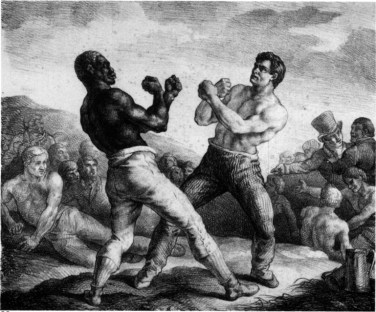
Eugene Peterson, in the Introduction to the book of Hebrews in his book The Message, writes:

“It seems odd to have to say so, but too much religion is a bad thing. We can’t get too much of God, can’t get too much faith and obedience, can’t get too much love and worship. But religion – the well intentioned efforts we make to ‘get it all together’ for God – can very well get in the way of what God is doing for us. The main & central action is everywhere, and always what God has done, is doing and will do for us. Jesus is the revelation of that action”.