The Gospel & Parental Sin

Last week I became rightfully angry at one of my children. (I won’t say which one.)  But in my anger I sinned against him. (Okay, the ‘him’ narrows it down some.) I had neglected the counsel of King David, who wrote: “In your anger do not sin.” (Psalm 4:4)  In my reprimand I was way too harsh.

A few moments later I went back and apologized. While remaining firm about his offense, I told him my offense was even worse and asked for his forgiveness.

Things are normal now.

I am sure I am not the only parent who has crossed this line. In fact we all do. And we may wonder what the lingering effect will be on our child, and on our relationship… 

At such times we need to remind oursleves of the hope of the Gospel.

I appreciate C.J. Mahaney and, right now in particular, a very brief message of his I stumbled across this week titled: The Gospel + Parental Sin.    C.J. discusses our moments of failure as parents, and how the Gospel relates.

If you, like me, ever cross the line as a parent, I recommend taking the time to hear what C.J. has to say. (Run time = 2:39)

Making a World of Difference

“What will it take to change the world – to really change it for the better?”

Ron Sider asks that question in the Introduction to his book, Living Like Jesus.  And his question resonates with me. It has for a long time – long before I heard Sider aksing it. 

I grow bored and frustrated with a faith that simply exists to perpetuate itself.  It has never seemed to me to be the faith I see in the Bible.  The early disciples of Jesus turned the world upside down! Jesus came to reclaim the world that is rightfully his.  Somehow, isolating oursleves while singing “When the Roll is Called Up Yonder” does not seem to match God’s purpose for his church.

The church of Jesus Christ is intended to be an expression of what the Kingdom of God is and will be.  We are called to be influencers in a world that is corrupt to its very core.  (See Matthew 5:13-16 & Jeremiah 29:7)

And we are to be influencers while recognizing that we have been infected by the very corruption of sin that is continuing to devastate the world around us. We are not immune. But we are in remission because of the blood of Christ. (See Romans 3:25 & Hebrews 9:22

Such an understanding shapes our attitdes as we do what we are called to do. Knowing that we are not superior, but are totally dependent upon the grace of God in the blood of Christ, we are humble and compassionate toward the world we are called to serve.  And knowing that our only hope is God’s grace, we glorify God through thankfulness to him and dependence upon him. 

Sadly, I see too may churches, and too many Christians, who have chosen to isolate themselves from the world they see as polluted.  They have no intention of trying to influence it, only to escape it. 

This seems foolish to me for a number of reasons.

First, it is directly disobedient to God’s intention for his people (See Genesis 12:2-3).  The motive for this disobedience may be the understanding that we are not immune to the corruption of sin. It is therefore an act of self preservation; it is an attempt to avoid becomming infected.  But it is still disobedience to God.  And it is a lack of functional faith that he will preserve his people.

Secondly, self preservation is misguided because, as Romans 3:23 shows us, we have all already beeen infected! We can hide if we want, but it will do us no good.  The infection is already inside the camp!

Finally, worst of all are those who isolate themselves and live as if they think they are immune to the effect of sin. These are self-righteous separatists. If they are impervious to sin, why isolate themselves? Such people make no positive influence on the world that I can see.  And frankly, because of their wrong view of themsleves and their direct disobedience to God, I am not sure I really consider them truly Christian! (However, I don’t get a vote.)

So I wrestle with the question: How can we make a difference? How can we change the world? How can we influence it toward what God intends it to be?

Sider offers an answer to his own question:

“I think the answer is simple: It would take just a tiny fraction of today’s Christians truly believeing what Jesus taught and living the way Jesus lived.”

I think Sider is right.

Siders book elaborates on practical ways we need to examine our lives, and ways our lives are to reflect the life & teaching of Jesus.  It revolves around what Sider labels Characteristics of a Genuine Christian: 

1. Genuine Christians embrace both God’s holiness and God’s love.

2. Genuine Christians live like Jesus.

3. Genuine Christians keep their marriage covenants and put children before career.

4. Genuine Christians nurture daily spiritual renewal and live in the power of the Spirit.

5. Genuine Christians strive to make the church a little picture of what heaven will be like.

6. Genuine Christians love the whole person the way Jesus did.

7. Genuine Christians mourn church divisions and embrace all who confess Jesus as God and Savior.

8. Genuine Christians confess that Jesus is Lord of politics and economics.

9. Genuine Christians share God’s special concern for the poor.

10. Genuine Christians treasure the creation and worship the Creator.

1l. Genuine Christians embrace servanthood.

This list alone is worth the price of the book. 

I think much good would come if we sincerely reflected on these premises.  How much more if we began to humbly acknowledge that often we have been negligent in many of these areas, and began to act on them in accordance with the teaching and life of Christ?

I suspect we would see our influence grow; that our influence would be viewed as a positive thing.  I suspect we may even see Proverbs 11:10 come to life:

When the righteous prosper the city rejoices;  When the wicked perish, there are shouts of joy!
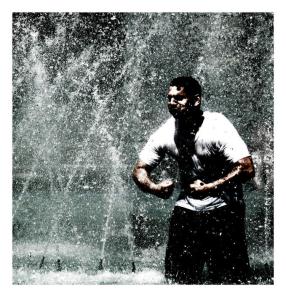
Prayer is…


Prayer…is a confessing of impotence and need, an acknowledging of helplessness and dependence, and an invoking of the mighty power of God to do for us what we cannot do for ourselves… God means us… to recognize and confess our impotence, and to tell Him that we rely on Him alone, and to plead with Him to glorify His name.

It is His way regularly to withhold His blessings until His people start to pray.

J.I. Packer, Evangelism & the Sovereignty of God

Following Jesus in Different Directions?

I’ve been pondering the following assertion from Ron Sider‘s Living Like Jesus:

“Still, the modern church prefers to accept only half of Jesus. They willingly accept him either as model or as mediator – but not both.  Some urge us to follow his example of love and social concern, but they forget about the cross. Others emphasize his death for our sins, but fail to imitate his actions. But Christianity is strong only when we embrace the whole Christ.”

Antithesis Manifesto


Several years ago a now defunct web-based organization, Antithesis or ChristianCounterCulture.com, published a manifesto that prophetically challenges contemporary Evanglicalism.  It resonated with me then and, with the exception of the dating in the opening paragraph, it remains timely. 

From time to time I re-read, what I call, the Antithesis Manifesto to refresh my thoughts. As I reflect on it this afternoon I want to sumarize some of the assertions:

1. Today’s Christian Culture is destroying Christianity

While we are prone to lament the “world” and the decaying values, the truth is that we Evangelicals bear much responsibility for this.  We want so desperately to be accepted by the world (for the sake of evangelism) that we have largely become indistinguishable from it.  We mimic whatever is popular, and many seem to be driven by the same values systems.  (Think about it, How do we guage a “successful” church?  Often by size, money, fame, and political clout.) 

This value shift has not escaped notice. Not from those outside the Church. And not from a generation inside the church that has grown weary of our impotence, if not our outright hypocrissy.  

I recall John Stott saying that if the culture is decaying it is the fault of the church not being the preserving “Salt” it is supposed to be. (See Matthew 5:13)  Stott said you can no more blame the culture for decaying than you can a piece of meat. It is the salt that bears the responsibility to the work of preserving.

If we think the world is having a negative influence on the church it is only because the church has chosen to be like the world.  It is not the world that is destroying us. We are doing it to ourselves. And collectively, I’m afraid, we Westerners are doing little toward our mandate to preserve our culture. (See Jeremiah 29:7)

2. We must Practice Truth

It is not enough to claim the Bible is truth. We must live that truth.  This requires a serious assessment of all of our practices – ecclesiastical as well as personal – and an intentional submission of them to Biblical standards.  We need to be “formed” by the Word, not merely familiar with it.  And there is no sphere of our lives that is exempt from constant need of re-formation.

3. Our Fellowships must be REAL Communities.

The Gospel not only forms us as “new creations”, but it forms a New Community.  As the Manifesto correctly observes: “Too many of our churches are really teaching stations and activity generators. The ‘sharing of life’ in community has had little place.” 

The Gospel formed community is an open, inviting, honest place, where participants are interdependent.  This runs contrary to our individualism (another value we have assumed from the culture), but it is the Biblical model, and the environment in which Gospel Transformation really takes place. 

Conclusion

The whole manifesto reveals a definite touch of Francis Schaeffer’s influence.  Perhaps that’s why it resonates with me.  But a simple periodic review is not enough. We need to make the appropriate changes.  Without them this whole thing is rather ominous.  But if there is change there is also reason for great hope.

The Antithesis Manifesto itself concludes with these words:

If Christians take these factors into account, then we may hope for the stirring of a revolution in our day. And, should our Lord delay his return, the century before us may be marked as a time when radical Christian proclamation went forth yet again – in the power of the Holy Spirit – turning the world upside down, forever altering the cultural landscape.

(To read the original document click: Antithesis Manifesto.pdf)

On My Reading Table: The Tangible Kingdom

 Recent travel has made it difficult to get to a number of things – like posting on this blog.  I have one more trip to make this week, then I should be settled in for the better part of the Summer. 

Posting on the blog is not the only thing that has been put on the shelf recently. I have not had opportunity to read as much as I like, either.  But I have been reading some.  It’s rare that I go anywhere without a book or two.  It’s just that while I usually juggle three or four books, these past few weeks I’ve been limited to one: The Tangible Kingdom

This book by Hugh Halter & Matt Smay is focused on cultivating an incarnational community, or on turning the local church into a vital and visible presence in our local community. The premise is that the Body of Christ is called to be a visible and authentic expression of the Kingdom of God as it presently exists. 

I think it is important to remember the Kingdom of God is both a present reality AND future hope. At least that’s what Jesus taught. Sadly, though, I think we are prone to focus solely on its future coming.  To the extent we focus only on the future manifestation of God’s Kingdom we miss out on a lot. And we fail to give the world around us a glimpse of what will one day be universal – only far better; more perfect than we presently express even on our best days. 

I long for such an expression of the Kingdom, so I am excited whenever I can catch a glimpse through those who are practicing such community in their churches.

I’m not quite finished yet, but I’ll probably give a summary and review in a few weeks.  In the mean time you might want to check out the related web site: TangibleKingdom.com.

Faith & Hope

The question occurs to us, What difference is there between faith and hope? We find it difficult to see any difference. Faith and hope are so closely linked that they cannot be separated. Still there is a difference between them.

First, hope and faith differ in regard to their sources. Faith originates in the understanding, while hope rises in the will.

Secondly, they differ in regard to their functions. Faith says what is to be done. Faith teaches, describes, directs. Hope exhorts the mind to be strong and courageous.

Thirdly, they differ in regard to their objectives. Faith concentrates on the truth. Hope looks to the goodness of God.

Fourthly, they differ in sequence. Faith is the beginning of life before tribulation (Hebrews 11). Hope comes later and is born of tribulation (Romans 5).

Fifthly, they differ in regard to their effects. Faith is a judge. It judges errors. Hope is a soldier. It fights against tribulations, the Cross, despondency, despair, and waits for better things to come in the midst of evil.

Without hope faith cannot endure. On the other hand, hope without faith is blind rashness and arrogance because it lacks knowledge. Before anything else a Christian must have the insight of faith, so that the intellect may know its directions in the day of trouble and the heart may hope for better things. By faith we begin, by hope we continue.

– from Martin Luther’s commentary on Galatians