Killing Me Softly: Putting Sin to Death

In Colossians 3.5, the Apostle Paul commands:

Put to death, therefore, whatever belongs to your earthly nature: sexual immorality, impurity, lust, evil desires and greed, which is idolatry.

Based on the language Paul uses it is clear that sin is in our hearts, and it will not just go away on its own.  We need to take an active role and kill it within ourselves, like any other form of heart disease – or like weeds from a garden.  And this list is suggestive, not exhaustive – a starting point, not a few last details.

In other words, we have a need to die to sin while we grow in grace.

But just how do we actually do this?

Puritan John Owen offered these profoundly helpful insights in his book, The Holy Spirit,

Determine that you will, everyday and in every duty abolish and destroy this ruling principle of sin.  it will not die unless it is gradually and constantly weakened.  Spare it, and it heals its wounds and recovers its strength.  Negligence allows sin to regain such power that we may never recover our former state as long as we live.

We are continually to watch out for the rising up of this ruling principle of sin and immediately subdue it.  This is to be done in all that we are and do.  We are to be watchful in our behaviour to others, watchful when we are alone, watchful when in trouble or joy.  We are to be particularly watchful in the use of our pleasure times and in temptations.

Determine that you will no longer serve sin  (Rom. 6:6).  See it as the worst service of which a rational creature is capable.  If you serve sin it will bring you to a dreadful end.  Determine that though sin remains in you, yet you will not serve it.  Remember, if the ‘old ma’ is not crucified with Christ, you are still a servant of sin, whatever you might think of yourself.

Realise that it is no easy task to mortify sin.  Sin is a powerful and dreadful enemy.  There is no living thing that will not do everything in its power to save its life.  So sin also will fight to save its life.  If sin is not diligently hunted down and dealt with by holy violence, it will escape all our attempts at killing it.  It is a great mistake to think that we can at any time rest from this duty.  The ruling principle of sin to be slain is in us, and so has hold of all our faculties.  Sin cannot be killed without a sense of pain and trouble.  So Christ compared it to ‘cutting of the right hand’ and ‘plucking out the right eye’.  The battle is not against any particular lust but against all sinful lusts which war against the soul.

Mortification arising from convictions of the law leads only to dealing with particular sins, and always proves fruitless.  True mortifying of sin deals with the entire body of sin.  It goes tot the heart of the matter and lays the axe to the root of the tree.  This is the mortification which the Holy Spirit drives the believer to do.

Mortification of particular sins arises from a guilty conscience.  But mortification arising from gospel principles deals with the whole body of sin in its opposition to the renewing of the image of God in us.
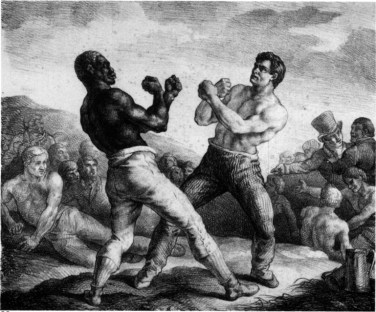
Fighting the Sin in Our Hearts

In Colossians 3, the Apostle Paul commands us:

Put to death therefore what is earthly in you:sexual immorality, impurity, passion, evil desire, and covetousness, which is idolatry. (v. 5)

His list should not be seen as exhaustive, but rather suggestive.  There are many other things that could be included in this list – things which are mentioned in many other passages throughout the Old and New Testaments.

But while Paul’s list here may not be complete, his message is clear:  “Put your sin to death!”

For those who cling to the notion that once we are secured in the grace of Jesus that we have little or no need to give serious and ongoing thought to our sin and the lingering effects it has upon us – that all we need to do is look at the positives of the promises of the gospel – Paul’s words provide a much needed corrective.

Certainly, the promises of the gospel give us a tremendous status. But there is still much to be done; much we need to be doing.  The gospel gives us the confidence that no matter what we may find when we look deep into the recesses of our own hearts, we will never be forsaken.  Whatever we may find in the dark and dank depths of our souls, it is no surprise to God.  He already knows. And he is the one who is encouraging us to take a look for ourselves. God, our Father, does this with the reassuring promise that no matter what we find he will not love us any less.

Still, easier said than done.

I appreciate the work Jonathan Dodson has done to  develop the concept of Fight Clubs to help us put our sin to death.   Dodson bases Fight Clubs on three essential principles:

1. Know Your Sin

Look for the sinful patterns in your life and trace them to the “identity of the moment” that you are looking to for worth and/or meaning (good person, faithful parent, creative artist, successful entrepreneur, etc.).   For instance, your sin could be sulking and your false identity could be victim

2. Fight Your Sin

Once you know your sin/identity issue, you can begin to fight it.

There are two primary ways God calls us to fight our sin.

First, confess your sin to God and ask for his forgiveness for your God-belittling desires and decisions. (1 John 1.9)  Follow your confession to God with confession to community so you can experience healing and encouragement of the church.  (James 5.16)

Second, encourage one another to take sin seriously, to “put sin to death”. (Romans 8.13 & Colossians 3.5) Don’t let identity-twisting sin just roll off your back. Get tenacious about glorifying and enjoying God!

In short, you could summarize it this way:

  • Confess your sin (to God and one another)
  • Get serious about fighting for true joy

3. Trust Your Savior

Trusting our Savior for gospel identity instead of an identity-of-the-moment is the most difficult and important part of being a disciple.

Robert Murray McCheyene said:

“For every look at sin, look ten times at Christ.”

How does Christ offer you a better identity than the false identity?

Dodson writes:

If my sin was sulking and my identity was victim, 2 Peter 1.3 reminds me that my identity is godly, a partaker of the divine nature. I was sulking in ungodliness because I thought I deserved better circumstances. I felt weak. Peter reminds us that we have “divine power granted to us for life and godliness.”

This scripture reminded me of my identity — godly — but it does not stop there.

It also offers us a Savior to trust, a counter-promise of divine power necessary to live a godly life, not a sulking life. What a relief! Our identity is godly, and our promise is divine power!

So, again, in short:

  • Find your Gospel counter-Identity
  • Trust your Biblical Promise