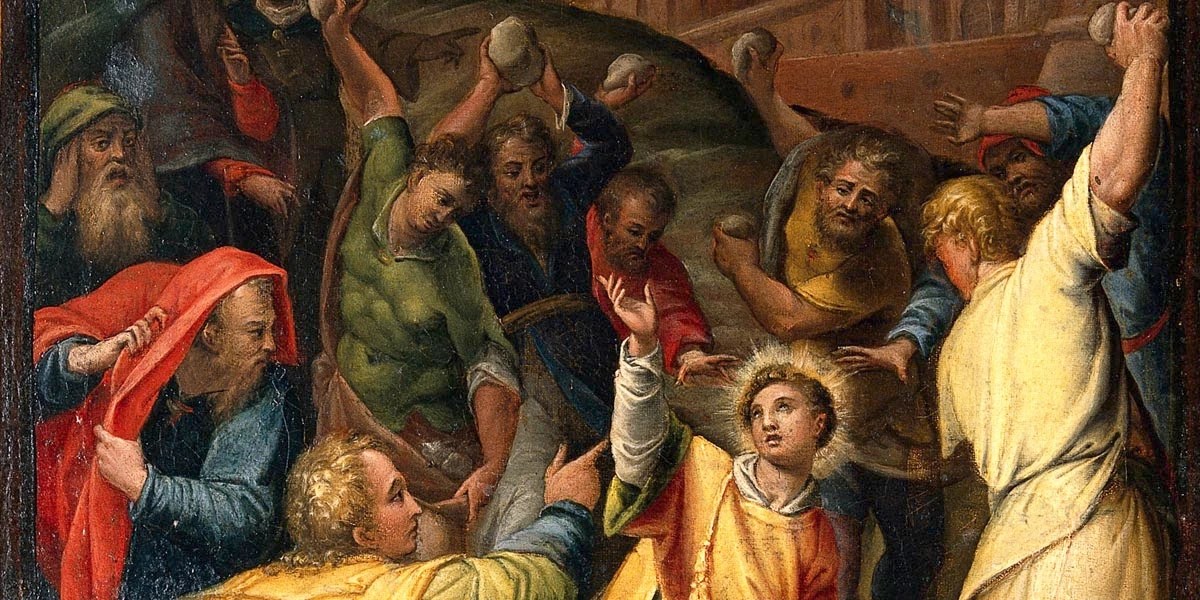
The Early Church Father, Tertullian, notably quipped:
“The blood of the martyrs is the seed of the Church.”
The author of the Book of Hebrews urges us to consider such leaders, and their way of life, as encouragement to us to persevere in the faith in the face of our own particular difficulties, trials, and hardships. (Hebrews 12.1, Hebrews 13.7). So below is a snapshot of what some of the earliest church leaders endured that the gospel may continue to bear fruit:
1. Matthew – Matthew suffered martyrdom in Ethiopia, Killed by a sword wound.
2. Mark – Mark died in Alexandria, Egypt , after being dragged by Horses through the streets until he was dead.
3. Luke – Luke was hanged in Greece as a result of his tremendous Preaching to the lost.
4. John – John faced martyrdom several times. Among the most notable was when he was boiled in huge Basin of boiling oil during a wave of persecution In Rome. However, he was miraculously delivered From death. John was then sentenced to the mines on the prison Island of Patmos. He wrote his prophetic Book of Revelation on Patmos . John was later freed and returned to serve As Bishop of Edessa in modern Turkey . He died as an old man, the only apostle to die peacefully
5. Peter – Peter was crucified upside down on an x shaped cross. According to church tradition it was because he told his tormentors that he felt unworthy to die In the same way that Jesus Christ had died.
6. James – James, the biological half-brother of Jesus, and leader of the church in Jerusalem, was thrown over a hundred feet down from the southeast pinnacle of the Temple when he refused to deny his faith in Christ. When they discovered that he survived the fall, his enemies beat James to death with a fuller’s club. (This was the same pinnacle where Satan had taken Jesus during the Temptation.)
7. James, the Son of Zebedee – James was a fisherman by trade when Jesus Called him to a lifetime of ministry. As a strong leader of the church, James was beheaded at Jerusalem. The Roman officer who guarded James watched amazed as James defended his faith at his trial. Later, the officer Walked beside James to the place of execution. Overcome by conviction, he declared his new faith to the judge and Knelt beside James to accept beheading as a Christian.
8. Bartholomew (also known as Nathaniel) – Bartholomew/Nathaniel was a missionary to Asia. He witnessed for our Lord in the present day area of Turkey. Bartholomew was martyred for his preaching in Armenia where he was flayed to death by a whip.
9. Andrew – Andrew was crucified on an x-shaped cross in Patras, Greece. After being whipped severely by seven soldiers they tied his body to the cross with cords to prolong his agony. His followers reported that, when he was led toward the cross, Andrew saluted it in these words, “I have long desired and expected this happy hour. The cross has been consecrated by the body of Christ hanging on it”. He continued to preach to his tormentors For two days until he expired.
10. Thomas – Thomas was stabbed with a spear in India during one of his missionary trips to establish the church in the Subcontinent.
11. Jude – Jude, a biological half-brother of Jesus, was killed with arrows when he refused to deny his faith in Christ.
12. Matthias – Matthias, the apostle chosen to replace the traitor Judas Iscariot, was stoned and then beheaded.
13. Paul – Paul was tortured and then beheaded by the evil Emperor Nero at Rome in A.D. 67. Before his death, Paul had endured a lengthy imprisonment, which allowed him to write his many epistles to the churches formed throughout the Roman Empire. These letters, essential to the foundational Doctrines of Christianity, form a large portion of the New Testament.
 Studying the Church at Smyrna, while working through a series from the 7 Churches in the Book of Revelation, reminded me that persecution of Christians is not just something that took place on the pages of ancient history. Persecution of Christians is an ever-present tragic reality. We are told by historians and scholars that more Christians were persecuted for their faith duing the 20th Century than during all history up to that time – COMBINED!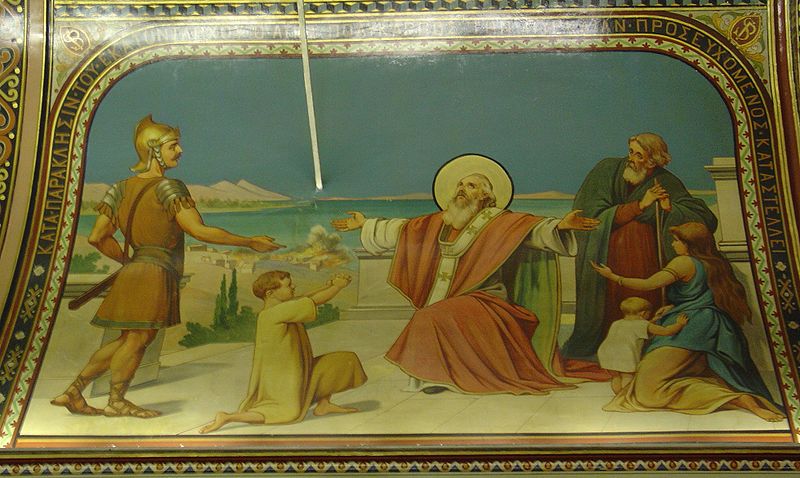
 GRACE & PEACE