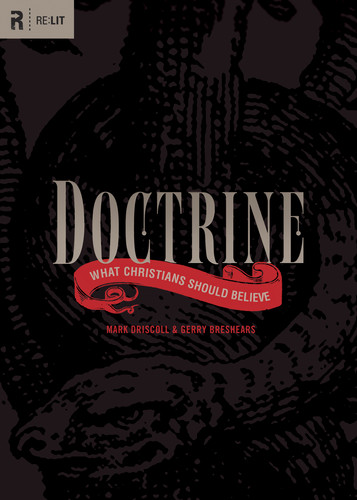
Doctrine

Do you want a good overview of the doctrines of the Christian faith? Would you be open to a introductory course, but are afraid people in your church might think lesser of you because of what you don’t know? (Most of them don’t know either, by the way.)  re:Lit publications has developed Doctine by Mark Driscoll & Gerry Breshear to introduce an overview of the themes of the Bible.

On the web site, across the top of the screen are icons that provide a brief synopsis of each doctrine. Additionally at the top right of the synopsis is a link to an audio/video of messages Driscoll delivered at Mars Hill Church that served as a foundation for each chapter.

Crossway Books has an e-book available free online.

  • Click: Doctrine
  • Scroll down to Contents
  • Click the Chapter Ttile

The Deep Church

At the suggestion of a friend, I recently read Jim Belcher’s Deep Church. I was not disappointed. This is thoughtful and thought-provoking book. 

The subtitle really captures the theme of this book: A Third Way. 

With all the discussions about “how” to do church, and the polemic approaches of the Traditionalists and the Emerging/Emergent, some of us find ourselves caught somewhere in the middle.  I see strengths and weakness in both movements. 

Belcher offers understanding of both worlds. With his understanding he offers honest reflections.  Belchers experience and research are helpful for bringing clarity about the issues of the debate and the players doing the debating.  I especially appreciated his dilineation of the “protests” being offered by the Emergning/Emergents against the practices of traditional church:

  1. Captivity to Enlightenment Rationalism
  2. A Narrow View of Salvation
  3. Belief Before Belonging
  4. Uncontextualized Worship
  5. Ineffective Preaching
  6. Weak Ecclesiology
  7. Tribalism

Honestly, I share these collective frustrations – though I cannot endorse the Emergent solutions.

More than just offering perspective, Belcher offers his thought process as he wrestles with the strengths and weaknesses of both the Emerging/Emergent and Traditionalist arguments.  He does not seem to be trying to convince anyone to embrace his positions, only sharing the insights of his personal and spiritual leadership journey.  I found this helpful. It was almost as if I had someone to talk with about these issues as I contemplate my own positions, questions, and inclinations. 

Most important, at no point does Belcher compromise by seeking the “middle way”.  Instead, listening to both sides of the debate, he searches and wrestles with Scripture to find “A Third Way”. 

The Bereans would be proud.

Humble Ambition

Pioneer missionary William Carey is noted for his mantra:

“Expect great things from God, and attempt great things for God.”

These are tremendously inspiring words.  They call us to think about the God in whom we believe, and whom we serve.  Jesus reminded us that “With God nothing is impossible.”  (Luke 1.37)  When Paul thought of our God he wrote: “I can do all things though Christ who gives me strength.”  Philippians 4.13  (I know these verses are often taken out of context, but the point is still valid.)  And having thought of God, Carey’s words encourage us to step out in action.  It is putting feet to our faith.

The question for me is: How does humility fit in here?  When I think of the things I would like to accomplish in my life, I have to ask myself: Is this Holy Ambition or simply Wholly Ambitious?  It is a real dilemma.

I am completely honest when I say that what I want most is for God to be glorified in my life and through my life. But at the same time, I confess, there is a part of me that would enjoy at least some credit, a little bit of the noteriety.  How much of the glory I want varies with each day – and with how honest I am being with myself.  In short, I do desire God’s glory, but my ego is all too alive as well.

How do I resolve this tension? How do I live out William Carey’s mission statement?

Dave Harvey, of Sovereign Grace Ministries, has written a new book, Rescuing Ambition, addressing this very issue.  I have yet to read the book, but I am placing it high on my On Deck list. 

A sneak peak is offered through a series of helpful posts Harvey has written for The Gospel Coalition:

Jesus Freaks

Studying the Church at Smyrna, while working through a series from the 7 Churches in the Book of Revelation, reminded me that persecution of Christians is not just something that took place on the pages of ancient history.  Persecution of Christians is an ever-present tragic reality.  We are told by historians and scholars that more Christians were persecuted for their faith duing the 20th Century than during all history up to that time – COMBINED! 

As startling as that statistic may be, it is important for us to be aware. 

As Christians we are instructed to “bear the burdens” of other believers (Galatians 6.2), and to “rejoice with those who rejoice and mourn with those who mourn”. (Romans 12.15)  We can do none of those things if we are not aware of what others are experiencing. 

We are also strangely strengthened by the examples of those who have endured suffering and persecution for the sake of Jesus.  Their testimonies ought to be an important part of our devotional diet.

There are a number of good resources that will share the stories of those who have endured hardship, indignation, and even martyrdom, for the Cause of Christ.  The classic is Foxe’s Book of Martyrs. Another I recommend is a more contemporary book – one I was at first skeptical about simply because it is written by the members of CCM’s DC Talk.  (I didn’t know anything about them.  I just assumed: “How deep can it be?”  But was I ever wrong…)

Jesus Freaks by DC Talk is a wonderful collection of testimonies of those who have glorified God by faithful endurance throughout the generations.  Each account is brief and profound.  Simply by reading a page or two daily, or periodic intervals, will enrich the reader with chronicles of Chrisitans whose lives have been poured out for God’s Glory.

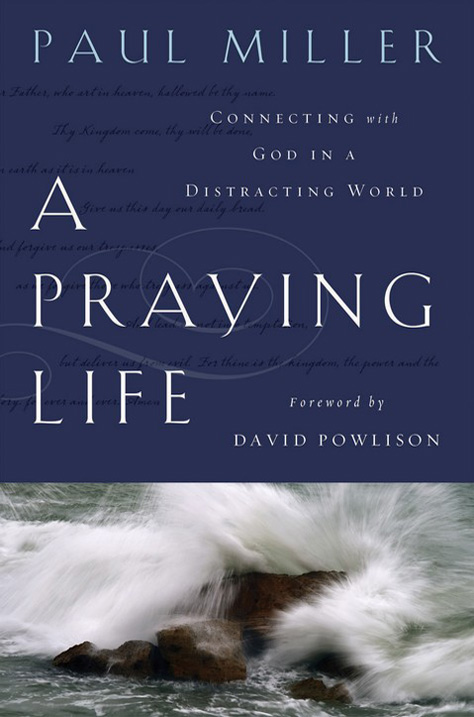
A Praying Life

Praying Life“Lord, teach us to pray.”   That’s the request of the disciple of Jesus. (Luke 11.1)  That’s a request that should not be limited to ages past or the pages of the Bible. It is the heart request of any disciple of Jesus. 

My friend, Paul Miller is Jesus’ tool to answer that request in this generation.  In his book, A Praying Life: Connecting With God in a Distracting World, Paul helps people like me, people who sometimes struggle in knowing how or what to pray; people who find their minds wandering often whenever trying to commit longer periods of time to pray; people who sometimes wonder if God get’s tired of these simple, random, and inarticulate petitions.

Paul reminds us what it means to be a child of God, and the implications that has for our prayer life. He helps us see that God will never reject those who come to him with a child-like heart, and therefore will certainly not be disappointed in us if we come to him with child-like characteristics.  Paul “redeems” the mind-wandering, and sets us free to enjoy our Father in prayer.

Check out a sample chapter and a review from NavPress.

3 Short Books I Wish Everyone in My Church Would Read

I read a fair amount.  I have been accused, and probably rightly so, of unrealistically pushing books and other reading materials on people who don’t read quite as much; who don’t have the time to read as much; who don’t get “paid” to read as much (as I, in part, am).  But there are ideas and expressions I have benefited from, that I am not sure I can adequately convey, and I like to share them with others. I like to hear how others are struck by the same insights, when the authors’ words are not colored by my thoughts.

I know that I will never get everyone in my church to read all the things I’d like them to read.  But there are three very short books that I have begun to encourage people to read:


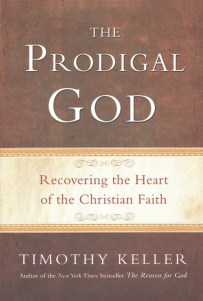
The Prodigal God by Tim Keller

This book is subtitled: “Recovering the Heart of the Christian Faith”.    

Cover Prodigal God

Keller elaborates on the well known story of the Prodigal Son, and offers a not-so-often recognized perspective:  The story is not about a wild son who receives mercy and grace from his benevolent father.  This is a story about two sons. In fact, this is a story about a Father who had two very different sons. It is THE story of God the Father and how people relate to Him in two different ways.

Each son is a reflection of the respective ways people relate to God.   

The younger son is the picture of all who go astray from God and his Law and, having been broken, recognize the emptiness and hopelessness of life apart from the Father.  When awakened to their desperate situation they find a grace and relationship with the Father that is ovewhelming.

The older son is the picture of all who try to relate to God, and please God, by being good; by following all the rules.  This is a picture of religious people, of many Conservative Christians. Yet in their own goodness there is an evident lack of heartfelt fondness for the Father, a lack of joy, obvious to all except for them.

In this book Keller helps us to discern our own tendencies in our relation to God.  Using this story Keller helps us see with keener insight that the ONLY way to have a relationship with God the Father is by recognizing that we are all in need and by being recipients of His compassion, grace, and generosity.  Keller shows us that at the end of the story there is only one son, one type of person, still alienated from the Father. It is not the one who seems to have been the most egregious.  It is the one who seems the most righteous.

Keller has also noted: “Our churches are full of Older Brother types… Is it any wonder, then, that the Younger Brother-types don’t want to come home (come to church)?”

OUCH!! 

The Prodigal God is only 133 pages – and the pages are double-spaced.

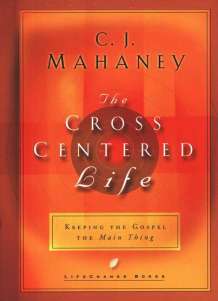
 Cover Cross Centered Life

The Cross-Centered Life by C.J. Mahaney

In this 85 page, pocket sized, book Mahaney helps the reader to keep the Gospel at the center of our lives. He helps us to recognize various subtle substitutes that lead us from the Cross, but ultimatley are of little or no help in strengthening the soul. 

Mahaney uses a plethora of annecdotes and illustrations to convey the simple, yet often forgotten and neglected, essential truth: The Gospel is the power to give and to transform life.  Understanding how we can appropriate the present benefits of the Cross is key to vibrant spirituality and joy.


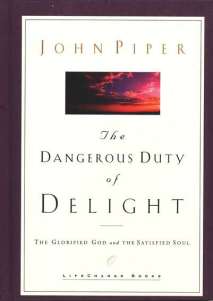
The Dangerous Duty of Delight by John Piper

 I am a long-time fan of Piper’s writing. Nevertheless, I confess, for a long time I refused to read this simple book. I guess I thought this pocket sized 84 page primer of his contemporary classic, Desiring God, was beneath me. After all, I’ve read the BIG book – several times!  But I was wrong.Cover Dangerous Duty

In this little book Piper conveys the essence of the Christian life: To glorify God by enjoying him forever.  It is a great introduction to what Piper calls Christian Hedonism. 

Christian Hedonism may sound like an oxymoron, and even inappropriate, to those who do not undertand what is behind Piper’s message.  But I am convinced that what he espouses is thoroughly Biblical.  It is the recognition that we are created to have a relationship with God; that we are commanded to take delight in God (i.e. Psalm 37.4); and that we are all prone to sell out the ultimate joy we can have in life, in God, for the cheap thrills and pleasures we find elsewhere. 

While I still hope everyone will read Desiring God, this little book, Dangerous Duty, serves as a great introduction that will both lay a groundwork of understanding and whet the appetite for the whole feast found in Desiring God.

You can check out a sample of Dangerous Duty or the entirety of Desiring God online. Just click the highlighted titles.

Pastor Dad: E-book by Mark Driscoll

Pastor Dad

Father’s Day has passed, but I just read a resource I thought I’d pass along to Dads and aspiring dads-to-be.  It is another e-book by Mark Driscoll of Resurgence and Mars Hill Church, this one titled Pastor Dad: Scriptural Insights on Fatherhood

The premise behind this free 48 page book is:

Every dad is a pastor. The important thing is that he is caring for his flock well.

Typical of Driscoll, this book combines sound Biblical insights with some of Driscoll’s brash, over-the-top, in-your-face applications.  So it is not a book for the overly sensitive or the timid.  But, while after a quick read I can say I don’t agree with all his positions, Driscoll’s thoughts are Biblial, practical, and worth considering for those who appreciate, or are at least willing to engage, his style.

Worldliness in Prespective

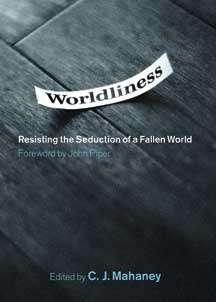
worldliness1

I recently finished reading the short book Worldliness, edited by C.J. Mahaney.  Each chapter is written by different men from the Sovereign Grace family.  I found it very insightful and practical. 

I appreciate that the writers did not merely resort to the worn out separatist “Us vs. The World” rhetoric.  Instead they wrestled intelligently, theologically, and bibilcally about the pertinent questions: What does worldliness actually mean?  What actual problems does worldliness pose?  Only once those questions are amply answered do the writers delve into practical applications in the various spheres of our culture.

I had given some thought to blogging about the book.  Already in previous posts I have elaborated on some of the insights I have gained.  But then on Crossway.blog I have found that Jonathan Leeman of 9 Marks has shared some highlights from each chapter.  Leeman has done such a good job that it made my intentions unnecessary.  I will still likely interact and expound upon some other insights in future posts, but for a good introduction to and overview of the book I encourage you to check out what Leeman has written.  Click: Worldliness

But don’t neglect the book. It is short, but beneficial. I’ve added it to my ‘must read’ list.

Sharing the Father’s Welcome

Tim Keller’s new book, The Prodigal God: Recovering the Heart of the Christian Faith, will be released in a few weeks, on October 31. In the book Keller presents a powerful expression of the gospel, rooted in the parable of the Prodigal Son.  Having heard Keller teach from this parable, I am looking forward to the written form.

But Keller’s insights were not developed in a vacuum.  They were cultivated by careful and thoughtful study and prayer. They were built upon a foundation of those who had walked before him, like Edwards and Chalmers. And they were influenced by the wisdom of those who invested in him. Among them, Dr. Ed Clowney, former president of Westminster Seminary, whom Keller credits in the Introduction of this upcoming book as having provided the inspiration: 

Many excellent studies have been written on this Biblical text over the last several years, but the foundation for my understanding of it was a sermon I heard preached over thirty years ago by Dr. Edmund P. Clowney. Listening to that sermon changed the way I understood Christianity. I almost felt I had discovered the secret heart of Christianity.  (Click: article.)

Crossway Books has made available Clowney’s sermon, Sharing the Father’s Welcome.  I hope it not only whets you appetite for Keller’s upcoming book, but that it opens your eyes to see how high and wide and long and deep is the love of God for we, his children.

(NOTE: My thanks to Justin Taylor of Between Two Worlds for tipping me off about this.)

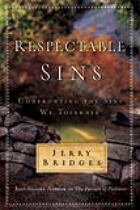
Respectable Sins

One of the books on my bedside table is Respectable Sins, by Jerry Bridges.  The subtitle of the book is: Confronting the Sins We Tolerate. The theme becomes self explanatory. 

In his preface Bridges explains the motive behind the book:

“The motivation for this book stems from a growing conviction that those of us whom I call conservative evangelicals may have become so preoccupied with some of the major sins of society around us that we have lost sight of the need to deal with our own more “refined” or subtle sins.”

I think Bridges is correct.  The whole notion of sin seems to have been lost on our society, and confused in our churches. 

Conservatives often lament the absence of any sense of, or concern about, sin reflected in our society.  In this glaring absence in our collective cultural conscience we have seen the arrival of government sanctioned killing through abortion and euthanasia; the crumbling of the family due to divorce, rampant pornography, and the redefining of it to embrace homosexuality as an acceptable norm; and a widespread apathy toward God. Those who speak out about such matters are right to be concerned.  The problem is that while we talk about those things that are infecting others, we are failing to address the very real sin in our own lives.  And we are therefore seen to be hypocrites – and probably rightly so.

Jesus instructed his followers to “first take the plank out of you own eye, then worry about the speck in the eye of another.”  I am not suggesting that those sins that are freely expressed in our society are minor specks.  They are not. They are serious.  And I am convinced that if we heed Jesus’s perscriptive counsel we will again experience the moral authority to speak. 

More serious than even the loss of our moral authority, many Evangelicals are confused about how we relate to God.  We have become disconnected from our own need of the Gospel, and our need of it every day. We fail to see the subtle, yet serious, ways we function as “unbelievers” and tolerate cancerous sin in our own hearts and relationships.  In fact, as the title of Bridges’ book suggests, we have not merely tolerated these things, but have functionally elevated them to a level of respectability.

Recognizing our sin, despite how it may seem, is not an entirely ugly proposition.  It is important to our spiritual vitality.  And makes practical sense. 

Let me explain it this way: We should be at least as concerned about our spiritual vitality as we are about our computers. 

I regularly receive updates from McAfee, and I run a scan on my computer at least a few times a week. Why? Because I have experienced the slow down, the unresponsiveness, and even a crash when I failed to have my computer checked for viruses that can infect it.  Once McAfee has performed a scan, if it has identified any potential threats I am able to deal with it. I either delete it, or in some cases quarantine the file. But either way, my computer functions much better because I have taken the time to perform this taks.

Sin in our lives, even that which seems minor, infects our hearts, our perceptions, our relationships, even our productivity.   We need to “scan” our hearts and lives regularly to see if there is anything there that may cause problems down the road. (This is what the Psalmist is advocating in Psalm 139)  Once we determine if there is anything there we can deal with it accordingly. In taking the appropriate precaustions we prevent problems because we are more able to keep things from spreading over and infecting other areas of our lives.

Despite what you may suspect due to my ranting thus far, this book is actually very positive, practical, and encouraging. 

In chapters 1-4 Bridges does a wonderful job explaining the Gospel, its practical importance, and its important practicality.

Chapter 5 discusses the Power of the Holy Spirit, and expalins how the Spirit is at work in the Gospel.

Chapter 6, titled: Directions for Dealing with Sins, serves as a practical preface to the rest of the book.  This chapter alone would be worth the price of the book, because it shows us how we can practice preaching the Gospel to ourselves. 

Chapters 7-20 deal with specific “acceptable” and “respectable” sins.  I have deeply appreciated Bridges’ talent for defining words of our Christian jargon that have at times confused me, or words that I’ve generally understood yet was still somewhat fuzzy about.  This understanding has been helpful in identifying some of the sin I carry around in my heart, and how it expresses itself in my life and in relationships..

The final chapter, chapter 21, simply asks the question: Where Do We Go from Here?

Each chapter is short and easily readable.  My intention is to read a few chapters a week over the next month or two so that I can digest Bridges’ insight, and deal with my own heart.  I may even journal my insights here on my blog. I haven’t decided yet.

But one thing I have decided to do. My friend, David Zavadil, has been working through this book and posting his observations on his blog, By His Grace.  Whether I develop my own posts or not, I will join the discussion David has started. I invite you to join me over there.
Making a World of Difference

“What will it take to change the world – to really change it for the better?”

Ron Sider asks that question in the Introduction to his book, Living Like Jesus.  And his question resonates with me. It has for a long time – long before I heard Sider aksing it. 

I grow bored and frustrated with a faith that simply exists to perpetuate itself.  It has never seemed to me to be the faith I see in the Bible.  The early disciples of Jesus turned the world upside down! Jesus came to reclaim the world that is rightfully his.  Somehow, isolating oursleves while singing “When the Roll is Called Up Yonder” does not seem to match God’s purpose for his church.

The church of Jesus Christ is intended to be an expression of what the Kingdom of God is and will be.  We are called to be influencers in a world that is corrupt to its very core.  (See Matthew 5:13-16 & Jeremiah 29:7)

And we are to be influencers while recognizing that we have been infected by the very corruption of sin that is continuing to devastate the world around us. We are not immune. But we are in remission because of the blood of Christ. (See Romans 3:25 & Hebrews 9:22

Such an understanding shapes our attitdes as we do what we are called to do. Knowing that we are not superior, but are totally dependent upon the grace of God in the blood of Christ, we are humble and compassionate toward the world we are called to serve.  And knowing that our only hope is God’s grace, we glorify God through thankfulness to him and dependence upon him. 

Sadly, I see too may churches, and too many Christians, who have chosen to isolate themselves from the world they see as polluted.  They have no intention of trying to influence it, only to escape it. 

This seems foolish to me for a number of reasons.

First, it is directly disobedient to God’s intention for his people (See Genesis 12:2-3).  The motive for this disobedience may be the understanding that we are not immune to the corruption of sin. It is therefore an act of self preservation; it is an attempt to avoid becomming infected.  But it is still disobedience to God.  And it is a lack of functional faith that he will preserve his people.

Secondly, self preservation is misguided because, as Romans 3:23 shows us, we have all already beeen infected! We can hide if we want, but it will do us no good.  The infection is already inside the camp!

Finally, worst of all are those who isolate themselves and live as if they think they are immune to the effect of sin. These are self-righteous separatists. If they are impervious to sin, why isolate themselves? Such people make no positive influence on the world that I can see.  And frankly, because of their wrong view of themsleves and their direct disobedience to God, I am not sure I really consider them truly Christian! (However, I don’t get a vote.)

So I wrestle with the question: How can we make a difference? How can we change the world? How can we influence it toward what God intends it to be?

Sider offers an answer to his own question:

“I think the answer is simple: It would take just a tiny fraction of today’s Christians truly believeing what Jesus taught and living the way Jesus lived.”

I think Sider is right.

Siders book elaborates on practical ways we need to examine our lives, and ways our lives are to reflect the life & teaching of Jesus.  It revolves around what Sider labels Characteristics of a Genuine Christian: 

1. Genuine Christians embrace both God’s holiness and God’s love.

2. Genuine Christians live like Jesus.

3. Genuine Christians keep their marriage covenants and put children before career.

4. Genuine Christians nurture daily spiritual renewal and live in the power of the Spirit.

5. Genuine Christians strive to make the church a little picture of what heaven will be like.

6. Genuine Christians love the whole person the way Jesus did.

7. Genuine Christians mourn church divisions and embrace all who confess Jesus as God and Savior.

8. Genuine Christians confess that Jesus is Lord of politics and economics.

9. Genuine Christians share God’s special concern for the poor.

10. Genuine Christians treasure the creation and worship the Creator.

1l. Genuine Christians embrace servanthood.

This list alone is worth the price of the book. 

I think much good would come if we sincerely reflected on these premises.  How much more if we began to humbly acknowledge that often we have been negligent in many of these areas, and began to act on them in accordance with the teaching and life of Christ?

I suspect we would see our influence grow; that our influence would be viewed as a positive thing.  I suspect we may even see Proverbs 11:10 come to life:

When the righteous prosper the city rejoices;  When the wicked perish, there are shouts of joy!

On My Reading Table: The Tangible Kingdom

 Recent travel has made it difficult to get to a number of things – like posting on this blog.  I have one more trip to make this week, then I should be settled in for the better part of the Summer. 

Posting on the blog is not the only thing that has been put on the shelf recently. I have not had opportunity to read as much as I like, either.  But I have been reading some.  It’s rare that I go anywhere without a book or two.  It’s just that while I usually juggle three or four books, these past few weeks I’ve been limited to one: The Tangible Kingdom

This book by Hugh Halter & Matt Smay is focused on cultivating an incarnational community, or on turning the local church into a vital and visible presence in our local community. The premise is that the Body of Christ is called to be a visible and authentic expression of the Kingdom of God as it presently exists. 

I think it is important to remember the Kingdom of God is both a present reality AND future hope. At least that’s what Jesus taught. Sadly, though, I think we are prone to focus solely on its future coming.  To the extent we focus only on the future manifestation of God’s Kingdom we miss out on a lot. And we fail to give the world around us a glimpse of what will one day be universal – only far better; more perfect than we presently express even on our best days. 

I long for such an expression of the Kingdom, so I am excited whenever I can catch a glimpse through those who are practicing such community in their churches.

I’m not quite finished yet, but I’ll probably give a summary and review in a few weeks.  In the mean time you might want to check out the related web site: TangibleKingdom.com.

“Shack”-ed

I don’t know where I’ve been, but I’ve missed it.  Apparently there is a self published book out there called The Shack that has become one of the most widely read works in country. It is in the process of becomming a major motion picture.  And it is a book about theology! Well, it is a fictional story aimed at communicating theology, akin to Bunyan’s classic Pilgrim’s Progress. 

The story behind the book’s publishing is… well, quite a story itself. Written by a man to give as a Christmas present to his children, it was never intended to be published beyond a couple copies at Kinko’s.  It has risen to reach the Top 10 List at Amazon, USA Today, and Barnes & Noble

But the book is also apparently polarizing.  Some say the theology is questionable. People I appreciate have expressed varying opinions.

As I already stated, I had never even heard of the book, or at the least I never took notice.  I do regularly check out the Best Seller Lists to see if there is anything that might catch my interest, but the Shack apparently slipped by.  But now, in just the past two or three days I’ve heard Steve Brown do an interview with the author and read a review of the book by Tim Challies.  (Click for .pdf the-shack-review)   

I’m not sure what I’m likely to think about it once I read it, but I guess I’ve found at least one book for my Summer Reading List.

Studies in 1 John: Compassion Among Brothers

   In my study through 1 John I had to pause and go back over one verse this week. 


Having preached from 1 John 3:11-18 last week, and John’s assertion that Christians are to be characterized by love for one another if Christ is in actuality alive in them,  I am struck by v. 17:


“If anyone has material possessions and sees his brother in need but has no pity on him, how can the love of God be in him?” 


Together, with John exhortation in the next verse: “…let us not love with words or tongue but with actions and in truth”; these verses not only reflect the heart of God, they express a mandate for a more holistic ministry. 


Clearly John has in mind here a demonstration of compassion that is to be practiced between Christians.  It was not John’s purpose at this point to discuss the broader scope.  But his narrower focus here in no way mitigates the Christians responsibility to express mercy to all people, Christian or not, as a reflection of God’s grace. 


Consider Paul’s counsel from Galatians 6:10:


“Therefore, as we have opportunity, let us do good to all people, especially to those who belong to the family of believers.”


Paul’s emphasis to do good, “especially” to other Christians, is consistent with John’s focus. But Paul gives a more expanded view of the heart of God.  Still, Paul shares John’s sentiment, that while we ought to show compassion to all people, how much more ought we do so for other Believers!


I am convinced and convicted that this – holistic ministry – has long been an area of neglect for many (most?) conservative Evangelicals.  So I feel compelled to go back to those two verses to preach from them. 


As I prepared this week several old books came off my shelf that proved helpful.  I thought I’d post them for anyone interested in pursuing the God-given, ministry of compassion that John urges us to undertake in v. 17-18


The Tragedy of American Compassion by Marvin Olasky

Rich Christians in an Age of Hunger by Ron Sider

Charity and It’s Fruits by Jonathan Edwards

The Micah Mandate by George Grant

Ministries of Mercy by Tim Keller

Restorers of Hope by Amy Sherman

Churches Than Make a Difference by Ron Sider, et. al.


And finally, anyone interested in seeing how ministry of compassion is practically & effectively being implemented across America will do well to visit Christian Community Development Association.  This is a wonderful network of holistic practitioners.