Are some Christmas hymns better than others? Consider what Martin Luther says to his Anglican friends in this imaginary discussion, from Lutheran Satire.
Advent
Join the Conspiracy!
“There has got to be more to the holiday season than this.”
Have you ever thought this way? I have – and I do – every year, around this time.
While there is nothing inherently wrong with our many traditions and celebrations, it is beneficial to repeatedly remind ourselves what this season is primarily about: that Christ Jesus came into the world to redeem sinners; to set free those captive to their sin and their situations.
And just as Jesus came into the world, he has also commissioned his followers to be his agents to continue what he began. (John 20.21)
In 2006 Advent Conspiracy was birthed, with the aim to remind the world what really matters during the Advent-Christmas season; and to urge Christians to embrace four simple but key tenets:
Let’s consider how we can make a difference in some small way. Let’s all join in this most wonderful Conspiracy.
Advent Conspiracy
For many Black Friday – the day after Thanksgiving – marks opening day for an exciting month long contact sport – shopping! For many others it is just one more cause for anxiety. In the midst of the seasonal hubbub, take a moment to watch this short video from the Advent Conspiracy.
Share the joy of Christmas!
A Christmas Reflection: Allowing God to Work in Us
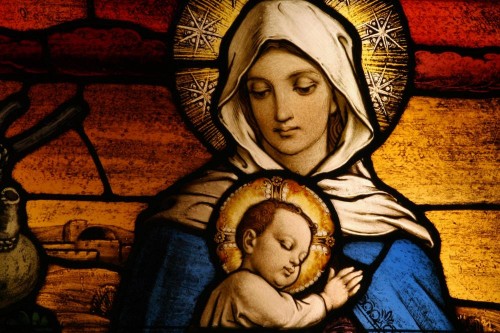
Consider Mary’s response to the angel. The angel has come to Mary and says: “Mary, you are going to give birth to the long-promised Messiah.”
This was a unique promise, and unrepeatable. There is something totally unique here: the birth of the eternal second Person of the Trinity into this world.
What was her response?
- She could have rejected the idea and said: “I do not want it: I want to withdraw; I want to run…”
- She could have said: “I now have the promises, so I will exert my force, my character, and my energy, to bring forth the promised thing.”
But what she did say is beautiful, it is wonderful. She says:
“Behold, the bondmaid of the Lord; be it unto me according to thy Word.” – Luke 1.38
There is an active passivity here. She took her own body, by choice, and put it into the hands of God to do the thing that he said he would do, and Jesus was born. She gave herself to God…
This is a beautiful, exciting, personal expression of a relationship between a finite person and the God she loves.
~ Francis Schaeffer, from True Spirituality
10 Questions to Ask at a Christmas Gathering

Do you have any Chrstmas gatherings to attend this holiday season? My thanks to Don Whitney for suggesting the following questions to spruce up the conversation, especially at church:
- What’s the best thing that’s happened to you since last Christmas?
- What was your best Christmas ever? Why?
- What’s the most meaningful Christmas gift you’ve ever received?
- What was the most appreciated Christmas gift you’ve ever given?
- What was your favorite Christmas tradition as a child?
- What is your favorite Christmas tradition now?
- What do you do to try to keep Christ in Christmas?
- Why do you think people started celebrating the birth of Jesus?
- Do you think the birth of Jesus deserves such a nearly worldwide celebration?
- Why do you think Jesus came to earth?
The Advent of Humility

The following article, by Tim Keller, first appeared in the December 2008 edition of Christianity Today Magazine. In this article Keller explains why the Advent of Jesus gives us reason to stop concentrating on ourselves.
***
Innumerable Christmas devotionals point out the humble circumstances of Jesus’ birth—among shepherds, in a crude stable, with a feed trough for a bassinet. When Jesus himself tried to summarize why people should take up the yoke of following him, he said it was because he was meek and humble (Matt. 11.29). Seldom, however, do we explore the full implications of how Jesus’ radical humility shapes the way we live our lives every day.
Humility is crucial for Christians. We can only receive Christ through meekness and humility (Matt. 5.3, 5; Matt 18.3-4). Jesus humbled himself and was exalted by God (Phil. 2:8-9); therefore joy and power through humility is the very dynamic of the Christian life (Luke 14.11; 18.14; 1 Peter 5.5).
The teaching seems simple and obvious. The problem is that it takes great humility to understand humility, and even more to resist the pride that comes so naturally with even a discussion of the subject.
We are on slippery ground because humility cannot be attained directly. Once we become aware of the poison of pride, we begin to notice it all around us. We hear it in the sarcastic, snarky voices in newspaper columns and weblogs. We see it in civic, cultural, and business leaders who never admit weakness or failure. We see it in our neighbors and some friends with their jealousy, self-pity, and boasting.
And so we vow not to talk or act like that. If we then notice “a humble turn of mind” in ourselves, we immediately become smug—but that is pride in our humility. If we catch ourselves doing that we will be particularly impressed with how nuanced and subtle we have become. Humility is so shy. If you begin talking about it, it leaves. To even ask the question, “Am I humble?” is to not be so. Examining your own heart, even for pride, often leads to being proud about your diligence and circumspection.
Christian humility is not thinking less of yourself; it is thinking of yourself less, as C. S. Lewis so memorably said. It is to be no longer always noticing yourself and how you are doing and how you are being treated. It is “blessed self-forgetfulness.”
Humility is a byproduct of belief in the gospel of Christ. In the gospel, we have a confidence not based in our performance but in the love of God in Christ (Romans 3.22-24). This frees us from having to always be looking at ourselves. Our sin was so great, nothing less than the death of Jesus could save us. He had to die for us. But his love for us was so great, Jesus was glad to die for us. Continue reading
Advent Song: Holy is His Name
Don’t forget: Advent begins Sunday November 28.
A Christmas Quiz
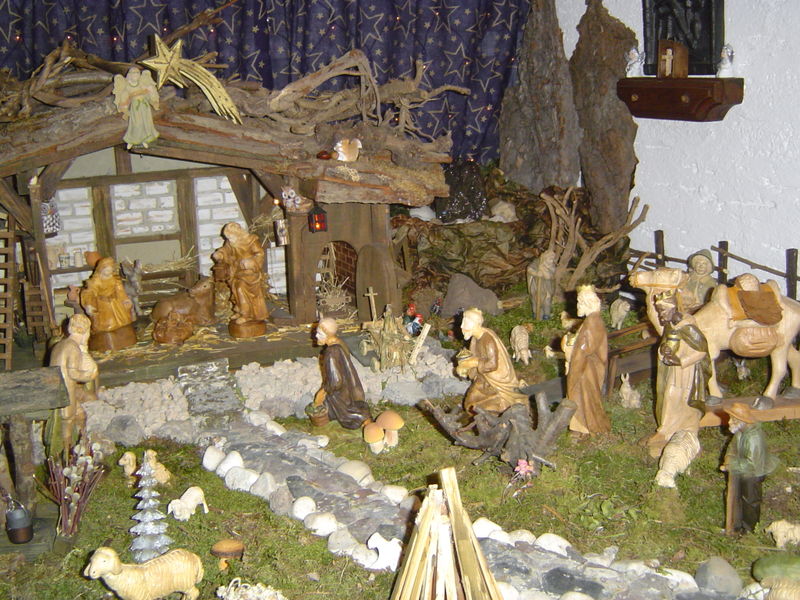
Test your knowledge of the Christmas Story using this quiz edited from LeadershipU & Probe Ministries. A link to an answer key can be found at the bottom of the page.
- Can you name the parents of Jesus?
- Where did Joseph and Mary live before they were married?
- What was the name of the angel who appeared to Mary?
- Where did Joseph and Mary live after their marriage?
- Where was Mary when the angel appeared to her?
- Whom did Mary visit immediately after Gabriel appeared to her?
- How far along in her pregnancy was Elizabeth when Gabriel appeared to Mary?
- How long did Mary stay with Elizabeth?
- Why didn’t Mary stay to celebrate the birth of John?
- How far along in her pregnancy was Mary when she broke the news to Joseph?
- Why were Joseph and Mary going to Bethlehem?
- Why did Mary accompany Joseph?
- What determined the city to which each Jew had to travel in order to be taxed?
- Who, then, would be in Bethlehem?
- Why couldn’t Joseph and Mary find space in the inn?
- Who were the first people to come to see Jesus according to Scripture?
- What chorus did the angels sing to the shepherds?
- What sign did the angels tell the shepherds to look for?
- What was the manger?
- In what way do the meaning of the Hebrew term for Bethlehem and the sign given by the angels prepare us for Jesus’ later ministry?
- What are two reasons that Joseph and Mary took Jesus to Jerusalem?
- What are magi?
- How many wise men came to see Jesus?
- How many gifts did the wise men bring and to whom did they present their gifts?
- What was curious about the star?
- How did Herod use the star?
- Where were Jesus, Mary, and Joseph when the wise men reached them?
- How old was Jesus at this time?
- In what year was Jesus born?
- How long was Jesus in Egypt with His parents?
- How did Joseph and Mary finance the trip to Egypt?
- Where was Jesus raised upon His return to Israel?
Click: Answer Key
 GRACE & PEACE