Paul Tripp further expounds the thoughts conveyed in this viedo in his book: Broken Down Houses.
3 Ways
There is a difference between the Gospel and being good. But I am not sure the average person understands this – neither in the church nor outside the doors. In this short video Tim Keller explains the difference between:
- Gospel
- Moralism
- Irreligion
Leading Lasting Changes

At Walnut Hill Church we are blessed with a strong tradition and a membership with a high level of satisfaction. Like most ministries and organizations we have our share of folks who express varying degrees of dissatisfaction – some because we are experiencing growth & change, and others because we have not changed & grown quickly enough.
Change is inevitable but it is also uncomfortable.
For one thing, not all change is good. Degeneration is a change of condition, but it is not something I want to experience in my health or my church.
But even good changes can make some people uncomfortable. Change marks the passing of something familiar. It is a constant reminder that nothing remains the same, and we cannot always go back. So when change occurs, even good change, it disturbs our nostalgia.
The key words for the leader concerning change are: effective, positive, and lasting.
Harvard professor John Kotter outlines 8 stages of effective change:
1. Establish a Sense of Urgency
- Examine market and competitive realities
- Identify and discuss crises, potential crises or major opportunities
2. Developing the Guiding Coalition
- Assemble a group with enough power to lead the change effort
- Encourage the group to work as a team
3. Developing a Vision & Strategy
- Create a vision to help direct the change effort
- Develop strategies for achieving that vision
4. Communicating the Change Vision
- Use every vehicle possible to communicate the new vision and strategies
- Teach new behaviors by the example of the Guiding Coalition
5. Empowering Broad-based Action
- Remove obstacles to change
- Change systems or structures that seriously undermine the vision
- Encourage the risk-taking and nontraditional ideas, activities, and actions
6. Generating Short-term Wins
- Plan for visible performance improvements
- Create those improvements
- Recognize and reward employees involved in the improvements
7. Don’t Let Up: Consolidating Gains & Produce More Change
- Use increased credibility to change systems, structures and policies that don’t fit the vision
- Hire, promote, and develop employees who can implement the vision
- Reinvigorate the process with new projects, themes, and change agents
8. Make Change Stick: Anchoring New Approaches in the Culture
- Articulate the connections between the new behaviors and organizational success
- Develop the means to ensure leadership development and succession

These steps come from the business world, but church & ministry leaders would be wise to consider and apply these principles to our own situations.
Lutheran leader Steve Goodwin, in a 2005 interview, said:
“I see so many pastors making the mistakes John Kotter wrote about 20 years ago.”
In an article for Leadership Journal, titled Before You Introduce Change, Bruce Boria observes that most pastors make the mistake of beginning at stage 4.
Boria explains:
I’ve found [Kotter’s] process has substantial implications for guiding change in my church.
In Kotter’s opinion the first three steps are necessary to defrost a hardened status quo. Steps four to seven introduce a number of new practices. And the last step grounds the changes into the organization’s culture.
As pastor of Walnut Hill Church I have intentionally embraced a slow approach to change. This church was not ailing when I came in, so I wanted to affirm the positives that already existed and pre-dated my arrival.
At the same time, because nothing remains the same, and because there are issues that require strategic attention, change is a necessity. With Kotter’s principles in mind, the questions I am asking are these:
- How do we cultivate a sense of need and urgency in a congregation widely satisfied with the way things have, for the most part, always been?
- How do we create a hunger for a better future?
Until we get a handle on these questions no pithy mission or vision statements will produce positive lasting changes. Instead, I suspect, we will find ourselves reminded of the poetic words of the Bard of Ayrshire: “The best laid plans of mice and men often go astray.”
Right People, Right Direction

There are two common maxims offered to pastors when entering a new ministry. Both are wise and true. But they are mutually exlusive:
- “Don’t change anything in the first year.”
- “If you don’t change anything in the first year, you will never be able to change anything later.”
One way to resolve the tension is to realize that not all churches are the same. And not all churches are in the same condition when a pastor, or others, assumes leadership. Therefore wisdom dictates applying the proper suggestion to the present state of the church.
For instance,
The first established church I pastored was a total mess. The church had existed for nearly 50 years, and had fired every pastor. The longest tenure, prior to my arrival, had been 5 years. Presbytery was sick and tired of the church’s shenanigans, and threatened to remove them from the denomination if they persisted. The church averaged about 25 people on Sunday morning, and had only two children under age 18. Obviously change was needed. Equally obvious was that change needed to happen immediately.
The second church I pastored had enjoyed solid numerical growth in the years prior to my arrival. Much of this growth was not healthy, however, but that was not particularly apparent to most people. There were a lot of good things going on, but still areas that needed attention and revision. Wisdom would have been to learn the landscape and go slower with initial changes.
The present church I pastor, Walnut Hill Church, was in many ways healthy when I came on board. My predecessor had enjoyed 16 years of relatively effective ministry, and the Interim Pastor between us was (and is) a gem. The church leadership had come to a conclusion that this church, while in many ways good, was not functioning on all cylinders, and therefore needed to take the opportunity afforded by a transition to reevaluate the ministry. Change is needed, and even desired, but what is the best approach: quick or slow?
Change is always needed. My college football coach, Johnny Majors, frequently reminded us that we never stay the same. Each day we either get better or we decline. And, at least in this way, what is true of football teams, and athletes, is also true of churches and organizations.
But one of the problems resulting from change, perhaps especially in a church, is disenfranchisement. People have invested themselves in a church long before changes are even on the radar. In fact, people are often part of a particular church, even with it’s warts and weaknesses, because they like that church the way it is. When change starts taking place, whether systematic or unintentional, fear often accompanies it. And fear keeps whispering in the ear: Am I sure I will still like this place if it changes?
This is an important dynamic working against change, and against leaders who bring change. And the problem is enhanced when the leader is focused more on bringing the change, and the anticipated positive results, than they are on the people in the church. Not only is this recipe un-pastoral, it is ultimately ineffective.
I am not suggesting that the leader is responsible to appease all the people. That is not possible – and it is not our job. I am suggesting that sometime, as pastors, we have been so exhorted by the experts and the know-it-all books to make necessary changes for the sake of the ultimate “potential” good, that we may lose perspective. We are anxious for success but forget what our success really looks like.
While it is true that to lead any necessary change, to chart any specific vision, risks losing some people, I wonder what place among our priorities Jesus’ instruction to “count the cost” holds. I wonder if we tally everything up correctly, or if sometimes we cook our books like ENRON did – counting only the gains, ignoring the losses.
The fact is sometimes some people need to go. This is especially true in an unhealthy church. (How else did it become unhealthy unless the stakeholders allowed it to become unhealthy and unfaithful?) This is a sometimes painful reality. (At other times it is really not so painful. It may even feel blissful. But, as pastors, we’re not supposed to say that.) The questions are: How many losses are necessary? How many are appropriate? How many could have been averted, yet still allow the church to be faithful to the new (or renewed) vision and purpose?
Tomorrow I plan to post the insights of leadership expert, John Kotter, about the stages of effective change. That post will apply Kotter’s insights to the mission of bringing appropriate, and necessary, change to the local church; and the ways pastors and churches commonly act unwisely. Chief among them is moving too quickly to implement a new vision. But that will be for tomorrow. At present, however, I want to ask the question: How many people might we keep if we were wiser about the change process? What if we moved a little slower, in cases that allow for it? Of course, we will never know the real answer. But one thing I am convinced of: More harm than good is done in many churches because of unwise implementation of change.
In a post last week I introduced the following quote by Jim Collins, from his best-selling book Good to Great:
The executives who ignited the transformations from good to great did not first figure out where to drive the bus and then get people to take it there. No, they first got the right people on the bus (and the wrong people off the bus) and then figured out where to drive it. They said, in essence, “Look, I don’t really know where we should take this bus. But I know this much: If we get the right people on the bus, the right people in the right seats, and the wrong people off the bus, then we’ll figure out how to take it someplace great.
I am convinced what Collins observed should be an important element for consideration in the early stages of all church vision and mission planning. Clearly his approach does not eliminate the loss of some – maybe even many – people. But his approach does guard against the loss of good people who avoidably become disenfranchised due to premature implementation of new direction.
One last observation. Collins is not stating that the leader does not have any idea about where he/she might like to take the “bus”. He is saying that the effective leader places a priority on the right people, and does not see himself as the sole navigator. I suspect that the effective leader may well have a good idea of where the bus should go, but in genuine humility he is willing to consider the God-given insights of others. What Collins is suggesting, as applied to the church, is that we lead to where God would have us go, and be less concerned about whether the destination is primarily according to the leader’s preconceived atlas.
Putting a Bus Stop at Our Church

A generation ago it was not uncommon for a churches to have bus ministries. Volunteers would drive a bus to pick people up from around the community and shuttle them to and from the church. Jim Collins, in his best-selling book Good to Great, seems to suggest churches still need to get people on and off the “bus”. But Collins, if we apply what he writes to ministry, has a more allegorical idea about the Church Bus:
The executives who ignited the transformations from good to great did not first figure out where to drive the bus and then get people to take it there. No, they first got the right people on the bus (and the wrong people off the bus) and then figured out where to drive it. They said, in essence, “Look, I don’t really know where we should take this bus. But I know this much: If we get the right people on the bus, the right people in the right seats, and the wrong people off the bus, then we’ll figure out how to take it someplace great.
Collins’ insight offers great wisdom to those leading churches and minstries. Thom Rainer picks up and develops this idea, in his book Breakout Churches, calling it the Who/What Simultrack. I am certainly giving it serious consideration as the church I have the privilege to pastor, Walnut Hill Presbyterian Church, gives thought to our mission and vision.
First, I think Collins’ observation is consistent with Solomon’s counsel of Proverbs 15.22:
Plans fail for lack of counsel, but with many advisers they succeed.
Anyone can offer a two-bit opinion. But to gain wise counsel we need the insights of the right people.
Second, it reminds me that people are at the very heart of God, not necessarily success. To be successful a church must focus on people. People are our mission, not programs.
Third, it inclines me toward humility. If Collins is right (and I believe he is) then I cannot do this alone. I need the people God will bring into the picture, or will put on the bus, in order for us to be what God intends us to be and do what he has purposed for us to do. We have already seen examples of that, as God has brought certain people, and their gifts, to add to those who were already aboard.
Fourth, it promotes patience. There are people who we need to get on our bus, but they won’t get on until we get to their stop. It is foolishness, and counter-productive, to assume that the people already with us will do all we need done; that they will do what God has not desgined them to do. We must patiently depend upon God to introduce us to the people he wants to use. As Rainer points out: Better to leave a postion unfulled for a long time than to rush to fill it with the wrong person.
Brian Regan: Little League Baseball
This past weekend we had several friends over for lunch after church. Two of the guys, both youth baseball coaches, were laughing and commiserating about the lack of concentration some of their players – Kindergarteners and First Graders – seem to bring to their game. Brian Regan telling of his days on the diamond came to mind.
This video of Brian Regan is animated by cartoon sketch. While Regan’s non-verbals add to his shows, this bit is funny enough even without them.
If you ever coached, played, or just watched Little League, Regan will crack you up.
6 Ways to Pursue Christ Thru Fatherhood

Scott Thomas, President of Acts 29 Network, has recently posted a brief article outlining Six Ways Fathers Pursue Christ in Their Fatherhood. In other words, these six principles applied together help fathers to grow in grace even as we seek to lead our families in grace.
The 6 ways are:
- See their children as a blessing from God
- Understand that their children are born with a bent toward evil
- Believe the gospel is the good news for children
- Train their children to honor and obey
- Practice and demonstrate submission
- Love their wives
To read the whole article click: 6 Ways.
This IS Tennessee!

As a Tennessean I appreciate Roy Exum sharing this in the Chattanoogan a few weeks ago. It is a treatise by the Assistant Athletic Director at Lipscomb University, Brent High, written in the days after a flood engulfed Nashville. If you are a Tennessean, stand tall. If you are from somewhere else, here’s a word picture of what Tennesseans are about:
“It’s Monday, May 3rd. The rain has stopped, finally. What happens next shouldn’t come as a surprise. Almost instinctively, after a long night of restlessness, volunteers spring into action. It’s in their blood. They’ve been trained to do so by their parents and grandparents. From Waverly to Cookeville, Winchester to Cross Plains and in the capital city of Nashville the sights and sounds are the same.
“Without being asked, fishermen launch their boats into the muddy soup, joining the rescue efforts. Business owners and supervisors tell their employees to take the day off and jump in and help wherever they can. Neighbors, many of whom helped empty entire houses in brigade fashion the night before, transition into cleanup mode.
“Sump pumps and generators whirl. Drywall, carpet and ruined floors are ripped out. Elderly ladies gather at the church to make lunches for workers. Teenagers distribute bottled water. Pickup trucks, trailers and storage units are loaded with what could be salvaged.
“Photos and documents are spread out in the sun to dry. Wads of $20 bills are slid into pockets of those affected. Checks are written. Hugs are given. Prayers are said. Tears are shed.
“This is Tennessee.
“Almost 200 years ago Tennessee first earned the nickname ‘Volunteer State.’ In 1812 More than 2,000 Tennesseans volunteered to fight for Andrew Jackson and were the main part of Jackson’s army that destroyed the British three years later in the Battle of New Orleans. A generation later the U.S. Secretary of War asked Tennessee for 2,800 soldiers to fight a war against Mexico. 30,000 volunteered.
“This is a state where faith comes first. We don’t ask why. We know there is a reason and look forward to it being revealed. We are guided by scriptures such as Philippians 2:3-5 which says: ‘Do nothing out of selfish ambition or vain conceit, but in humility consider others better than yourself. Each of you should look not only to your own interests, but also to the interests of others. Your attitude should be the same as that of Jesus.’
“Family is a focus, not an afterthought. Don’t bother trying to do business with us the week of Christmas or July 4th. We’ll be with family. When our kids have a school play we will be there. We throw big birthday parties. We teach our kids right from wrong and aren’t afraid to give them a whippin’ when they need it.
“Here we say ‘Yes ma’am’ and ‘No ma’am.’ We try to leave a place better than we found it. We put our hand over our heart when the National Anthem is played. We pull over on the side of the road when funeral processions pass on the other side.
“We are savvy business people. We are farmers. We are teachers. We drink Coke here. We like gravy with our biscuits and potatoes.
“We are serious about our sports. We keep score in little league and we still have all-star teams and MVP trophies.
“We are givers.
“You won’t hear us wailing about where the federal government and insurance companies were in all of this. We’ll get by just fine without them.
“Right now we have a lot to deal with here in our backyard. We will handle it with dignity and class. We will sacrifice for each other in ways that are unfathomable to most. We will stand together. We will stand tall. We will come out of this stronger than we were before it.
“One day in the not too distant future a hurricane, tornado, fire, flood or other unspeakable disaster will strike your community. As you struggle to put the pieces back together we will be there.
“We will volunteer.
“We are Tennesseans.
“This is Tennessee.”
NOTE: I’ve never met Brent High, but I am proud to learn that he and I share an alma mater: Overton High School in Nashville
John Piper and the Prosperity Gospel
A couple weeks ago I posted some of my thoughts about the Prosperity Gospel as it compares to Scripture. In particular I was reflecting on some insight from Revelation 2.8-11 – Jesus’ affirmation of the Church at Smyrna. (See Suffering Saints)
I have since run across this video of John Piper expressing how the Prosperity Gospel runs counter to the True Gospel. As usual, Piper’s message is powerful.
How Deep
You were broken that I might be healed
You were cast off that I might draw near
You were thirsty that I might come drink
Cried out in anguish that I might singHow deep is Your love
How high and how wide is Your mercy
How deep is Your grace
Our hearts overflow with praise
To YouYou knew darkness that I might know light
Wept great tears that mine might be dried
Stripped of glory that I might be clothed
Crushed by Your Father to call me Your own© 2006 Sovereign Grace Music (BMI).
From Valley of Vision
Under the Spell of the Wizard of Westwood
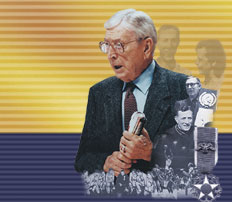
He was known as a wizard – the Wizard of Westwood. I am not sure how that moniker came to be attached to him, except that this pithy alliteration well described his mastery of the the basketball court as coach of the UCLA Bruins. But that nickname seems to have rung true for another reason. By all accounts the influence of Coach John Wooden‘s ‘spell’ left his former players, and others around him, better for having had him around.
An era has passed. In a way it is odd to say this, since the John Wooden era of coaching ended more than 35 years ago. But the era ended completely with the passing of Coach Wooden, who went to be with his Lord, and his long-departed wife, Friday evening.
Still, even in his parting, Wooden influence will continue to live in those he coached, and through those whose lives have been enhanced through the life & leadership lessons Wooden took a lifetime to craft, and which he devoted to sharing in his retirement years: Wooden’s Pyramid of Success. 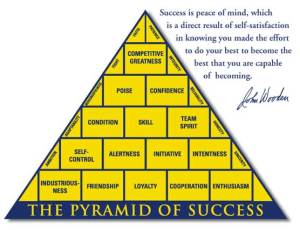
Despite his nickname, there is nothing ‘magical’ about the Wooden Way. His success formula is rooted in integrity, discipline, loyalty, and hard work. And unlike many of the self-help principes on the market, Wooden’s philosophy was woven in his Faith.
In summary: Wooden was more than just a coach. He was a godly man who was on a mission to bless those around him.
As a father of a son, entering college, who aspires to be a coach, I can think of no example I would rather have influence him, in that endeavor, than that which John Wooden embodied.
John Wooden’s legend will be long remembered. John Wooden’s character & principles will continue to speak for generattion to come.
Worship and/or Counseling pt. 2
Several years ago an article in Journal of Biblical Counseling opened my eyes to see that counseling is a Ministry of the Word. True Christian Counseling often involves helping people discern their bestting sin, personal idols, and functional unbelief, and then helping them apply the gospel to their lives. This is what the Ministry of the Word does, whether it comes in the form of preaching, teaching, or counseling. With that understanding, then, it should be no surprise that Worship can also carry a function of Counseling.
In this video David Powlison of CCEF and Bob Kauflin of Sovereign Grace Ministries continue their discussion about how worship can effect personal transformation in the participant and the worship leaders’ responsibilty to lead people to fully enter into worship in a way that opens the participant to experience what God will do in them.
[This is Part 2 of 2]
Worship and/or Counseling
What effect can worship have on the worshipper? In this video Worship Leader Bob Kauflin and counseler David Powlison discuss the therapeutic aspect of worship.
While this video comes from the perspective of the worship leader, and the awesome opportunity and responsibility the worship leader has, I think this discussion will provide everyone an enhanced perspective about the dynamic that entering into genuine worship offers.
[NOTE: This is the First of Two Parts of this discussion]
Deep Church & Ordinary Means
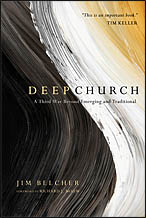 Unbeknownst to me when I posted earlier today, two of my long-time friends interviewed Jim Belcher, author of Deep Church, earlier this year for their podcast: Ordinary Means.
In this interview Jim introduces and discusses his book with two guys, Matt Bohling & Shaun Nolan, who unhesitatingly identify themselves with the Traditional Church.
Great discussion…
To listen click: Deep Church.
The Deep Church

At the suggestion of a friend, I recently read Jim Belcher’s Deep Church. I was not disappointed. This is thoughtful and thought-provoking book.
The subtitle really captures the theme of this book: A Third Way.
With all the discussions about “how” to do church, and the polemic approaches of the Traditionalists and the Emerging/Emergent, some of us find ourselves caught somewhere in the middle. I see strengths and weakness in both movements.
Belcher offers understanding of both worlds. With his understanding he offers honest reflections. Belchers experience and research are helpful for bringing clarity about the issues of the debate and the players doing the debating. I especially appreciated his dilineation of the “protests” being offered by the Emergning/Emergents against the practices of traditional church:
- Captivity to Enlightenment Rationalism
- A Narrow View of Salvation
- Belief Before Belonging
- Uncontextualized Worship
- Ineffective Preaching
- Weak Ecclesiology
- Tribalism
Honestly, I share these collective frustrations – though I cannot endorse the Emergent solutions.
More than just offering perspective, Belcher offers his thought process as he wrestles with the strengths and weaknesses of both the Emerging/Emergent and Traditionalist arguments. He does not seem to be trying to convince anyone to embrace his positions, only sharing the insights of his personal and spiritual leadership journey. I found this helpful. It was almost as if I had someone to talk with about these issues as I contemplate my own positions, questions, and inclinations.
Most important, at no point does Belcher compromise by seeking the “middle way”. Instead, listening to both sides of the debate, he searches and wrestles with Scripture to find “A Third Way”.
The Bereans would be proud.
 GRACE & PEACE